
What is CPR all about?
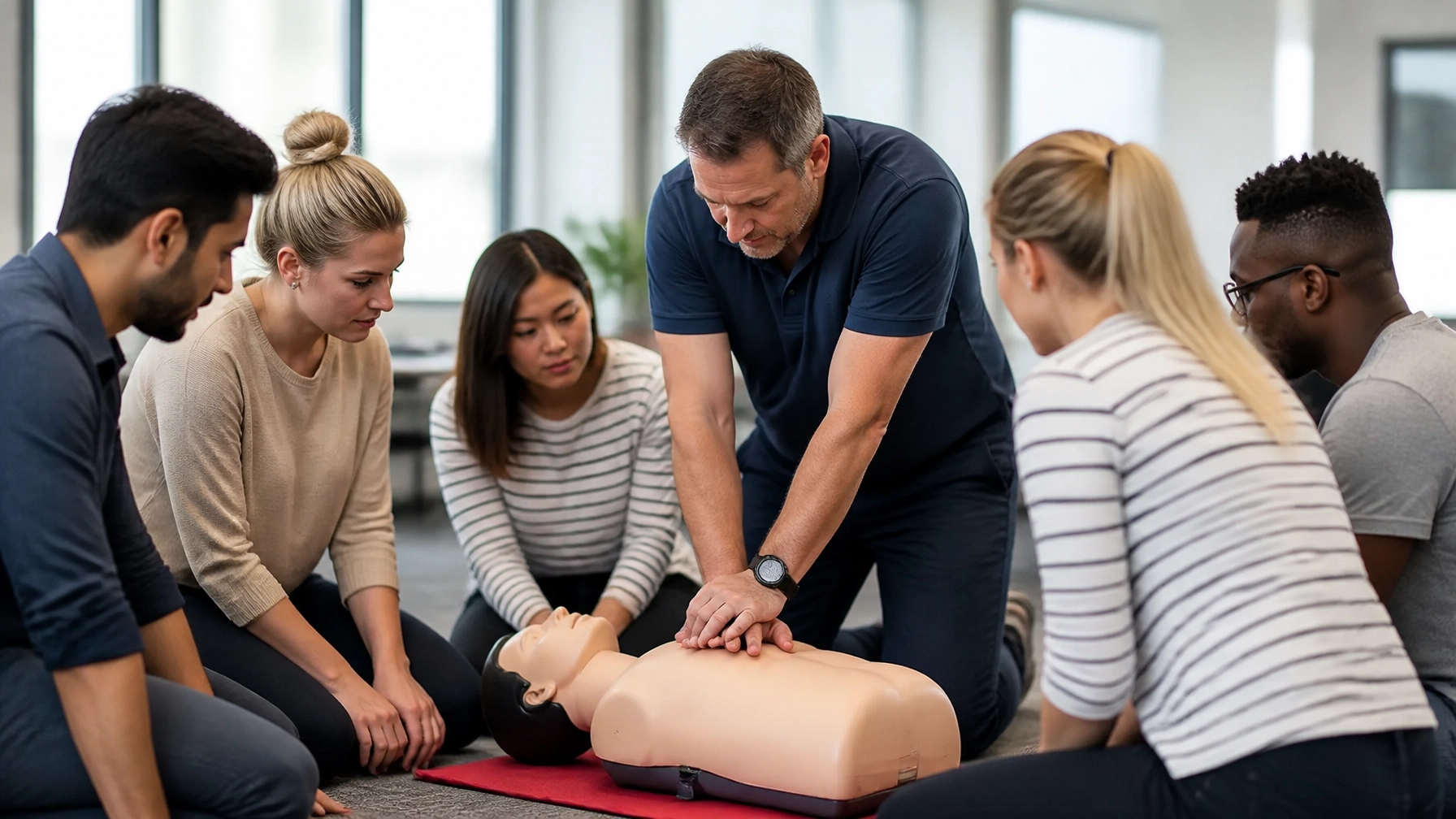
Cardiopulmonary Resuscitation (CPR) is an emergency procedure used when a person’s heart stops beating or they stop breathing. Think of it as a manual override for the body's internal pump. When the heart stops (cardiac arrest), blood stops flowing to the brain and other vital organs. Without oxygen, brain damage can occur within minutes.
By performing chest compressions and rescue breaths, you are physically squeezing the heart and forcing oxygenated blood to circulate. It is the most critical link in the chain of survival until professional help arrives. Whether you are looking for HLTAID011 Provide First Aid in Albury / Wodonga or a specialized Childcare First Aid course HLTAID012, understanding the mechanics of CPR is the foundation of all life-saving skills.
Despite its importance, many people: even those previously trained: make technical errors that reduce the effectiveness of the procedure. Here are the seven most common mistakes and exactly how to fix them.
1. Not Pushing Deep Enough
The Mistake
The most common error in CPR is "shallow compressions." Rescuers are often afraid that pushing too hard will break the victim's ribs. While rib fractures can happen (a popping or cracking sound is common), a shallow compression does not squeeze the heart enough to eject blood into the arteries.
How to Fix It
- Compress to 5cm: For an adult, you must compress the chest at least 5cm (about one-third of the chest depth).
- Use your body weight: Do not rely solely on your arm strength. Lean over the patient so your shoulders are directly over your hands.
- Be firm: It takes a significant amount of force to compress a human chest. If you aren't feeling the physical effort, you likely aren't pushing deep enough.

2. Incorrect Compression Rate
The Mistake
Rescuers often perform compressions too slowly or, in a state of panic, much too quickly. If you go too slow, you aren't maintaining enough blood pressure. If you go too fast (over 120 beats per minute), the heart doesn't have enough time to refill with blood between squeezes.
How to Fix It
- Target 100–120 bpm: Aim for a steady rhythm.
- Use a mental song: The classic recommendation is the beat of "Stayin' Alive" by the Bee Gees.
- Stay consistent: Avoid starting fast and slowing down as you get tired. If you have a second person available, swap every two minutes to maintain the correct tempo.
3. Leaning on the Chest (No Recoil)
The Mistake
In the rush to keep going, many people forget to let the chest "recoil." This means they keep pressure on the chest even when they are supposed to be releasing. If the chest doesn't come all the way back up to its neutral position, the heart cannot refill with blood, making the next compression useless.
How to Fix It
- Full release: After every downward squeeze, lift your weight entirely off the chest while keeping your hands in contact with the skin.
- Check your posture: Ensure you aren't "leaning" into the patient. Your arms should be straight, but your weight should come off during the upward phase of the cycle.
4. Bending Your Elbows
The Mistake
Performing CPR is physically demanding. If you bend your elbows and try to use your biceps and triceps to push, you will tire out within sixty seconds. This leads to shallower, less effective compressions and eventual exhaustion.
How to Fix It
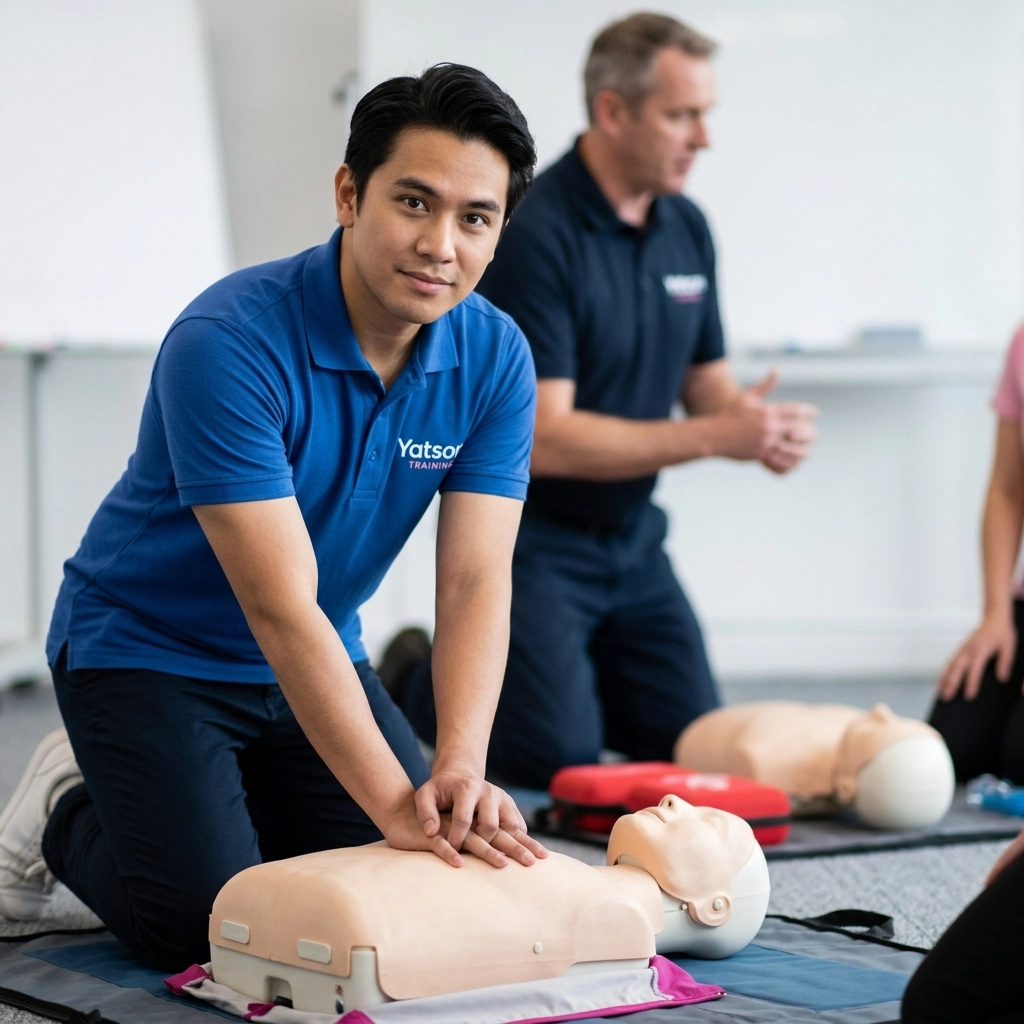
- Lock your elbows: Keep your arms straight and rigid.
- Pivot from the hips: Use your upper body weight to drive the compression. This is more sustainable and provides the necessary force for adult victims.
- Positioning: Kneel close to the victim's side so you don't have to reach across them, which forces your elbows to bend.

5. Failing to Manage the Airway
The Mistake
When it comes time to deliver rescue breaths (as taught in HLTAID011 Provide First Aid), many rescuers simply blow into the mouth without adjusting the head. If the head is flat on the ground, the tongue often blocks the back of the throat, meaning no air reaches the lungs.
How to Fix It
- Head-tilt/chin-lift: Place one hand on the forehead and two fingers under the chin. Tilt the head back gently to open the airway (this moves the tongue out of the way).
- Pinch the nose: Ensure you pinch the soft part of the nose closed before delivering a breath to prevent air escaping.
- Watch for the rise: Look for the chest to rise with each breath. If it doesn't rise, readjust the head tilt and try again.

6. Excessive Interruptions
The Mistake
Every second you aren't compressing the chest, blood pressure drops to zero. Many people stop compressions for too long to check for a pulse, adjust their hands, or look around for help.
How to Fix It
- Minimise breaks: Keep interruptions to less than 10 seconds.
- Prepare in advance: If an AED (Automated External Defibrillator) arrives, keep doing compressions while someone else unboxes it and applies the pads.
- Don't "pulse check": Unless the person starts breathing normally or moving, do not stop to check for a pulse. Continue until professional help takes over.
7. Stopping Too Soon
The Mistake
Rescuers often stop CPR because they feel it isn't "working" or because they are exhausted. In a real-world emergency, you may have to perform CPR for a long time before paramedics arrive.
How to Fix It
- Continue until handover: Only stop when a medical professional tells you to, the scene becomes unsafe, or the victim shows signs of life.
- Rotate rescuers: If you are part of a team or in a workplace setting, ensure you have an organized rotation. Fatigue is the enemy of quality CPR.
- Trust the process: CPR is designed to buy time. Even if the victim doesn't "wake up," your compressions are keeping their brain alive for the paramedics to perform advanced life support.
Keep in Mind: Our Recommendation
At Yatson Training, we always say that "any CPR is better than no CPR." However, high-quality technique significantly increases the chances of a positive outcome. If you haven't refreshed your skills in the last 12 months, your technique has likely slipped.
For businesses in the Albury / Wodonga area, we recommend regular Corporate First Aid training to ensure your staff are confident and competent. It is one thing to read about these mistakes, but it is another to practice on a manikin with real-time feedback from an instructor.

Our Recommendation for Workplace Safety:
- Annual Refresher: Even if your certificate is valid for three years, your CPR skills should be refreshed annually.
- AED Accessibility: Ensure your workplace has an AED and that everyone knows where it is.
- Booking: Secure your Workplace First Aid certification by contacting us today.
For more information on compliance, check out our guide on 7 mistakes you’re making with workplace first aid compliance.
FAQ: CPR and Training
How often do I need to renew my CPR?
While most First Aid certificates (like HLTAID011) last three years, the Australian Resuscitation Council (ARC) recommends that the CPR component be refreshed every 12 months.
Can I hurt someone by doing CPR?
It is possible to break ribs or cause bruising, but remember: you are performing CPR on someone who is technically dead (their heart has stopped). Any physical injury is secondary to the goal of saving their life.
Do I have to do mouth-to-mouth?
If you are unwilling or unable to perform rescue breaths, "compression-only" CPR is still highly effective and much better than doing nothing at all. However, for drowning victims or children, breaths are crucial.
Where can I get certified in Albury / Wodonga?
Yatson Training offers regular courses including HLTAID011 Provide First Aid and Childcare First Aid course HLTAID012. We also specialise in Corporate First Aid training in the Albury Wodonga area.
Book Your Training Today
Don't wait for an emergency to realize your skills are rusty. Whether you need a Childcare First Aid course HLTAID012 or a standard workplace refresh, Yatson Training is here to help.
Contact Us:
- Phone: 0450 533 179
- Website: yatsontraining.com.au
- Location: Serving Albury, Wodonga, and surrounding regions.
Follow us for more tips:
Ready to save a life? Click here to call us and book your next session!