Maintaining a safe workplace is about more than just avoiding fines; it is about protecting the people who make your business run. In Albury / Wodonga, businesses have a legal responsibility to provide adequate first aid equipment, facilities, and trained personnel. However, staying compliant is often easier said than done. Small oversights can lead to big risks when an actual emergency occurs.
At Yatson Training, we see many local businesses struggling with the same few hurdles. Whether you are running a small retail shop or a large industrial site, these common mistakes can compromise your safety standards.
What is Workplace First Aid Compliance all about?
Workplace First Aid Compliance is the process of ensuring your business meets the standards set by Safe Work Australia and relevant state legislation. It involves a "risk-based" approach, meaning your first aid requirements depend on the specific hazards in your workplace, the number of employees, and your location. It isn't a one-size-fits-all solution.
Compliance ensures that if a worker is injured or falls ill, they receive immediate and effective attention. This could be anything from applying a bandage to performing life-saving CPR. The goal is to bridge the gap between the incident occurring and the arrival of professional emergency services. To stay compliant, you need three main things: trained people, the right equipment, and a clear plan.

1. Letting First Aid & CPR Certificates Expire
The most common mistake we see is the "set and forget" mentality. Many managers assume that once an employee has completed their HLTAID011 Provide First Aid course, the job is done for years.
In reality, first aid skills are perishable. If you don’t use them, you lose them. Most First Aid certifications are valid for three years, but the CPR component (which is part of the training) is recommended for a refresher every 12 months. Once a certificate expires, that staff member no longer officially counts toward your required number of first aiders.
How to fix it:
- Create a central training register.
- Log every staff member’s qualification and expiry date.
- Set a calendar reminder for 60 days before an expiry.
- Book a Corporate First Aid training session annually to keep everyone’s CPR skills sharp.
2. Inadequate Coverage Across All Shifts
You might have five trained first aiders, but if they all work Monday to Friday from 9:00 am to 5:00 pm, your night shift is in trouble. Compliance requires you to have adequate coverage whenever workers are present. This includes weekends, overtime, and night shifts.
We often see businesses fail to account for "ghost" first aiders: people who are on the list but are actually on annual leave, sick, or working at a different site. If an accident happens and your only first aider is at lunch, you are not compliant.
How to fix it:
- Assess your roster. Ensure at least one (ideally two) trained people are present during every hour of operation.
- Account for leave. Train more staff than the minimum requirement to act as "backup" first aiders.
- Place a clear list of on-duty first aiders in common areas like the tea room or near the first aid kit.

3. Choosing the Wrong Type of Training
Not all first aid courses are created equal. A common mistake is booking a generic course that doesn't address your specific workplace risks. For example, a standard office environment has different needs than a daycare centre or a construction site.
If you work in education or childcare, you likely need the Childcare First Aid course HLTAID012. This specifically covers asthma and anaphylaxis management, which are critical in those environments. Using a general course when a specialised one is required is a major compliance red flag.
How to fix it:
- Conduct a First Aid Needs Assessment. Consider the nature of the work and the types of injuries that could happen.
- Match the course to the risk. If you are unsure, ask us at Yatson Training. We can help you decide between HLTAID011 and HLTAID012.
- Ensure the training is RTO-accredited to meet Australian standards.
4. Poor Equipment Maintenance
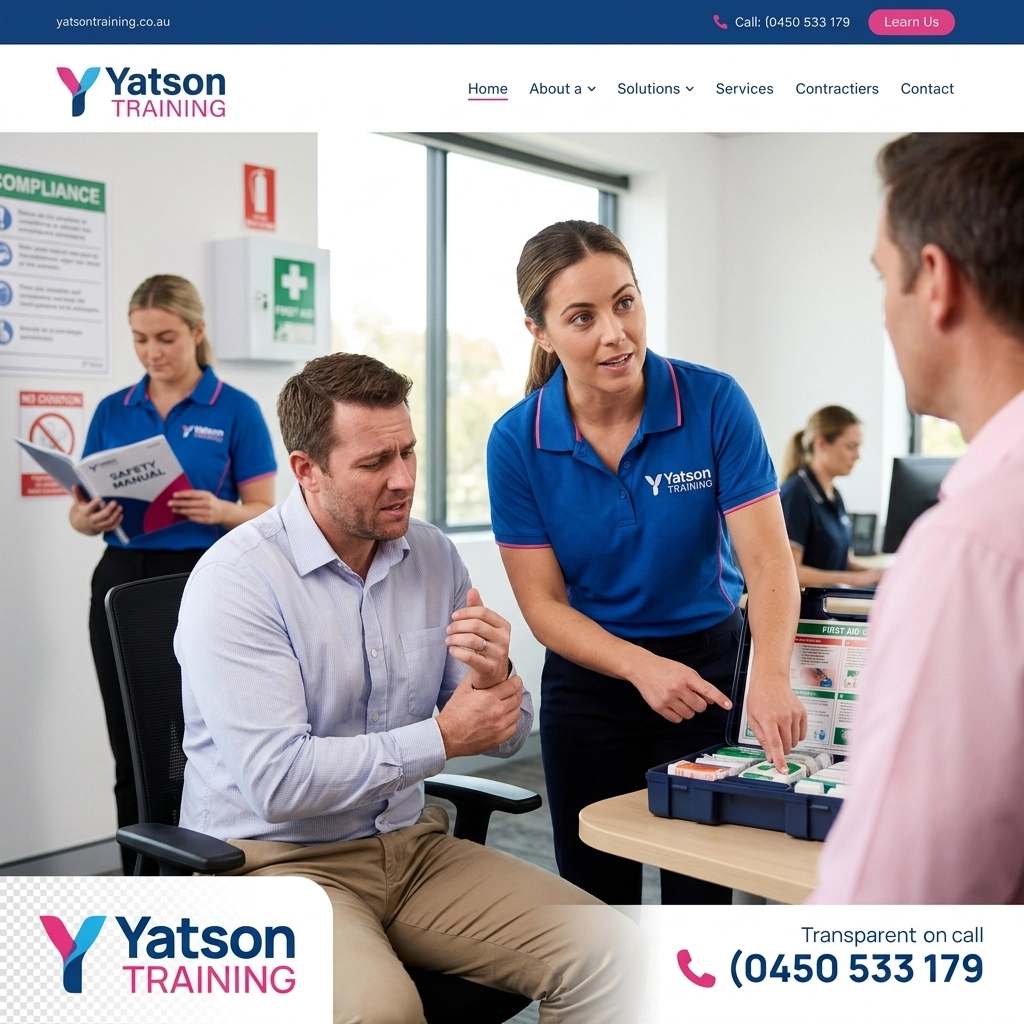
Having a first aid kit "somewhere in the back" isn't enough. We often find kits that are missing essential items (like the scissors someone borrowed and never returned) or filled with expired ointments and bandages.
Furthermore, many Albury / Wodonga workplaces now have Automated External Defibrillators (AEDs). These are incredible life-saving tools, but they require battery and pad checks. A dead AED is just a heavy box on the wall when someone is having a cardiac arrest.
How to fix it:
- Appoint a "Kit Warden." This person should check all kits monthly.
- Use a checklist. Mark off items and check expiry dates on saline, creams, and pads.
- Make kits accessible. Do not lock them in a manager’s office. They must be reachable within seconds.

5. Weak Emergency Planning and Zero Practice
A certificate on the wall doesn't guarantee a calm response during a crisis. Many workplaces have a written plan that stays in a dusty folder. When a real emergency happens, people often panic because they haven't practiced.
If your staff doesn't know who calls 000, who meets the ambulance at the gate, or where the AED is located, valuable minutes are lost. In a life-threatening situation, minutes equal lives.
How to fix it:
- Run "First Aid Drills." Just like a fire drill, simulate a medical emergency.
- Practise using the AED (using a trainer unit).
- Assign clear roles. Designate a "Caller," a "First Aider," and a "Gate Greeter."
- Review the response after the drill to see what could be improved.
6. Treating Training as a "Tick-Box" Exercise
If your staff views first aid training as a boring day away from the desk, they won't retain the life-saving skills they need. Compliance isn't just about having the paperwork; it's about competence.
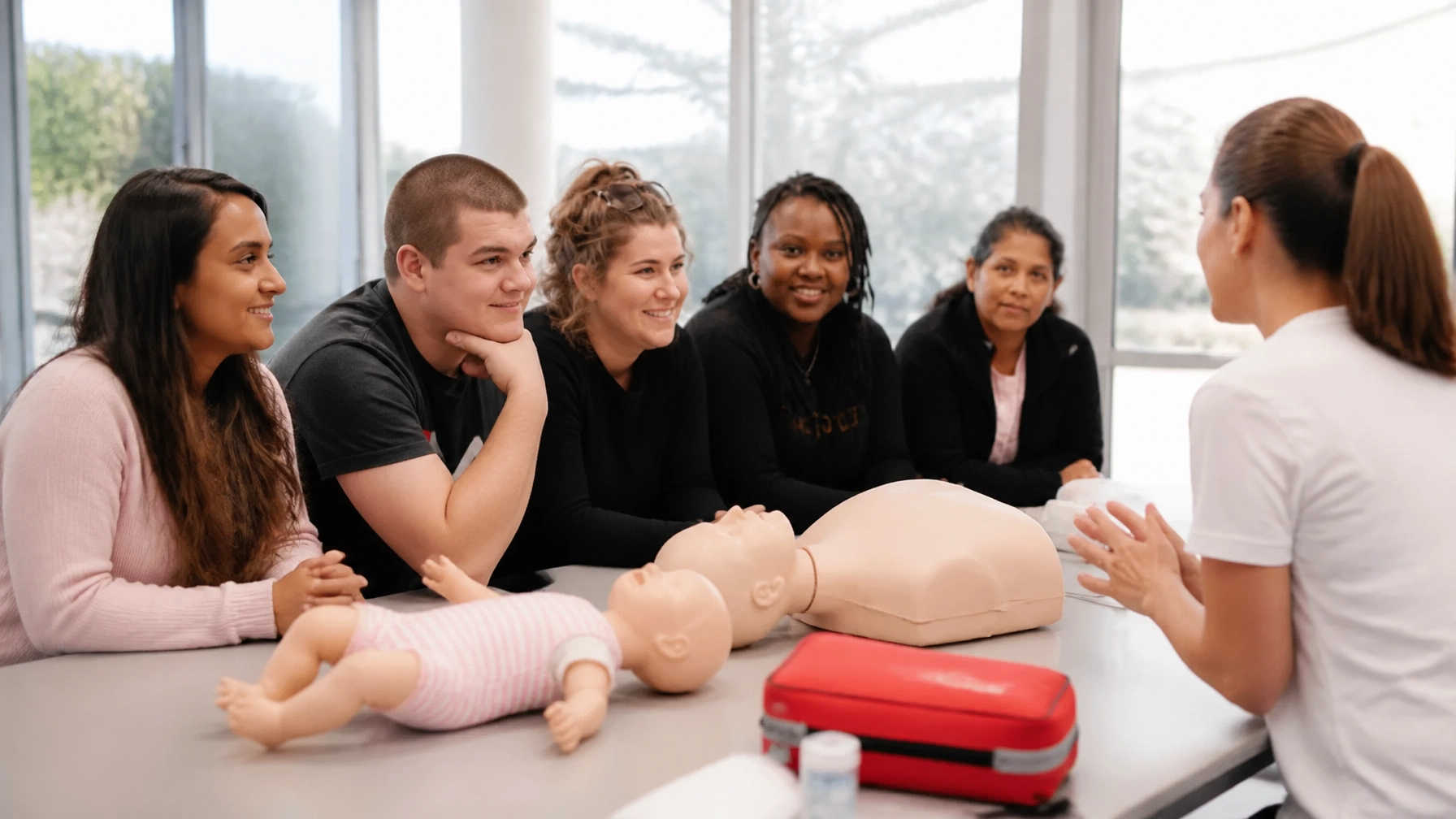
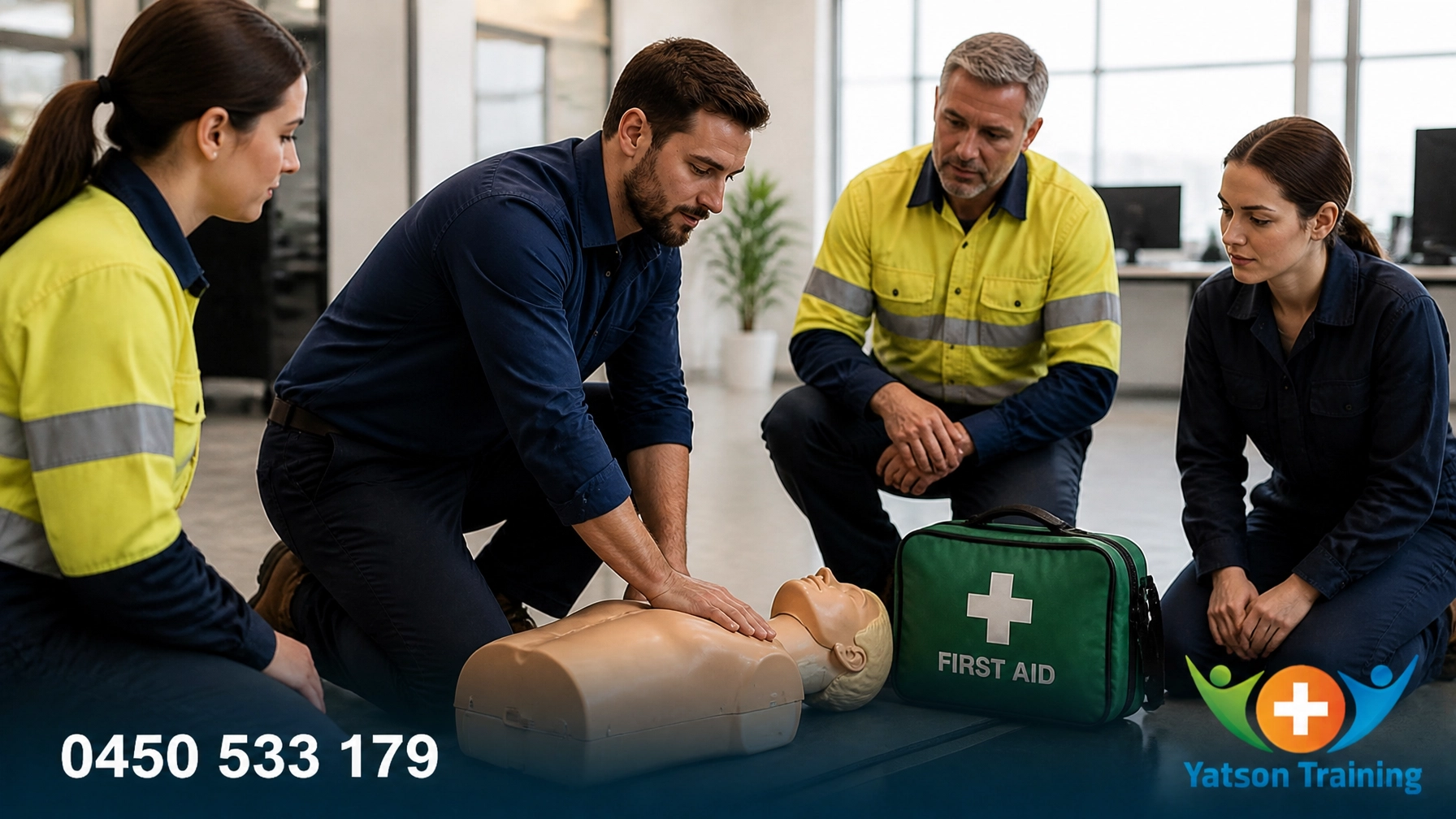
Theory-heavy, online-only courses often leave people feeling unsure of themselves. Effective training requires hands-on practice. You need to actually push on a manikin to understand the depth and rhythm required for effective CPR.
How to fix it:
- Choose interactive training. At Yatson Training, we focus on hands-on, practical scenarios.
- Encourage questions. Create an environment where staff feel comfortable asking "What if?"
- Focus on confidence. The goal of training should be making staff feel empowered to step in and help.

7. Failing to Review and Update
Your workplace changes. You might hire more people, move to a bigger warehouse, or start using new machinery. If your first aid arrangements stay the same while your business grows, you will quickly fall out of compliance.
A common mistake is failing to review your first aid needs after a "near miss" or a minor accident. Every incident is a lesson that should be used to update your safety protocols.
How to fix it:
- Review your assessment annually.
- Check compliance after any major business change (like a relocation).
- Conduct a post-incident debrief. If someone gets hurt, ask: Was the kit stocked? Was the first aider ready? Did the plan work?
Our Recommendation: Stay Ahead of the Curve
At Yatson Training, our recommendation is to treat first aid as an ongoing culture rather than an annual chore. Learn CPR in Albury / Wodonga with a provider that understands the local landscape. We recommend booking your staff for Corporate First Aid training to ensure your team is always ready.
Keep in mind: The cost of a training course is a tiny fraction of the cost of a workplace accident or a non-compliance fine. More importantly, you cannot put a price on a life saved.

Frequently Asked Questions
How many first aiders do I actually need?
The "Compliance Code" generally suggests one first aider for every 50 workers in a low-risk workplace (like an office) and one for every 25 in a high-risk workplace (like a factory). However, you should always have enough to cover leave and shifts.
Is HLTAID011 enough for my school staff?
Generally, staff working with children should complete Childcare First Aid course HLTAID012. This course includes the elements of HLTAID011 but adds specific modules for asthma and anaphylaxis, which are mandatory in many educational settings.
Can I do my first aid training entirely online?
While some theory can be done online, the practical assessment (like CPR) must be done in person to be compliant and accredited. Yatson Training offers flexible options to make this easy for your team.
What is the fastest way to get compliant?
The fastest way is to give us a call. We can assess your needs and book a session that fits your schedule.
Ready to get compliant?
Don't wait for an accident to find out your first aid plan is lacking. Whether you need to Learn CPR in Albury / Wodonga or require a full HLTAID011 Provide First Aid certification for your team, we are here to help.
For all your First Aid training needs, call Yatson Training today on 0450 533 179 or visit yatsontraining.com.au.
Follow us for more safety tips:
#FirstAidTraining #AlburyWodonga #WorkplaceSafety #HLTAID011 #HLTAID012 #CPR #SafetyCompliance #YatsonTraining