Maintaining a safe workplace is about more than just avoiding fines. It is about ensuring that if a staff member, client, or visitor suffers a medical emergency, your team is ready to act. Workplace first aid compliance in Australia is governed by strict codes of practice, yet many businesses in the Albury / Wodonga region still fall into common traps.
If your first aid plan consists of a dusty box in the cupboard and a certificate from five years ago, you are at risk. Being non-compliant doesn't just invite legal trouble; it puts lives in danger. At Yatson Training, we see these mistakes every day. Here is how you can identify and fix the seven most common compliance errors in your workplace.
What is Workplace First Aid Compliance all about?
Workplace first aid compliance is the process of ensuring your business meets the legal requirements set out by Safe Work Australia and relevant state regulators. It involves providing adequate equipment, facilities, and trained personnel to deliver initial treatment for injuries or illnesses at work.
This is not a "set and forget" task. Compliance is a dynamic system that changes based on your staff numbers, the type of work you do (risk level), and your location. Whether you are running a high-risk construction site or a low-risk office, you must have a plan that works when seconds count.
1. Letting First Aid Certificates Expire
The mistake: Many managers assume that once a staff member completes a First Aid Training course, they are "qualified" forever.
The risk: In Australia, the standard industry recommendation is that the HLTAID011 Provide First Aid certificate be renewed every three years. However, the CPR component (HLTAID009) must be refreshed every 12 months. If an incident occurs and your designated first aider has an expired certificate, your business is technically non-compliant. More importantly, skills fade. A first aider who hasn't practised chest compressions in three years is less likely to perform them effectively in a crisis.
The fix:
- Create a central register of all first aid qualifications.
- Record the expiry dates for both the full certificate and the annual CPR refresher.
- Set a calendar reminder for six months before an expiry date.
- Book your refresher courses early with Yatson Training by calling 0450 533 179.

2. Relying on Too Few First Aiders (and Not Planning for Absence)
The mistake: You have exactly one trained person on-site, and you think you’ve ticked the box.
The risk: What happens when that person is on lunch? Or home with the flu? Or on annual leave? If your only first aider is not physically present when an accident happens, you have zero first aid capability. The Code of Practice suggests a ratio of one first aider for every 50 workers in low-risk workplaces, and one for every 25 in high-risk environments.
The fix:
- Map out your staff shifts and rosters.
- Ensure a trained first aider is present during all hours of operation, including night shifts or weekend work.
- Train a "buffer" group. Aim for at least 20-30% more first aiders than the legal minimum to cover for unexpected absences.
- Incorporate first aid coverage into your leave approval process.

3. Using the Wrong Type of Training for Your Specific Risks
The mistake: Booking a generic course without considering the specific hazards of your industry.
The risk: A childcare centre has very different needs compared to a warehouse. If your staff work with children, they require the Childcare First Aid course HLTAID012, which includes specific training for asthma and anaphylaxis. If you work in a high-voltage environment, you may need Low Voltage Rescue (LVR) training. Using a generic "one-size-fits-all" approach means your team might not know how to handle the most likely emergencies in your specific workplace.
The fix:
- Conduct a first aid needs assessment.
- Identify your main hazards (e.g., machinery, chemicals, outdoor work, or vulnerable populations).
- Choose the correct unit of competency. For most general workplaces, HLTAID011 Provide First Aid is the standard.
- Consult with an expert. Call Jackie Hislop at Yatson Training on 0450 533 179 to discuss which course fits your Albury / Wodonga business best.
4. Neglecting First Aid Kits and Equipment
The mistake: Buying a kit once and never looking inside it again.
The risk: Items like antiseptic wipes dry out. Bandages lose their elasticity. Most importantly, sterile items and saline have expiry dates. If a staff member reaches for a burn dressing only to find it expired in 2022, you are failing your duty of care. Furthermore, kits are often "cannibalised" for Band-Aids without being restocked, leaving them empty when a real emergency strikes.
The fix:
- Appoint a "First Aid Kit Warden" for each department.
- Schedule a formal kit audit every month.
- Check that all seals are intact and expiry dates are visible.
- Ensure kits are easily accessible and not locked behind a manager's door or blocked by stock.
- For professional advice on kit compliance, click here to read our guide on kit maintenance.
5. Treating Training as a "Box-Ticking" Exercise
The mistake: Choosing the shortest, cheapest online-only course just to get a piece of paper.
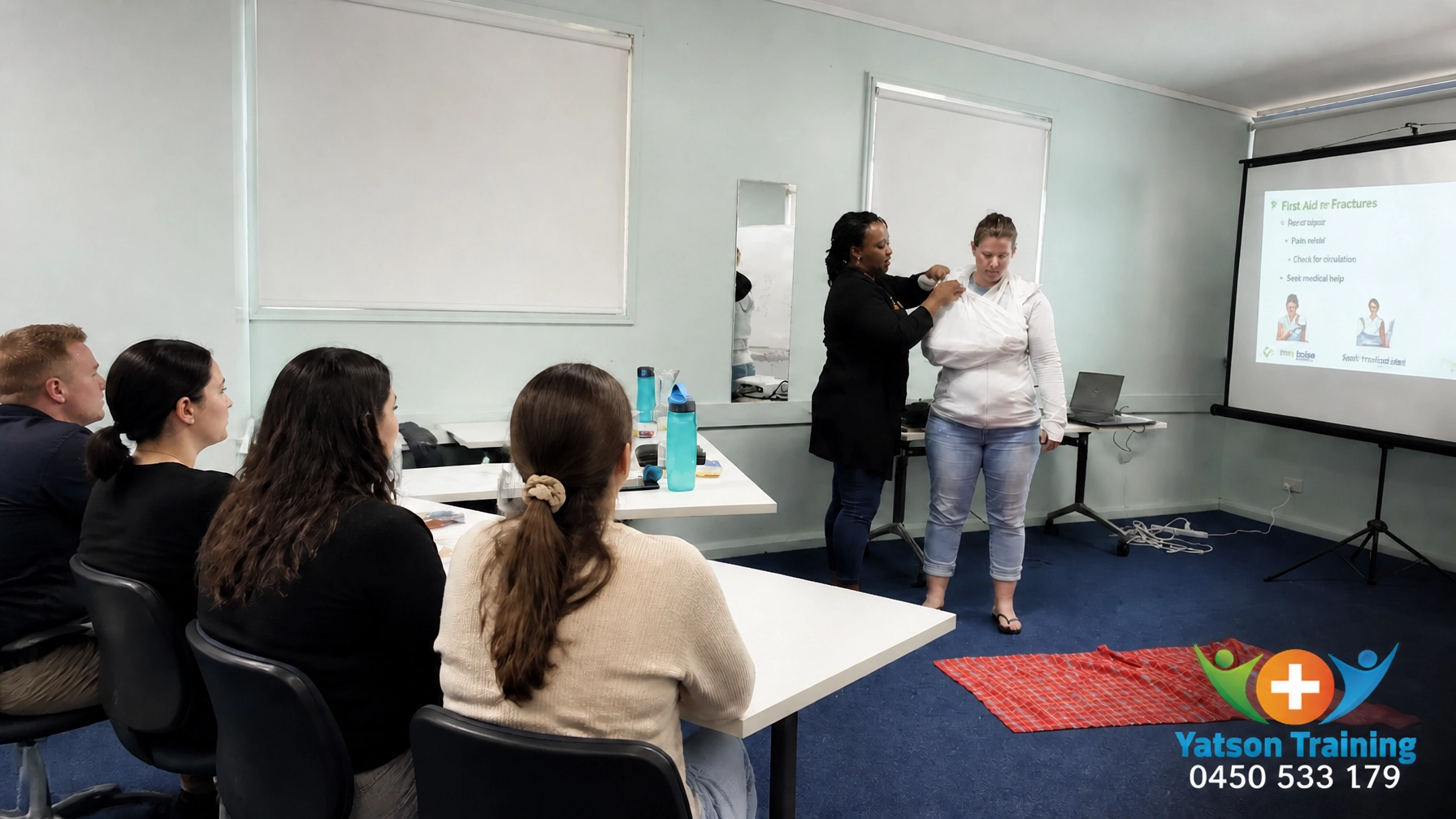
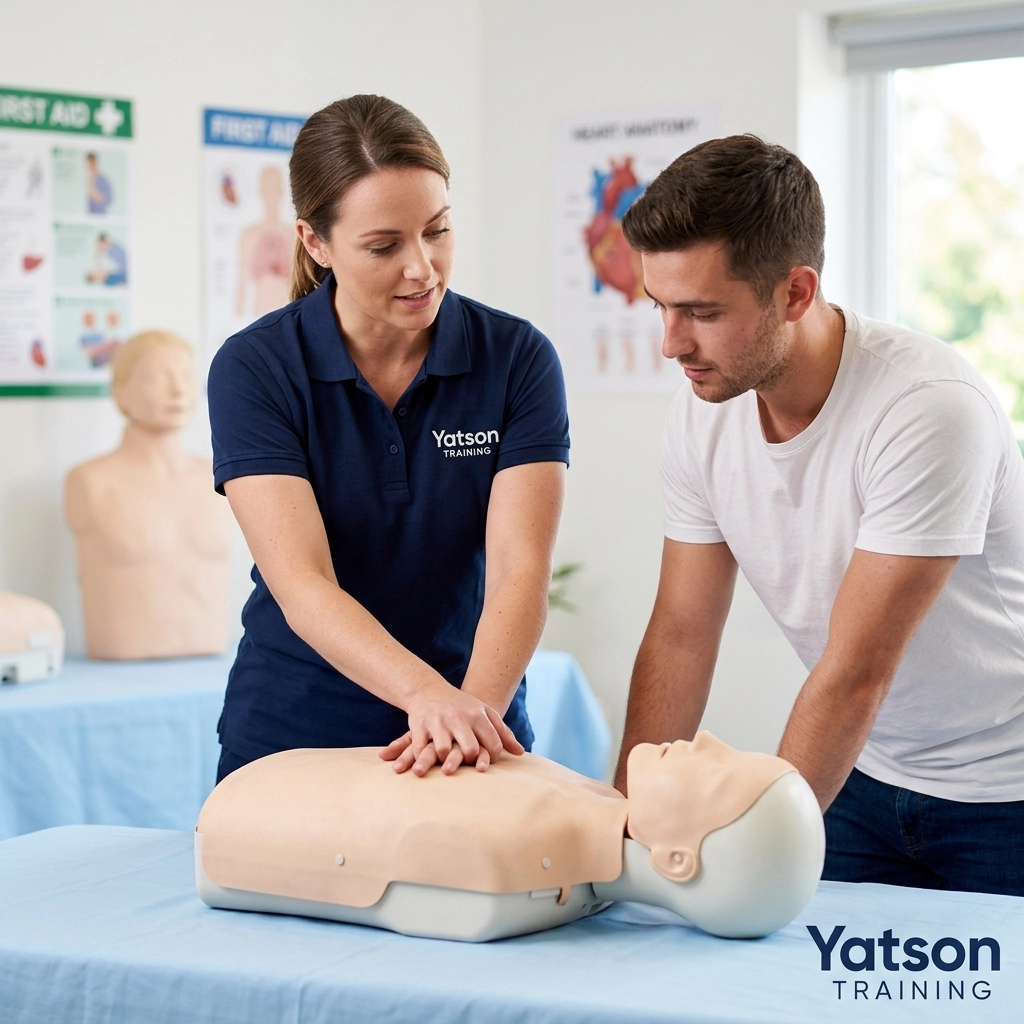
The risk: First aid is a practical, physical skill. You cannot learn the pressure required for effective CPR or the technique for a proper sling by just clicking "next" on a slideshow. If your staff do not get hands-on practice, they will likely freeze when a real emergency occurs. High-quality Life-saving skills require muscle memory developed through repetition.
The fix:
- Prioritise hands-on, face-to-face training sessions.
- Look for providers that use modern manikins and AED trainers.
- Ensure your trainer has real-world experience. At Yatson Training, our lead trainer Jackie Hislop is a Registered Nurse (RN) with years of clinical experience.
- Encourage staff to ask questions and run through scenarios specific to your office or workshop.

6. Ignoring Incident Reporting and Post-Incident Reviews
The mistake: Treating an injury, then going straight back to work without documenting it.
The risk: If you don't record what happened, you can't prevent it from happening again. Legally, you must keep records of any first aid treatment given. Failing to review an incident also means you miss the chance to see if your first aid response worked. Did the first aider find the kit easily? Was the AED reachable?
The fix:
- Maintain a First Aid Treatment Log.
- Record the date, time, name of the injured person, treatment provided, and the name of the first aider.
- Conduct a brief "debrief" after any significant event.
- Update your procedures if the review highlights any gaps in your response plan.
7. Failing to Re-Evaluate as Your Business Evolves
The mistake: Sticking to a first aid plan that was written for five employees when you now have twenty.
The risk: As your business grows, moves location, or changes its service offering, your first aid needs change. Moving into a two-storey building, for example, usually requires a first aid kit and trained staff on every floor. If you start offering outdoor services, you may need to consider Weather Safety and kits designed for hyperthermia or snake bites.
The fix:
- Review your first aid needs assessment annually.
- Trigger a mandatory review whenever you move premises or significantly increase staff numbers.
- Check for updates in Australian Resuscitation Council (ARC) guidelines or work health and safety laws.
Our Recommendation: Keep it Practical
The best first aid plan is one that actually works. We recommend moving away from the "minimum requirement" mindset and towards a "readiness" mindset.
Our top tip: Don't just train the bare minimum number of people. When more people in your team Learn CPR in Albury / Wodonga, the overall safety culture of your business improves. It creates a workplace where everyone looks out for each other.
Frequently Asked Questions
Is online first aid training enough for compliance?
While theory can be done online, the Australian skills quality authority requires practical assessment for units like HLTAID011. You must demonstrate physical competence (like performing CPR on the floor) to be fully certified.
How many first aid kits do I need?
This depends on your layout. A good rule of thumb is that a kit should be reachable within two minutes. If you have multiple buildings or floors, you need multiple kits.
What is the difference between HLTAID011 and HLTAID012?
HLTAID011 is the standard "Provide First Aid" course for most workplaces. HLTAID012 is specifically designed for educators and support workers in early childhood and school settings.
Does Yatson Training come to our workplace?
Yes! We specialise in Corporate First Aid training. We can come to your location in Albury, Wodonga, or surrounding areas to train your staff in their actual working environment.
Ready to secure your workplace compliance?
Don't wait for an accident to find out your first aid plan is failing. Yatson Training provides flexible, friendly, and nationally recognised training that keeps your business compliant and your staff safe.
Contact us today to book your next session:
- Phone: 0450 533 179
- Website: yatsontraining.com.au
- Follow us for tips: Facebook | Instagram
Call Yatson Training on 0450 533 179 for all your First Aid training needs in the Albury / Wodonga area.
#FirstAidTraining #AlburyWodonga #WorkplaceSafety #HLTAID011 #WorkplaceCompliance #CPRTraining #YatsonTraining #SafetyFirst