
Cardiopulmonary Resuscitation (CPR) is a life-saving skill that everyone should have, but simply "knowing" the basics isn't always enough. When an emergency happens in your Albury / Wodonga workplace or home, adrenaline takes over. Without regular practice and proper technique, it is easy to fall into common traps that make your efforts less effective.
At Yatson Training, we see many students arrive for their HLTAID011 Provide First Aid course with a few "bad habits" picked up from television or outdated advice. This guide breaks down the seven most common mistakes made during CPR and how you can fix them to ensure you are providing the best possible chance of survival.
What is CPR technique all about?
CPR technique is a manual process designed to preserve intact brain function until further measures (such as a defibrillator or paramedics) are taken to restore spontaneous blood circulation and breathing in a person who is in cardiac arrest. It involves a combination of chest compressions, which physically pump blood through the heart and to the brain, and rescue breaths, which provide oxygen to the lungs.
Effective technique is about precision. It is the specific combination of depth, rate, and rhythm that keeps the body viable. Whether you are undertaking a Childcare First Aid course HLTAID012 or general Workplace First Aid certification, mastering these physical movements is the core of your training.
1. Your Compressions Aren’t Deep Enough
The most frequent mistake we see during training is shallow compressions. Many people are naturally afraid of hurting the patient. You might worry about "pushing too hard" or breaking a rib. However, if the compressions aren't deep enough, you aren't actually squeezing the heart between the breastbone and the spine. This means blood isn't moving.
The Fix:
- Aim for depth: For an adult, you must compress the chest at least 5 cm (but no more than 6 cm).
- Use your body weight: Do not rely on your arm muscles. Lock your elbows, position your shoulders directly over your hands, and push down using your core and hips.
- Expect the noise: You may hear or feel a "crack." This is often the cartilage or ribs moving. While it feels unsettling, a broken rib can be fixed; a brain without oxygen cannot.
- Firm surface: Ensure the person is on a firm, flat surface. If they are on a bed, move them to the floor if it is safe to do so.

2. Your Compression Rate is Off
Timing is everything. If you push too slowly, you don't generate enough pressure to get blood to the brain. If you push too fast, the heart doesn't have enough time to refill with blood between each push, making the next compression useless.
The Fix:
- Target the rhythm: Aim for 100 to 120 compressions per minute.
- Use a song: Most people find it helpful to match their beat to "Stayin' Alive" by the Bee Gees or "Baby Shark."
- Count aloud: Counting "1, 2, 3, 4…" helps you maintain a steady pace and keeps you focused.
- Avoid fatigue: If you are part of a team, switch rescuers every two minutes to keep the rate consistent.
3. Incorrect Hand Placement and Body Position
If your hands are too high, too low, or off to one side, you risk damaging internal organs like the liver or stomach, and you won't effectively pump the heart. Furthermore, if your body position is wrong, you will tire out within seconds.
The Fix:
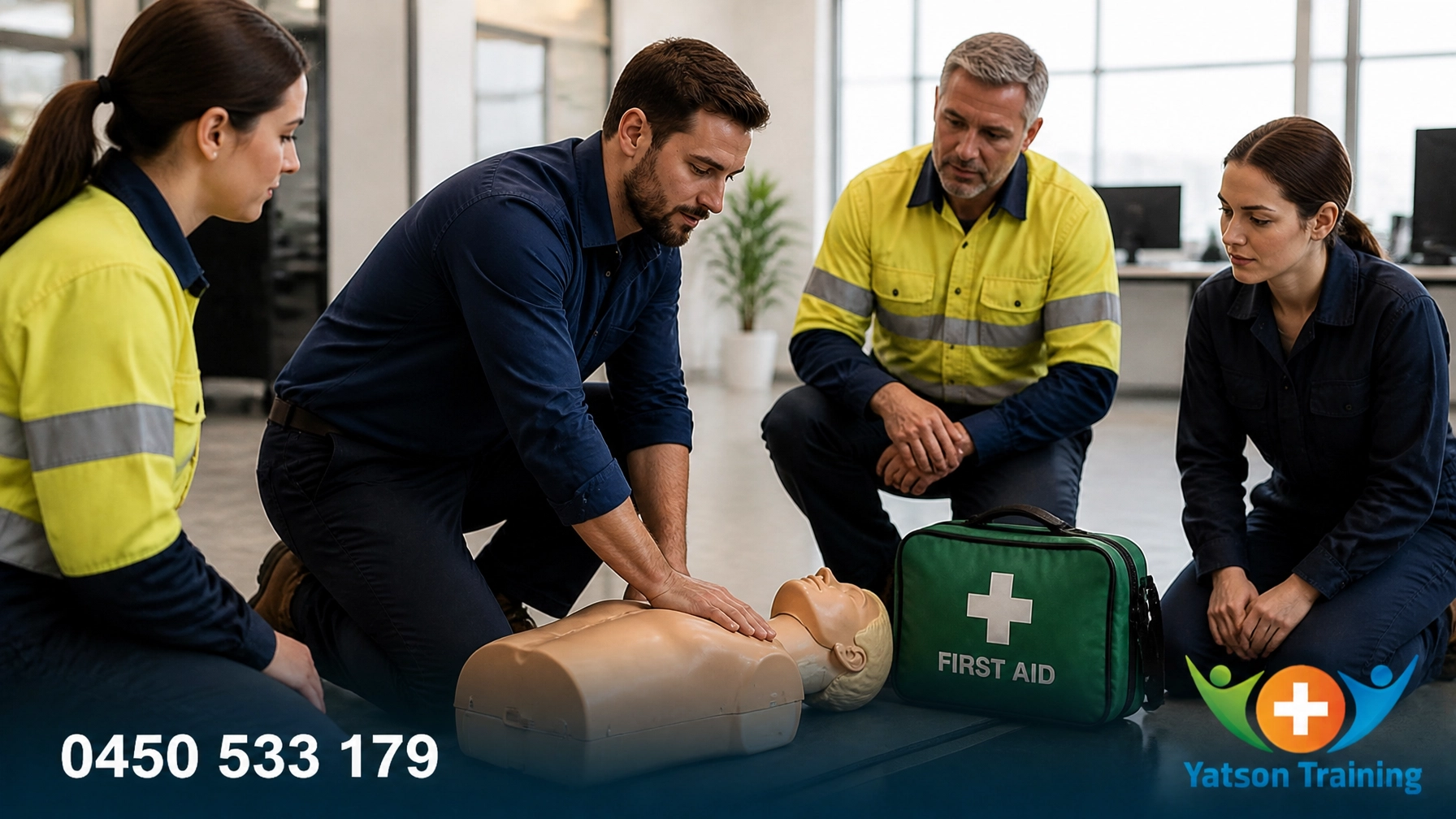
- Find the centre: Place the heel of one hand in the centre of the patient's chest (the lower half of the sternum).
- Interlock: Place your other hand on top and interlock your fingers. Pull your fingers up so only the heel of your hand is making contact.
- Kneel close: Kneel as close to the patient's side as possible. This allows you to stay upright and keep your shoulders over the chest without overreaching.

4. Not Allowing Full Chest Recoil
This is the "silent" mistake. Recoil is the moment the chest returns to its normal position after you push down. This "up" phase is just as important as the "down" phase because it creates a vacuum that pulls blood back into the heart. If you "lean" on the chest and don't let it come all the way back up, the heart cannot refill.
The Fix:
- Lift, don't leave: Ensure you release all pressure from the chest between compressions.
- Stay in contact: While you release the pressure, do not lift your hands off the skin entirely, as you might lose your correct hand placement.
- Think "Up and Down": Mentally focus on the recoil as a distinct part of the process.
5. Interrupting Compressions Too Often
Every time you stop compressions, to check for a pulse, to adjust your clothes, or to wait for someone to open a door, the blood pressure you've built up drops to zero almost instantly. It takes several compressions to get that pressure back up again.
The Fix:
- Minimize breaks: Keep interruptions to less than 10 seconds.
- Don't check for a pulse: Unless the person starts breathing normally, shows signs of life, or a professional tells you to stop, keep going.
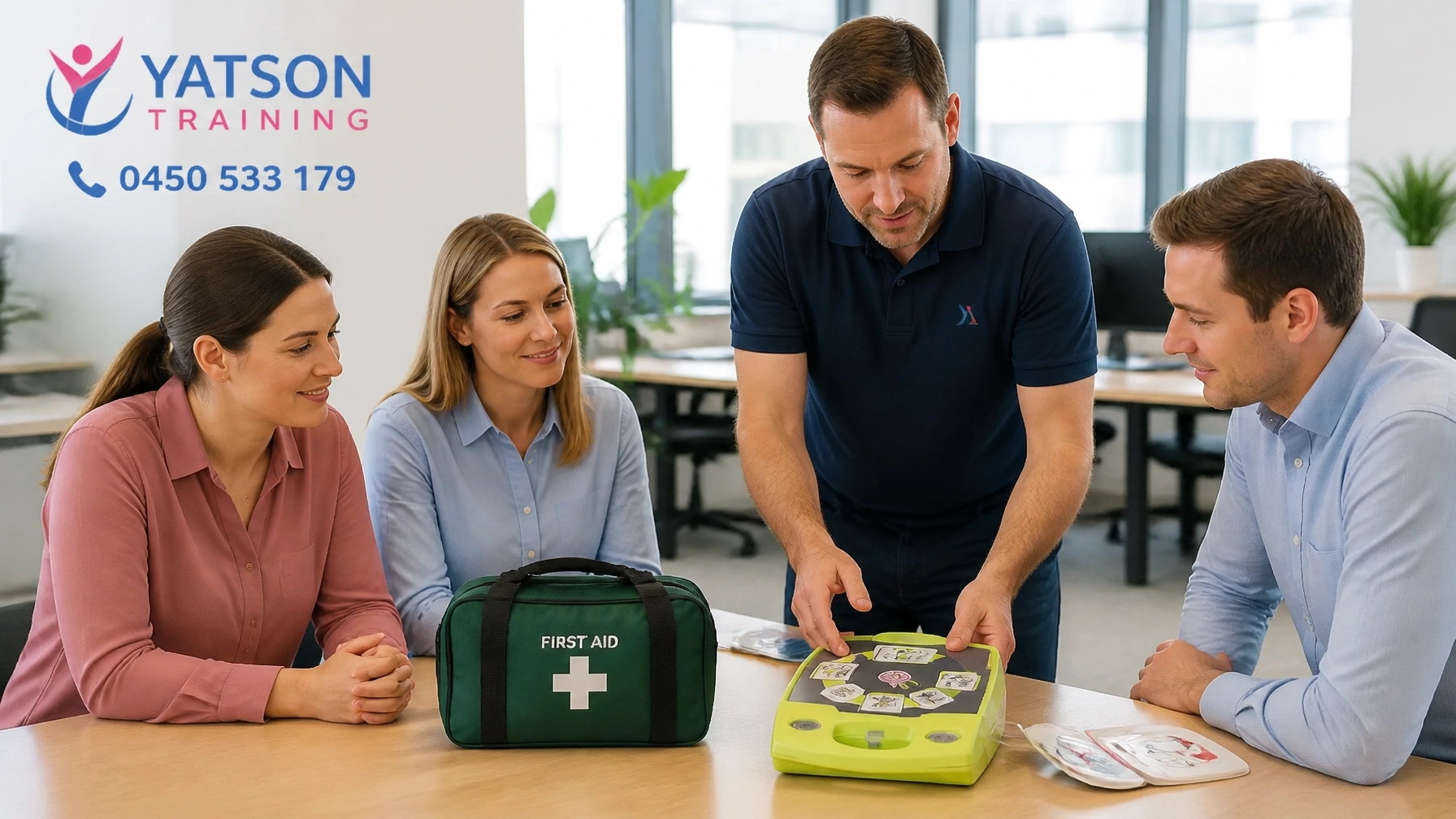
- Prep while pumping: If an AED (Automated External Defibrillator) arrives, have someone else set it up while you continue compressions. Only stop when the AED tells you to "stand clear."
6. Poor Airway Management and Breathing Technique
When delivering rescue breaths, many people fail to open the airway properly, meaning the air goes into the stomach (causing vomiting) or nowhere at all. In a Childcare First Aid course HLTAID012, we place extra emphasis on this, as respiratory issues are more common in infants.
The Fix:
- Head-tilt, chin-lift: Use one hand on the forehead to tilt the head back and two fingers under the chin to lift it. This pulls the tongue away from the back of the throat.
- Pinch the nose: Ensure a tight seal over the mouth (and nose for infants) so air doesn't leak out.
- Watch the chest: Give a breath just until you see the chest rise. If it doesn't rise, readjust the head-tilt and try again.
- Don't over-inflate: Too much air or too much force can cause complications.

7. Delaying Help or Hesitating with an AED
The final mistake isn't about how you move your hands; it's about what you do before you start. Delaying the call to 000 or being "afraid" to use an AED significantly reduces the chances of survival. An AED is designed to be used by anyone, even those without a Workplace First Aid certification.
The Fix:
- Call early: If you are alone, put your phone on speaker and call 000 while you start compressions.
- Use the AED: If one is available, turn it on immediately. The machine will talk you through every single step. You cannot "accidentally" shock someone who doesn't need it.
- Delegate: Point to a specific person and say, "You, call 000 and bring back an AED." This removes bystander confusion.
Keep in Mind: Our Recommendations
CPR is physically demanding and mentally taxing. Our recommendation for businesses in the Albury / Wodonga region is to conduct regular "refresher" drills. Reading a blog post is a great start, but it cannot replace the muscle memory gained from a hands-on Corporate First Aid training session.
- Refresh annually: While most certificates last three years, the CPR component should be refreshed every 12 months.
- Check your equipment: Regularly inspect your workplace first aid kits and AED batteries.
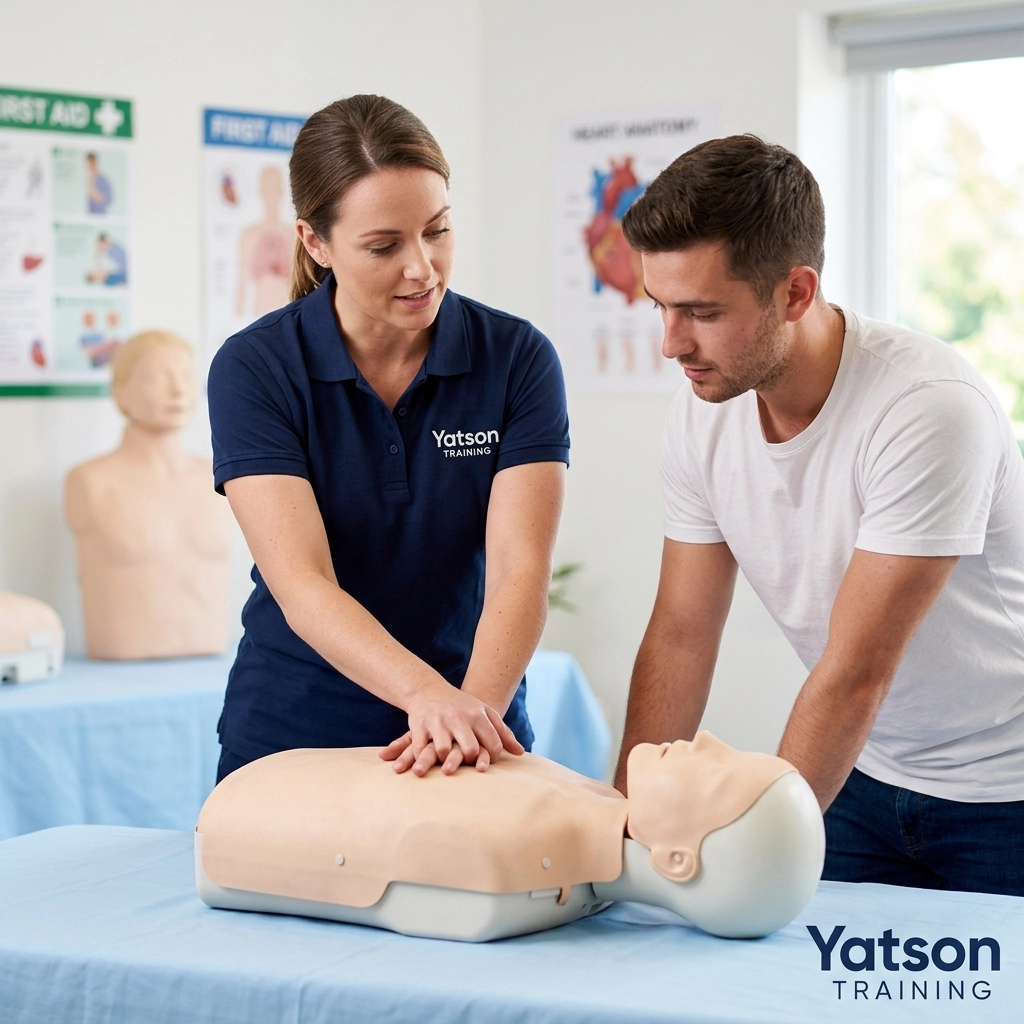
- Practice on manikins: Using a feedback manikin (like the ones we use at Yatson Training) allows you to see exactly how deep and fast you are pushing in real-time.

Frequently Asked Questions
Do I have to do mouth-to-mouth?
If you are unwilling or unable to perform rescue breaths, "Hands-Only" CPR (compressions only) is still highly effective and much better than doing nothing. However, for drowning victims or children (HLTAID012), breaths are highly recommended.
Can I be sued for performing CPR incorrectly in Australia?
In Australia, "Good Samaritan" laws generally protect individuals who provide assistance in an emergency, provided they act in good faith and within their level of training. The risk of doing nothing is far greater than the risk of trying to help.
Is HLTAID011 Provide First Aid the right course for me?
Yes, HLTAID011 is the standard requirement for most Australian workplaces. It includes comprehensive CPR training as well as management of various injuries and illnesses.
How long does the training take?
Our courses are designed to be efficient. We offer a mix of online theory and practical face-to-face sessions in Albury / Wodonga to suit busy schedules.
Book Your Training Today
Don't wait for an emergency to realise your technique is rusty. Whether you need Corporate First Aid training for your entire team or an individual Workplace First Aid certification, Yatson Training is here to help. We provide expert, friendly instruction that gives you the confidence to act when it matters most.
Contact Yatson Training:
- Phone: 0450 533 179
- Web: yatsontraining.com.au
- Location: Serving the Albury / Wodonga region and beyond.
Follow us for more tips:
Ready to save a life? Click here to book your course or call us on 0450 533 179 today!