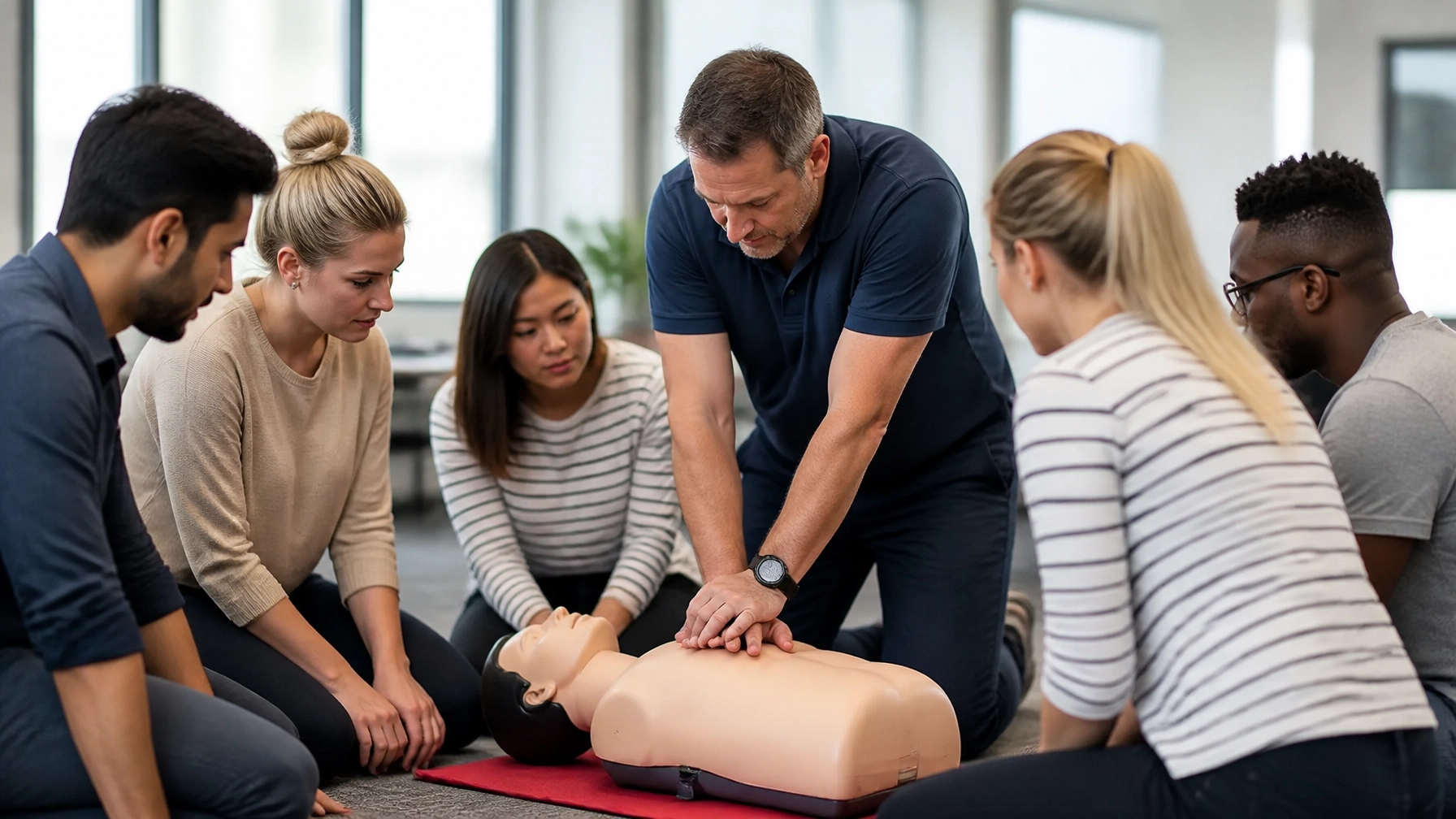
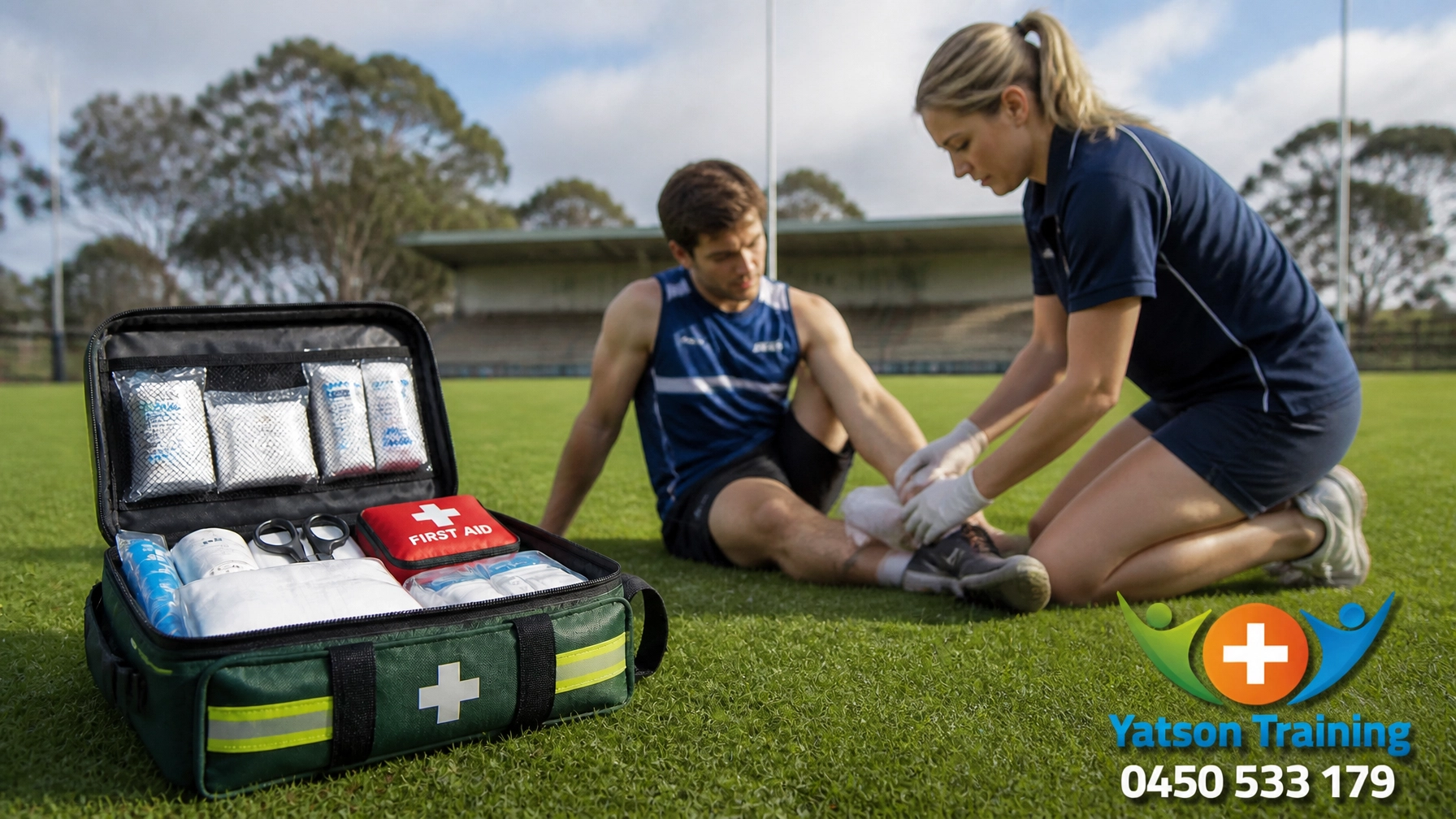
Whether you are cheering from the sidelines of the Lavington Sports Ground or coaching a netball team in Wodonga, you know that local sport is the heartbeat of our community. But with the thrill of the game comes the reality of physical contact and the occasional injury. Being prepared isn't just about having a few Band-Aids in a dusty bag; it is about having the confidence to act when the pressure is on.
At Yatson Training, we specialise in making sure our local clubs are ready for anything. With Jackie Hislop, our lead trainer and a Registered Nurse, bringing her years of emergency clinical experience to the table, we provide more than just a certificate. We provide the peace of mind that your players are in safe hands.
What is First Aid for Sports Clubs all about?
First aid for sports clubs is the immediate care given to an athlete or spectator who has been injured or becomes ill during training or competition. It is the first line of defence between a minor mishap and a major medical emergency. In a sports setting, first aid focuses on managing acute injuries like sprains, fractures, and concussions, as well as environmental issues like heat stroke during those scorching Albury summers.
The goal is simple: preserve life, prevent the condition from worsening, and promote recovery until professional medical help arrives. For local clubs, this means having trained personnel who have completed their HLTAID011 Provide First Aid and having a plan in place that everyone understands.

Common Sports Injuries on the Field
Every sport has its risks. Whether it is a "corkie" on the footy field or a rolled ankle on the netball court, knowing what to look for is half the battle.
- Sprains and Strains: These occur when ligaments or muscles are overstretched. They are the bread and butter of sports injuries.
- Concussions: A traumatic brain injury that must be taken seriously. If you suspect a concussion, the rule is: "If in doubt, sit them out."
- Fractures and Dislocations: These are serious injuries that require immobilisation and urgent medical attention.
- Heat Exhaustion: Especially common in North East Victoria, heat illness can quickly escalate to a life-threatening emergency.
- Cardiac Arrest: Rare but critical. This is why you must Learn CPR in Albury / Wodonga to ensure your club is prepared for the worst-case scenario.
The Process: Essential First Aid Steps for Clubs
When an injury occurs, follow these steps to ensure the best outcome for the player.
- Check the scene. Ensure it is safe for you to enter the field of play. (Watch out for other players or equipment.)
- Assess the player. Use the DRSABCD action plan. (Check for Danger, Response, Send for help, Airway, Breathing, CPR, and Defibrillation.)
- Call for help. If the injury is serious, telephone triple zero (000) immediately.
- Apply R.I.C.E. For soft tissue injuries, use Rest, Ice, Compression, and Elevation. (Always apply ice indirectly with a towel or sleeve.)
- Immobilise fractures. Use a splint or sling to prevent movement of the injured limb.
- Monitor the casualty. Stay with them until help arrives or they are handed over to a guardian.
- Document the incident. Fill out an injury report form for your club’s records and insurance.

The Importance of Professional Training
While a basic understanding of first aid is better than nothing, professional training is what makes the difference in an emergency. Our Corporate First Aid training is designed to be interactive and practical, moving away from dry, boring lectures.
Jackie Hislop (RN) brings real-world medical knowledge to every session, ensuring that you don't just learn the "what," but also the "why." This expertise is vital for local clubs that need to manage high-risk environments. Whether you need a standard Workplace First Aid certification or a specialised Childcare First Aid course HLTAID012 for your junior teams, we tailor the training to your specific needs.
Symptoms to Watch For
If you are unsure if a player needs professional medical help, look for these "red flag" symptoms:
- Loss of consciousness: Even if it is only for a few seconds.
- Seizures or fitting: Following a head impact or extreme heat.
- Persistent vomiting: Often a sign of a serious concussion.
- Inability to move a limb: Or obvious deformity of a bone.
- Severe chest pain: Or difficulty breathing.
- Confusion or agitation: Changes in personality after a collision.
Keep in Mind: Our Recommendation
We recommend that every local sports club in the Albury-Wodonga region has at least one person per team who is current in their HLTAID011 Provide First Aid qualification. It is also vital to check your first aid kits at the start of every season.
You should also ensure your club has an Automated External Defibrillator (AED) that is accessible and regularly maintained. For more tips on keeping your equipment up to scratch, check out our guide on common mistakes in your first aid kit.

Frequently Asked Questions
How often should sports club volunteers refresh their training?
CPR training should be refreshed every 12 months, while the full first aid qualification (HLTAID011) should be updated every three years.
Does our club need a specific type of first aid kit?
Yes. A sports first aid kit needs to be portable and stocked with extra items like instant ice packs, compression bandages, and wound spray. You can find more details in our first aid ratios guide.
Is first aid training expensive for small clubs?
At Yatson Training, we offer competitive rates for small groups and clubs. Investing in training now can prevent costly insurance issues and, more importantly, save a life on the field.
Why choose Yatson Training over a national provider?
We are locals. We know the Albury-Wodonga community, and we provide hands-on, face-to-face training that actually sticks. We don't just tick boxes; we build skills.
Contact Us Today
Don’t wait for an accident to happen before you decide to get trained. Keep your players, coaches, and spectators safe with professional, interactive training from Yatson Training.
For all your First Aid training needs in Albury, Wodonga, and the surrounding areas, click here to call us or dial 0450 533 179.
Visit us at yatsontraining.com.au to book your next session.
Follow us for more tips and updates:
#FirstAidTraining #AlburyWodonga #SportsSafety #LearnCPR #WodongaSport #HLTAID011 #WorkplaceSafety #YatsonTraining
{“@type”:”BlogPosting”,”image”:”https://cdn.marblism.com/PKt259Vxzbl.webp”,”author”:{“name”:”Penny”,”@type”:”Person”},”@context”:”https://schema.org”,”headline”:”First Aid for Local Sports Clubs: Keeping Your Wodonga Team Safe on the Field”,”publisher”:{“logo”:{“url”:”https://cdn.marblism.com/-8AyRUBMjeY.png”,”@type”:”ImageObject”},”name”:”Yatson Training”,”@type”:”Organization”},”description”:”Ensure your local sports club in Albury or Wodonga is prepared for emergencies. Learn about common sports injuries, essential first aid steps, and the importance of professional HLTAID011 training.”,”datePublished”:”2026-05-22″,”mainEntityOfPage”:{“@id”:”https://yatsontraining.com.au/first-aid-for-local-sports-clubs”,”@type”:”WebPage”}}