
What is First Aid Compliance all about?
First aid compliance is the legal requirement for every Australian workplace to provide adequate equipment, facilities, and trained personnel to ensure the safety of employees and visitors. It is not just about having a green box on the wall; it is a dynamic system governed by the Safe Work Australia Model Code of Practice.
Your compliance status depends on your ability to respond to an emergency (the immediate care provided to an injured person) before professional medical help arrives. Neglecting these requirements can lead to heavy fines, legal liability, and, most importantly, preventable workplace tragedies. At Yatson Training, we specialise in making sure your team is not just compliant on paper, but truly capable in a crisis.
1. Letting Your HLTAID011 Certificates Lapse
One of the most frequent mistakes businesses make is losing track of expiration dates. A Workplace First Aid certification for the unit HLTAID011 Provide First Aid is generally valid for three years. However, once that date passes, your designated first aider is no longer "trained" in the eyes of the law.
- Check your staff records every quarter.
- Book a refresher course at least one month before the expiry date.
- Ensure you have a backup first aider while someone is away or their certificate is being renewed.
Failure to maintain current certifications means your business is failing to meet the minimum safety standards required for your industry.

2. Ignoring the Annual HLTAID009 Provide CPR Requirement
While the full first aid certificate lasts three years, the CPR component, HLTAID009 Provide CPR, requires an annual refresher. Many managers in Albury / Wodonga mistakenly believe that the three-year first aid certificate covers them for the entire duration.
Safe Work Australia and the Australian Resuscitation Council (ARC) recommend that CPR skills be refreshed every 12 months. This is because:
- Skills fade (physical techniques like chest compressions and rescue breathing degrade quickly without practice).
- Guidelines change (new research often leads to updates in compression depth or frequency).
- Compliance requires it (most industry regulators insist on an annual CPR update).
If you haven't booked your team in for their yearly CPR check, click here to schedule a quick, hands-on session with Jackie Hislop.
3. Booking the Wrong Course for Your Industry
Not all first aid courses are created equal. A common compliance error is putting staff through a general course when their specific role requires specialised training.
For example, if you operate a day-care or school in the Albury / Wodonga region, your staff must complete HLTAID012 Childcare First Aid (Provide First Aid in an education and care setting). This course includes specific training for anaphylaxis and asthma management, which are critical in a childcare environment.
Choosing a generic HLTAID011 Provide First Aid course when your industry specifically mandates HLTAID012 leaves you legally vulnerable and your staff unprepared for pediatric emergencies.
4. Inaccurate First Aider Ratios
How many first aiders do you actually need? Compliance is not a "one size fits all" rule. Your ratio of trained staff to employees depends on the risk level of your workplace.
- Low-risk workplaces (like offices or retail shops) generally require 1 first aider for every 50 workers.
- High-risk workplaces (like construction sites or manufacturing plants) require 1 first aider for every 25 workers.
- Remote locations require even higher ratios and specialised training.
If your designated first aider is on annual leave or sick, do you have a qualified replacement on-site? If the answer is no, you are non-compliant. We offer flexible Corporate First Aid training to ensure you always have enough coverage across all shifts.

5. Failing to Maintain First Aid Kits and Equipment
A first aid kit is only useful if it is stocked with in-date supplies. Many businesses buy a kit and never look at it again until an accident happens. Common kit mistakes include:
- Expired items (sterile wipes dry out, and saline solution expires).
- Missing essentials (bandages and gloves used for minor cuts that were never replaced).
- Poor accessibility (kits locked in a manager’s office or hidden behind stock).
Apply a monthly checklist to your kits. Restock immediately after use. Ensure there is clear signage (a white cross on a green background) indicating the kit's location.
6. Skipping the First Aid Risk Assessment
You cannot be compliant if you haven't identified the specific risks in your workplace. A risk assessment involves walking through your site and identifying potential hazards (e.g., heavy machinery, chemicals, or trip hazards).
Safe Work Australia expects you to tailor your first aid provisions based on these risks. If you work with chemicals, you may need a specialized shower or eye-wash station. If you work in a high-stress environment, an Automated External Defibrillator (AED) is a must. At Yatson Training, led by Jackie Hislop, a Registered Nurse (RN), we help you understand these nuances during our training sessions.

7. Choosing "Tick-Box" Training Over Quality Instruction
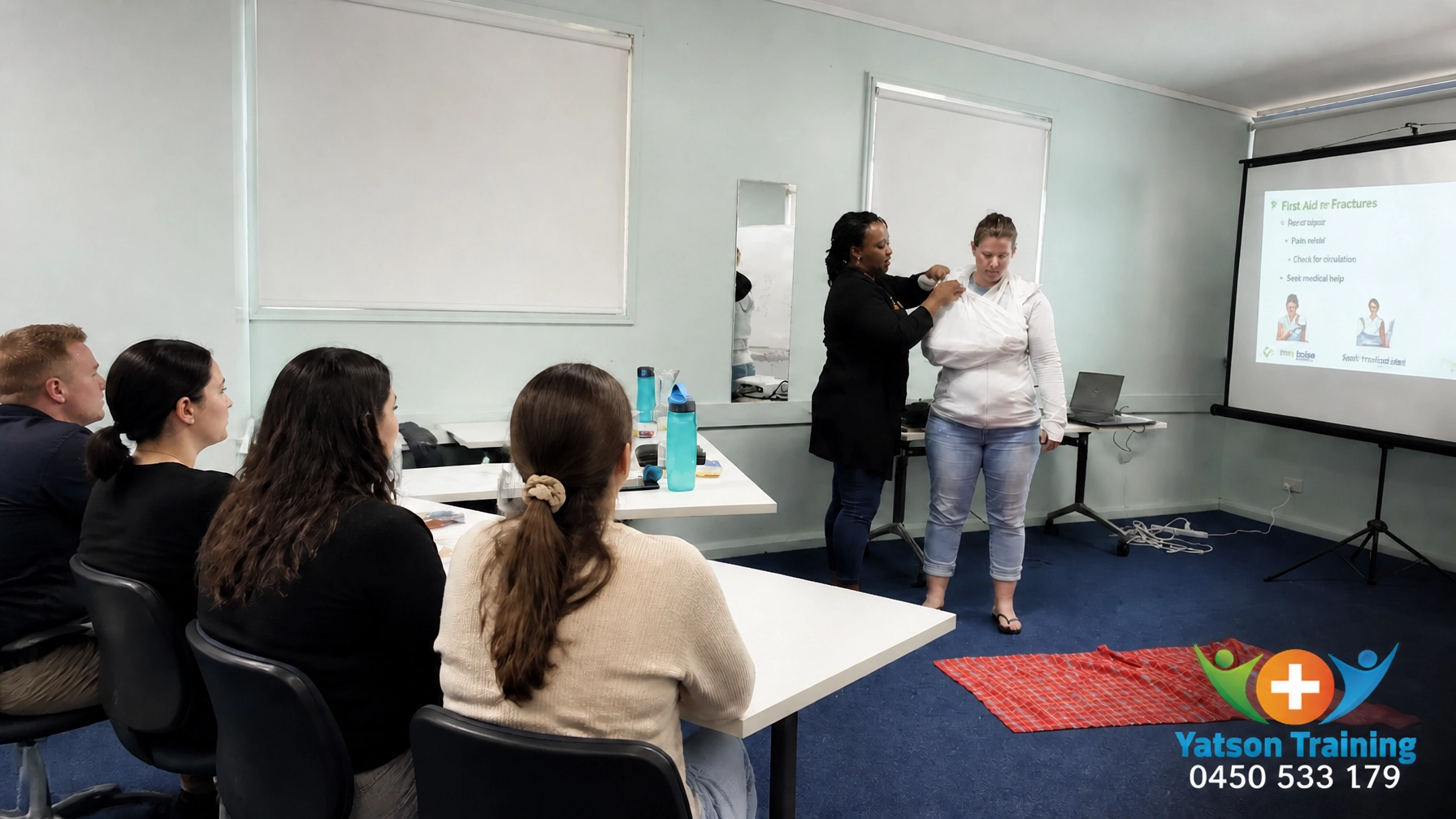
The biggest mistake is treating first aid training as a boring, mandatory chore. When training is dry and non-interactive, staff don't retain the information. In a real emergency, they may freeze because they didn't get enough "hands-on" experience during their course.
Yatson Training changes that. Our courses are:
- Interactive (you will actually practice on manikins and use real equipment).
- Engaging (Jackie Hislop brings her real-world nursing experience to every class).
- Reliable (we ensure you meet and exceed all compliance requirements).
Don't settle for a certificate that was earned by just watching a video. Ensure your team has the confidence to save a life.
Our recommendation
Keep a centralized digital register of all staff certifications and set automated reminders for 11 months (for CPR) and 34 months (for First Aid). This proactive approach prevents compliance gaps and ensures you never have to scramble for a last-minute booking. For local Albury businesses, scheduling a group session on-site is the most cost-effective way to get everyone sorted at once.

Frequently Asked Questions
Is HLTAID011 the standard first aid course for most workers?
Yes, HLTAID011 Provide First Aid is the standard unit of competency required by most Australian workplaces. It includes the content of HLTAID009 (CPR) and HLTAID010 (Basic Emergency Life Support).
How often do I need to refresh my first aid training?
The full certification (HLTAID011) should be renewed every three years. However, the CPR component (HLTAID009 Provide CPR) must be refreshed every 12 months to maintain compliance.
Can Yatson Training come to our office in Wodonga?
Absolutely. We provide Corporate First Aid training on-site for businesses throughout the Albury and Wodonga area, making it easy and convenient for your entire team.
Why should we choose a Registered Nurse for our training?
Having a Registered Nurse like Jackie Hislop as your lead trainer means you get clinical insights and real-world stories that a standard instructor might lack. This makes the training more relatable and easier to remember.
Ready to get your workplace compliant?
Don't wait for an audit or an accident. Telephone Yatson Training today on 0450 533 179 or visit yatsontraining.com.au/courses to book your next session. We make First Aid training professional, reliable, and enjoyable.
Follow us for more safety tips:
#FirstAidTraining #AlburyWodonga #WorkplaceSafety #HLTAID011 #CPRRefresher #CorporateTraining #FirstAidCompliance #ChildcareFirstAid #SafetyFirst #YatsonTraining
{“@type”:”BlogPosting”,”image”:”https://cdn.marblism.com/LWVngVD1R_Y.webp”,”author”:{“name”:”Yatson Training”,”@type”:”Organization”},”@context”:”https://schema.org”,”headline”:”7 Mistakes You’re Making with First Aid Compliance—And How Our HLTAID011 Course in Albury Gets You Sorted”,”publisher”:{“logo”:{“url”:”https://cdn.marblism.com/-8AyRUBMjeY.png”,”@type”:”ImageObject”},”name”:”Yatson Training”,”@type”:”Organization”},”articleBody”:”What is First Aid Compliance all about? First aid compliance is the legal requirement for every Australian workplace to provide adequate equipment… 7 Mistakes: 1. Letting Certificates Lapse, 2. Ignoring Annual CPR, 3. Wrong Course for Industry, 4. Inaccurate Ratios, 5. Poor Kit Maintenance, 6. Skipping Risk Assessments, 7. Tick-Box Training.”,”description”:”Learn the most common workplace first aid compliance mistakes and how to fix them with HLTAID011 training in Albury Wodonga. Expert advice from Registered Nurse Jackie Hislop.”,”datePublished”:”2026-05-29″,”mainEntityOfPage”:{“@id”:”https://yatsontraining.com.au/7-mistakes-first-aid-compliance-albury”,”@type”:”WebPage”}}