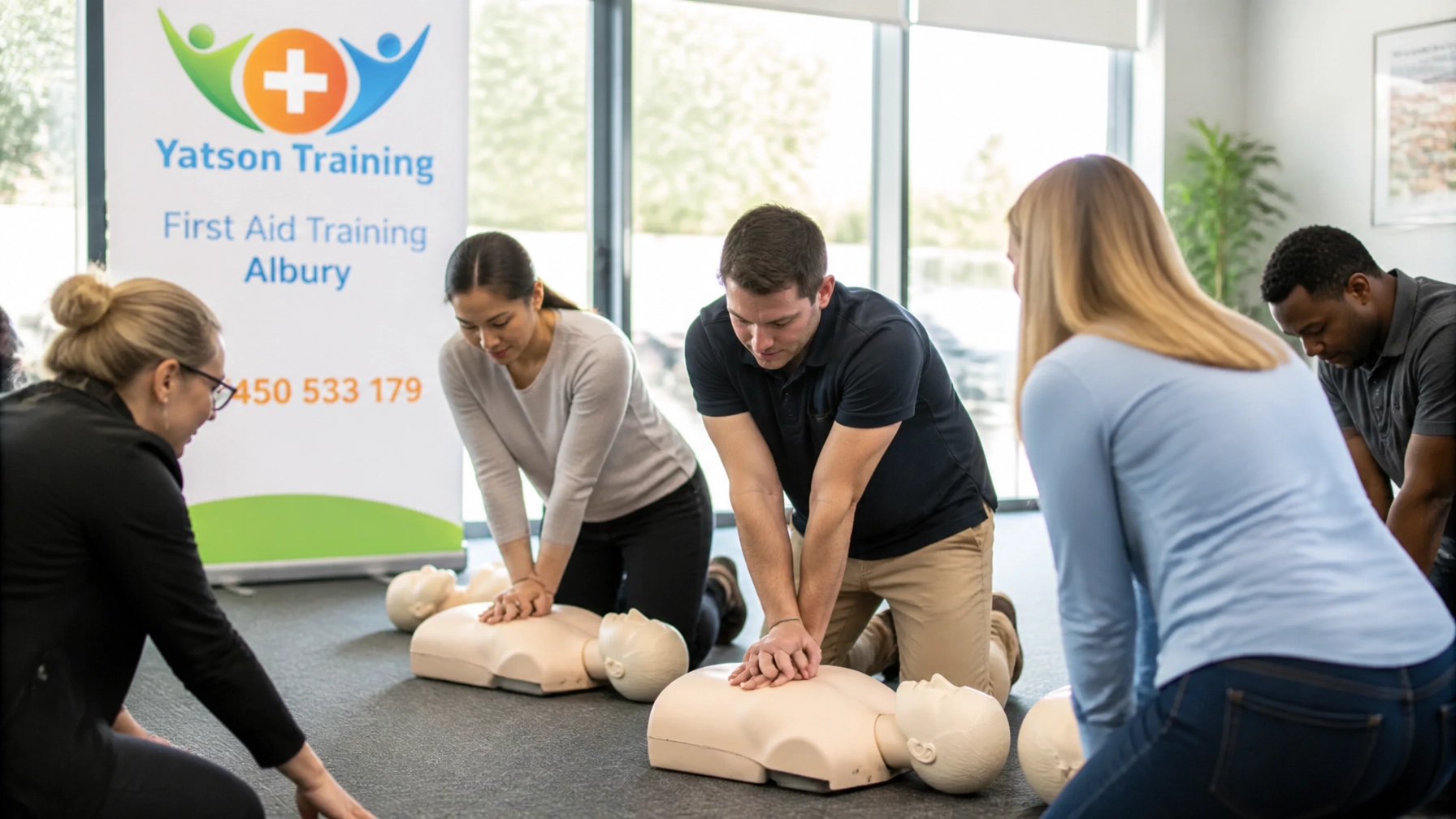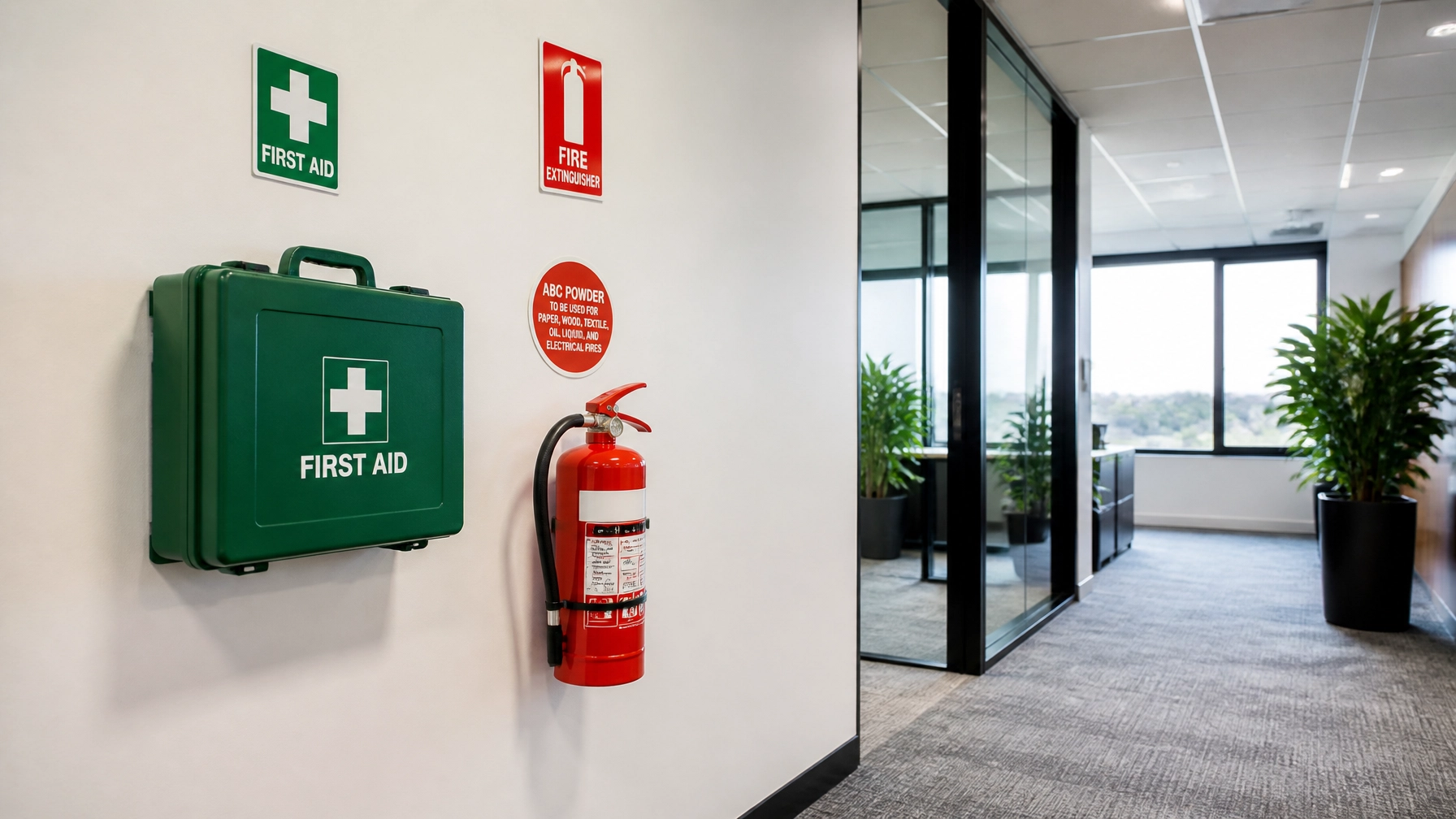
Ensuring the safety of your team is a primary responsibility for any business owner in Albury / Wodonga. However, simply having a green box on the wall and a designated "first aid person" doesn't necessarily mean you are compliant or prepared for a real emergency. At Yatson Training, we see many businesses making the same errors that could lead to delayed response times, worsened injuries, or even legal penalties.
What is Workplace First Aid all about?
Workplace first aid refers to the immediate care provided to an ill or injured person until professional medical help arrives. It is a critical component of your Workplace Health and Safety (WHS) obligations. The goal is to preserve life, prevent the condition from worsening, and promote recovery. In a corporate environment, this involves having the right equipment (first aid kits and AEDs), appropriate facilities (first aid rooms if required), and, most importantly, staff with current HLTAID011 Provide First Aid certification.
1. The "Set and Forget" Kit Mistake
One of the most frequent mistakes we see during our Corporate First Aid training sessions is the discovery of expired items in office first aid kits. Many businesses buy a kit and never open it until an accident happens.
The Problem:
- Adhesive bandages lose their stickiness.
- Antiseptic wipes dry out and become useless.
- Saline solution (eye wash) can expire and harbor bacteria.
- The kit is missing items used in a previous incident and never replaced.
How to Fix It:
- Assign a dedicated First Aid Officer to audit kits monthly.
- Check expiry dates on all sterile items.
- Restock immediately after use.
- Maintain a checklist inside the kit for easy tracking.

2. The Training Ratio Gap
Having one person trained in HLTAID011 Provide First Aid might seem sufficient, but what happens if that person is the one who gets injured? Or what if they are on annual leave, sick, or working at a different site?
The Problem:
Under the Safe Work Australia Code of Practice, you must ensure an adequate number of workers are trained. Relying on a single point of failure leaves your remaining staff vulnerable and your business non-compliant.
How to Fix It:
- Calculate your staff ratios based on your risk level (low risk typically requires 1 first aider for every 50 workers; high risk requires 1 for every 25).
- Ensure coverage for all shifts, including night shifts and weekend work.
- Train backup personnel to cover for leave or travel.
- Call Yatson Training on 0450 533 179 to book group training for your entire team.
3. Relying on Outdated Skills
First aid guidelines change as medical research evolves. If your team's last training was five years ago, they are likely using techniques that are no longer recommended. Furthermore, certifications eventually expire.
The Problem:
- CPR skills degrade rapidly without practice.
- The Australian Resuscitation Council (ARC) updates its guidelines periodically.
- Legal compliance requires a refresh of the CPR component every 12 months.
How to Fix It:
- Schedule a yearly Learn CPR in Albury / Wodonga session for your staff.
- Ensure the full Workplace First Aid certification is renewed every three years.
- Keep a central register of all staff certificates and set calendar reminders for expiry dates.
4. Missing the Specific Risk Assessment
A generic first aid kit designed for a quiet office is completely inadequate for a construction site or a chemical laboratory. Many businesses fail to tailor their first aid provisions to the actual hazards present in their specific workplace.
The Problem:
- No hydrogel or burn treatments in a kitchen environment.
- No eye-wash stations where chemicals are handled.
- No heavy-duty dressings for workshops using sharp machinery.
How to Fix It:
- Conduct a thorough first aid risk assessment (identifying potential injuries based on your daily tasks).
- Consult with your staff about the hazards they face.
- Customise your kits to include specific items for burns, poisons, or eye injuries.
- If you work in childcare, ensure staff have completed the Childcare First Aid course HLTAID012, which includes asthma and anaphylaxis management.

5. The Invisible First Aider
In a crisis, every second counts. If a staff member collapses and nobody knows where the first aid kit is or who the first aider is, valuable time is lost.
The Problem:
- First aid kits are hidden in cupboards or behind stacked boxes.
- Signage is outdated or non-existent.
- New employees are not briefed on emergency procedures during induction.
How to Fix It:
- Install clear, standardized green and white signage above all first aid kits and AEDs.
- Display a list of qualified first aiders and their contact details in prominent areas like the staff room and near exits.
- Include first aid information in every new employee's induction pack.
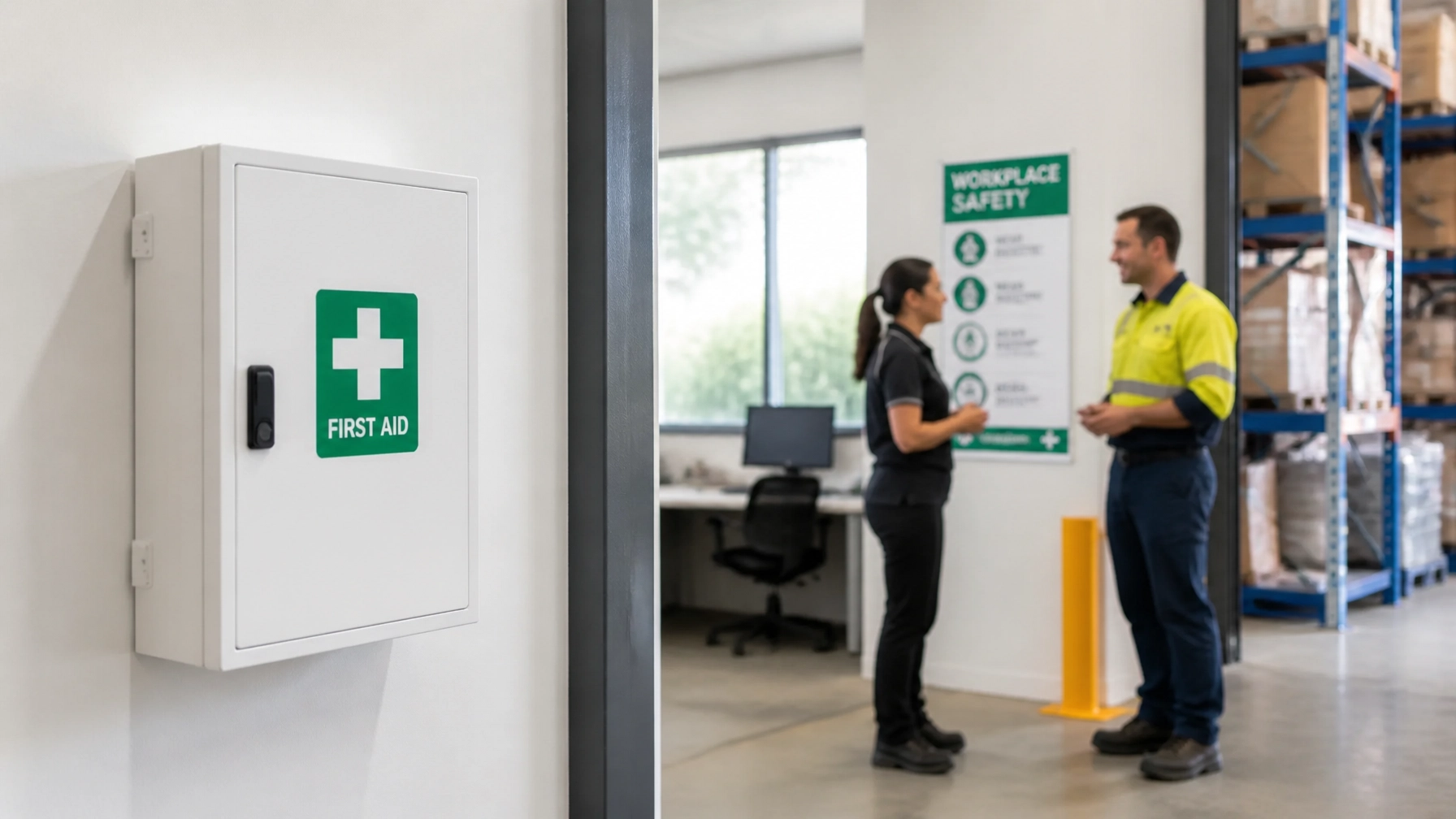
- Ensure the first aid kit is easily accessible (not locked away) and located near high-risk areas.
6. The "Move Them Now" Impulse
When someone falls or is involved in a collision, the natural instinct for many untrained people is to help them up or move them to a "more comfortable" spot. This is a dangerous mistake.
The Problem:
- Moving a casualty with a suspected spinal or head injury can lead to permanent paralysis or death.
- Moving someone who is in shock can cause a sudden drop in blood pressure.
How to Fix It:
- Train your staff to follow the DRSABCD action plan (Danger, Response, Send for help, Airway, Breathing, CPR, Defibrillation).
- Do not move an injured person unless they are in immediate danger (e.g., from fire or rising water).
- Stabilise the head and neck if a fall from height has occurred.
- Reassure the casualty and keep them still until professional paramedics arrive.
7. Failing to Record the Incident
Treating a minor cut or a dizzy spell and then returning to work without documentation is a common oversight. However, failing to record first aid treatments is a breach of safety protocols.
The Problem:
- Without records, you cannot identify patterns of injury that might suggest a larger safety issue.
- If a minor injury later becomes infected or worsens, you have no proof of the initial treatment provided.
- Insurance claims can be complicated by a lack of documentation.
How to Fix It:
- Keep an incident report book or digital form near every first aid kit.
- Record the date, time, name of the casualty, nature of the injury, and the treatment provided.
- Review these records monthly to identify hazards that need addressing.

Our Recommendation
At Yatson Training, we recommend a proactive approach to workplace safety. Don't wait for an accident to happen before you check your compliance. Our lead trainer, Jackie Hislop, is a Registered Nurse with years of clinical experience, ensuring that your training is not only compliant but also practical and engaging.
Checklist for a Safer Workplace:
- Audit your kits today and discard anything expired.
- Identify who in your team needs a refresher for their HLTAID011 Provide First Aid.
- Verify that your AED battery is charged and pads are in-date.
- Call us at Yatson Training to discuss a tailored training package for your business.
We provide flexible, hands-on training for corporate clients and small groups across the Albury / Wodonga region. We make sure your team leaves with the confidence to act in a real-life emergency.
For all your First Aid training needs, click here to call Yatson Training on 0450 533 179.
Frequently Asked Questions
Why is HLTAID011 the standard for workplaces?
HLTAID011 Provide First Aid is the nationally recognised unit of competency required by most Australian workplaces. it covers a broad range of emergencies, including trauma, medical conditions, and CPR.
How often do we need to refresh our training?
The Code of Practice recommends that First Aid qualifications be renewed every three years. However, the CPR component should be refreshed every 12 months to maintain high-quality life-saving skills.
Can you come to our office for training?
Yes! Yatson Training specializes in Corporate First Aid training. We can bring our equipment to your site in Albury / Wodonga to minimize disruption to your workday.
What is the difference between HLTAID011 and HLTAID012?
While HLTAID011 is the general workplace standard, Childcare First Aid course HLTAID012 is specifically designed for educators and support staff in the childcare and school sectors, focusing on paediatric emergencies.
Contact Yatson Training today:
Telephone: 0450 533 179
Website: yatsontraining.com.au
Follow us for more safety tips:
#FirstAidTraining #AlburyWodonga #WorkplaceSafety #HLTAID011 #LearnCPR #CorporateTraining #SafetyFirst #FirstAidMistakes #WHSCompliance #JackieHislop
{“@type”:”BlogPosting”,”image”:”https://cdn.marblism.com/RPujUxJx_Ps.webp”,”author”:{“name”:”Yatson Training”,”@type”:”Organization”},”@context”:”https://schema.org”,”headline”:”7 Mistakes You’re Making with Workplace First Aid (and How to Fix Them)”,”publisher”:{“logo”:{“url”:”https://cdn.marblism.com/-8AyRUBMjeY.png”,”@type”:”ImageObject”},”name”:”Yatson Training”,”@type”:”Organization”},”articleBody”:”Ensuring the safety of your team is a primary responsibility for any business owner in Albury / Wodonga. However, simply having a green box on the wall and a designated ‘first aid person’ doesn’t necessarily mean you are compliant or prepared for a real emergency…”,”description”:”Discover common workplace first aid mistakes including expired kits, inadequate training ratios, and outdated certifications like HLTAID011. Learn how to stay compliant in Albury / Wodonga.”,”datePublished”:”2026-06-05″,”mainEntityOfPage”:{“@id”:”https://yatsontraining.com.au/7-mistakes-youre-making-with-workplace-first-aid”,”@type”:”WebPage”}}