
Maintaining a safe environment is a core responsibility for every business owner and manager in the Albury / Wodonga region. Whether you operate a high-risk industrial site or a low-risk corporate office, emergencies can occur without warning. Having staff members who possess life-saving skills is not just a legal requirement; it is a moral imperative.
The HLTAID011 Provide First Aid course is the industry standard for workplace first aid in Australia. It equips you with the knowledge to handle everything from minor cuts to life-threatening cardiac arrests. By implementing the right strategies, you can significantly reduce the impact of an injury and potentially save a colleague's life.
What is HLTAID011 all about?
HLTAID011 Provide First Aid (previously known as Level 2 First Aid) is a nationally accredited training unit that provides the skills and knowledge required to provide a first aid response to a casualty. It is the baseline qualification recommended by Safe Work Australia for designated first aiders in most Australian workplaces.
This course covers the recognition of emergencies, the application of CPR (HLTAID009), the use of an Automated External Defibrillator (AED), and the management of various medical conditions and injuries. It is designed to bridge the gap between the moment an incident occurs and the arrival of professional medical help (such as paramedics or a Registered Nurse). At Yatson Training, we specialise in delivering this Corporate First Aid training in a way that is hands-on and engaging, ensuring your team is truly prepared for the physical realities of an emergency.

1. Implement the DRS ABCD Action Plan
The first and most critical tip for any workplace emergency is to follow the DRS ABCD action plan. This is a systematic approach used to assess a casualty and determine the necessary life-saving steps.
- D – Danger: Check the area for any hazards to yourself, bystanders, or the casualty. Do not become a second casualty. (Hazards might include live wires, traffic, or chemical spills).
- R – Response: Check for a response by talking to the casualty and squeezing their shoulders. Ask, "Can you hear me?" or "Open your eyes."
- S – Send for help: If there is no response, call Triple Zero (000) immediately. Use a mobile phone on speaker so your hands remain free.
- A – Airway: Check if the airway is clear and open. If the casualty is unconscious and breathing normally, place them in the recovery position (on their side).
- B – Breathing: Look, listen, and feel for normal breathing. If they are not breathing normally, you must act immediately.
- C – CPR: Start cardiopulmonary resuscitation.
- D – Defibrillation: Apply an AED as soon as one is available.
By memorising this sequence, you ensure that no vital steps are missed during the high-pressure environment of a workplace accident.
2. Execute High-Quality CPR and AED Use
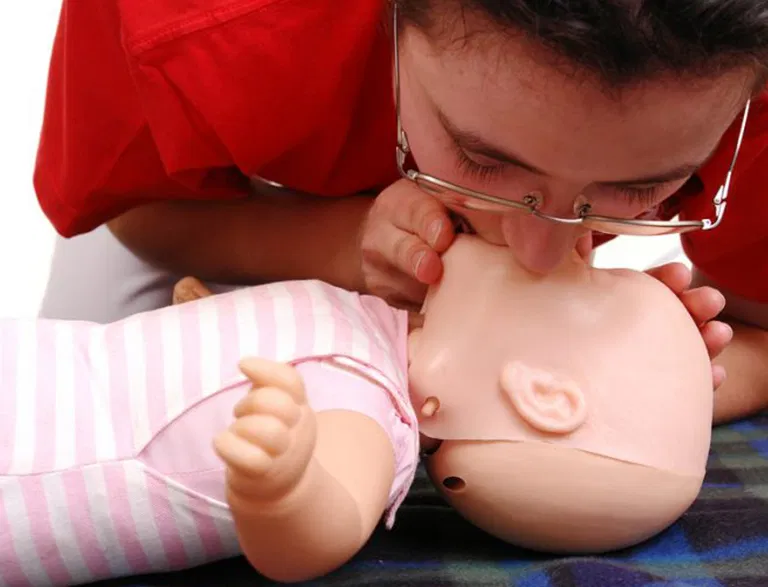
When someone suffers a cardiac arrest, their heart stops pumping blood to the brain and other vital organs. CPR (Cardiopulmonary Resuscitation) acts as a manual pump to keep oxygenated blood moving.
Follow these steps for effective CPR on an adult:
- Place the heel of one hand in the centre of the chest and the other hand on top.
- Compress the chest at a depth of about one-third of the chest depth (roughly 5-6 cm).
- Maintain a steady rhythm of 100–120 compressions per minute (to the beat of "Stayin' Alive").
- Provide 2 rescue breaths for every 30 compressions, if you are trained and willing to do so. (If you are uncomfortable with breaths, perform continuous chest compressions).
If your workplace has an AED, turn it on immediately. These devices provide clear voice prompts (auditory instructions) that guide you through the entire process. Do not be afraid to use it; the machine will only deliver a shock if it detects a specific heart rhythm that requires it.

3. Manage Severe Bleeding and Prevent Shock
Severe bleeding is a common risk in many workplaces, especially those involving machinery or sharp tools. Rapid blood loss can lead to shock (a life-threatening condition where the body’s organs do not get enough blood or oxygen).
To manage severe bleeding:
- Check for any embedded objects (do not remove them; pad around them instead).
- Apply firm, direct pressure to the wound using a sterile dressing or the cleanest cloth available.
- Maintain pressure until the bleeding stops or help arrives.
- Lay the casualty down and raise their legs if possible (to keep blood flowing to the vital organs).
- Keep the casualty warm and calm.
Our HLTAID011 Provide First Aid course at Yatson Training provides ample time for you to practice applying bandages and managing simulated bleeding scenarios, so you don't hesitate when it counts.
4. Respond Fast to Anaphylaxis and Asthma
Many workplaces in the Albury / Wodonga area include staff or visitors with known allergies or respiratory conditions. Knowing how to assist with an EpiPen or an asthma inhaler is a core component of Workplace First Aid certification.
For Anaphylaxis:
- Identify the symptoms (swelling of the tongue/throat, difficulty breathing, or collapse).
- Locate the casualty's adrenaline auto-injector (EpiPen).
- Administer the injection into the outer mid-thigh.
- Call 000 immediately, even if the person seems to improve.
For Asthma:
- Sit the person upright and reassure them.
- Give 4 separate puffs of a blue/grey reliever inhaler (using a spacer if available).
- Wait 4 minutes. If there is no improvement, give another 4 puffs.
- If the person still cannot breathe properly, call 000.

5. Prioritise Accurate Documentation and Incident Reporting
The physical act of providing first aid is only part of the job. As a trained first aider, you must also handle the administrative side of an incident to comply with Workplace Health and Safety (WHS) regulations.
- Request Consent: Always ask the casualty for permission before touching them, provided they are conscious.
- Maintain Privacy: Keep the casualty’s medical information confidential (do not discuss the details with other staff members).
- Record the Details: Fill out an incident report form as soon as possible after the event. Include the time, the symptoms observed, the treatment provided, and the outcome.
- Debrief: Serious incidents can be traumatic. Ensure you and the casualty have access to support or counselling if needed.
Accurate reporting helps your business identify hazards and improve safety protocols to prevent future occurrences. If you need assistance setting up your workplace safety systems, feel free to telephone Yatson Training on 0450 533 179.
Our recommendation for Albury / Wodonga Workplaces
First aid skills are "perishable," meaning they fade over time if not used or practiced. While the HLTAID011 certificate is generally valid for three years, the Australian Resuscitation Council (ARC) recommends refreshing your CPR (HLTAID009) skills every 12 months.
We recommend that businesses in Albury, Wodonga, and surrounding areas like Wagga Wagga or Corowa schedule regular group training sessions. This ensures all staff members are on the same page and confident in using your specific workplace equipment. Yatson Training offers flexible, on-site training that fits your schedule, led by our experienced Registered Nurse, Jackie Hislop.

Frequently Asked Questions (FAQ)
Is HLTAID011 Provide First Aid mandatory for my business?
Under the Work Health and Safety Act, most employers must provide adequate first aid equipment, facilities, and a sufficient number of trained first aiders. For most low-risk workplaces, this means having at least one person with an HLTAID011 qualification for every 50 workers. High-risk workplaces require higher ratios.
How long does the training take?
At Yatson Training, we respect your time. Our courses typically involve a mix of online pre-learning and a focused, hands-on practical session. This approach ensures you get the necessary skills without spending days away from your business.
Why should I choose Yatson Training?
We don't just "tick a box." Our lead trainer, Jackie Hislop, is a Registered Nurse with years of clinical experience. This means you receive training that is grounded in real-world medical practice, making it more engaging and effective for your staff.
What is the difference between HLTAID011 and HLTAID012?
While HLTAID011 is the general workplace standard, HLTAID012 Provide First Aid in an Education and Care Setting is specifically designed for those working in childcare or school environments. We offer both courses to ensure you have the specific certification you need.
Contact Yatson Training Today
Don't wait for an emergency to find out if your team is prepared. Boost your workplace safety instantly by booking a comprehensive training session with the experts.
For all your First Aid Training needs in the Albury / Wodonga region, contact Yatson Training. We provide flexible, high-quality courses for corporate clients and small groups.
- Telephone: 0450 533 179
- Website: yatsontraining.com.au
- Location: Serving Albury, Wodonga, and surrounding regional areas.
Ready to book? Click here to call us now and secure your training dates.
Follow us for more safety tips:

#FirstAidTraining #AlburyWodonga #WorkplaceSafety #HLTAID011 #LearnCPR #YatsonTraining #LifeSavingSkills #CorporateTraining #EmergencyPreparedness #WHSCompliance
{“@type”:”BlogPosting”,”image”:[“https://cdn.marblism.com/jzK7AACkp5I.webp”,”https://cdn.marblism.com/j77d6iu7h4N.webp”,”https://cdn.marblism.com/czC2ccPg3FH.webp”,”https://cdn.marblism.com/N3XRUuZ8tYX.webp”,”https://cdn.marblism.com/otf0Wqy3YeY.webp”,”https://cdn.marblism.com/t9NIb55HpAn.webp”],”author”:{“url”:”https://yatsontraining.com.au”,”name”:”Yatson Training”,”@type”:”Organization”},”@context”:”https://schema.org”,”headline”:”Boost Your Workplace Safety Instantly with These 5 Life-Saving HLTAID011 Tips”,”publisher”:{“logo”:{“url”:”https://cdn.marblism.com/-8AyRUBMjeY.png”,”@type”:”ImageObject”},”name”:”Yatson Training”,”@type”:”Organization”},”articleBody”:”Maintaining a safe environment is a core responsibility for every business owner and manager in the Albury / Wodonga region. The HLTAID011 Provide First Aid course is the industry standard for workplace first aid in Australia. This blog outlines 5 critical tips, including the DRS ABCD action plan, high-quality CPR, managing severe bleeding, responding to anaphylaxis and asthma, and proper documentation. Yatson Training provides professional, hands-on training led by Registered Nurse Jackie Hislop.”,”description”:”Discover 5 essential life-saving tips from the HLTAID011 Provide First Aid course to enhance your workplace safety in Albury / Wodonga. Learn CPR, AED use, and more.”,”datePublished”:”2026-06-07T10:30:00+10:00″}