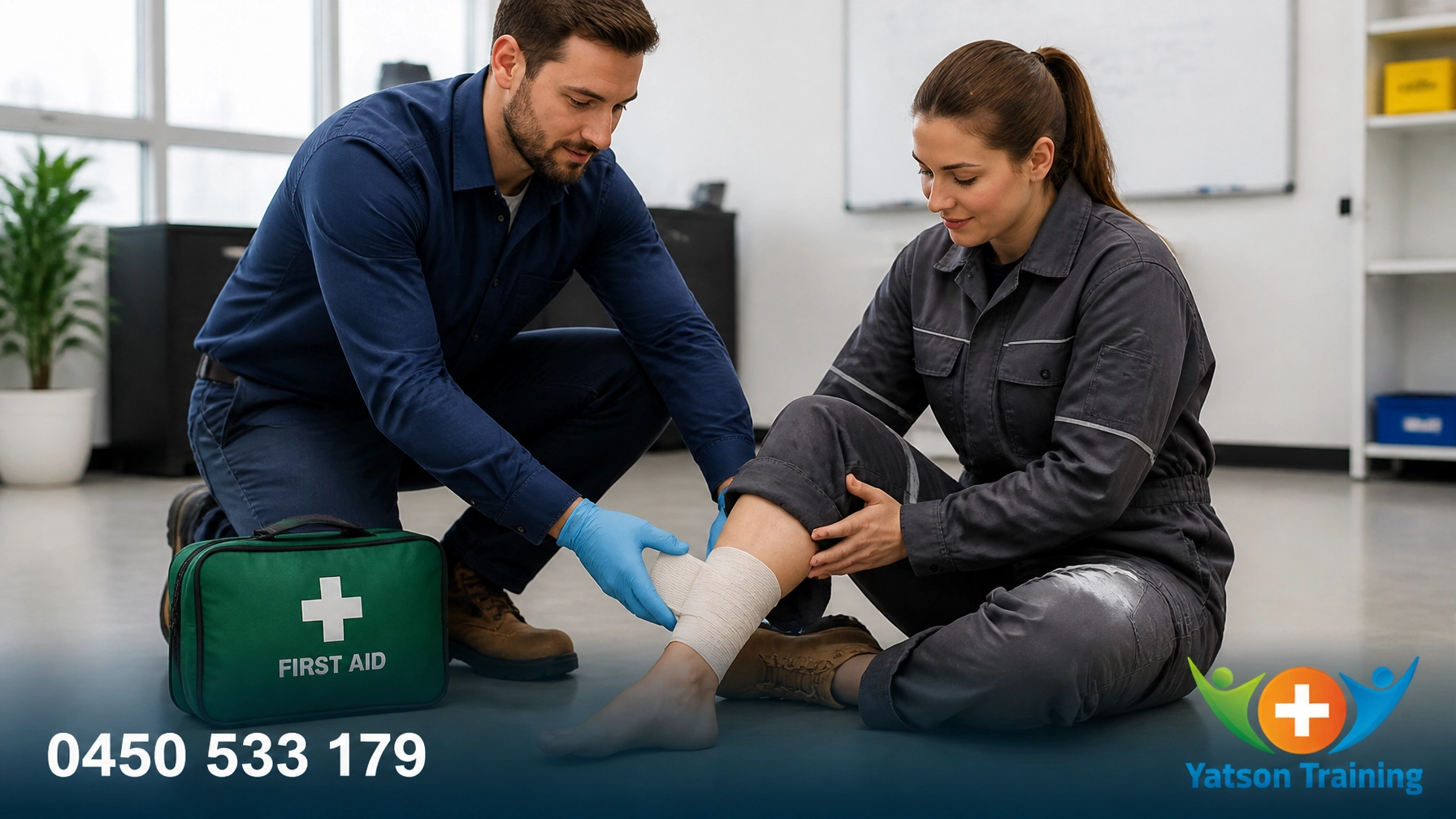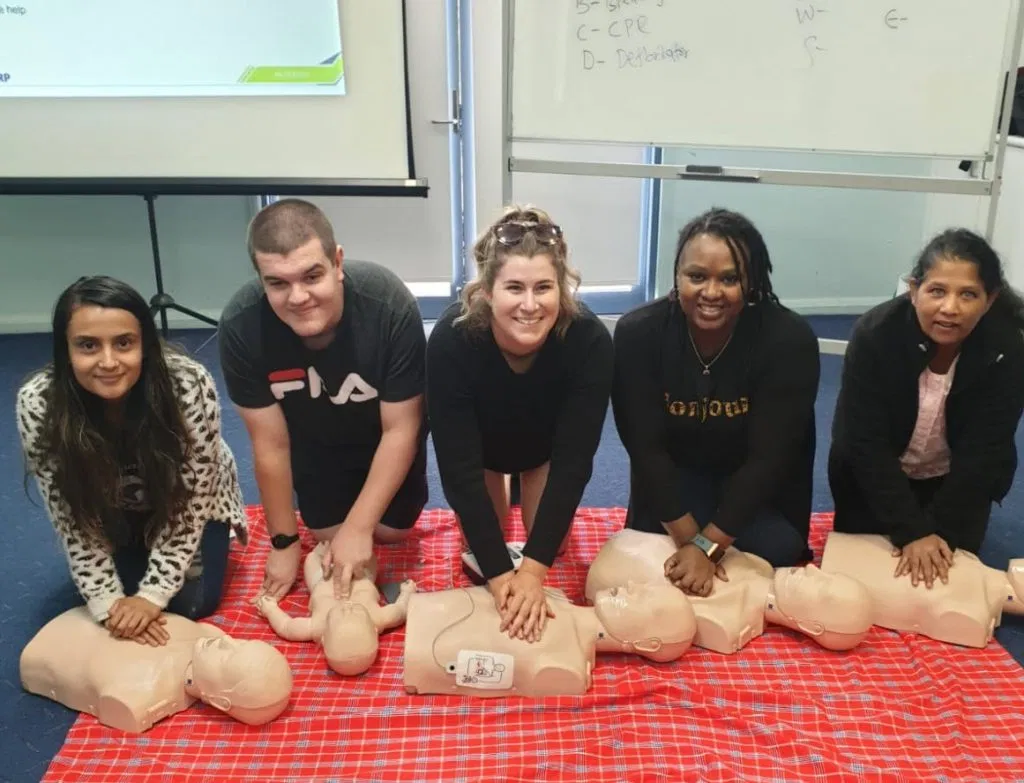

Maintaining a safe workplace is about more than just ticking a box for compliance. In the Albury / Wodonga region, businesses have a legal and moral obligation to ensure their staff can handle an emergency. However, many organisations fall into common traps that leave their teams vulnerable. Whether you are a small local office or a large industrial site, these errors can lead to poor outcomes during a medical crisis.
At Yatson Training, we specialise in Corporate First Aid training that moves beyond dry theory. Led by Jackie Hislop, a Registered Nurse (RN) with years of clinical experience, our courses focus on the practical, life-saving skills you actually need. Identifying and fixing these seven common mistakes will significantly improve your workplace safety culture.
What is Workplace First Aid all about?
Workplace First Aid is the immediate care provided to an ill or injured person until professional medical help (such as paramedics) arrives. It serves as the first line of defence in the workplace "chain of survival." The primary goal is to preserve life, prevent the condition from worsening, and promote recovery.
In a professional setting, this involves having the right equipment (the first aid kit), the right knowledge (trained first aiders), and the right procedures (emergency plans) in place. It is a critical component of your Work Health and Safety (WHS) obligations under the Safe Work Australia Code of Practice.
1. Treating the First Aid Kit as "Set and Forget"
Many businesses buy a first aid kit, hang it on the wall, and never look at it again. Over time, bandages lose their elasticity, antiseptic wipes dry out, and sterile items (those free from bacteria or living organisms) go past their expiry dates.
How to fix it:
- Assign a monitor. Appoint a specific staff member to check the kit every month.
- Check expiry dates. Dispose of and replace any out-of-date items immediately.
- Restock after use. If someone uses a single band-aid, replace it. A partially empty kit is a liability during a major incident.
2. Relying on Untrained or Outdated Staff
Having a first aid kit is useless if no one knows how to use it. A common mistake is having a "designated first aider" whose certification expired three years ago. Skills like CPR (cardiopulmonary resuscitation) are perishable; if you don't practice them, you forget the correct depth and rhythm.
How to fix it:
- Audit your certifications. Ensure your team holds a current HLTAID011 Provide First Aid qualification.
- Schedule regular refreshers. CPR training should be updated every 12 months, even if the full certificate lasts for three years.
- Increase the ratio. Don't just train the bare minimum. Aim to have multiple people trained on every shift to cover leave or sickness.

3. Ignoring Site-Specific Risks
A generic first aid kit from a hardware store might be fine for a small office, but it won't cut it in a commercial kitchen or a workshop. Using a one-size-fits-all approach is a major compliance gap.
How to fix it:
- Conduct a risk assessment. Identify the specific hazards in your workplace (e.g., chemicals, heavy machinery, high-risk allergens).
- Customise your gear. If your team works with chemicals, you need eye-wash stations. If you work with heights, you need trauma dressings.
- Consult the experts. Ask us at Yatson Training to help you identify what specific Workplace First Aid certification your team needs based on your industry.
4. Moving an Injured Person Unnecessarily
When someone falls or is injured, the natural human instinct is to help them up or move them to a chair to make them "comfortable." This is a dangerous mistake, especially if there is a suspected spinal injury (damage to the vertebrae or spinal cord).
How to fix it:
- Follow DRSABCD. Always start with the standard action plan (Danger, Response, Send for help, Airway, Breathing, CPR, Defibrillation).
- Keep them still. Unless there is an immediate danger (like a fire or a collapsing structure), do not move the casualty.
- Wait for pros. Let the paramedics handle the transport. Your job is to keep them stable and calm.
5. Forgetting Personal Protective Equipment (PPE)
In the heat of the moment, first aiders often rush in without putting on gloves. This exposes both the first aider and the casualty to cross-infection (the transfer of harmful microorganisms between people).
How to fix it:
- Prioritise your safety. You cannot help anyone if you become a casualty yourself.
- Keep PPE accessible. Ensure gloves and face shields are stored on top of the first aid kit, not buried at the bottom.
- Use them every time. Even for minor cuts, put on a pair of nitrile gloves (latex-free gloves to avoid allergy issues).

6. Delaying the Call to Triple Zero (000)
Some workplaces try to "manage" an incident internally to avoid "making a scene" or because they aren't sure if it's serious enough. Delaying the call to emergency services can be the difference between life and death.
How to fix it:
- If in doubt, call. It is always better to have an ambulance turned back because it wasn't needed than to call one too late.
- Designate a caller. In your emergency plan, specify who calls 000 while the first aider provides care.
- Provide clear info. Ensure your staff knows the exact address and nearest cross-street of your workplace to tell the operator.
7. Relying on Outdated First Aid Myths
Old habits die hard. We still see people putting butter on burns, leaning their heads back during a nosebleed, or trying to "walk off" a serious sprain. These myths often cause more harm than good.
How to fix it:
- Cool the burn. Use cool running water for at least 20 minutes. Never use ice, butter, or ointments.
- Lean forward. For a nosebleed, sit the person up, lean them slightly forward, and pinch the soft part of the nose.
- Get modern training. The HLTAID011 Provide First Aid course teaches the most current, evidence-based techniques approved by the Australian Resuscitation Council.
Our Recommendation
At Yatson Training, our recommendation is to move beyond the "compliance mindset." Don't just get the certificate because you have to; get it because you want your team to feel confident and capable. We suggest running annual "scenario drills" where staff have to find the kit and respond to a mock injury. This builds the muscle memory required to stay calm when a real emergency strikes.
If you are looking to Learn CPR in Albury / Wodonga, we offer flexible, hands-on sessions that come to you. We make the training interactive and enjoyable, ensuring the information actually sticks.

Keeping Your Workplace Safe and Compliant
Safety is an ongoing process. Regularly reviewing your first aid procedures ensures that your business remains a safe place to work. If you haven't updated your Workplace First Aid certification recently, now is the time to act. Professional training from a Registered Nurse ensures you are getting the highest quality instruction available.
For all your training needs, contact Yatson Training. We provide everything from general first aid to the specialised Childcare First Aid course HLTAID012.
Frequently Asked Questions (FAQ)
How often does my workplace need first aid training?
In Australia, the standard HLTAID011 Provide First Aid certificate is valid for three years. however, the CPR component (which is included in the course) should be refreshed every 12 months to remain compliant with the Code of Practice.
How many first aiders do I need for my office?
As a general rule, you should have one first aider for every 50 workers in a low-risk workplace (like an office) and one for every 25 workers in a high-risk workplace (like a factory or construction site).
Is online first aid training enough?
While theory can be learned online, the practical assessment (performing CPR on a manikin, applying slings, etc.) must be done in person to receive a nationally recognised certificate. Yatson Training provides the hands-on expertise you need.
Can we be sued for giving first aid?
In Australia, "Good Samaritan" laws generally protect individuals who provide first aid in good faith and within the scope of their training. The greater risk is the legal consequence of not providing adequate first aid facilities or trained staff as an employer.
Book Your Training Today
Don't wait for an accident to happen before you realise your team isn't prepared. Secure your workplace safety today with Yatson Training. We offer mobile, onsite training for corporate clients and small groups across the region.
Telephone: 0450 533 179
Website: yatsontraining.com.au
Email: admin@yatsontraining.com.au
Connect with us:
Call us now on 0450 533 179 to book your next First Aid course!
#FirstAidTraining #AlburyWodonga #WorkplaceSafety #HLTAID011 #LearnCPR #CorporateTraining #LifeSavingSkills #YatsonTraining #SafetyFirst
{“@type”:”BlogPosting”,”image”:”https://cdn.marblism.com/i1fhZ32ZVbw.webp”,”author”:{“name”:”Yatson Training”,”@type”:”Organization”},”@context”:”https://schema.org”,”headline”:”7 Mistakes You’re Making with Workplace First Aid (and How to Fix Them)”,”publisher”:{“logo”:{“url”:”https://cdn.marblism.com/-8AyRUBMjeY.png”,”@type”:”ImageObject”},”name”:”Yatson Training”,”@type”:”Organization”},”articleBody”:”Maintaining a safe workplace is about more than just ticking a box for compliance… [Full text of the article]”,”description”:”Learn the 7 most common workplace first aid mistakes and how to fix them to ensure WHS compliance and employee safety. Expert tips from Yatson Training in Albury / Wodonga.”,”datePublished”:”2026-06-20″}