
What is Australian First Aid, CPR, and Workplace Safety all about?
Australian workplace First Aid and CPR are practical systems that help you respond to injury, illness and medical emergencies before professional help arrives. Workplace safety is the wider process of identifying hazards, reducing risks and preparing your team to act safely.
For businesses in Albury–Wodonga, an effective safety plan should include:
- Trained first aiders who are available during all operating hours.
- Accessible first aid kits and emergency equipment.
- Clear procedures for calling Triple Zero (000).
- Current First Aid and CPR qualifications.
- Regular reviews of workplace hazards and emergency procedures.
- Training that reflects your actual work environment.
A certificate alone is not a complete safety system. You also need staff who can apply their skills confidently, equipment that is easy to find and procedures that are understood before an emergency occurs.
Why does First Aid training matter in Albury Wodonga workplaces?
Australian workplaces have duties to provide appropriate first aid equipment, facilities and trained personnel. The exact requirements depend on your workplace hazards, workforce size, location, shift arrangements and industry.
Businesses operating across the border should also check the requirements that apply to their jurisdiction. Albury businesses are generally covered by NSW workplace safety arrangements, while Wodonga businesses are generally covered by Victorian arrangements.
Start by reviewing the Safe Work Australia first aid guidance. Then check the relevant state or territory requirements for your business.
Common workplace risks in the region may include:
- Manual handling injuries.
- Slips, trips and falls.
- Cuts, burns and crush injuries.
- Vehicle and machinery incidents.
- Heat exposure during summer.
- Cold, wet and slippery conditions during winter.
- Asthma, anaphylaxis and other medical emergencies.
- Incidents involving customers, children or members of the public.
Complete a documented risk assessment. Use it to decide how many first aiders you need, where equipment should be located and what additional training your team may require.
What should your workplace First Aid plan include?
A useful workplace plan should be simple enough to follow under pressure. Assign responsibility for maintaining the plan and review it whenever your workplace, staffing or equipment changes.
Include the following:
- First aid officer details: List trained first aiders and their usual work locations.
- Coverage arrangements: Ensure first aid support is available across shifts, breaks, leave periods and off-site activities.
- First aid kit locations: Mark kits clearly and keep them accessible.
- AED location: If you have an automated external defibrillator (AED), display its location and check its condition.
- Emergency access: Record your street address, entry points and instructions for emergency services.
- Incident reporting: Provide a consistent process for recording injuries and first aid responses.
- Post-incident support: Review what happened and support staff who were involved.
Check kit contents regularly. Replace expired, damaged or used items. Include gloves, resuscitation barrier devices, wound dressings, bandages, eye protection and other items relevant to your hazards.
Do not place a kit behind locked doors, inside an overfilled cupboard or in an area that workers cannot reach quickly.

How should you respond to a workplace emergency?
Teach your team the DRSABCD action plan used in Australian First Aid training. Use it as a structured response, but do not place yourself or others at risk.
- D – Danger: Check for hazards. Look for electricity, machinery, traffic, chemicals, fire, broken glass or unstable structures.
- R – Response: Check whether the person responds to your voice or gentle touch.
- S – Send for help: Call Triple Zero (000), or direct a specific person to call. Ask someone to bring the first aid kit and AED.
- A – Airway: Open the airway and check for visible obstructions.
- B – Breathing: Check for normal breathing. Agonal or abnormal breathing is not normal breathing.
- C – CPR: If the person is unresponsive and not breathing normally, start CPR according to your training.
- D – Defibrillation: Apply an AED as soon as it is available. Follow its voice prompts.
When providing CPR, use a firm surface where possible. Follow current guidance from the Australian and New Zealand Committee on Resuscitation (ANZCOR). Continue until the person shows signs of life, a qualified responder takes over, you become exhausted or it is unsafe to continue.
Do not delay calling 000 while searching for a perfect response. Early emergency communication, CPR and defibrillation can form an important part of the chain of survival.
What CPR skills should your team practise?
CPR skills can deteriorate when they are not used. Encourage your designated first aiders to refresh their CPR skills every 12 months, consistent with Australian Resuscitation Council recommendations and workplace expectations.
During training, practise:
- Adult CPR.
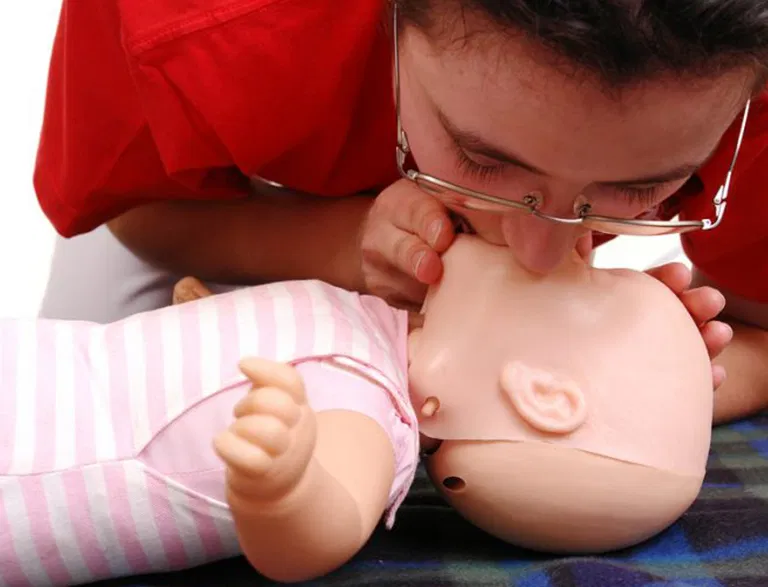
- Infant CPR.
- Rescue breaths and the use of barrier devices.
- AED operation.
- Safe rescuer rotation during CPR.
- Responding to vomiting or regurgitation.
- Choking emergencies.
- Communication with emergency services.
- Incident reporting and handover.
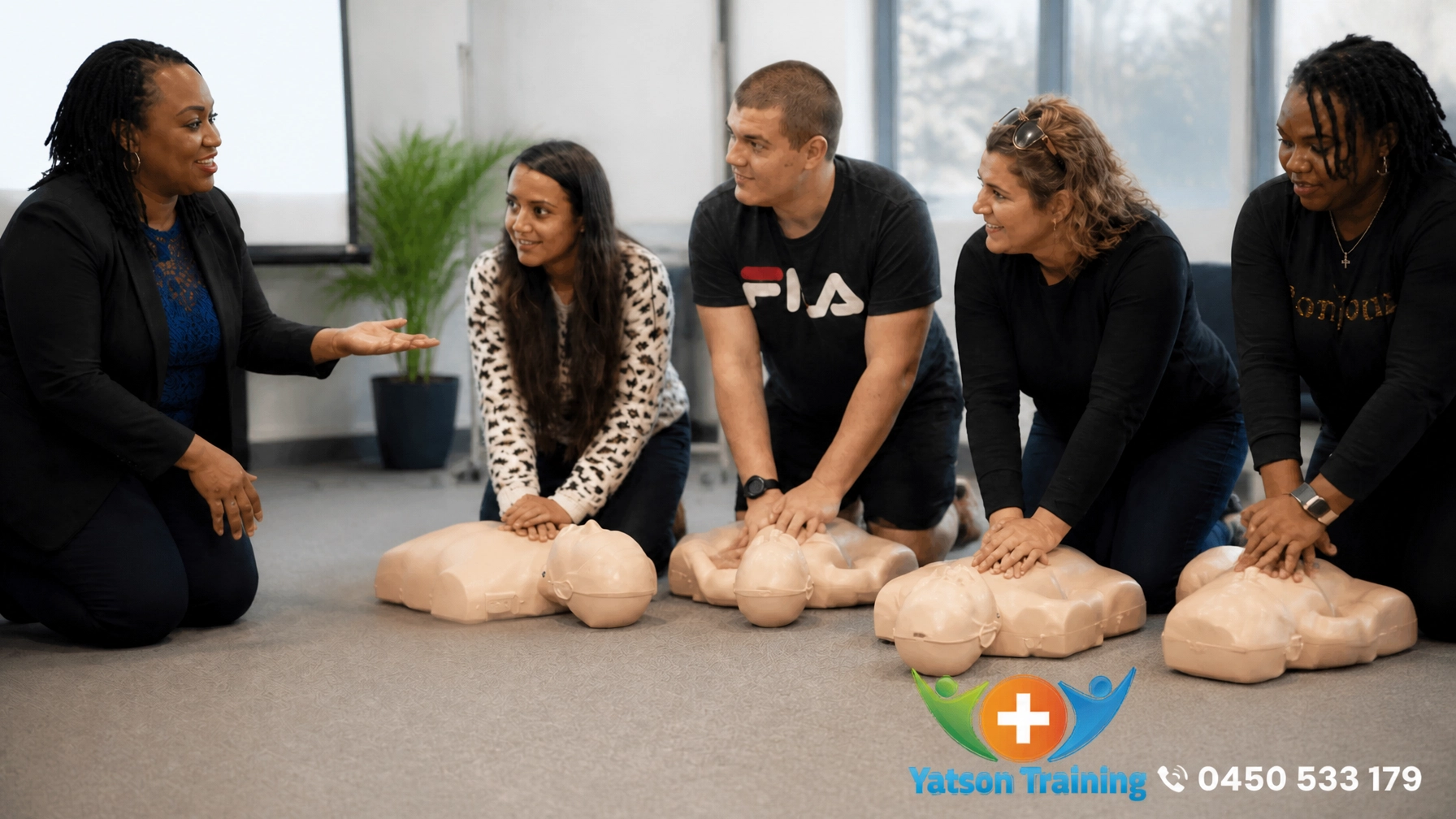
If you want to Learn CPR in Albury Wodonga, choose practical training that allows you to work with appropriate adult and infant manikins. Repetition helps you understand the correct sequence, hand position, compression technique and AED process.
Yatson Training provides the nationally recognised HLTAID009 Provide Cardiopulmonary Resuscitation course, along with workplace-focused First Aid training.
Which qualification suits your workplace?
For many workplaces, HLTAID011 Provide First Aid is the appropriate baseline course. The unit covers responding to emergencies, CPR, AED use, common injuries and illnesses, incident communication and workplace reporting.
You can review the current unit details on training.gov.au. Your organisation should also confirm its specific requirements with its regulator, industry body or workplace safety adviser.
Yatson Training offers HLTAID011 Provide First Aid training for corporate businesses, small groups and individuals. The training is hands-on, interactive and designed to be more useful than a purely theoretical compliance exercise.
Other relevant options may include:
- Workplace First Aid certification: Suitable for employees who may need to provide a first aid response at work.
- Corporate First Aid training: A flexible option for businesses that want training delivered for their team or at their workplace.
- Childcare First Aid course HLTAID012: Designed for people providing First Aid in an education and care setting. Explore the HLTAID012 course information.
- Basic Emergency Life Support: Suitable for workplaces with specific training needs. Review the HLTAID010 course.
Ask your training provider how the course applies to your workplace risks. A construction site, office, warehouse, childcare service and hospitality venue may require different examples and preparation.

How can Albury Wodonga businesses improve daily safety?
Use simple controls consistently. Do not wait until an incident exposes a weakness in your system.
- Check walkways: Remove trip hazards, manage cables and clean spills immediately.
- Improve visibility: Keep emergency exits, first aid kits and AEDs clearly marked.
- Control manual handling: Use mechanical aids where appropriate and train workers in safe lifting procedures.
- Review seasonal risks: Manage wet floors, frost, heat, dehydration and outdoor work conditions.
- Keep emergency contacts current: Display 000 instructions and your site address.
- Control access: Make sure contractors and visitors understand emergency procedures.
- Use PPE: Provide gloves, eye protection and other equipment relevant to the task.
- Encourage early reporting: Ask workers to report hazards, near misses and symptoms before they become more serious.
- Practise scenarios: Run short drills for collapse, severe bleeding, burns, anaphylaxis or machinery incidents.
Your team should know who is responsible for stopping unsafe work, contacting emergency services and meeting an ambulance at the correct entrance.
Our recommendation: combine compliance with practical confidence
Do not treat First Aid training as a once-only administrative task. Schedule CPR refreshers, track certificate expiry dates and review your emergency plan after every significant incident or workplace change.
Choose a provider with experienced trainers and a practical delivery style. Yatson Training’s lead trainer, Jackie Hislop, is a Registered Nurse. The Yatson team supports you from the initial enquiry through to training and certification.
Yatson Training provides professional First Aid training for:
- Corporate clients.
- Small workplace groups.
- Community organisations.
- Childcare and education settings.
- Individuals seeking reliable certification.
Training can be arranged to suit your business requirements. The focus is on relevant scenarios, active participation and skills that you can apply at work or home.

Book First Aid training in Albury Wodonga
If your workplace needs First Aid Training Albury Wodonga, contact Yatson Training to discuss your team, industry and preferred delivery format. We can help you identify a suitable course and plan your training requirements.
Visit yatsontraining.com.au or telephone Yatson Training on 0450 533 179 for all your First Aid training needs.
You can also follow Yatson Training for safety information and course updates on Facebook, Instagram and YouTube.
Frequently asked questions
Is HLTAID011 Provide First Aid suitable for every workplace?
HLTAID011 is a widely used workplace First Aid qualification, but your required level of training depends on your risks, staffing and industry. Review your risk assessment and confirm any sector-specific requirements.
How often should CPR training be refreshed?
CPR skills should generally be refreshed every 12 months. First Aid qualifications are commonly refreshed every three years, but your workplace, regulator or industry may require a different schedule. Track both dates.
Can Yatson Training deliver Corporate First Aid training for our staff?
Yes. Yatson Training offers flexible, hands-on training for corporate clients, small groups and individuals. Contact the team to discuss on-site or suitable local arrangements.
Is First Aid training a worthwhile business expense?
Yes. Prepared staff, maintained equipment and clear procedures can reduce response delays, support workplace duties and limit the disruption caused by an emergency. Prevention and preparation are usually more cost-effective than waiting for an incident to reveal gaps.
How do I arrange Workplace First Aid certification?
Review the available Yatson Training courses, then telephone 0450 533 179 to discuss your requirements. Yatson Training can support you from your first enquiry through to final certification.
#FirstAidTraining #AlburyWodonga #FirstAidTrainingAlburyWodonga #WorkplaceSafety #CPRTraining #HLTAID011 #LearnCPR #CorporateFirstAidTraining #WorkplaceFirstAid #FirstAidCertification #AustralianFirstAid #BusinessSafety