What are essential CPR skills all about?
Cardiopulmonary resuscitation (CPR) is an emergency response used when a person is unresponsive and not breathing normally. It combines chest compressions with rescue breaths to maintain blood flow and oxygen delivery until professional medical help arrives.
In an Albury Wodonga workplace, CPR may be required after a cardiac arrest, serious electric shock, drowning incident or other medical emergency. Your response in the first few minutes can be critical.
The HLTAID009 Provide CPR unit teaches you how to recognise an emergency, perform CPR, use an automated external defibrillator (AED), and continue assisting until paramedics take over.
This article provides general information only. It does not replace practical training or the instructions of a Triple Zero (000) operator.
1. Recognise when CPR is needed
Start CPR when a person is:
- Unresponsive.
- Not breathing normally.
- Only gasping or making occasional abnormal breaths.
- Not showing normal signs of life.
Do not delay because you are uncertain. Australian Resuscitation Council guidance recommends starting CPR when a person is unresponsive and not breathing normally.
Use the DRSABCD sequence:
- Danger: Check for hazards, including traffic, electricity, fire, chemicals or unsafe machinery.
- Response: Speak loudly and gently tap the person’s shoulders.
- Send for help: Call Triple Zero (000), or direct a specific person to call.
- Airway: Open the airway using a head tilt and chin lift.
- Breathing: Check for normal breathing for no more than 10 seconds.
- CPR: Begin chest compressions if the person is not breathing normally.
- Defibrillation: Attach an AED as soon as one is available.
Ask a colleague to bring the workplace AED and first aid kit. Give clear instructions, such as, “You in the blue shirt, call 000. You, bring the AED.”
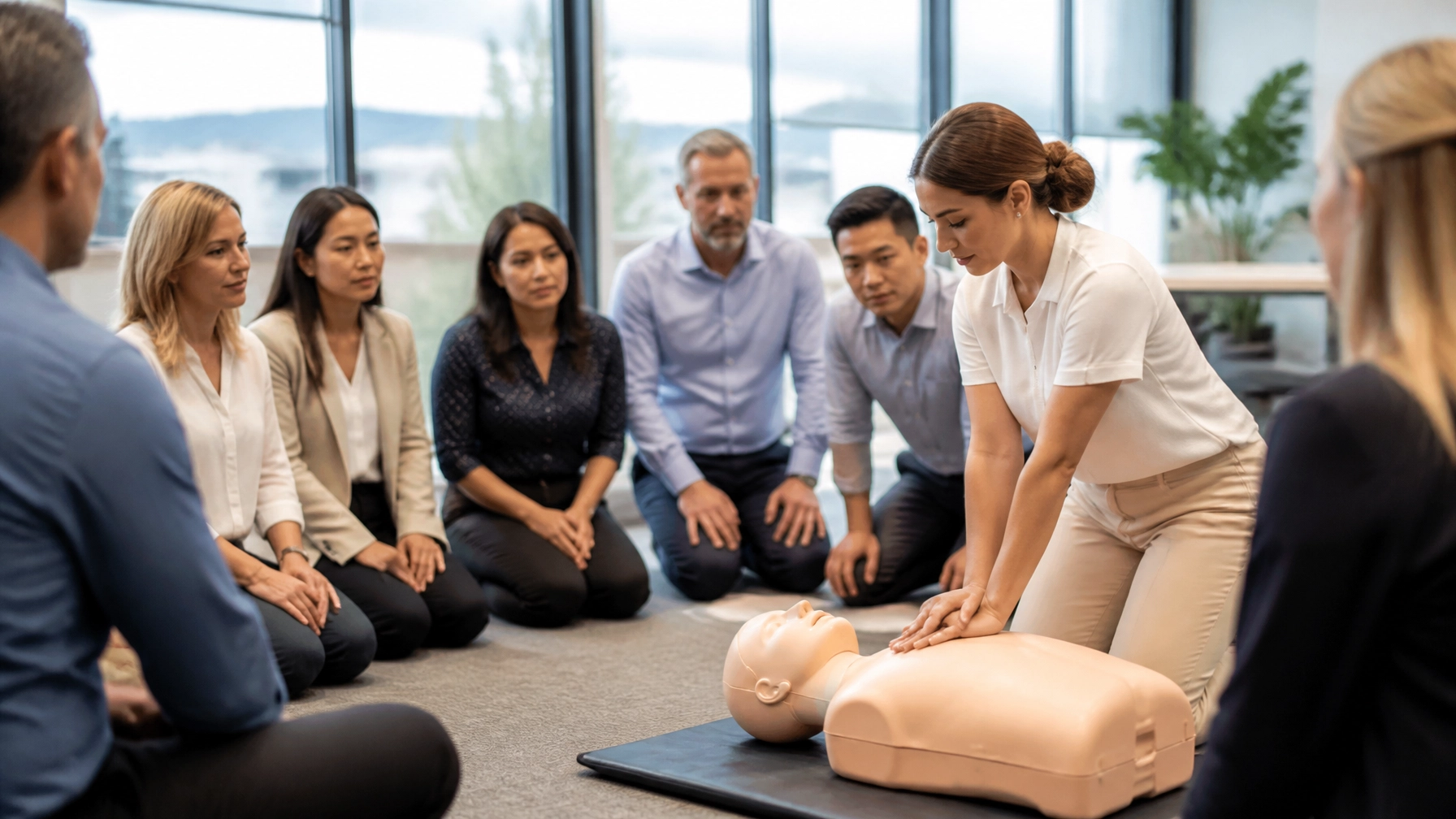
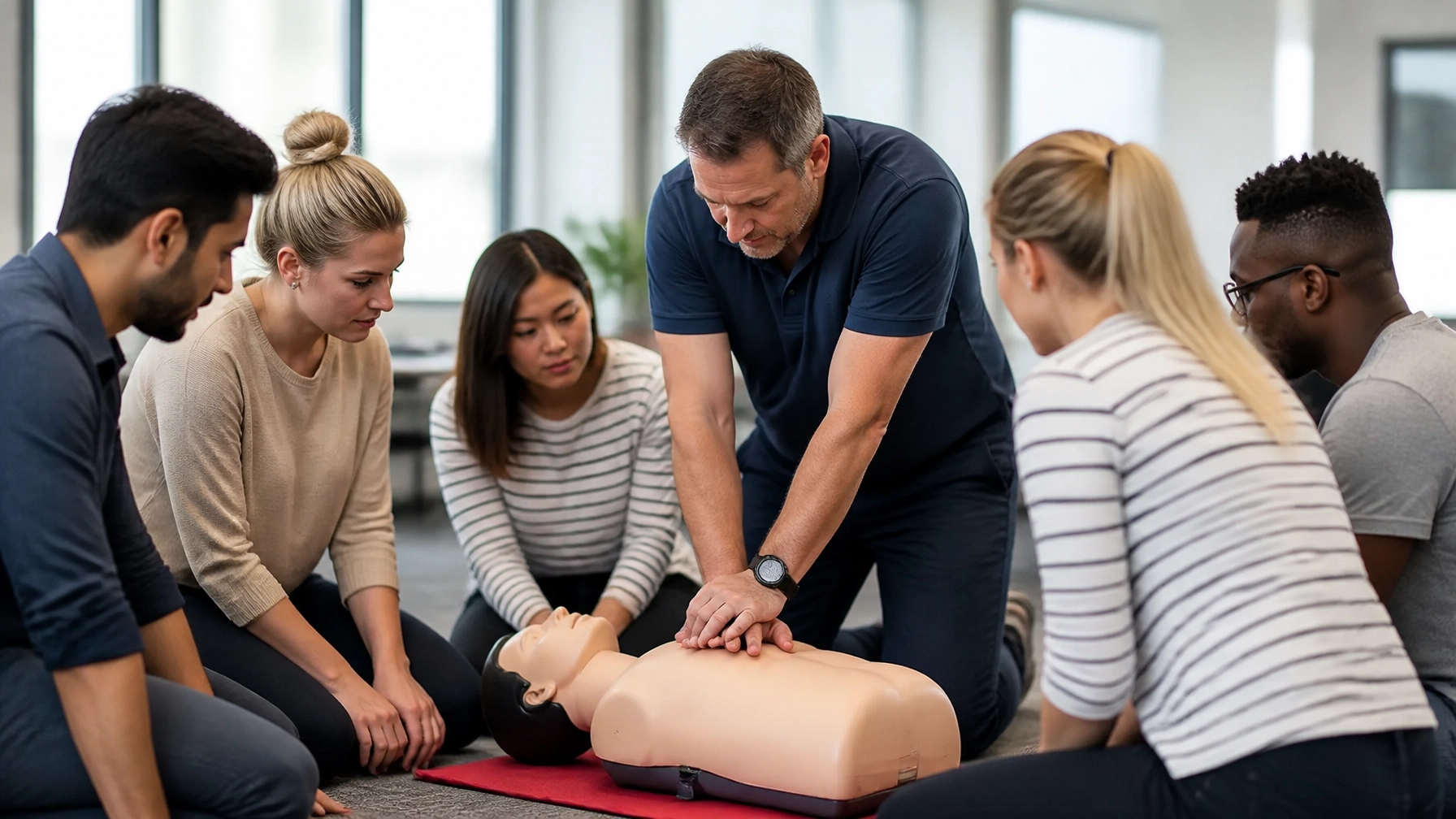
2. Perform effective chest compressions
Chest compressions are the most important physical part of CPR. They temporarily move blood around the body when the heart is no longer pumping effectively.
Follow these steps:
- Place the person on their back. Use a firm, flat surface where possible.
- Kneel beside the person’s chest.
- Find the centre of the chest. Place the heel of one hand on the lower half of the sternum (breastbone).
- Place your other hand on top. Interlock your fingers and keep them raised away from the ribs.
- Position your shoulders above your hands. Keep your arms straight.
- Push vertically down. Use your body weight rather than relying only on your arms.
- Compress at 100–120 compressions per minute.
- Allow full chest recoil. Release pressure after each compression without lifting your hands from the chest.
- Minimise interruptions. Avoid stopping to check for a pulse or repeatedly reassess breathing.
For an adult, compress the chest by approximately one-third of its depth (around 5–6 centimetres in an average adult). CPR is physically demanding. If another trained person is available, change rescuers approximately every two minutes while keeping interruptions as short as possible.

3. Use the 30:2 CPR ratio
The standard CPR cycle for a single rescuer is:
- Give 30 chest compressions.
- Open the airway.
- Give 2 rescue breaths.
- Return immediately to chest compressions.
Aim to complete approximately five cycles of 30 compressions and two breaths in about two minutes.
If you are trained, willing and able to provide rescue breaths, use a barrier device if one is available. Give each breath over approximately one second. Provide enough air to make the chest visibly rise. Avoid giving breaths too forcefully or too quickly.
If you are unable or unwilling to provide rescue breaths, perform continuous chest compressions at 100–120 per minute. Compression-only CPR is better than doing nothing.
In a workplace emergency, follow the instructions from the 000 operator. The operator can help you maintain the correct sequence while an ambulance is on the way.
4. Manage the airway and rescue breaths
Airway management is a key skill covered in HLTAID009 Provide CPR training.
To open the airway:
- Place one hand on the person’s forehead.
- Use the fingers of your other hand to lift the chin.
- Tilt the head back gently.
- Pinch the soft part of the nose closed.
- Seal your mouth over the person’s mouth.
- Give one breath and watch for the chest to rise.
- Allow the chest to fall.
- Give a second breath.
- Return to compressions immediately.
If the chest does not rise, reposition the head and chin, check the seal, and try again. Do not spend a long time attempting to deliver breaths. The priority is to continue effective compressions.
A Childcare First Aid course HLTAID012 includes additional requirements for infants and children. Do not assume that adult CPR technique is identical for every age group. Complete the course relevant to your role and workplace.

5. Use an AED as soon as it arrives
An automated external defibrillator analyses the heart rhythm and may deliver a shock when appropriate. It is designed to provide clear voice and visual instructions.
When the AED arrives:
- Turn it on.
- Follow the spoken and visual prompts.
- Expose the person’s chest.
- Dry the chest quickly if it is very wet.
- Apply the pads as shown in the AED instructions.
- Continue CPR while the AED is being prepared, unless directed otherwise.
- Stop touching the person when the AED says it is analysing.
- Make sure nobody is touching the person if a shock is advised.
- Deliver the shock if instructed.
- Resume CPR immediately after the shock, or when the AED says no shock is advised.
Make sure your workplace knows where its AED is located. Keep access clear. Include AED checks in your workplace emergency procedures, including battery and pad expiry checks.
6. Work effectively as a team
A coordinated response is safer and more effective. If several workers are present, allocate tasks quickly:
- Ask one person to call 000.
- Ask another person to bring the AED.
- Ask a third person to meet paramedics at the building entrance.
- Nominate a person to record what happened and when.
- Rotate chest compressors to reduce fatigue.
- Keep bystanders away from the casualty.
- Follow the AED and 000 operator instructions.
After the event, notify the workplace first aid coordinator and follow your organisation’s incident reporting process. Provide support to workers involved in the response and arrange professional debriefing where appropriate.
Keep in Mind: Reading is not practical training
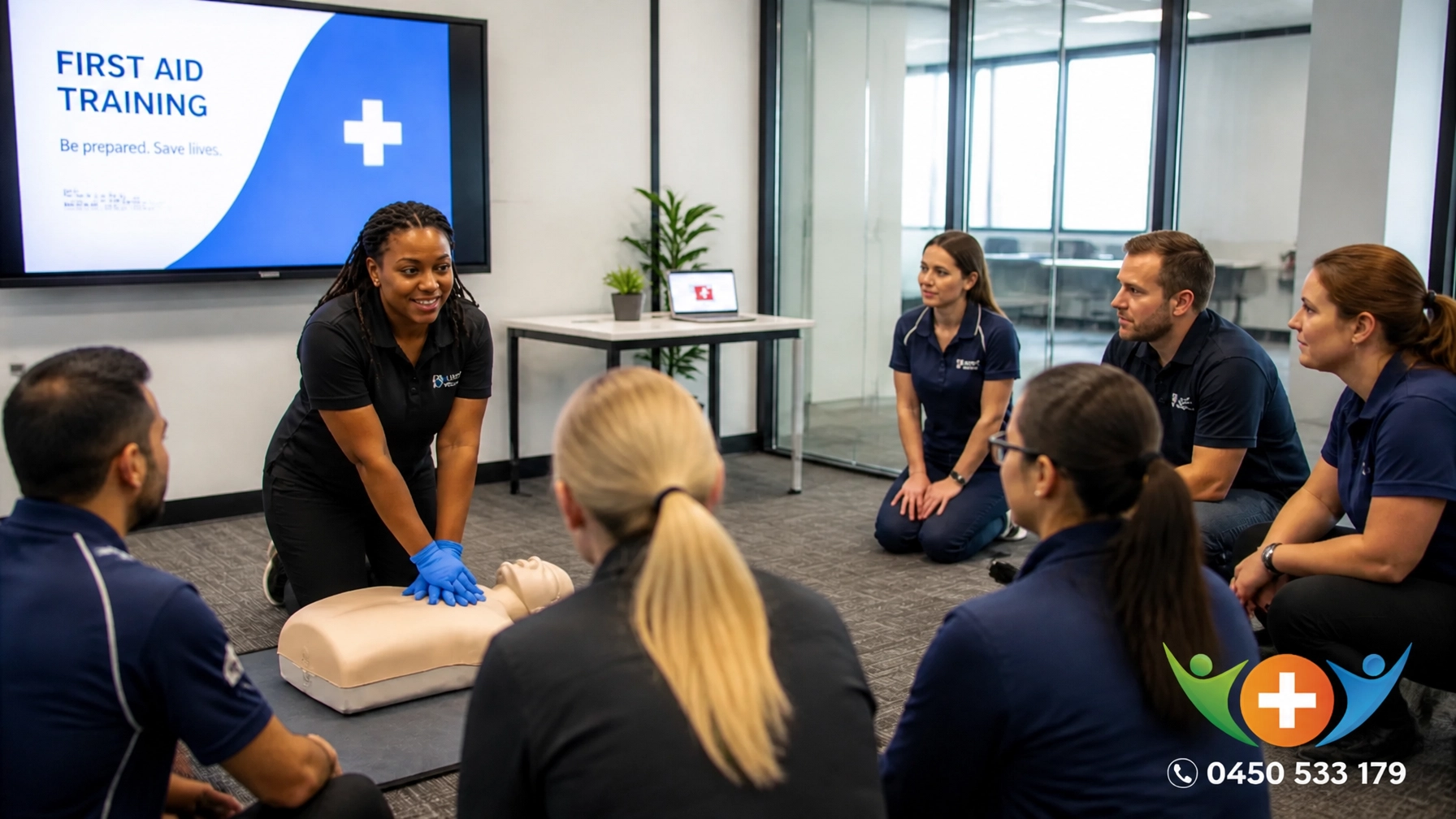
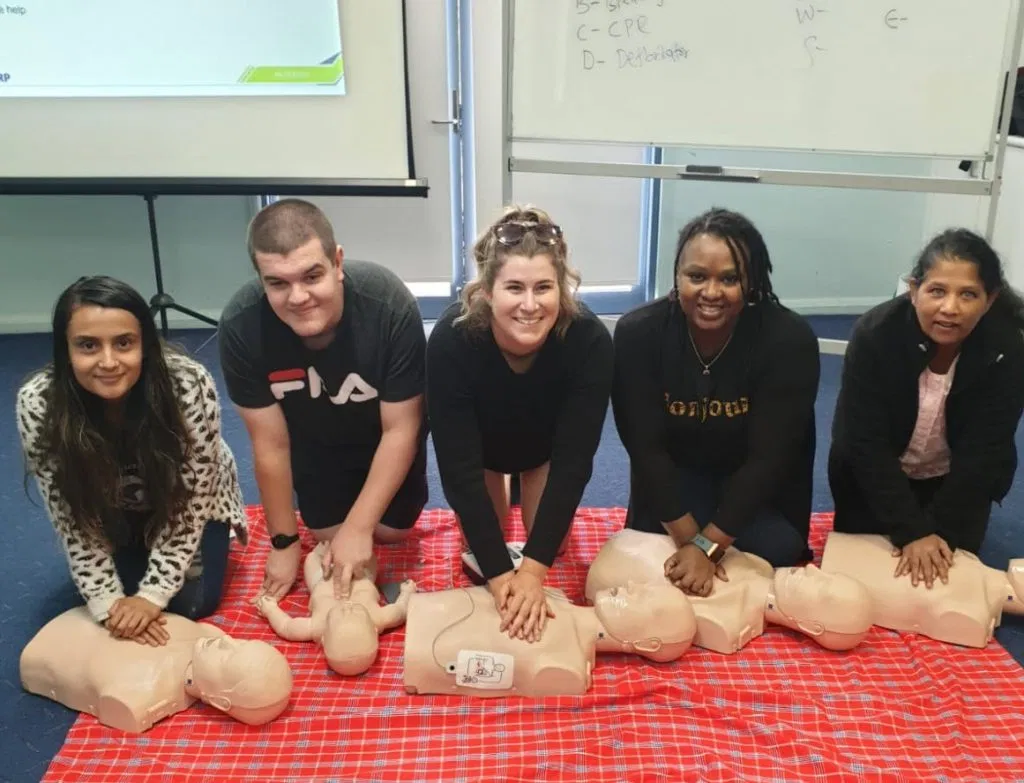
You may remember the CPR sequence from a poster or online video. However, real CPR requires physical positioning, pressure, timing and stamina. These skills are easier to perform when you have practised them on a manikin with an experienced trainer.
Our recommendation for Albury Wodonga businesses is to:
- Keep CPR skills current.
- Refresh the CPR component every 12 months, in line with workplace training expectations.
- Check that first aiders know the location of the AED.
- Include CPR scenarios in workplace emergency drills.
- Maintain adequate first aid coverage for your worksite.
- Choose training that reflects the hazards and layout of your workplace.
Yatson Training provides professional, hands-on Corporate First Aid training for businesses across Albury, Wodonga and surrounding areas. Lead trainer Jackie Hislop is a Registered Nurse, and the training is designed to be interactive, practical and easy to apply.
Yatson Training supports corporate clients, small groups and individuals from the first enquiry through to training and certification. Explore the Yatson Training courses or learn more about the Yatson Training team.

Frequently Asked Questions
Is HLTAID009 Provide CPR necessary for workplace staff?
Many workplaces require designated workers to hold current CPR training as part of their first aid arrangements. Your exact requirements depend on your workplace hazards, staffing and state or territory obligations. Yatson Training can help you identify the most suitable course for your team.
How often should CPR training be refreshed?
The CPR component should generally be refreshed every 12 months. Check your organisation’s training schedule and applicable workplace requirements. A current Workplace First Aid certification does not remove the need to maintain practical CPR skills.
Can I perform CPR if I have not completed a course?
Yes. If a person is unresponsive and not breathing normally, call 000 and follow the operator’s instructions. Start compressions if you can. Formal training gives you the knowledge and practical confidence to respond more effectively.
Where can I learn CPR in Albury Wodonga?
Yatson Training offers flexible, hands-on CPR and First Aid courses for corporate clients, small groups and individuals in the Albury Wodonga region. Training is led by experienced professionals, including Registered Nurse Jackie Hislop.
Book CPR training for your Albury Wodonga workplace
Do not wait until an emergency exposes gaps in your team’s skills. Contact Yatson Training for professional CPR and First Aid training tailored to your workplace.
Telephone Yatson Training on 0450 533 179 for all your First Aid training needs.
You can also visit yatsontraining.com.au or use the Yatson Training contact page to enquire about course options.
For current guidance, review the Australian Resuscitation Council and ANZCOR CPR guideline and the St John Ambulance Australia adult CPR fact sheet.
Follow Yatson Training for further workplace safety information:
#FirstAidTraining #CPRTraining #HLTAID009 #LearnCPRInAlburyWodonga #AlburyWodonga #WorkplaceSafety #WorkplaceFirstAidCertification #CorporateFirstAidTraining #AEDTraining #YatsonTraining