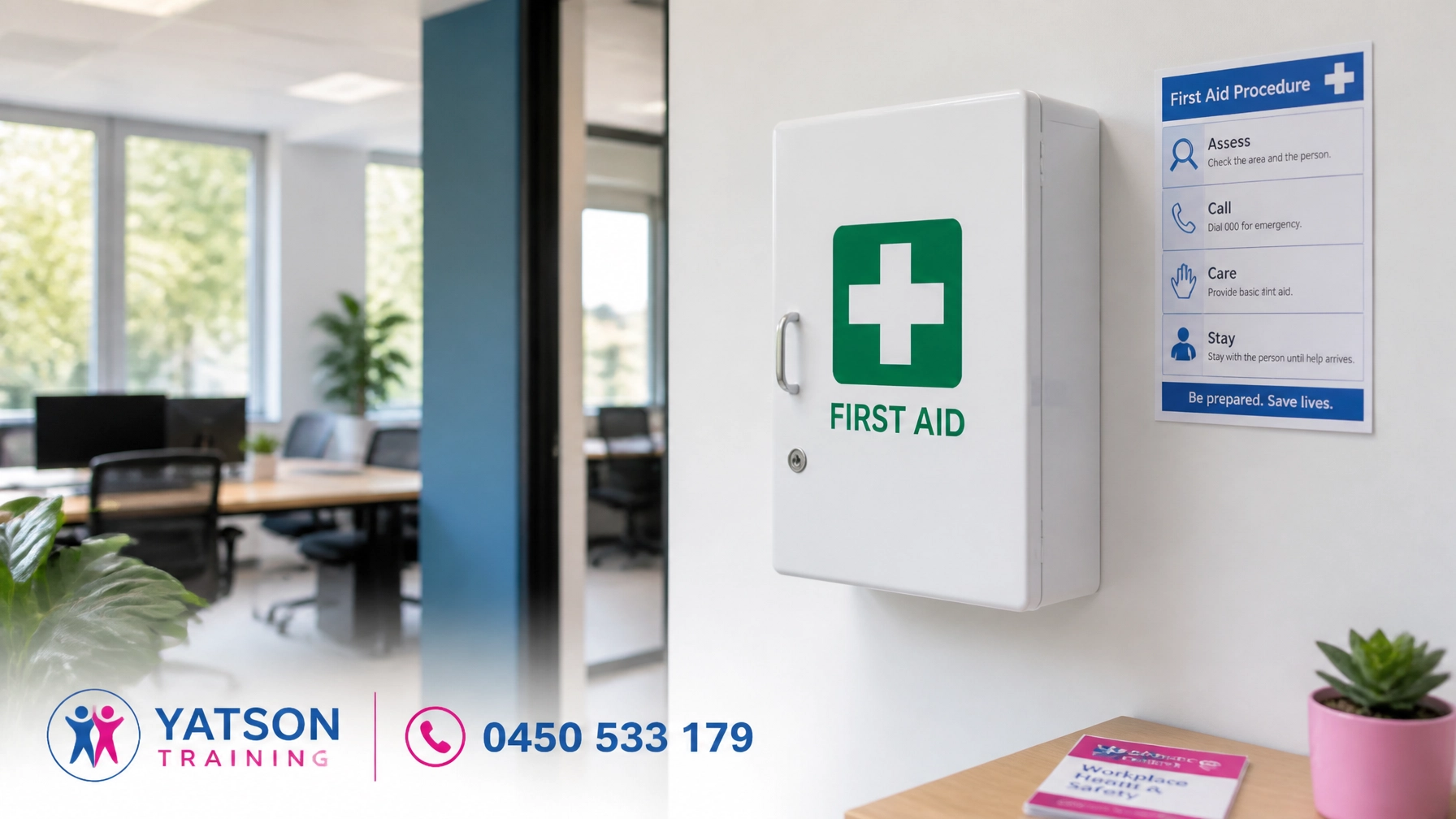

What is spring workplace first aid readiness all about?
Spring readiness is the process of reviewing your workplace safety systems before seasonal conditions change. It includes checking first aid kits, confirming staff qualifications, refreshing CPR skills and identifying new hazards.
For workplaces across Albury and Wodonga, late August is a practical time to review your arrangements. Winter slips, colds and reduced outdoor activity may soon give way to outdoor work, warmer weather, storms, allergies and increased movement around worksites.
Your first aid plan should change when your work, workforce or environment changes. Use this guide to prepare your team for early spring.
1. Refresh CPR skills before spring activity increases
CPR is a time-critical skill. It is also a practical skill that can deteriorate if you do not practise it regularly.
The nationally recognised HLTAID009 Provide cardiopulmonary resuscitation course covers:
- Recognising cardiac arrest.
- Following the DRSABCD action plan.
- Performing adult CPR.
- Using an automated external defibrillator (AED).
- Managing a casualty until emergency services arrive.
- Responding to relevant workplace scenarios.
The Australian Resuscitation Council recommends regular CPR updates. Many workplaces require CPR skills to be refreshed every 12 months. Check your certificates, internal policies and industry requirements before the next busy period.
When you need to Learn CPR in Albury / Wodonga, choose training that includes physical practice. You should practise compressions, rescue breaths where appropriate and AED use on training equipment. Reading instructions alone does not build the same level of confidence.

During a CPR response, remember to:
- Check for danger before approaching.
- Check the person for a response.
- Send for help and call Triple Zero (000).
- Open the airway.
- Check for normal breathing.
- Start CPR if the person is not breathing normally.
- Apply an AED as soon as one is available.
Do not delay CPR while waiting for a trained first aider if an emergency is occurring. Call 000 and follow the emergency operator’s instructions.
For further guidance, review the Australian Resuscitation Council and healthdirect CPR information.
2. Review HLTAID011 Provide First Aid certification
CPR is only one part of workplace emergency response. Most businesses also need staff who can manage a broader range of injuries and illnesses.
HLTAID011 Provide First Aid is designed for general workplace first aid. It commonly covers responses to:
- Bleeding and wounds.
- Burns.
- Fractures and soft-tissue injuries.
- Choking.
- Asthma.
- Anaphylaxis.
- Shock.
- Seizures.
- Chest pain and suspected heart attack.
- Environmental exposure.
- Use of an AED and CPR procedures.
Your workplace should identify which employees need Workplace First Aid certification. Consider your:
- Number of workers.
- Worksite size and layout.
- Operating hours and shift patterns.
- Distance from medical assistance.
- Level of supervision.
- Workplace hazards.
- Number of remote, mobile or outdoor workers.
- Existing health conditions or foreseeable emergencies.
Do not rely on a single first aider if that person works part-time, takes leave or works in a separate area. Maintain enough trained coverage for normal operations.
Yatson Training provides practical HLTAID011 Provide First Aid training for businesses, small groups and individuals. Training can be arranged to suit your workplace and is supported from the initial enquiry through to certification.
3. Prepare educators with HLTAID012
Early childhood services, schools and other education and care environments have specific responsibilities. Staff may need training that addresses the needs of infants and children.
The Childcare First Aid course HLTAID012 Provide First Aid in an education and care setting is designed for educators and care workers. It includes scenarios relevant to children, such as:
- Choking.
- Falls and head injuries.
- Burns.
- Asthma.
- Anaphylaxis.
- Fever and illness.
- Seizures.
- Drowning and near-drowning.
- CPR for infants and children.
Spring can increase outdoor play, excursions, sporting activities and community events. Review how your team will respond if a child becomes unwell or injured away from the usual classroom or play area.
Check that:
- First aid qualifications are current.
- CPR updates are completed as required.
- Medication and health plans are accessible.
- Emergency contacts are current.
- Staff know where the first aid kit is located.
- Staff can access an AED, if one is available.
- Excursion and outdoor activity procedures are documented.

Yatson Training offers HLTAID012 training for eligible education and care workers. Contact the team to discuss a suitable course for your service.
4. Check and restock your first aid kits
A first aid kit is only useful when it is complete, accessible and suited to your workplace.
Complete a spring audit. Check every kit, including vehicle kits, mobile kits and kits used for outdoor work.
Use this checklist:
- Remove expired items.
- Replace opened or contaminated products.
- Confirm sterile dressings are sealed.
- Check gloves for damage.
- Replace used eyewash supplies where required.
- Confirm cold packs are intact.
- Check scissors, shears and tweezers.
- Add supplies for identified workplace hazards.
- Make sure the kit is clearly marked.
- Keep the kit accessible and unlocked.
- Record the inspection date.
- Tell staff where the kit is located.
Do not place a kit in an office that is locked outside standard hours if workers operate at other times. Larger sites may need more than one kit.
Your kit should reflect the risks of your work. A construction site, warehouse, childcare service and professional office will not need identical supplies.
Use the Safe Work Australia Model Code of Practice: First aid in the workplace to review your first aid risk assessment, equipment and trained first aider arrangements.
5. Identify the change from winter to spring hazards
Spring does not remove winter hazards immediately. Wet floors, cold mornings and respiratory illness can continue through September. At the same time, new risks may develop.
Review these common Albury Wodonga workplace hazards.
Outdoor work
More outdoor maintenance, construction, landscaping and community activity can increase the risk of:
- Cuts and puncture wounds.
- Falls on uneven ground.
- Manual handling injuries.
- Insect bites and stings.
- Sun exposure.
- Heat-related illness.
- Contact with plants or chemicals.
Inspect outdoor work areas before tasks begin. Remove trip hazards. Provide suitable personal protective equipment. Make drinking water available and schedule breaks where needed.
Allergies and anaphylaxis
Spring may increase exposure to pollen, grass and insects. Confirm that workers know how to respond to an allergic reaction or anaphylaxis.
Follow the person’s ASCIA action plan if available. Use an adrenaline autoinjector when indicated and call 000. Do not leave the person alone.
For current anaphylaxis information, review ASCIA’s first aid guidance.
Storms and severe weather
Albury Wodonga can experience sudden weather changes. Storms may create risks from falling branches, lightning, flooding, damaged structures and power interruptions.
Before outdoor work or events:
- Check the weather forecast.
- Secure loose equipment.
- Review shelter locations.
- Keep emergency contacts available.
- Stop work when conditions become unsafe.
- Inspect the site after a storm before allowing normal operations to resume.
Slips and trips
Rain can still create wet internal and external surfaces. Check walkways, entrances and work areas regularly. Clean spills promptly. Use visible wet-floor signage and require suitable footwear.
6. Test your emergency response plan
A written procedure is not enough if staff do not know how to use it.
Run a short spring emergency drill. Keep it practical and relevant to your workplace. Test whether staff can:
- Identify who calls 000.
- Locate the first aid kit.
- Locate the AED.
- Contact the workplace first aider.
- Direct emergency services to the correct entrance.
- Manage visitors, children or members of the public.
- Preserve access for an ambulance.
- Record and report the incident.
After the drill, ask what caused delays. Update signs, contact lists and procedures as needed.

Keep in Mind: training must be practical
First aid training should not be treated as a dry compliance exercise. Your employees need to practise the physical actions they may be required to perform.
Yatson Training delivers flexible, hands-on training for:
- Corporate clients.
- Small groups.
- Individuals.
- Offices and professional workplaces.
- Warehouses and worksites.
- Early childhood and education services.
Lead trainer Jackie Hislop is a Registered Nurse. The experienced Yatson Training team focuses on clear explanations, realistic practice and support throughout the training process.
Review the Yatson Training courses, learn more about corporate First Aid training in Albury Wodonga, or contact Yatson Training to discuss your requirements.
Our recommendation for Albury Wodonga workplaces
Use late August as your annual spring readiness trigger.
Check your first aid kits. Confirm CPR expiry dates. Review HLTAID011 coverage. Arrange HLTAID012 training where children are in your care. Inspect outdoor areas and test your emergency plan.
The cost of a planned training session is usually lower than the disruption caused by an unprepared response, avoidable injury or expired certification. More importantly, practical training helps your people act promptly when a serious incident occurs.
Book professional First Aid training
Do not wait until a certificate has expired or an incident exposes a gap in your workplace system. Telephone Yatson Training on 0450 533 179 for bookings and advice about CPR, general First Aid or education and care training.
Yatson Training services corporate clients, small groups and individuals across Albury, Wodonga and surrounding areas. Visit yatsontraining.com.au or attend training by appointment at 77 Lawrence Street, Wodonga.
Follow Yatson Training for course updates and workplace safety information on Facebook, Instagram and YouTube. You can also view the Yatson Training social media channels page.
Frequently asked questions
How often should CPR be refreshed?
CPR skills are commonly refreshed every 12 months. Check your employer, regulator and industry requirements. Contact Yatson Training to confirm the appropriate refresher for your workplace.
What is the difference between HLTAID009 and HLTAID011?
HLTAID009 focuses on cardiopulmonary resuscitation and AED use. HLTAID011 covers a broader range of first aid emergencies and is commonly used for general workplace First Aid certification.
Do childcare educators need HLTAID012?
Education and care services generally require training that addresses the first aid needs of infants and children. Confirm your specific obligations with your service, regulator and employer. Yatson Training can discuss the Childcare First Aid course HLTAID012 with you.
Is professional First Aid training worth the cost?
Yes. It helps you meet workplace requirements, improves practical response skills and reduces the risk of delays during an emergency. It also provides a structured way to review your workplace hazards and emergency procedures.
Where can I book First Aid training in Albury Wodonga?
Telephone Yatson Training on 0450 533 179 for flexible, hands-on training for your business, small group or individual booking.
#FirstAidTraining #CPRTraining #HLTAID009 #HLTAID011 #HLTAID012 #AlburyWodonga #WorkplaceSafety #CorporateFirstAidTraining #WorkplaceFirstAid #ChildcareFirstAid #SpringSafety #FirstAidCertification
{“@type”:”FAQPage”,”@context”:”https://schema.org”,”mainEntity”:[{“name”:”How often should CPR be refreshed?”,”@type”:”Question”,”acceptedAnswer”:{“text”:”CPR skills are commonly refreshed every 12 months. Check your employer, regulator and industry requirements, and contact Yatson Training to confirm the appropriate refresher for your workplace.”,”@type”:”Answer”}},{“name”:”What is the difference between HLTAID009 and HLTAID011?”,”@type”:”Question”,”acceptedAnswer”:{“text”:”HLTAID009 focuses on cardiopulmonary resuscitation and AED use. HLTAID011 covers a broader range of first aid emergencies and is commonly used for general workplace First Aid certification.”,”@type”:”Answer”}},{“name”:”Do childcare educators need HLTAID012?”,”@type”:”Question”,”acceptedAnswer”:{“text”:”Education and care services generally require training that addresses the first aid needs of infants and children. Specific obligations should be confirmed with the service, regulator and employer.”,”@type”:”Answer”}},{“name”:”Where can I book First Aid training in Albury Wodonga?”,”@type”:”Question”,”acceptedAnswer”:{“text”:”Telephone Yatson Training on 0450 533 179 for flexible, hands-on First Aid, CPR and education and care training for corporate clients, small groups and individuals.”,”@type”:”Answer”}}]}