
What is Australian workplace first aid all about?
Australian workplace first aid is the immediate care you provide when someone is injured or becomes unwell before professional medical help arrives. It helps maintain breathing, control bleeding, reduce further harm and support a casualty until paramedics take over.
For workers, supervisors and business owners across Albury and Wodonga, first aid preparation must reflect real workplace risks. These may include frosty mornings on outdoor sites, wet floors, manual handling injuries, machinery incidents, asthma flare-ups, anaphylaxis and sudden cardiac events.
First aid is not a substitute for calling Triple Zero (000). It is the critical response that begins while emergency services are on their way.
1. Use DRSABCD during an emergency
DRSABCD is the standard Australian emergency response sequence. Follow these steps calmly and methodically:
- Danger: Check the area for hazards such as traffic, electricity, machinery, fire, chemicals, ice or unstable structures. Do not put yourself at risk.
- Response: Speak to the person and gently squeeze their shoulders. Check whether they respond.
- Send for help: Call 000. Ask a specific person to collect the workplace AED (automated external defibrillator) and first aid kit.
- Airway: Open the airway by gently tilting the head back and lifting the chin, unless spinal injury is suspected.
- Breathing: Check for normal breathing for up to 10 seconds. Occasional gasping is not normal breathing.
- CPR: If the person is unresponsive and not breathing normally, begin CPR.
- Defibrillation: Apply the AED as soon as it is available. Follow its voice and visual prompts.
Keep communicating with your team. Allocate clear tasks, record the time of important actions and direct paramedics to the casualty when they arrive.
2. Understand the basics of CPR and AED use
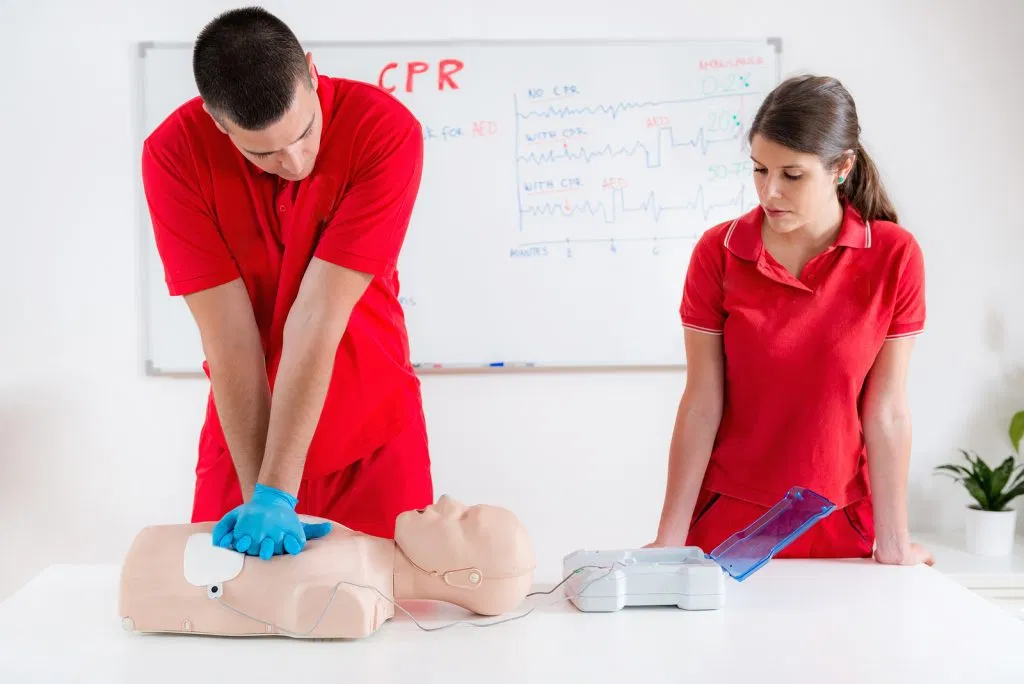
CPR keeps blood and oxygen moving when a person’s heart or breathing has stopped. For an adult, place the heel of one hand in the centre of the chest and the other hand on top. Keep your arms straight and your shoulders above your hands.
Perform:
- 30 chest compressions
- Two rescue breaths, if you are trained and willing to provide them
- Compressions at a rate of approximately 100–120 per minute
- Compressions to an appropriate depth for the casualty
Continue until the person shows signs of life, you become exhausted, another trained person takes over, or emergency services instruct you to stop.
An AED analyses the heart rhythm and determines whether a shock is appropriate. It will not deliver a shock unless required. Expose the chest, apply the pads as shown on the device and follow every instruction. Do not touch the person while the AED analyses or delivers a shock.
If you want to Learn CPR in Albury Wodonga, practical training is more effective than relying on written instructions alone. Yatson Training provides hands-on HLTAID009 Provide CPR training for individuals, small groups and workplaces.

3. Recognise and manage common workplace emergencies
Choking
A person who is choking may be unable to speak, breathe or cough effectively. Encourage effective coughing if they can breathe and cough.
If the obstruction does not clear:
- Call 000 or direct someone else to call.
- Give back blows and chest thrusts in line with your current first aid training.
- Continue until the obstruction clears or the person becomes unresponsive.
- Start CPR if the person becomes unresponsive.
- Do not blindly sweep inside the mouth.
Infants and children require different techniques. This is particularly important for educators completing HLTAID012 Childcare First Aid.
Asthma
Cold air, respiratory infections, dust and workplace irritants can trigger asthma symptoms during late winter and early spring. Watch for wheezing, coughing, chest tightness and difficulty speaking.
Follow the person’s asthma action plan and assist them to use their reliever medication. Call 000 if symptoms are severe, the person becomes exhausted or confused, or their breathing does not improve.
Anaphylaxis
Anaphylaxis is a severe allergic reaction. Symptoms may include difficulty breathing, swelling of the tongue or throat, wheezing, dizziness, collapse or widespread skin symptoms.
Act immediately:
- Call 000.
- Help the person use their adrenaline auto-injector, such as an EpiPen or Anapen, if available.
- Lay the person flat unless breathing is difficult. In that case, allow them to sit with legs extended.
- Do not allow them to stand or walk.
- Monitor breathing and begin CPR if required.
- Give a second adrenaline dose if directed by emergency services or the person’s action plan.
Severe bleeding and shock
Apply firm, direct pressure to the wound using gloves, a sterile dressing or clean material. Maintain pressure and add further dressings over the top if blood soaks through. Do not remove the original dressing.
Look for signs of shock, including pale or clammy skin, weakness, rapid breathing, confusion or nausea. Help the person lie down, keep them warm and reassure them. Do not give food or drink. Call 000 for severe bleeding or signs of shock.
4. Prepare for Albury Wodonga winter hazards
Cold weather creates predictable risks for workers, particularly on construction sites, farms, transport routes, warehouses and outdoor work areas.
Complete these checks before each shift:
- Inspect car parks, paths, stairs and loading areas for frost, ice and pooled water.
- Apply grit or sand where surfaces are slippery.
- Use absorbent entrance mats and clean wet floors immediately.
- Place warning signs around wet or icy areas.
- Improve lighting for early starts and late finishes.
- Encourage footwear with suitable grip.
- Check outdoor workers have warm, dry clothing and regular access to shelter.
- Inspect heaters, cords and power boards before use.
- Keep heaters, fire exits and emergency equipment clear.
Cold stress can cause shivering, clumsy movement, slurred speech, fatigue and confusion. Move the person to a warm, dry area, remove wet clothing, add dry layers and call 000 if symptoms are severe or do not improve.
Winter also increases respiratory illness. Encourage hand hygiene, clean shared surfaces and sensible stay-home-when-sick practices. These controls support both Winter Safety and general workplace health.
5. Meet your WHS first aid responsibilities
Under Australian WHS arrangements, a person conducting a business or undertaking (PCBU) must provide appropriate first aid equipment, facilities and trained first aiders. The exact arrangements depend on your workplace risk, workforce size, work patterns, site layout, remoteness and access to emergency services.
Your business should:
- Complete a workplace first aid risk assessment.
- Provide accessible and clearly identified first aid kits.
- Check and restock kits regularly.
- Provide trained first aiders on every shift where reasonably required.
- Consider leave, remote work, multiple buildings and isolated work areas.
- Make sure workers know who the first aiders are.
- Display emergency procedures and AED locations.
- Keep suitable gloves and infection-control supplies available.
- Review arrangements after incidents, workplace changes or seasonal hazards.
Read the Safe Work Australia first aid guidance and check the requirements that apply in NSW or Victoria. You can also review current resuscitation recommendations through the Australian and New Zealand Committee on Resuscitation.
6. Keep Workplace First Aid certification current
A certificate is only useful when the holder can perform the required skills confidently. Most general workplace first aiders complete HLTAID011 Provide First Aid, which covers CPR, AED use, bleeding, shock, burns, fractures, medical emergencies, asthma and anaphylaxis.
The full first aid qualification is generally renewed every three years. CPR skills should be refreshed every 12 months because practical ability can decline without regular practice.
Different workplaces may need different units:
- HLTAID011 Provide First Aid for general workplace first aid.
- HLTAID009 Provide CPR for annual CPR refreshers.
- HLTAID012 Provide First Aid in an Education and Care Setting for childcare, education and care workers.
Yatson Training offers flexible Corporate First Aid training across the Albury Wodonga area. Training can be arranged for businesses, small groups and individuals, with practical scenarios that reflect your workplace.

Our recommendation: practise before an emergency
Do not wait until an incident exposes gaps in your procedures. Run a short workplace check this week:
- Find the first aid kit and AED.
- Confirm your trained first aiders and certificate dates.
- Review emergency contacts and site access instructions.
- Discuss who calls 000 and who meets the ambulance.
- Inspect outdoor areas for frost, slips and poor lighting.
- Check whether your first aid coverage matches every shift.
- Book annual CPR refreshers before certificates expire.
Professional training should be practical, clear and relevant. Yatson Training is led by experienced trainers, including Registered Nurse Jackie Hislop. Sessions are interactive and engaging, with support from the initial enquiry through to final certification.

Frequently asked questions
Is first aid training necessary for every Albury Wodonga workplace?
Businesses must provide first aid arrangements that match their risks and circumstances. That usually includes suitable equipment, facilities and an adequate number of trained first aiders. Complete a risk assessment rather than relying on a one-size-fits-all number.
Is HLTAID011 suitable for general workplace safety?
Yes. HLTAID011 Provide First Aid is the standard general first aid qualification used across many Australian workplaces. Check whether your industry requires additional units.
How often should CPR training be refreshed?
Refresh CPR every 12 months. Annual practice helps maintain the physical skills needed for effective compressions, rescue breaths and AED use.
Can Yatson Training visit our workplace?
Yatson Training provides flexible, hands-on training for corporate clients, small groups and individuals across Albury, Wodonga and surrounding areas. View the corporate training service.
Book First Aid training in Albury Wodonga
Protect your workers and meet your workplace responsibilities with professional, practical training. Telephone Yatson Training on 0450 533 179 for all your First Aid training needs.
Visit yatsontraining.com.au to review available courses. You can also follow Yatson Training on Facebook, Instagram and YouTube.
#FirstAidTraining #AlburyWodonga #WorkplaceSafety #CPR #HLTAID011 #HLTAID009 #HLTAID012 #CorporateFirstAidTraining #WinterSafety #FirstAidTrainingAlburyWodonga #LearnCPR #WorkplaceFirstAidCertification