Businesses across Albury and Wodonga need practical systems for managing workplace emergencies. A stocked first aid kit is important, but it is only one part of an effective safety plan. Your team also needs current training, clear procedures and the confidence to act before emergency services arrive.
This guide explains essential Australian first aid, CPR and workplace safety tips for local businesses and workers. Use it to review your current arrangements and identify where professional training may be needed.
What is Australian First Aid, CPR, and Workplace Safety all about?
Australian workplace first aid is the coordinated process of recognising an emergency, providing immediate care and contacting appropriate medical assistance. It includes trained first aiders, accessible equipment, emergency procedures and regular skills maintenance.
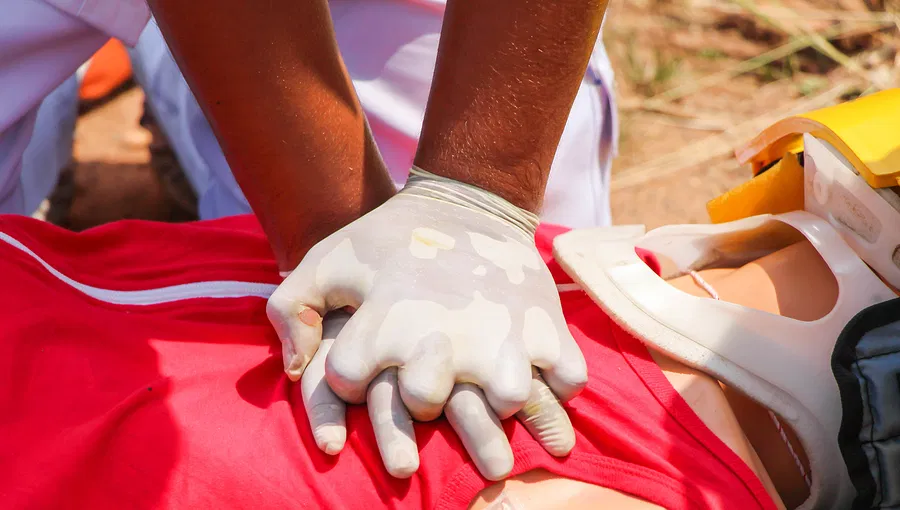
CPR (cardiopulmonary resuscitation) is used when a person is unresponsive and not breathing normally. It helps maintain blood flow to the brain and other vital organs until an AED (automated external defibrillator) or paramedics become available.
Workplace safety extends beyond responding to injuries. It also means identifying hazards, reducing risks and preparing your staff for foreseeable emergencies.
For current workplace guidance, review Safe Work Australia’s first aid information and its Model Code of Practice: First aid in the workplace. Albury businesses should also consider applicable NSW requirements, while Wodonga businesses should check Victorian requirements.
1. Train enough workplace first aiders
Start by assessing the risks in your workplace. Consider:
- The number of employees, contractors, visitors and customers on-site.
- The size and layout of your premises.
- The type of work being completed.
- The distance to medical services.
- The number of shifts and remote work locations.
- Whether trained first aiders are available during leave, breaks and overtime.
Low-risk offices may have different needs from construction sites, warehouses, workshops or manufacturing facilities. Your first aid risk assessment should determine how many first aiders you need and where they should be located.
Safe Work Australia provides general guidance on first aid coverage, but these figures are not a substitute for a site-specific assessment. Make sure your first aiders can reach an injured person quickly.
The nationally recognised HLTAID011 Provide First Aid unit is suitable for many workplace first aid roles. It covers CPR, AED use, injuries, medical emergencies and emergency response procedures.

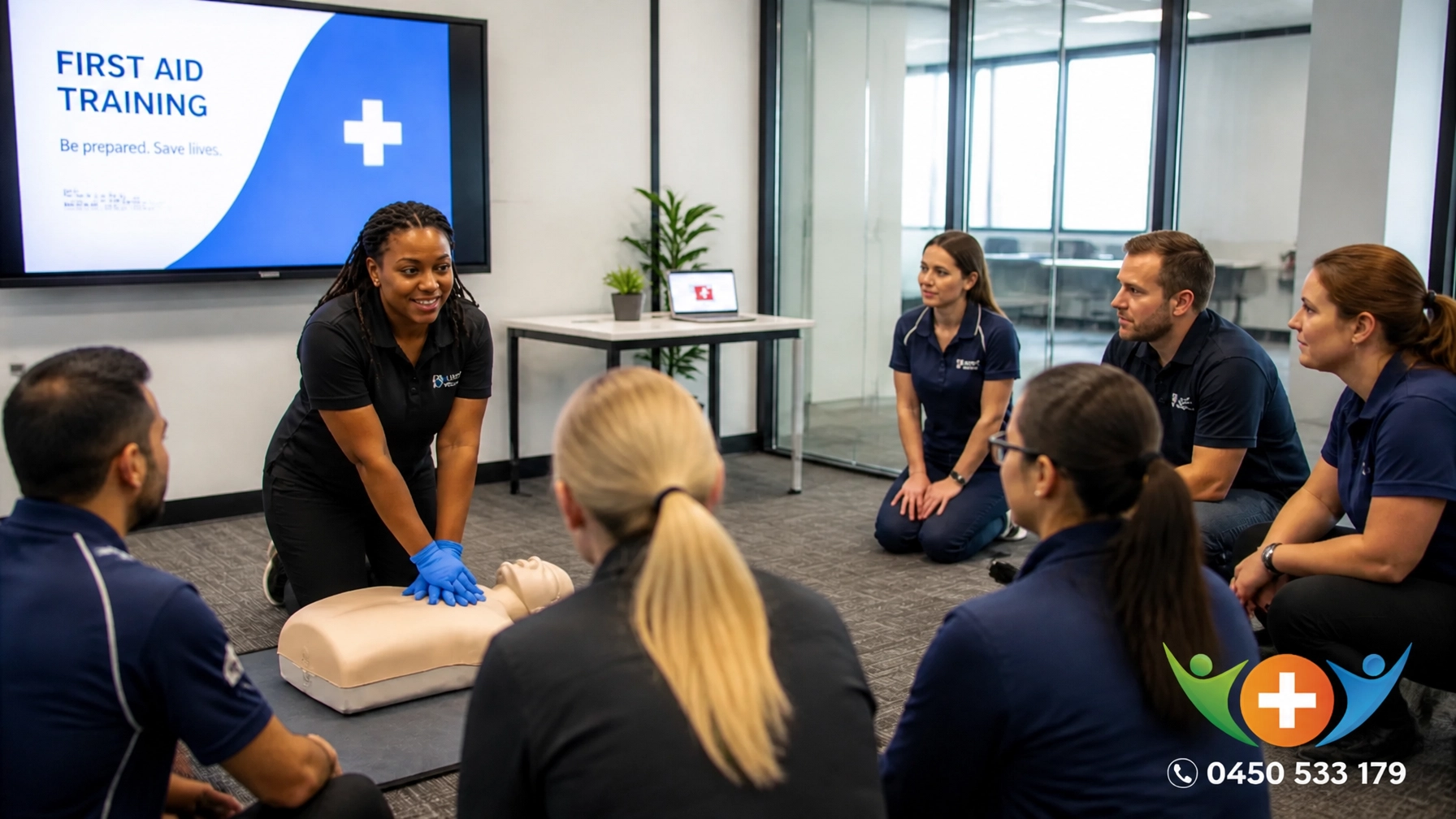
Yatson Training provides professional, hands-on HLTAID011 Provide First Aid training in Albury and Wodonga. Training is delivered for corporate clients, small groups and individuals, with practical activities designed to make the skills easier to remember.
2. Teach your team the DRSABCD action plan
Use the DRSABCD action plan when responding to a serious emergency:
- Danger: Check for hazards such as electricity, traffic, fire, chemicals or unsafe machinery.
- Response: Speak to the person and gently stimulate their shoulders.
- Send for help: Call 000 and ask someone to bring the first aid kit and AED.
- Airway: Open the airway and check for visible obstructions.
- Breathing: Look for normal breathing for up to 10 seconds. Gasping is not normal breathing.
- CPR: Start CPR if the person is unresponsive and not breathing normally.
- Defibrillation: Attach an AED as soon as one is available and follow its voice prompts.
For adult CPR, use 30 chest compressions followed by two rescue breaths when you are trained and willing to provide breaths. Compress at a rate of approximately 100 to 120 compressions per minute. Minimise interruptions.
If you are not trained or are unable to provide rescue breaths, contact 000 and follow the call-taker’s instructions. Hands-only CPR is preferable to doing nothing while waiting for help.

Make sure staff know the exact location of your AED and first aid kits. Include these locations in inductions, site maps and emergency drills.
3. Keep first aid kits accessible and maintained
A first aid kit must be easy to find and quick to access. Do not store it behind locked doors, in an obstructed cupboard or in an area that workers cannot reach during an emergency.
Review your kits regularly. Check that they contain appropriate supplies for your workplace, including items such as:
- Disposable gloves.
- Eye protection.
- Resuscitation masks.
- Sterile dressings.
- Bandages and triangular bandages.
- Antiseptic wipes.
- Scissors and tweezers.
- Burn dressings.
- Cold packs.
- Wound dressings and adhesive tape.
Replace used, damaged or expired items. Consider additional kits for vehicles, remote areas, large sites and high-risk work zones.
Do not rely on a kit to manage an emergency without trained people. Equipment supports a response, but it does not replace Workplace First Aid certification.
4. Prepare for common workplace emergencies
Your team should know how to respond to common incidents before they occur. Professional First Aid training should include practical scenarios involving:
- Severe bleeding.
- Burns.
- Fractures and dislocations.
- Head, neck and spinal injuries.
- Choking.
- Asthma.
- Anaphylaxis.
- Seizures.
- Stroke.
- Heart attack.
- Diabetic emergencies.
- Shock and serious illness.
Tell workers what to do, what not to do and when to call 000. For example, apply firm direct pressure to severe bleeding and maintain pressure while arranging emergency assistance. Do not remove an embedded object from a wound.
If a person may have a spinal injury, keep them still unless there is immediate danger. Monitor their breathing and provide reassurance while waiting for paramedics.
Training should also cover incident reporting and handover. Record what happened, what first aid was provided and when emergency services were contacted.
5. Make your CPR skills current
CPR is a physical skill. Reading instructions is not enough to develop reliable technique. You need regular practice with a manikin so you can learn compression position, depth, rhythm and role changes.
The CPR component of workplace first aid training should generally be refreshed every 12 months. The broader HLTAID011 qualification is generally renewed every three years, subject to your workplace, industry and regulator requirements.
If you want to Learn CPR in Albury Wodonga, Yatson Training offers practical CPR training for workplaces, small groups and individuals. Sessions focus on correct technique, AED operation and the decisions you need to make under pressure.
Book through the Yatson Training courses page or discuss a group session for your workplace.
6. Consider specialist training for childcare and higher-risk workplaces
Different industries require different training. Childcare workers and educators may need the Childcare First Aid course HLTAID012, which addresses first aid responses for babies and children.
Construction, manufacturing, warehousing, hospitality and outdoor work may also require additional planning for hazards such as machinery, falls, burns, chemicals, heat and remote locations.
Match your training to your actual work environment. A generic presentation may not prepare your team for the risks they face every day.

Our recommendation: combine training with regular safety checks
Training is most effective when it forms part of a broader safety system. Schedule regular checks and assign responsibility for each task.
Use this practical checklist:
- Review your first aid risk assessment at least annually and after significant workplace changes.
- Check first aid kits regularly and replace used or expired items.
- Confirm that AED batteries and pads are within their expiry dates.
- Display the names or locations of current first aiders.
- Confirm first aid coverage for every shift.
- Include first aid and emergency procedures in worker inductions.
- Run short emergency drills.
- Record training completion and renewal dates.
- Refresh CPR skills every year.
- Review incidents and near misses to identify recurring hazards.
Yatson Training’s experienced team, including lead trainer Jackie Hislop, a Registered Nurse, provides interactive training rather than a dry, mandatory exercise. You receive support from the initial enquiry through to final certification, with flexible delivery for corporate clients, small groups and individuals.
Frequently asked questions
Is HLTAID011 Provide First Aid suitable for workplace certification?
It is the nationally recognised first aid unit commonly used for workplace first aiders. Confirm your industry-specific requirements and workplace risk profile before enrolling.
How often should workplace CPR training be refreshed?
Refresh CPR skills every 12 months. Regular practice helps maintain physical technique and reduces hesitation during an emergency.
Is an AED necessary for every business?
An AED is not automatically required for every workplace. However, your risk assessment should consider the size of your workforce, site location, response times and the likelihood of a cardiac emergency. Train workers to access and use an AED promptly.
Is professional First Aid training cost-effective?
Yes. Planned training reduces disruption, supports workplace safety duties and gives your team practical skills before an emergency occurs. The cost of training is small compared with the potential consequences of an unprepared response.
Can Yatson Training come to our workplace?
Yes. Yatson Training offers flexible Corporate First Aid training across the Albury Wodonga region. The team can discuss your workplace size, industry, preferred dates and certification requirements.
Book professional First Aid training in Albury Wodonga
Do not wait for an incident to expose gaps in your workplace safety plan. Arrange current, practical training for your team.
For HLTAID011 Provide First Aid, CPR refreshers, Workplace First Aid certification or a Childcare First Aid course HLTAID012, call Yatson Training today on 0450 533 179. Visit yatsontraining.com.au to learn more about available courses and corporate options.
Call 0450 533 179 for all your professional First Aid training needs in Albury, Wodonga and surrounding areas.
Connect with Yatson Training:
#FirstAidTraining #AlburyWodonga #WorkplaceSafety #HLTAID011 #CorporateFirstAidTraining #WorkplaceFirstAidCertification #LearnCPR #LearnCPRAlburyWodonga #ChildcareFirstAid #HLTAID012 #CPRTraining #YatsonTraining