What is Australian workplace first aid all about?
Workplace first aid is the immediate care provided to a person who is injured or becomes unwell at work. It is given before advanced medical help arrives or until the person recovers.
Your workplace first aid system should help you:
- Preserve life.
- Prevent an injury or illness from becoming worse.
- Reduce pain where possible.
- Promote recovery.
- Protect an unconscious person.
- Contact emergency services quickly.
For Albury and Wodonga businesses, workplace safety requires more than keeping a first aid kit in a cupboard. You need appropriate equipment, clear procedures and trained first aiders who are available during every shift.
The exact arrangements depend on your workplace activities, hazards, site size, worker numbers and location. Albury businesses operate under NSW work health and safety requirements. Wodonga businesses operate under Victorian requirements. Both sides of the border expect businesses to assess their first aid needs properly.
Read the SafeWork Australia first aid guidance and the SafeWork NSW workplace first aid information for more detail.
1. Build a practical workplace first aid system
Start with a site-specific risk assessment. Do not rely on a generic checklist.
Identify:
- Machinery, vehicles, tools and electrical hazards.
- Chemicals, dust, fumes and other hazardous substances.
- Work at heights or in confined spaces.
- Outdoor work and isolated work.
- Manual handling and repetitive tasks.
- The number of employees, contractors, visitors and customers.
- Shift patterns, leave arrangements and after-hours work.
- The distance to emergency services and medical facilities.
A low-risk office may commonly use a starting ratio of approximately one trained first aider for every 50 workers. A high-risk workplace may need approximately one first aider for every 25 workers. Remote, isolated or higher-risk operations may require additional coverage.
These figures are starting points, not a substitute for a risk assessment. Consider whether a first aider can reach every work area quickly. Train backup first aiders for annual leave, sick leave and different shifts.
Keep first aid equipment:
- Clearly identified.
- Unlocked and easy to access.
- Close to higher-risk areas where appropriate.
- Protected from dust, moisture and contamination.
- Checked regularly by a nominated person.
Record what has been used. Replace opened, damaged or expired supplies. Include suitable items for cuts, burns, bleeding, sprains, eye injuries and other hazards identified at your site.
Consider whether you also need an AED (automated external defibrillator), eyewash equipment, emergency showers or a dedicated first aid room. SafeWork NSW explains that an AED may be appropriate where there is a risk of electrocution, delayed ambulance access or a large number of people at the workplace.

2. Understand CPR certification: HLTAID009 Provide CPR
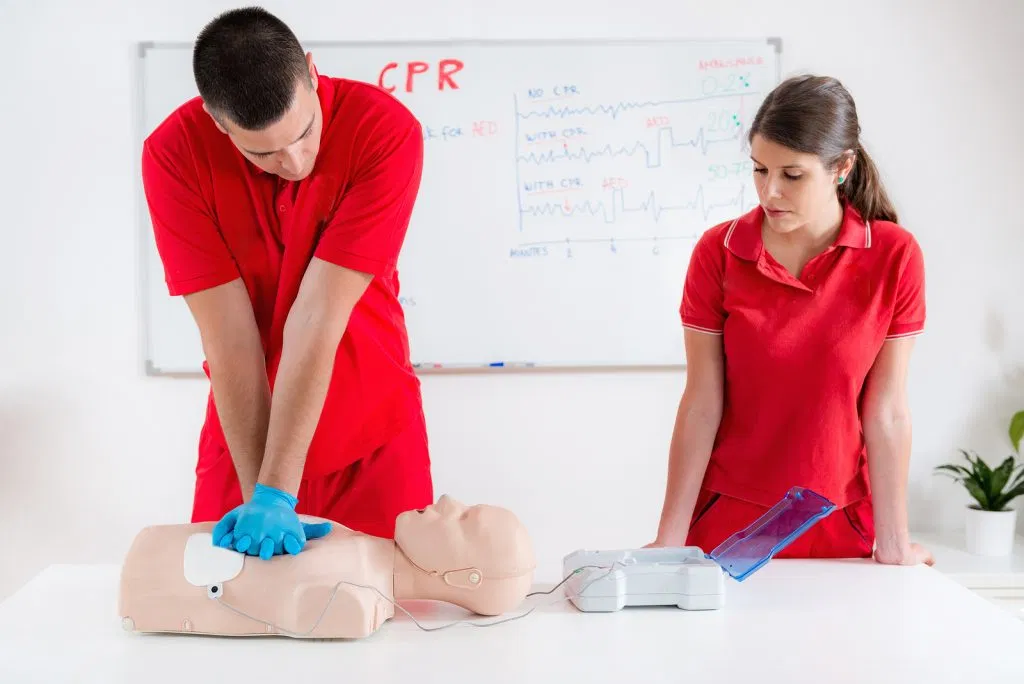
The HLTAID009 Provide CPR unit teaches the practical skills needed to respond to a person who is unconscious and not breathing normally.
The standard emergency response is DRSABCD:
- Danger: Check for hazards to yourself, bystanders and the casualty.
- Response: Speak to the person and gently squeeze their shoulders.
- Send for help: Direct someone to call 000 and bring an AED.
- Airway: Open the airway and check for obvious obstruction.
- Breathing: Check for normal breathing for up to 10 seconds. Gasping is not normal breathing.
- CPR: Start CPR if the person is not breathing normally.
- Defibrillation: Apply an AED as soon as it arrives and follow its prompts.
For adult CPR, use:
- 30 chest compressions followed by two rescue breaths.
- A compression rate of 100–120 compressions per minute.
- A depth of approximately one-third of the chest depth (about 5 cm in an adult).
- Minimal interruptions until the person recovers or emergency services take over.
If you are unsure whether a person is in cardiac arrest, act on the available signs. Call 000, start CPR and use an AED. The emergency call-taker can provide instructions while help is travelling to you.
CPR skills decline when they are not practised. CPR certification should generally be refreshed every 12 months. Yatson Training helps local businesses Learn CPR in Albury / Wodonga through flexible, hands-on sessions designed around real workplace needs.
3. Know what HLTAID011 Provide First Aid covers
The HLTAID011 Provide First Aid unit covers a broader range of workplace emergencies. It includes CPR, but it also addresses injuries and medical conditions that may occur in an office, warehouse, workshop, retail environment or outdoor worksite.
Training may cover how to:
- Assess an emergency scene safely.
- Manage severe bleeding and shock.
- Treat burns and soft tissue injuries.
- Support a person with asthma or anaphylaxis.
- Recognise possible heart attack or stroke.
- Respond to seizures and diabetic emergencies.
- Manage fractures, dislocations and sprains.
- Apply bandages and slings.
- Use an AED.
- Communicate with 000 operators and other responders.
- Complete workplace incident and treatment records.
Practical training matters. A first aider may need to kneel on a hard floor, apply firm pressure to a wound, maintain CPR compressions or communicate clearly while others are under pressure.
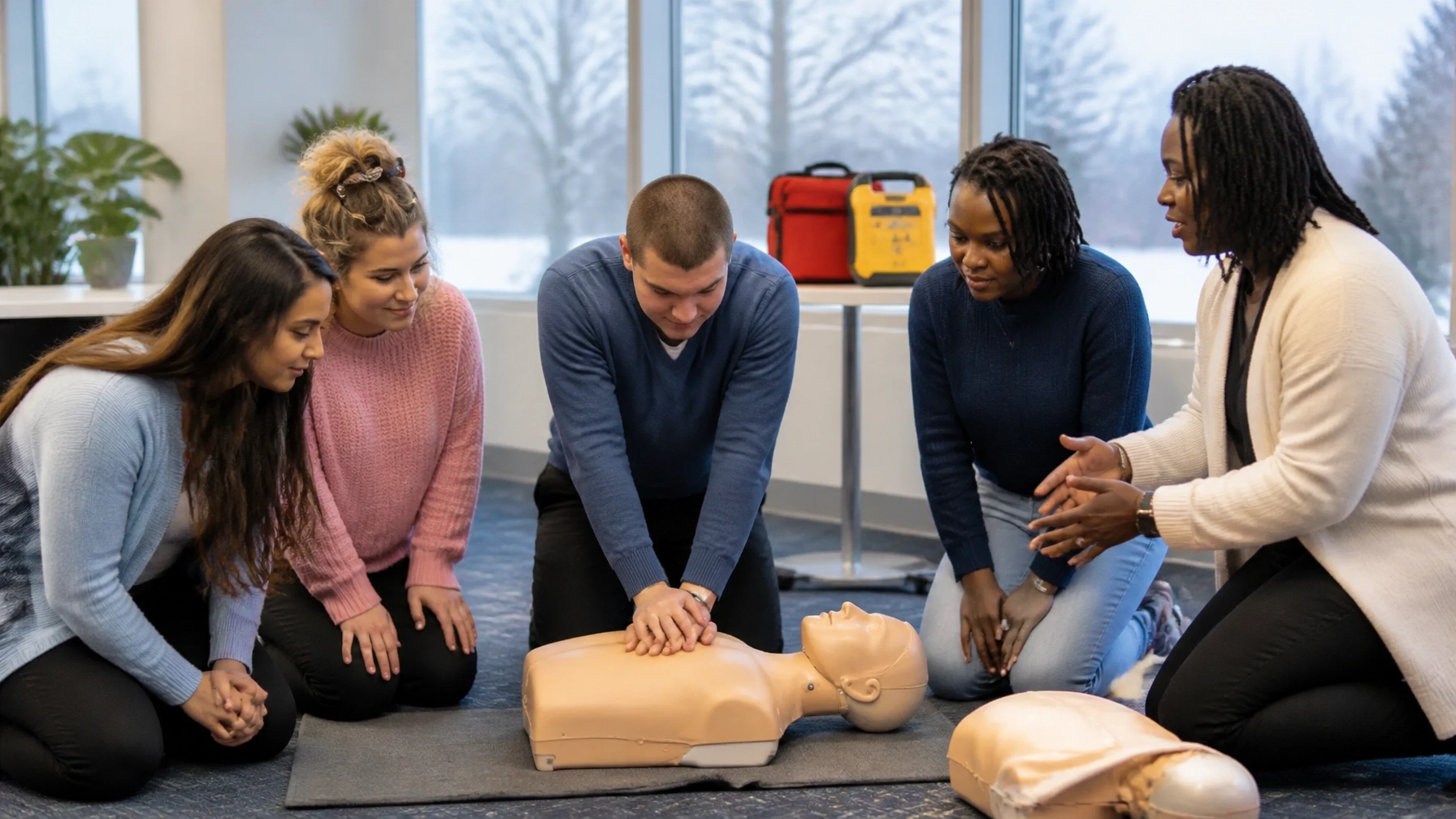
Yatson Training provides HLTAID011 Provide First Aid training in Albury / Wodonga with practical scenarios, manikins, bandages and AED trainers. Lead trainer Jackie Hislop is a Registered Nurse, and the training team focuses on making sessions interactive, clear and relevant.
The course is suitable for corporate clients, small groups and individuals who need reliable Workplace First Aid certification.
4. Prepare your Albury Wodonga workplace for winter
Winter creates practical hazards across the Border region. Cold mornings, frost, rain, reduced daylight and wet footwear can increase the likelihood of slips, trips and falls.
Use these winter safety measures:
- Inspect entrances, paths and car parks each morning.
- Look for frost, ice, mud and pooled water.
- Apply suitable grit or another traction treatment where required.
- Mop up tracked-in rain immediately.
- Place wet-floor signs around hazards until the surface is dry.
- Keep outdoor work areas well lit.
- Encourage suitable non-slip footwear with good tread.
- Keep walkways clear of boxes, cords and equipment.
- Provide warm, dry areas for workers who spend time outdoors.
- Review procedures for isolated and early-morning work.
Train workers to recognise possible cold-related illness. Symptoms may include intense shivering, pale or cold skin, tiredness, confusion, drowsiness and slurred speech.
If a worker may be affected by cold exposure:
- Move the person to a warm, dry location.
- Remove wet clothing where practical.
- Add dry layers, jackets or blankets.
- Offer a warm non-alcoholic drink only if the person is conscious and able to swallow.
- Monitor the person.
- Call 000 if symptoms are severe, worsening or include confusion, reduced responsiveness or significant drowsiness.
Do not rub cold skin or use extreme heat. Follow first aid training and emergency service instructions.

5. Make emergency procedures easy to follow
Your first aid procedure should be available to every worker. Keep the wording simple and explain it during induction.
Include:
- The location of every first aid kit and AED.
- The names or roles of current first aiders.
- How to contact a first aider.
- Who calls 000 and who meets the ambulance.
- How to provide access for emergency vehicles.
- How to report injuries and illnesses.
- How to protect workers from blood and body substances.
- How to maintain first aid equipment.
- How to arrange support after a serious incident.
Display emergency contact information in visible locations. Make sure workers know the site address, including the correct suburb and entry point. This is particularly important for large industrial sites, warehouses and businesses near the NSW–Victoria border.
Review your procedure after an incident, workplace change or near miss.
Our recommendation: train for the workplace you actually have
Do not choose first aid training solely because it is the quickest or cheapest option. Select training that reflects your workers, hazards and operating hours.
Yatson Training offers:
- Flexible Corporate First Aid training at your workplace or a training location.
- Hands-on HLTAID009 CPR sessions.
- HLTAID011 Provide First Aid courses.
- Training for small groups and individuals.
- Support from the initial enquiry through to final certification.
- Practical instruction delivered by experienced trainers.
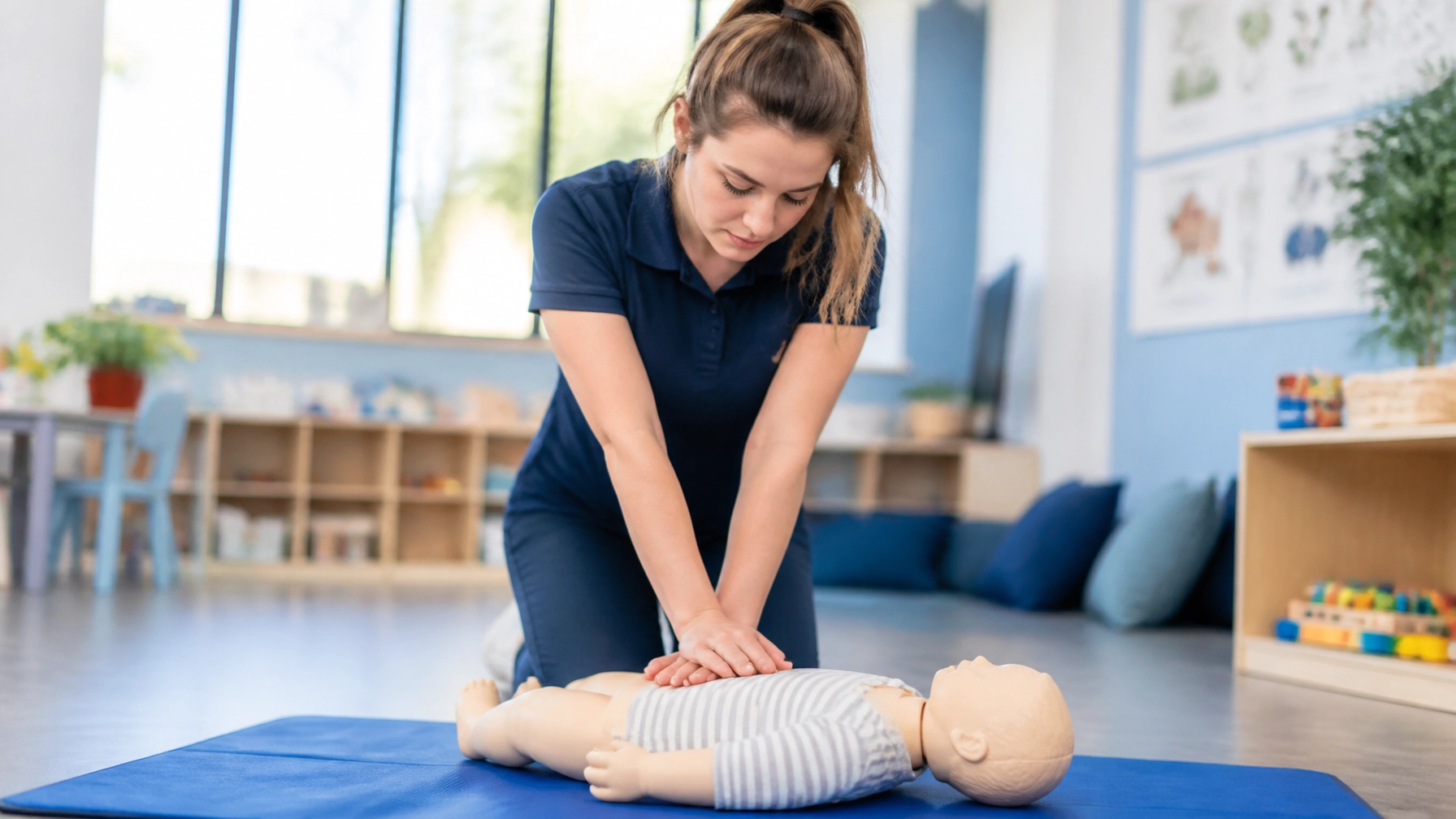
- Childcare First Aid course HLTAID012 options for eligible childcare and education workers.
Review your training records regularly. Refresh CPR every year and renew broader first aid training every three years, while also checking whether your industry or regulator has additional requirements.
Visit the Yatson Training courses page or learn more about Corporate First Aid training in the Albury Wodonga area.
Frequently asked questions
How urgent is workplace first aid training?
It is urgent if your business does not currently have suitable coverage, accessible equipment or clear procedures. An emergency can happen before you have time to arrange training.
Is HLTAID009 enough for workplace compliance?
It may be appropriate where your workplace only requires CPR competency. Many workplaces need broader HLTAID011 Provide First Aid training. Complete a risk assessment before choosing a course.
Is professional training cost-effective?
Yes. Preventative training costs less than unmanaged injuries, extended disruptions, regulatory problems and avoidable harm. It also gives workers practical skills they can use at work and at home.
Can Yatson Training come to our Albury or Wodonga workplace?
Yatson Training provides flexible delivery for corporate businesses, small groups and individuals. Discuss your worker numbers, location, shifts and hazards with the team before booking.
Book your workplace training
Do not wait for a winter slip, serious injury or cardiac emergency to reveal a gap in your safety system. Telephone Yatson Training on 0450 533 179 for all your First Aid training needs, including HLTAID009 CPR, HLTAID011 Provide First Aid and corporate workplace sessions.
Visit yatsontraining.com.au to learn more. You can also connect with Yatson Training on Facebook and Instagram.
#FirstAidTraining #AlburyWodonga #WorkplaceSafety #HLTAID009 #HLTAID011 #LearnCPR #WorkplaceFirstAidCertification #CorporateFirstAidTraining #ChildcareFirstAid #WinterSafety #SafeWorkplace #YatsonTraining