
Workplace emergencies can happen in an office, warehouse, workshop, childcare service, retail store or work vehicle. The first few minutes often determine whether an injury becomes worse while you wait for professional medical assistance.
If you work in Albury, Wodonga or the surrounding region, prepare your team to respond using a clear process. Learn how to recognise danger, call Triple Zero (000), provide immediate care and communicate effectively with emergency services.
Professional First Aid training helps your workers act calmly and correctly. Yatson Training provides flexible, hands-on training for corporate clients, small groups and individuals.
What is workplace emergency response all about?
Workplace emergency response is the immediate action you take when someone is injured or becomes seriously ill at work. Its function is to preserve life, prevent further harm and support recovery until paramedics or other professional medical care arrives.
Your response should begin with the DRSABCD action plan:
- Danger: Check that the area is safe for you, the casualty and bystanders.
- Response: Check whether the person responds to your voice or touch.
- Send for help: Call Triple Zero (000), or direct a specific person to call.
- Airway: Open and check the airway.
- Breathing: Check for normal breathing for up to 10 seconds.
- CPR: Start CPR if the person is not breathing normally.
- Defibrillation: Apply an AED as soon as one is available.
Use the process taught in your training. Do not put yourself at risk by entering a dangerous area, touching live electrical equipment or approaching an uncontrolled chemical spill.
1. Cardiac arrest: start CPR immediately
Cardiac arrest occurs when the heart suddenly stops pumping effectively. The person will usually be unresponsive and not breathing normally. They may make occasional gasping sounds, but gasping is not normal breathing.
Take these steps:
- Check for danger and response.
- Call 000 and ask for an ambulance. Give the exact workplace address and entry instructions.
- Start CPR if the person is not breathing normally.
- Ask someone to bring the AED, if your workplace has one.
- Follow the AED voice prompts when it arrives.
- Continue CPR until the person starts breathing normally, a trained healthcare professional takes over or you are physically unable to continue.
For adult CPR, use the following general approach:
- Place the heel of one hand on the lower half of the breastbone, in the centre of the chest.
- Place your other hand on top.
- Compress the chest by approximately one-third of its depth.
- Maintain a rate of 100–120 compressions per minute.
- Give 30 compressions followed by two breaths if you are trained and willing to provide rescue breaths.
- Use continuous chest compressions if you cannot provide breaths.
An AED can be used by a trained or untrained person. Turn it on, attach the pads as shown and follow the instructions. Ensure everyone stands clear when the AED analyses the heart rhythm or delivers a shock.

The Healthdirect CPR guide provides further information. Your team should also practise these skills during HLTAID009 Provide Cardiopulmonary Resuscitation training.
2. Severe bleeding: apply firm pressure
Severe bleeding can result from machinery incidents, sharp tools, broken glass, falls or vehicle-related accidents. Blood loss can become life-threatening quickly.
Respond as follows:
- Check that the scene is safe.
- Wear gloves or use a barrier if available.
- Call 000 for heavy, uncontrolled or spurting bleeding.
- Apply firm, direct pressure over the wound with a dressing, pad or clean cloth.
- Keep pressure applied until help arrives.
- Add another pad over the top if blood soaks through. Do not remove the original dressing.
- Keep the person still and warm while monitoring their breathing and response.
- Do not remove an embedded object. Apply pressure around it and secure padding over the area.
- Use a commercial tourniquet only if it is appropriate, available and you have been trained to use it.
Do not wash a heavily bleeding wound before controlling the bleeding. Do not give the casualty food or drink. Record the time of major actions, including when a tourniquet was applied, and provide this information to paramedics.
3. Choking: identify the severity quickly
A person with a mild airway obstruction may be able to speak, cough or breathe. Encourage them to keep coughing and observe them closely.
A person with a severe obstruction may be unable to speak, cough or breathe. They may become silent, distressed or clutch their throat.
Take action:
- Ask the person whether they are choking.
- Call 000 if the obstruction is severe or does not clear promptly.
- Give firm back blows between the shoulder blades, checking after each blow.
- If the obstruction remains, provide chest thrusts as taught in your First Aid course.
- Continue alternating actions according to your training and the emergency operator’s instructions.
- If the person becomes unresponsive, lower them safely to the floor and follow DRSABCD.
- Start CPR if they are not breathing normally.
- Remove only an object that is clearly visible. Do not blindly sweep inside the mouth.
Choking procedures differ for adults, children and infants. Include the appropriate response in your workplace training, particularly if your team works in childcare, education, hospitality or healthcare.
Yatson Training also delivers the HLTAID012 Childcare First Aid course for education and care settings.
4. Burns: stop the burning process and cool the area
Burns can occur in kitchens, workshops, laboratories, manufacturing areas and outdoor work environments. They may be caused by heat, steam, chemicals or electricity.
Use this process:
- Remove the person from danger if it is safe to do so.
- Stop the heat source, isolate electricity or brush off dry chemicals.
- Cool the burn with cool running water for at least 20 minutes.
- Remove jewellery, watches and loose clothing before swelling develops.
- Do not remove clothing stuck to the skin.
- Do not apply ice, butter, creams or ointments.
- Cover the burn with a sterile non-stick dressing or clean plastic film.
- Call 000 for large, deep or severe burns, electrical burns, chemical burns or burns affecting the face, airway, hands or genitals.
- Continue monitoring the person for shock and breathing difficulties.
Chemical burns require large amounts of running water. Protect yourself from splashes and follow your workplace chemical safety procedure. Consult the relevant Safety Data Sheet where appropriate.
5. Slips, trips and falls: control the hazard before moving anyone
Slips, trips and falls are common workplace incidents. They can result in bruising, sprains, fractures, head injuries or spinal injuries.
Start with scene safety:
- Isolate wet floors, moving machinery, traffic or other hazards.
- Check the person’s response and breathing.
- Call 000 for serious injury, loss of consciousness, breathing problems, severe pain or suspected spinal injury.
- Keep the person still if they have fallen from a height, struck their head or report neck or back pain.
- Support the head in the position found if a spinal injury is suspected.
- Do not move the person unless there is immediate danger, or you need to provide CPR.
- Do not straighten a deformed limb.
- Support a suspected fracture in the most comfortable position.
- Check colour, warmth, sensation and movement beyond the injury.
- Apply a wrapped cold pack to minor sprains if appropriate.
- Report the incident and remove the hazard after the casualty has been cared for.

A proper response involves both first aid and prevention. Investigate why the incident occurred. Repair damaged flooring, improve lighting, clean spills and review manual handling or housekeeping procedures.
The first five minutes: prepare your workplace now
Your first aid procedure should be simple enough to use under pressure. Review these points with your team:
- Identify trained first aiders on every shift.
- Display emergency contact information near fixed phones.
- Record the workplace address, nearest cross-street and best ambulance access point.
- Check that first aid kits are visible, accessible and stocked.
- Locate the AED and confirm that staff know how to access it.
- Assign someone to meet paramedics at the entrance.
- Protect the area from additional hazards.
- Document the incident according to your workplace reporting procedure.
- Restock the first aid kit after use.
- Debrief workers after a serious event and provide appropriate support.
SafeWork NSW states that workplaces must provide suitable first aid equipment, facilities and access to trained first aiders. The required arrangements depend on factors such as the nature of the work, workplace hazards, workforce size and location. Businesses in the Victorian part of Albury–Wodonga should also refer to WorkSafe Victoria requirements.
Read the SafeWork NSW first aid in the workplace guidance and the Safe Work Australia model Code of Practice when reviewing your arrangements.
Why HLTAID011 and HLTAID009 matter
A written emergency procedure is useful, but it cannot replace practical training. During a real incident, workers need to recognise an emergency, communicate clearly and perform physical skills under pressure.
HLTAID011 Provide First Aid covers a broad range of workplace emergencies, including CPR, bleeding, burns, fractures, shock and other first aid responses.
HLTAID009 Provide CPR focuses on recognising cardiac arrest, performing CPR and using an AED.
CPR skills should generally be refreshed every 12 months. First Aid qualifications are generally renewed every three years, subject to your workplace requirements and applicable guidance.
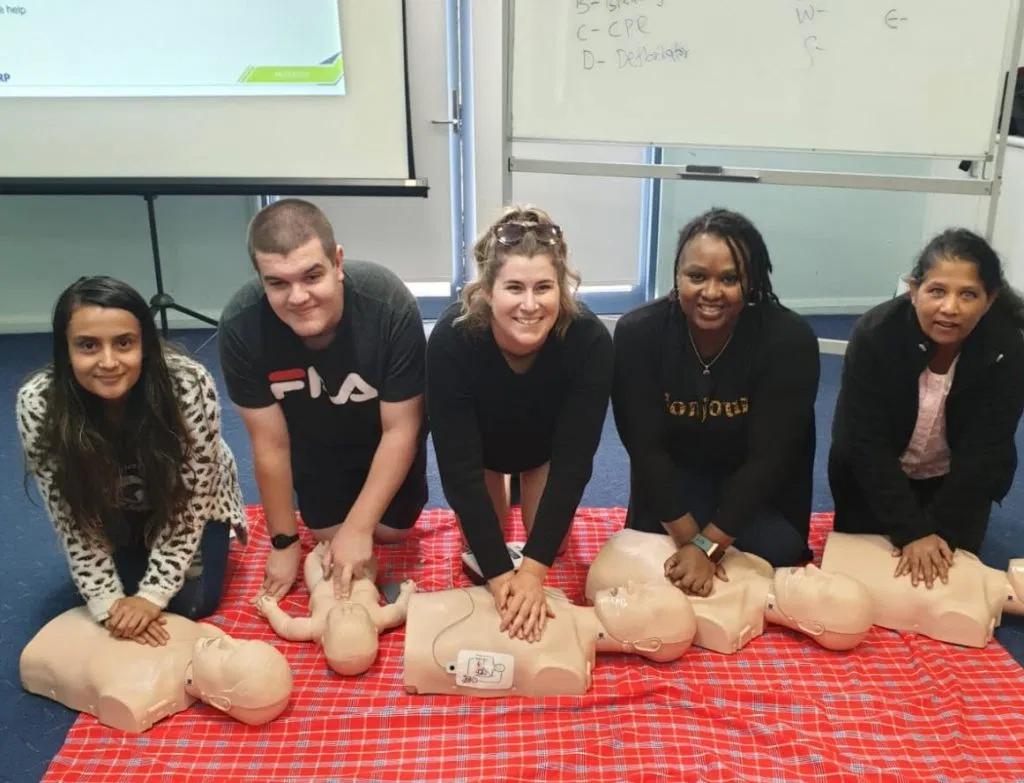
If you want to Learn CPR in Albury / Wodonga, choose training that includes realistic practice on manikins and equipment. Yatson Training provides interactive sessions designed to be practical, clear and relevant to your workplace.
Our recommendation
Do not wait until an incident exposes a gap in your emergency plan. Review your hazards, first aid kits, AED access, shift coverage and emergency communication process.
Then book professional training that matches your workplace risk. Yatson Training provides flexible, hands-on Corporate First Aid training in Albury and Wodonga, as well as training for small groups and individuals.
Lead trainer Jackie Hislop is a Registered Nurse. Yatson Training supports you from your initial enquiry through to training and final certification.
Frequently asked questions
Is First Aid training necessary for a small workplace?
Yes. Every workplace needs suitable first aid arrangements. The number of trained first aiders and the equipment required depend on your workplace size, activities, hazards, location and operating hours.
Is HLTAID011 the same as workplace First Aid certification?
HLTAID011 is the nationally recognised unit commonly used for workplace First Aid certification. Confirm the exact requirement for your industry, role or regulator before enrolling.
How often should CPR be refreshed?
CPR should generally be refreshed annually. Frequent practice helps you maintain compression technique, AED confidence and the ability to follow DRSABCD.
Can Yatson Training deliver training for our whole team?
Yes. Yatson Training offers flexible, hands-on training for corporate clients, small groups and individuals across Albury, Wodonga and surrounding areas.
How do we book training?
Telephone Yatson Training on 0450 533 179 for all your First Aid training needs. You can also visit yatsontraining.com.au to review available courses and enquire about workplace training.
Book your workplace First Aid training
Prepare your team before an emergency occurs. Telephone Yatson Training today on 0450 533 179 to discuss HLTAID011, HLTAID009, workplace First Aid certification or tailored Corporate First Aid training in Albury Wodonga.
Follow Yatson Training on Facebook, Instagram and YouTube for First Aid and workplace safety information.
#FirstAidTraining #AlburyWodonga #WorkplaceSafety #HLTAID011 #HLTAID009 #CPRTraining #CorporateFirstAidTraining #WorkplaceFirstAidCertification #LearnCPR #FirstAidCourse #YatsonTraining #WHS #AEDTraining