
What are seizures and diabetic emergencies all about?
Seizures and diabetic emergencies can occur in any workplace across Albury and Wodonga. They may happen in an office, warehouse, construction site, school, childcare service or retail environment.
A seizure is a sudden change in the brain’s electrical activity. Epilepsy is a condition that causes recurring seizures. A diabetic emergency occurs when blood glucose becomes dangerously low or high.
Your response should focus on safety, breathing, observation and early medical assistance. Do not diagnose the person. Do not delay calling Triple Zero (000) if the emergency is severe or you are unsure what to do.
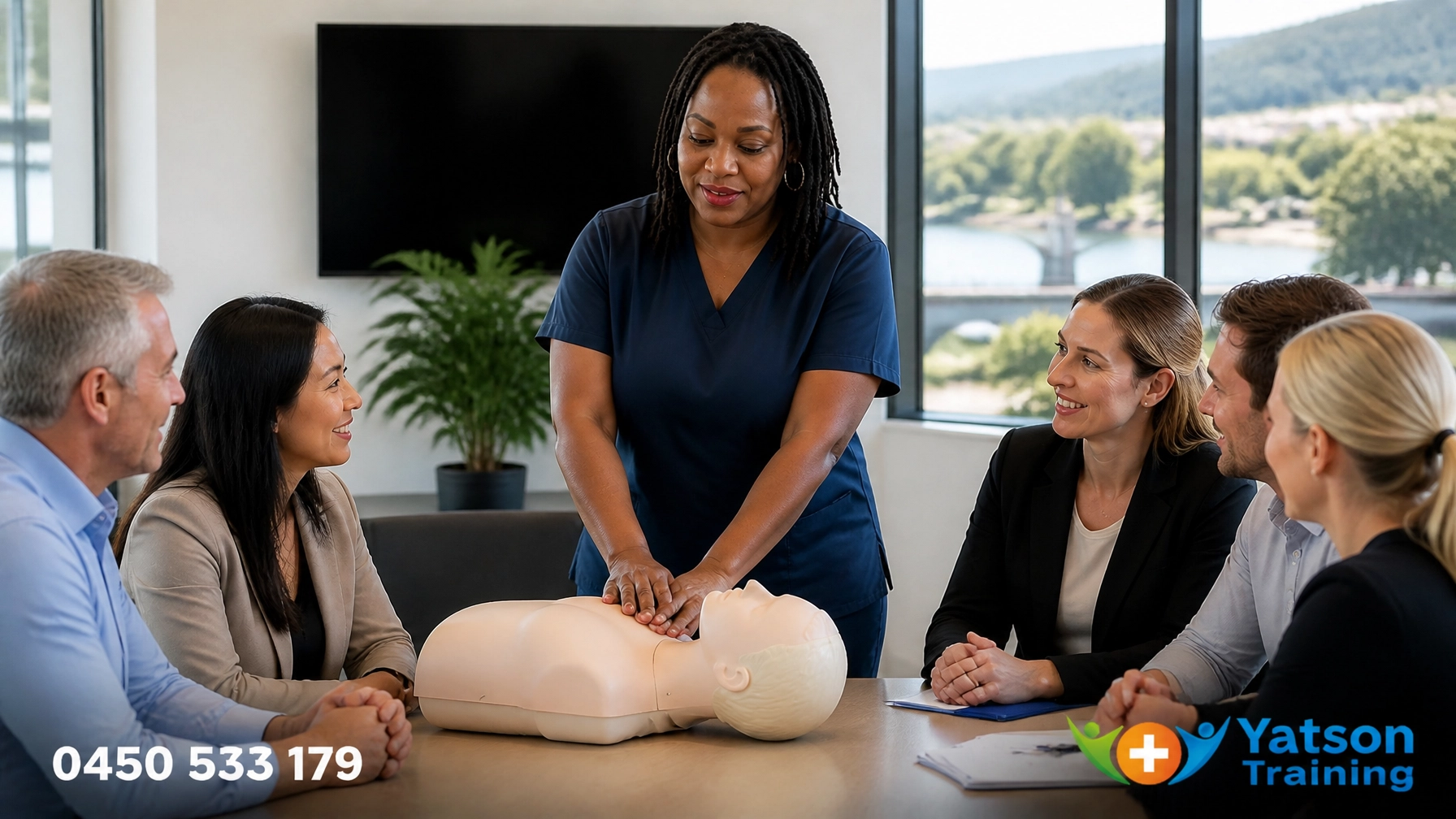
Yatson Training provides practical Corporate First Aid training in Albury Wodonga. Our experienced trainers, including lead trainer Jackie Hislop, a Registered Nurse, help workplaces practise the physical steps needed during real emergencies.
Recognise a seizure at work
A seizure may look different from person to person. Common signs include:
- Sudden collapse or loss of awareness.
- Stiffening of the body.
- Rhythmic jerking or shaking.
- Unusual movements or staring.
- Loss of bladder or bowel control.
- Confusion, drowsiness or fatigue after the seizure.
- Difficulty speaking or responding after the episode.
Some seizures are subtle. A person may appear confused, unresponsive or unusually repetitive rather than experiencing obvious convulsions.
Ask a co-worker whether the person has an epilepsy management plan. If one is available, follow it. The plan may state the person’s usual seizure pattern, when to call 000 and whether prescribed emergency medication is available.
Step-by-step seizure first aid
Follow these steps when a colleague is having a seizure:
- Stay calm and stay with the person.
- Check for danger. Move furniture, tools, hot objects and other hazards away from them.
- Protect their head. Place something soft underneath it if possible.
- Loosen tight clothing around the neck.
- Time the seizure. Note when the movements start and stop.
- Allow the seizure to run its course. Do not try to hold the person down.
- Move the person only if there is immediate danger.
- When the movements stop, place the person in the recovery position if they are breathing normally.
- Check their breathing and monitor their response.
- Reassure them as they regain awareness. Explain what happened and keep other staff members back to provide privacy.

What not to do during a seizure
Never:
- Put anything in the person’s mouth.
- Put your fingers, a spoon, a pen or any other object between their teeth.
- Give food, drink or medication while they are unconscious or not able to swallow safely.
- Restrain their arms or legs.
- Attempt to stop the movements.
- Move them unless the environment is dangerous.
- Leave them alone during or immediately after the seizure.
The person will not swallow their tongue. Placing an object in their mouth can cause choking, broken teeth or injury to the rescuer.
When to call 000 for a seizure
Call Triple Zero (000) immediately if:
- The seizure lasts five minutes or longer.
- Another seizure begins before the person recovers.
- The person does not regain consciousness or normal responsiveness.
- It is their first known seizure.
- The person has been injured.
- They are having difficulty breathing.
- The seizure occurs in water.
- The person is pregnant.
- No epilepsy management plan is available and you are concerned.
- You are unsure whether the event is a seizure or another medical emergency.
If the person stops breathing normally, start CPR and use the workplace AED as soon as it is available. A trained person should follow the AED prompts and continue CPR until help arrives.
For further guidance, review the Epilepsy Foundation seizure first aid information and the Better Health Channel epilepsy first aid advice.
Recognise hypoglycaemia: low blood glucose
Hypoglycaemia, commonly called a hypo, occurs when blood glucose is too low. It can develop quickly and may affect a person’s judgement and behaviour.
Signs may include:
- Shaking or trembling.
- Sweating.
- Hunger.
- Pale skin.
- Headache.
- Irritability or unusual behaviour.
- Confusion.
- Difficulty concentrating.
- Slurred speech.
- Drowsiness.
- Seizure or unconsciousness in severe cases.
A person with diabetes may recognise the symptoms before anyone else. Listen to them and follow their diabetes management plan where possible.
Step-by-step response to a suspected hypo
If the person is conscious, cooperative and able to swallow safely:
- Stop work and move them to a safe place.
- Help them sit or lie down.
- Ask whether they have diabetes and a personal management plan.
- Help them check their blood glucose if they have a meter and want assistance.
- Give fast-acting carbohydrate, such as glucose tablets, jelly beans, regular soft drink, fruit juice, sugar or honey.
- Wait 10 to 15 minutes.
- Repeat the fast-acting carbohydrate if symptoms continue or blood glucose remains low.
- Give a longer-acting carbohydrate snack when they improve (for example, a sandwich, milk, fruit or biscuits with cheese).
- Keep monitoring them. Do not allow them to drive or return to hazardous work until they have recovered and are safe to do so.
If the person is unconscious, having a seizure or cannot swallow safely:
- Call 000 immediately.
- Place them in the recovery position if they are breathing normally.
- Do not give food, drink, glucose or medication by mouth.
- Do not give insulin.
- Follow an individual emergency plan if one is available and you are trained and authorised to administer prescribed glucagon.
- Be prepared to start CPR if they are not breathing normally.
Never give insulin to treat a hypo. Insulin lowers blood glucose and can make the emergency worse.
Read more from Diabetes Australia about hypoglycaemia and hyperglycaemia and St John Ambulance Australia’s diabetes first aid information.
Recognise hyperglycaemia: high blood glucose
Hyperglycaemia means blood glucose is too high. It can develop more gradually than a hypo but may become serious.
Possible signs include:
- Excessive thirst.
- Frequent urination.
- Tiredness or weakness.
- Blurred vision.
- Nausea or vomiting.
- Abdominal pain.
- Dry mouth.
- Fruity-smelling breath.
- Deep or rapid breathing.
- Increasing drowsiness or confusion.
Deep breathing, vomiting, fruity breath and confusion may indicate diabetic ketoacidosis (DKA), which requires urgent medical care.
Help the person follow their own diabetes management plan. Encourage water only if they are conscious and can swallow safely. Do not administer insulin or other medication unless this is part of the person’s plan and they are directing their own treatment, or an authorised and trained person is following the appropriate procedure.
Call 000 if the person is very unwell, vomiting, confused, drowsy, breathing deeply or rapidly, unable to drink safely, or not improving. Tell the operator that you suspect a diabetes emergency.
Prepare your Albury Wodonga workplace
Good Workplace Safety planning reduces delays and confusion. Complete these practical steps:
- Ask workers to voluntarily disclose relevant medical information confidentially.
- Store epilepsy management plans and diabetes emergency plans where authorised first aiders can access them.
- Record the location of emergency medication, glucose supplies and personal monitoring equipment.
- Include glucose tablets or other fast-acting carbohydrate in the workplace first aid arrangements where appropriate.
- Keep the first aid kit clearly labelled and accessible.
- Display the AED location and check that staff know how to reach it.
- Make sure entrances and access routes are clear for paramedics.
- Keep the exact workplace address and entry instructions beside workplace phones.
- Train staff to provide the site address, describe the person’s condition and follow the 000 operator’s directions.
- Review incident reports and update procedures after an emergency.
- Maintain staff coverage so a trained first aider is available during operating hours.

Our recommendation: practise before an emergency
Reading first aid instructions is useful, but it does not replace hands-on training. In an emergency, you may need to protect someone during a seizure, place them in the recovery position, call 000, begin CPR or use an AED while managing bystanders.
Yatson Training provides:
- HLTAID011 Provide First Aid for comprehensive workplace and general first aid skills.
- HLTAID009 Provide CPR for CPR, AED and emergency response practice.
- HLTAID012 Childcare First Aid for education and care settings.
- Additional professional development in diabetes and seizure management.
Training is available for corporate clients, small groups and individuals across Albury Wodonga. Yatson Training offers flexible on-site delivery, experienced instruction and full support from enquiry through to certification.
Book First Aid training in Albury Wodonga
Do not wait until a colleague has a seizure or diabetic emergency before reviewing your workplace response.
For professional First Aid Training Albury Wodonga, hands-on Corporate First Aid training, or Workplace First Aid certification, telephone Yatson Training on 0450 533 179. We can help you choose the right course for your team, including HLTAID011 Provide First Aid, HLTAID009 Provide CPR and HLTAID012 Childcare First Aid.
Visit yatsontraining.com.au to learn more.
Follow Yatson Training on Facebook, Instagram and YouTube for training updates and safety information.
Frequently asked questions
Should every workplace have a seizure management procedure?
Every workplace should have a clear emergency response procedure. Where a worker has epilepsy and chooses to disclose it, an individual management plan can help first aiders understand their usual seizures and when to call 000.
Can I give food or drink to someone having a seizure?
No. Never give anything by mouth during a seizure or while the person is unconscious or unable to swallow safely. Place them in the recovery position after the seizure if they are breathing normally.
Can I give insulin to a worker with suspected high blood glucose?
No. Do not administer insulin to another person unless you are specifically trained, authorised and following an appropriate documented plan. Never give insulin to someone experiencing a suspected hypo.
Is professional training worth the cost?
Yes. A trained workplace responder can recognise danger, call 000 early, protect a person from injury, provide CPR and use an AED. Practical training helps reduce hesitation and supports a safer, more organised response.
Call Yatson Training today on 0450 533 179 for your workplace, small group or individual First Aid training needs.
#FirstAidTraining #AlburyWodonga #WorkplaceSafety #CorporateFirstAid #WorkplaceFirstAidCertification #HLTAID011 #HLTAID009 #HLTAID012 #LearnCPR #LearnCPRAlburyWodonga #SeizureFirstAid #DiabetesFirstAid #EpilepsyAwareness #YatsonTraining