What are slips, trips and falls all about?
Slips, trips and falls happen when a person loses stable contact with a walking surface or falls from one level to another. A slip usually involves reduced traction. A trip occurs when the foot strikes an object or uneven surface. A fall can happen on the same level or from a height.
These incidents are a major workplace safety concern across Australia. They can cause sprains, fractures, cuts, head injuries and spinal injuries. Falls from height can be life-threatening.
Slips, trips and falls are one of the leading causes of workplace injury. However, national data from Safe Work Australia shows that manual handling and body stressing remain the most common overall cause of serious claims. Falls, slips and trips are still a significant and often preventable source of harm.
For businesses in Albury and Wodonga, prevention should be supported by clear emergency procedures and current Workplace First Aid certification.
Common workplace hazards to identify
Inspect your workplace regularly. Look for hazards that may affect employees, contractors, visitors and customers.
Common slip, trip and fall hazards include:
- Spilt water, oil, chemicals or other liquids.
- Wet floors after cleaning.
- Loose mats, damaged carpet and uneven flooring.
- Trailing power cords, hoses and cables.
- Boxes, tools or stock left in walkways.
- Poorly stored equipment.
- Broken tiles, pavers or steps.
- Inadequate lighting.
- Unmarked changes in floor level.
- Unstable ladders or unsuitable access equipment.
- Smooth or worn footwear.
- Rushing, poor housekeeping or blocked access routes.
Do not rely only on warning signs or personal protective equipment. Use the hierarchy of control. Remove the hazard where reasonably practicable. Then isolate, redesign or manage the remaining risk.
How to prevent slips, trips and falls
Apply the following controls across your workplace:
- Keep walkways clear. Store equipment, stock and personal items away from access routes.
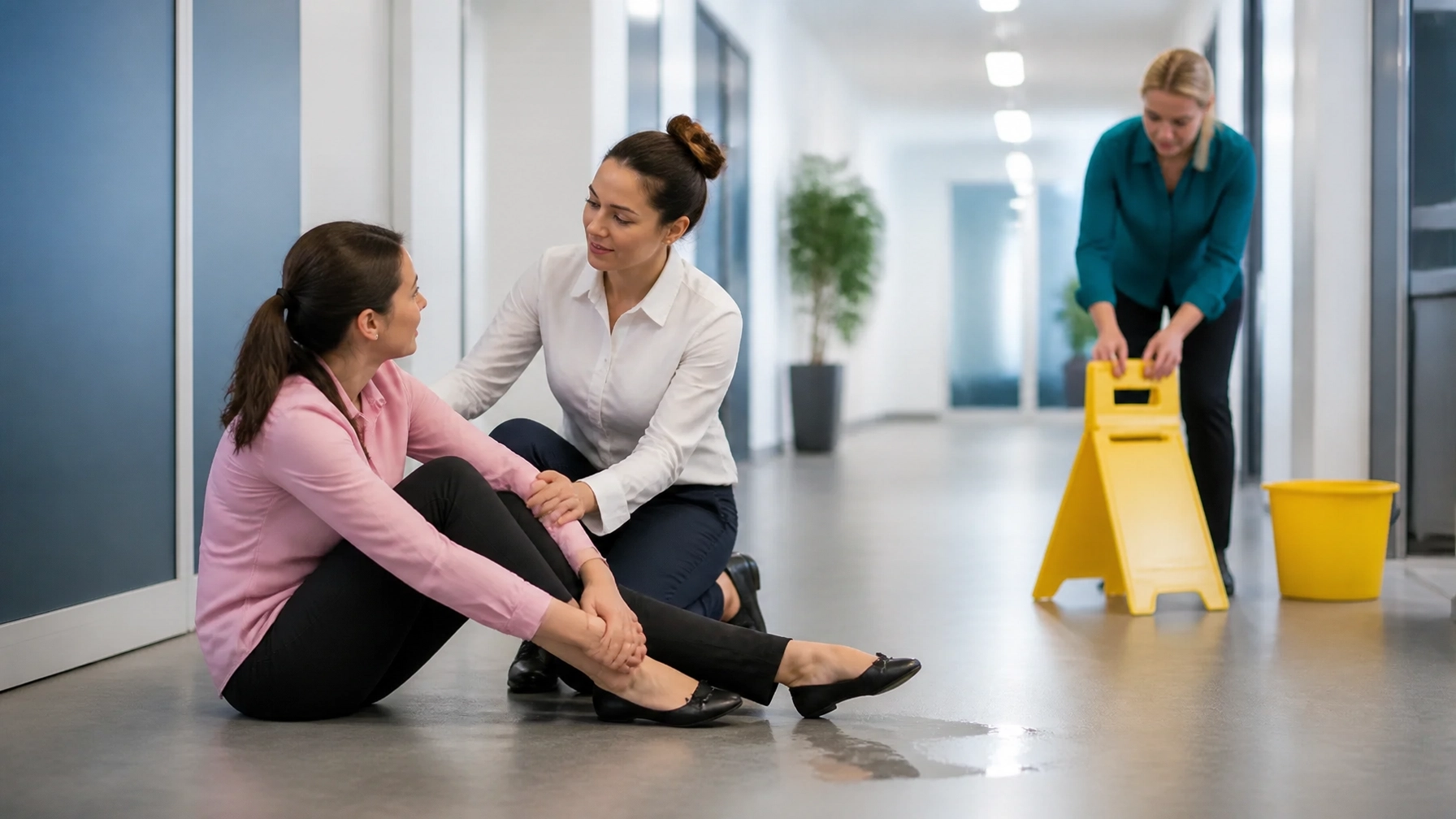
- Clean spills immediately. Isolate the area and use suitable signage while the surface dries.
- Repair damaged flooring. Fix holes, loose tiles, curled mats and uneven transitions promptly.
- Improve lighting. Make stairs, ramps, entrances and loading areas easy to see.
- Mark changes in level. Use suitable visual contrast on steps and edges.
- Install handrails. Provide stable support on stairs and ramps.
- Manage cables and hoses. Use safer routing, covers or overhead systems where appropriate.
- Choose suitable flooring. Use slip-resistant surfaces in wet or high-traffic areas.
- Provide appropriate footwear. Match footwear to the work task and floor conditions.
- Use the right access equipment. Never use chairs, boxes or unstable objects as makeshift steps.
- Inspect regularly. Include floors, stairs, ramps, entrances and outdoor paths in workplace inspections.
- Report hazards early. Give workers a simple process for reporting and resolving safety issues.
Review your controls after an incident, workplace change or near miss. A near miss may reveal a hazard before someone is seriously injured.
Read the Safe Work Australia guidance on slips, trips and falls for further risk-management information.

What to do after a workplace slip, trip or fall
A person who has fallen may have an injury that is not immediately obvious. Do not ask them to stand quickly or walk around to “test” the injury.
Follow your training and workplace emergency procedure.
Use DRSABCD
- Danger: Check that the area is safe. Look for traffic, machinery, electricity, unstable objects, broken glass or a wet surface.
- Response: Speak to the person and check whether they respond.
- Send for help: Ask someone to call 000 and bring the first aid kit and AED if required.
- Airway: Check and open the airway if the person is unresponsive.
- Breathing: Check for normal breathing for up to 10 seconds.
- CPR: Start CPR if the person is unresponsive and not breathing normally.
- Defibrillation: Apply an AED as soon as it is available and follow the device prompts.
The Australian and New Zealand Committee on Resuscitation (ANZCOR) recommends 30 compressions followed by two breaths for adult CPR, at a rate of 100 to 120 compressions per minute. If you are not trained or are unwilling to provide rescue breaths, perform continuous chest compressions until help arrives.
When to call 000
Call 000 immediately if the person has:
- Lost consciousness.
- Confusion, unusual drowsiness or a seizure.
- Difficulty breathing or chest pain.
- Severe or worsening pain.
- Heavy or uncontrolled bleeding.
- An obvious deformity or suspected fracture.
- Numbness, weakness or tingling.
- Severe neck or back pain.
- A suspected spinal injury.
- A significant head impact.
- Vomiting after a head injury.
- Signs of shock (pale, cold, clammy skin or a rapid, weak pulse).
- Fallen from a height or been struck by a vehicle, machinery or heavy object.
Do not move the person if you suspect a serious head, neck, back or leg injury. Move them only if there is immediate danger, such as fire, traffic or moving machinery.
Recognise symptoms after a fall
Some symptoms can develop or worsen after the incident. Monitor the person and arrange medical assessment when required.
Watch for:
- Increasing headache.
- Dizziness or loss of balance.
- Confusion or memory problems.
- Blurred or double vision.
- Nausea or vomiting.
- Increasing sleepiness.
- Severe swelling or bruising.
- Inability to move or bear weight.
- Reduced sensation or movement in a limb.
- Persistent pain in the neck, back, hip or abdomen.
- Changes in breathing or responsiveness.
For a suspected fracture, keep the injured area still. Do not straighten an obviously deformed limb. Apply a cold pack wrapped in cloth if appropriate and if this does not delay urgent medical care.
For bleeding, apply firm direct pressure with a clean dressing. If blood soaks through, place another dressing over the first one. Do not remove the original dressing.
First aid advice cannot replace professional medical assessment. If you are unsure, call 000 or seek medical advice.
Incident reporting and workplace review
After the person has received care, follow your workplace reporting process.
- Record what happened, when and where it happened.
- Note the task being performed and the surface conditions.
- Identify witnesses.
- Photograph the hazard if this is safe and permitted.
- Remove or control the hazard.
- Review whether the first aid response was effective.
- Check that equipment, signage and procedures were suitable.
- Update the risk assessment and provide further training if necessary.
Your first aid procedure should connect with your broader WHS system. Make sure workers know who the trained first aiders are, where the first aid kit is located and how to contact emergency services.

Keep in mind: prevention and first aid work together
A first aid course does not remove hazards from your workplace. It gives your team the skills to respond while the organisation improves its systems.
Your workplace should:
- Maintain an appropriate number of trained first aiders.
- Keep first aid kits accessible and stocked.
- Consider AED access based on your risk assessment.
- Display emergency contact information.
- Practise emergency response procedures.
- Include slips, trips and falls in inductions and toolbox talks.
- Provide refresher training when required.
- Review procedures after incidents and near misses.
Yatson Training provides professional, hands-on Corporate First Aid training for businesses across Albury and Wodonga. The nationally recognised HLTAID011 Provide First Aid course covers essential skills for responding to workplace injuries, medical emergencies and life-threatening situations.
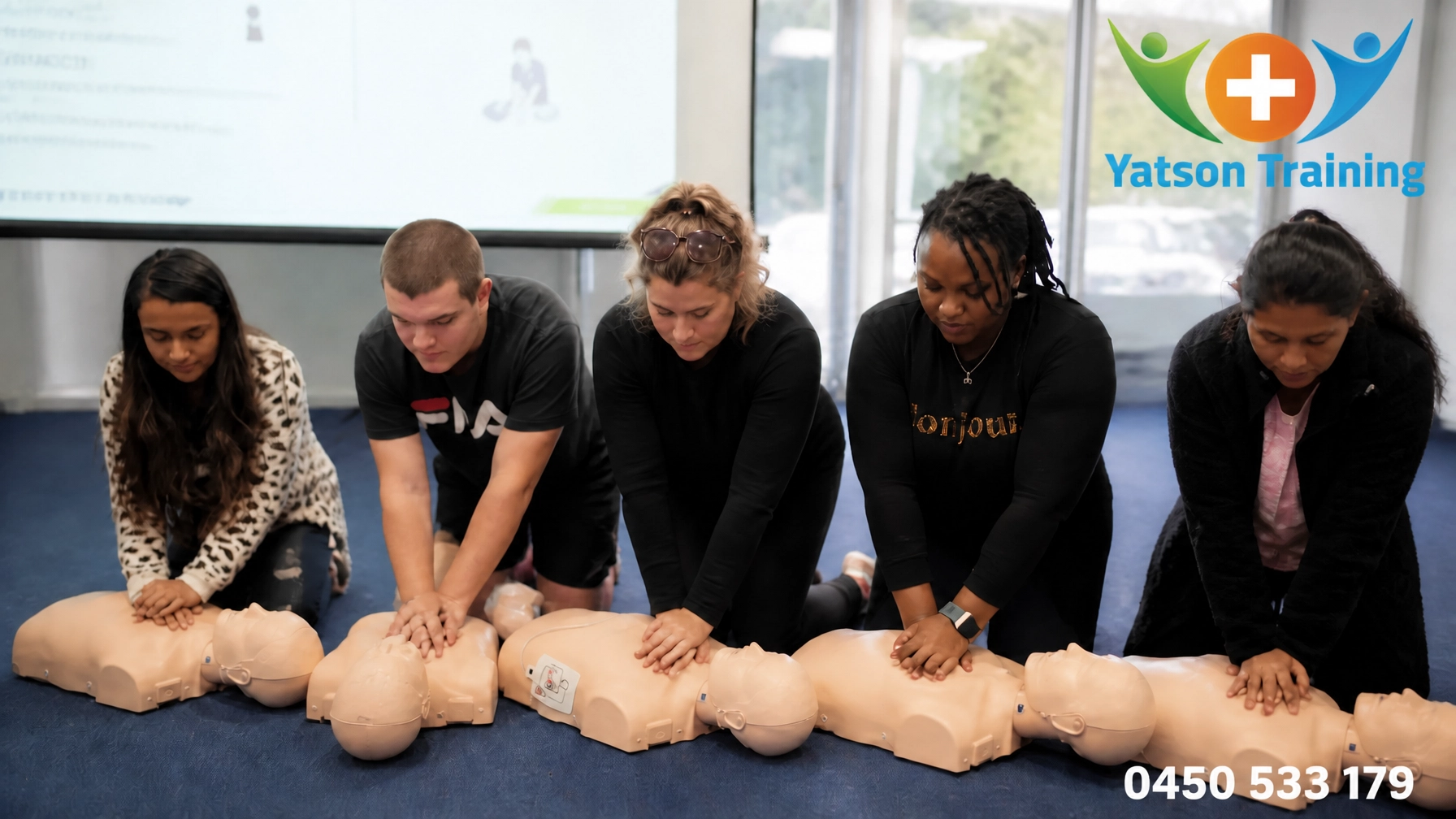
Training is interactive and practical. Participants practise CPR, use training equipment and work through realistic emergency scenarios. Lead trainer Jackie Hislop is a Registered Nurse, and the Yatson team supports you from your initial enquiry through to final certification.
Explore the Yatson Training courses or learn more about Albury Wodonga Corporate First Aid training.
Yatson Training also offers flexible sessions for corporate clients, small groups and individuals. If you need to Learn CPR in Albury Wodonga, arrange a CPR course or organise Workplace First Aid certification for your team, choose training that is practical and relevant to your environment.
Our recommendation
Complete a short workplace inspection this week. Focus on entrances, bathrooms, stairs, storage areas, kitchens, loading zones and busy walkways.
Then check three things:
- Can workers identify and report a slip or trip hazard?
- Can they quickly access a first aid kit and AED?
- Do your trained first aiders know how to respond to an injured or unresponsive person?
If the answer to any of these questions is no, update your procedure and arrange professional training.
FAQs about slips, trips, falls and first aid training
Are slips, trips and falls the most common workplace injury in Australia?
They are one of the leading causes and account for a substantial proportion of serious workplace injury claims. Manual handling and body stressing are the most common overall cause nationally. Every workplace should still manage fall risks because many are foreseeable and preventable.
Does HLTAID011 Provide First Aid cover falls?
HLTAID011 Provide First Aid covers a broad range of first aid responses, including assessing an injured person, managing bleeding, recognising serious injury and responding to an unresponsive casualty. Your training should be supported by workplace-specific procedures and risk controls.
Is CPR training necessary if our workplace has no high-risk machinery?
Yes. Cardiac arrest, medical emergencies and serious falls can happen in any workplace. CPR and AED skills may help maintain a person’s chance of survival until emergency services arrive.
How often should workplace first aid training be refreshed?
Follow current training package and workplace requirements. CPR skills are generally refreshed annually, while Provide First Aid certification is commonly renewed every three years. Confirm the requirements that apply to your industry and workplace.
How can I book First Aid Training in Albury Wodonga?
Contact Yatson Training to discuss your workforce, location and training needs. Telephone Yatson Training on 0450 533 179 for all your First Aid training needs, or visit yatsontraining.com.au.
Follow Yatson Training on Facebook, Instagram, LinkedIn and YouTube for course updates and workplace safety information.
#FirstAidTraining #WorkplaceSafety #CorporateFirstAidTraining #WorkplaceFirstAidCertification #HLTAID011 #ProvideFirstAid #LearnCPR #LearnCPRAlburyWodonga #FirstAidTrainingAlburyWodonga #AlburyWodonga #CPRTraining #WHS #SlipTripFallPrevention #AustralianFirstAid