
Maintaining a safe environment is a legal and moral obligation for every Australian business. Whether you operate a high-risk construction site or a low-risk office in Albury, understanding the fundamentals of first aid and CPR is essential for protecting your staff and staying compliant with Work Health and Safety (WHS) regulations. This guide provides practical tips and procedural steps to ensure your workplace is prepared for any emergency.
What is Australian First Aid and Workplace Safety all about?
Australian First Aid and Workplace Safety refers to the systematic approach of providing immediate care to ill or injured persons and maintaining a work environment that minimises hazards. It involves a combination of physical equipment (like first aid kits), environmental controls (like floor signage), and human expertise (like trained first-aiders). In Australia, these standards are governed by Safe Work Australia and the Australian Resuscitation Council (ANZCOR) to ensure that every worker has access to life-saving assistance when they need it most.
Common Workplace Injuries and Essential First Aid Tips
Workplace injuries can range from minor abrasions to life-threatening cardiac events. Recognising the symptoms early and taking the correct action is vital for a positive outcome.
Cuts and Severe Bleeding
- Symptoms: Visible break in the skin, active bleeding, or spurting blood (indicates arterial damage).
- Apply direct pressure to the wound using a sterile dressing or clean cloth.
- Maintain pressure for at least 10 to 15 minutes without lifting the dressing.
- Secure the dressing with a bandage once bleeding is controlled.
- Call 0450 533 179 to book your HLTAID011 Provide First Aid course and learn advanced wound management.
Burns and Scalds
- Symptoms: Redness, swelling, blisters, or charred skin.
- Run cool (not ice-cold) running water over the burn for at least 20 minutes.
- Remove any clothing or jewellery near the burn, unless it is stuck to the skin.
- Cover the area loosely with plastic wrap or a clean, lint-free dressing.
Sprains and Strains
- Symptoms: Pain, swelling, bruising, and difficulty moving the affected limb.
- Follow the RICE protocol: Rest, Ice (apply for 20 minutes every 2 hours), Compression (apply a firm bandage), and Elevation.

CPR Basics: Every Second Counts
Cardiopulmonary Resuscitation (CPR) is a life-saving technique used when a person's heart stops beating or they stop breathing normally. If you want to Learn CPR in Albury Wodonga, you must understand the current 2026 ANZCOR guidelines.
The DRSABCD Action Plan
- Danger: Check the site for hazards (like electrical wires or traffic) before approaching.
- Response: Squeeze the casualty's shoulders and ask loudly, "Can you hear me?"
- Send for help: Call Triple Zero (000) immediately.
- Airway: Open the mouth and check for obstructions (like food or vomit).
- Breathing: Look, listen, and feel for normal breathing for no more than 10 seconds.
- CPR: Start compressions if the person is unresponsive and not breathing normally.
- Defibrillation: Apply an Automated External Defibrillator (AED) as soon as it arrives.
Performing CPR on an Adult
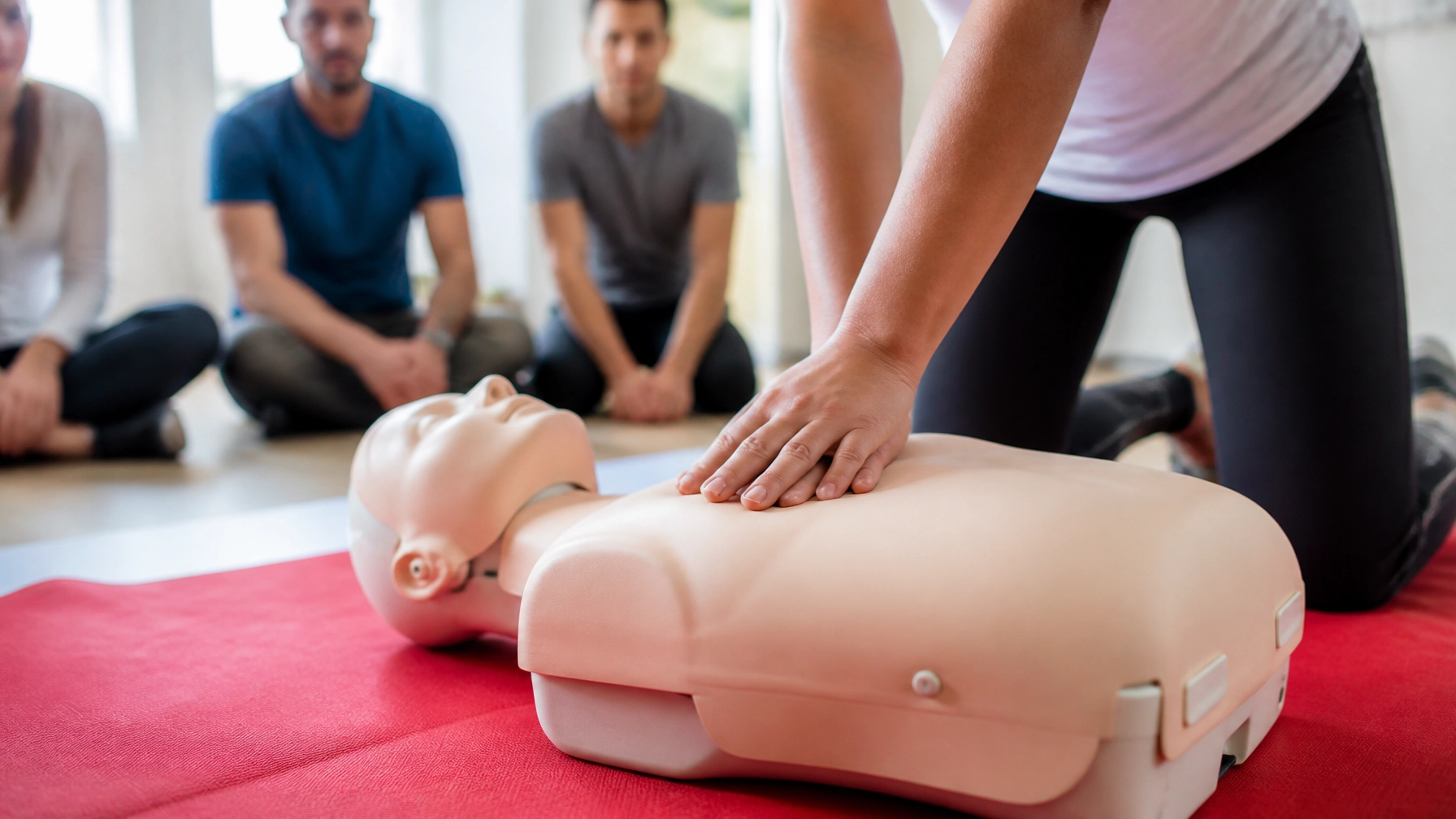
- Place the heel of one hand in the centre of the chest with the other hand on top.
- Push hard and fast to a depth of one-third of the chest (approximately 5–6 cm).
- Maintain a rate of 100 to 120 compressions per minute.
- Give 2 rescue breaths for every 30 compressions (if trained and willing).
Performing CPR on an Infant (Under 1 Year)
- Use two fingers in the centre of the chest.
- Push to a depth of one-third of the chest (approximately 4 cm).
- Give 30 compressions followed by 2 small puffs of air.

Practical Workplace Safety Tips for Australian Businesses
Effective Workplace Safety goes beyond just having a kit on the wall. It requires a proactive culture of risk management and regular workplace first aid compliance checks.
- Conduct a Risk Assessment: Identify specific hazards in your workplace, such as chemicals, heavy machinery, or repetitive tasks.
- Appoint First Aiders: Ensure you have enough trained staff based on your industry. A low-risk office generally requires 1 first-aider for every 50 workers, while high-risk sites require 1 for every 25.
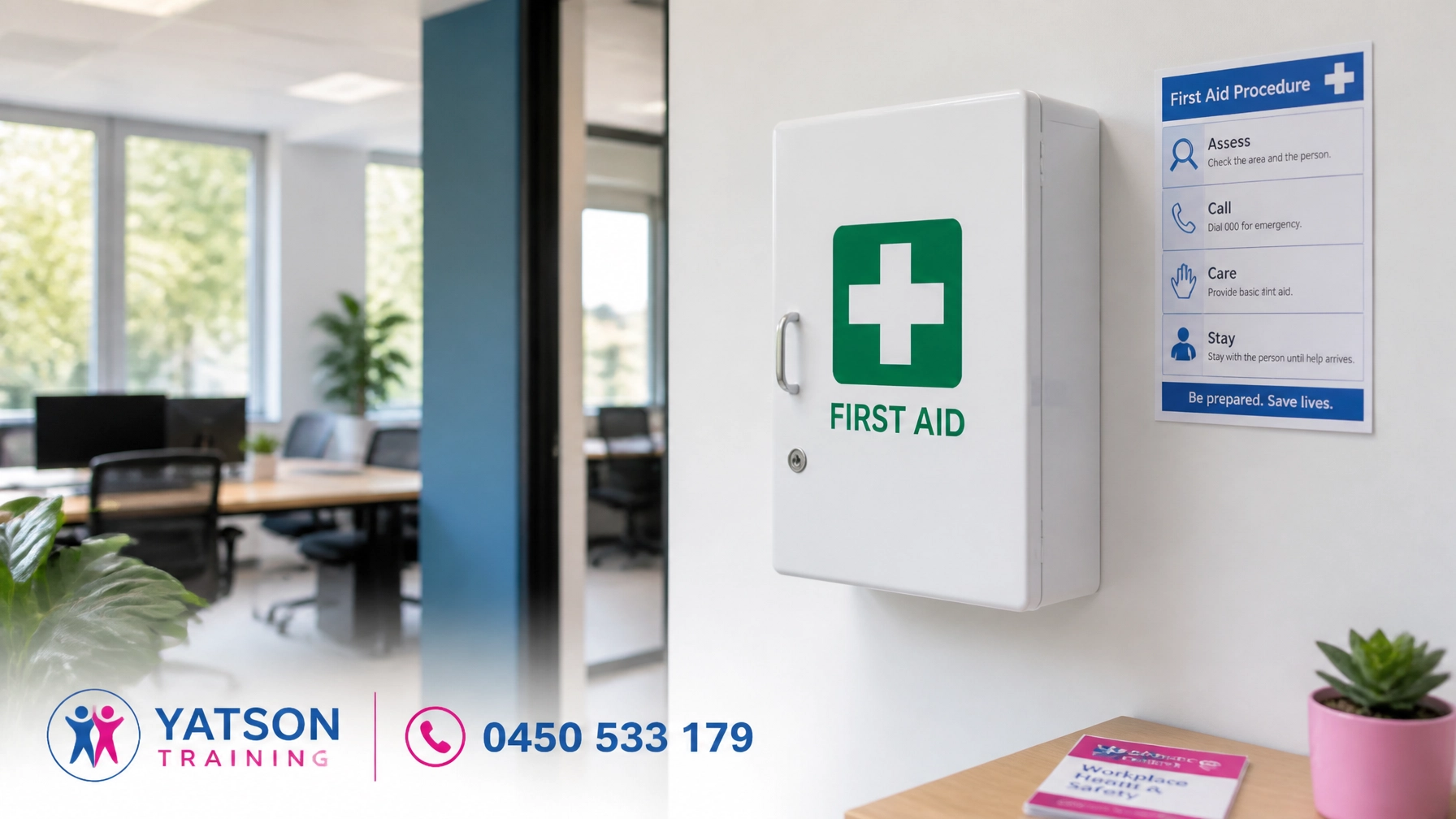
- Check Your Kits: Regularly audit your workplace first aid kit to replace expired items or used bandages.
- Display Signage: Clearly mark the location of first aid kits, AEDs, and emergency exits.
- Invest in Corporate First Aid training: Customised training ensures your team knows how to handle the specific risks present in your unique work environment.
Winter Safety in the Australian Workplace
Winter brings unique hazards to the Australian workplace, particularly in cooler regions like Albury and Wodonga.
- Prevent Slips: Keep entryways dry and use non-slip mats to manage rainwater or frost tracked indoors.
- Monitor Heating: Ensure all portable heaters are kept away from flammable materials and are turned off at the end of the day.
- Manage Illness: Encourage staff to stay home if they are unwell to prevent the spread of seasonal viruses in the office.

Our Recommendation: Stay Compliant with Professional Training
At Yatson Training, we believe that first aid training should be more than just a "tick-box" exercise. Our lead trainer, Jackie Hislop, is a Registered Nurse who brings years of clinical experience to every session, ensuring your Workplace First Aid certification is grounded in real-world application.
We recommend that all staff undergo a CPR refresher every 12 months and a full HLTAID011 Provide First Aid course every three years. For those working in education or childcare, our HLTAID012 Childcare First Aid course is specifically designed to meet your regulatory requirements.
We offer flexible, hands-on training for corporate clients and small groups throughout Albury and Wodonga. We focus on making the training interactive and engaging, so your staff feel confident to act when it matters most.

Frequently Asked Questions (FAQ)
How often do I need to renew my First Aid certificate?
While the certificate itself is typically valid for three years, Safe Work Australia and the Australian Resuscitation Council (ANZCOR) recommend renewing the CPR component (HLTAID009) every 12 months to keep your skills sharp.
Is it a legal requirement to have an AED in my workplace?
While not always a strict legal requirement for all small businesses, having an AED significantly increases the chance of survival during a cardiac arrest. We strongly recommend installing one in any environment where staff or the public gather.
Can Yatson Training come to our office?
Yes. We specialise in Corporate First Aid training and can deliver our courses at your premises in Albury, Wodonga, and surrounding areas. This allows us to tailor the scenarios to your specific workplace hazards.
What is the difference between HLTAID009 and HLTAID011?
HLTAID009 focuses specifically on Providing CPR, while HLTAID011 is the comprehensive "Provide First Aid" course that covers CPR plus a wide range of injuries and illnesses.
Contact Yatson Training Today
Don't wait for an emergency to find out if your team is prepared. Ensure your business meets its safety obligations and empowers your staff with life-saving skills. For all your First Aid Training Albury Wodonga needs, telephone Yatson Training on 0450 533 179 or visit our website at yatsontraining.com.au.
Call us today on 0450 533 179 to book your next session.
Follow us for more safety tips and updates:
#FirstAidTraining #AlburyWodonga #WorkplaceSafety #CPRBasics #HLTAID011 #CorporateTraining #WinterSafety #FirstAidCertification #LifeSavingSkills #YatsonTraining
{“@type”:”BlogPosting”,”image”:”https://cdn.marblism.com/dvWwDYlWi1z.webp”,”author”:{“name”:”Yatson Training”,”@type”:”Organization”},”@context”:”https://schema.org”,”headline”:”Australian First Aid, CPR, and Workplace Safety Tips”,”publisher”:{“logo”:{“url”:”https://cdn.marblism.com/-8AyRUBMjeY.png”,”@type”:”ImageObject”},”name”:”Yatson Training”,”@type”:”Organization”},”articleBody”:”Maintaining a safe environment is a legal and moral obligation for every Australian business. Whether you operate a high-risk construction site or a low-risk office in Albury, understanding the fundamentals of first aid and CPR is essential for protecting your staff and staying compliant with Work Health and Safety (WHS) regulations…”,”description”:”Learn essential Australian First Aid, CPR, and Workplace Safety tips. Discover how to stay compliant with HLTAID011 Provide First Aid and HLTAID009 CPR training in Albury Wodonga.”,”datePublished”:”2026-07-25″,”mainEntityOfPage”:{“@id”:”https://yatsontraining.com.au/australian-first-aid-cpr-workplace-safety-tips”,”@type”:”WebPage”}}