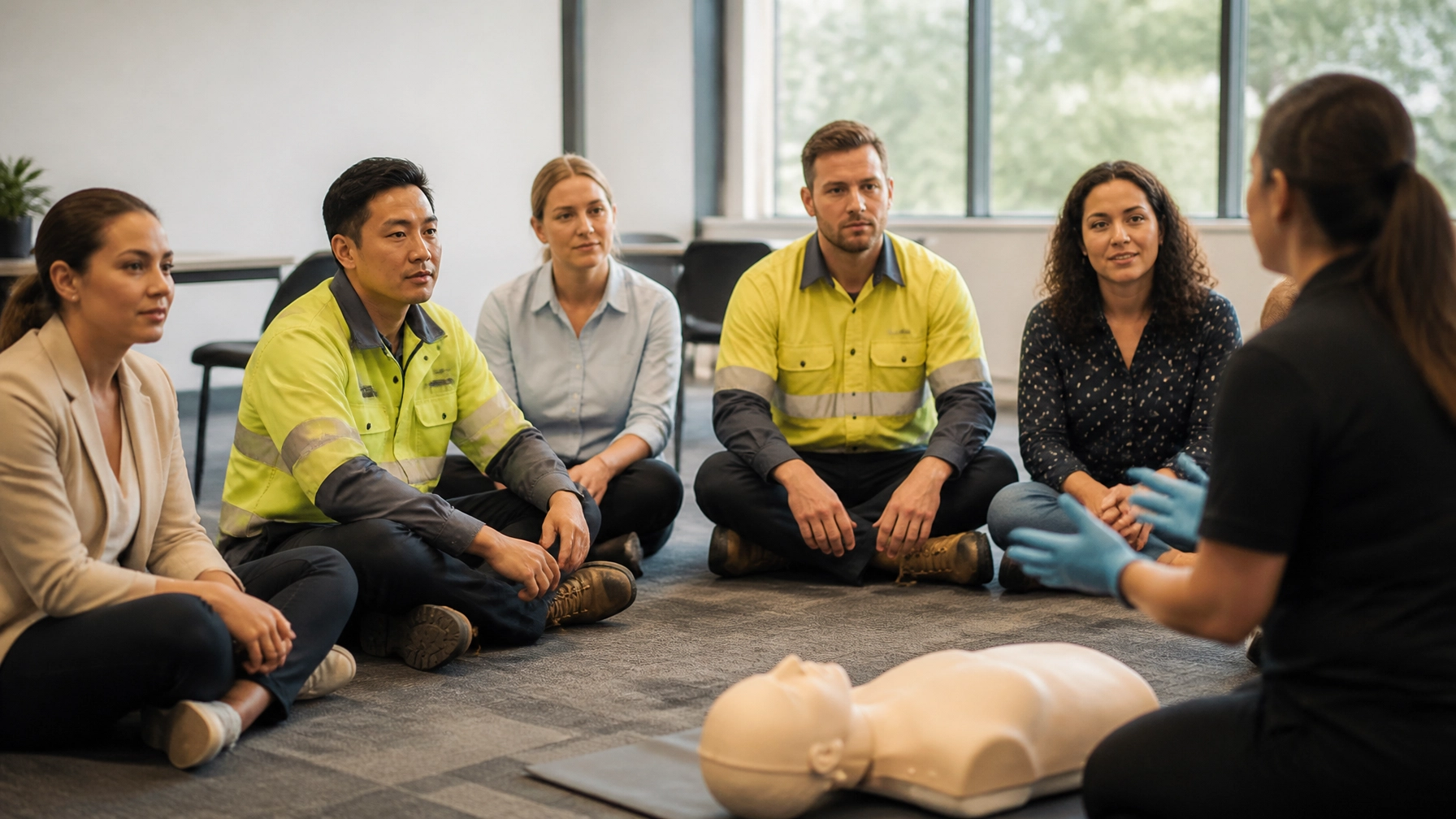
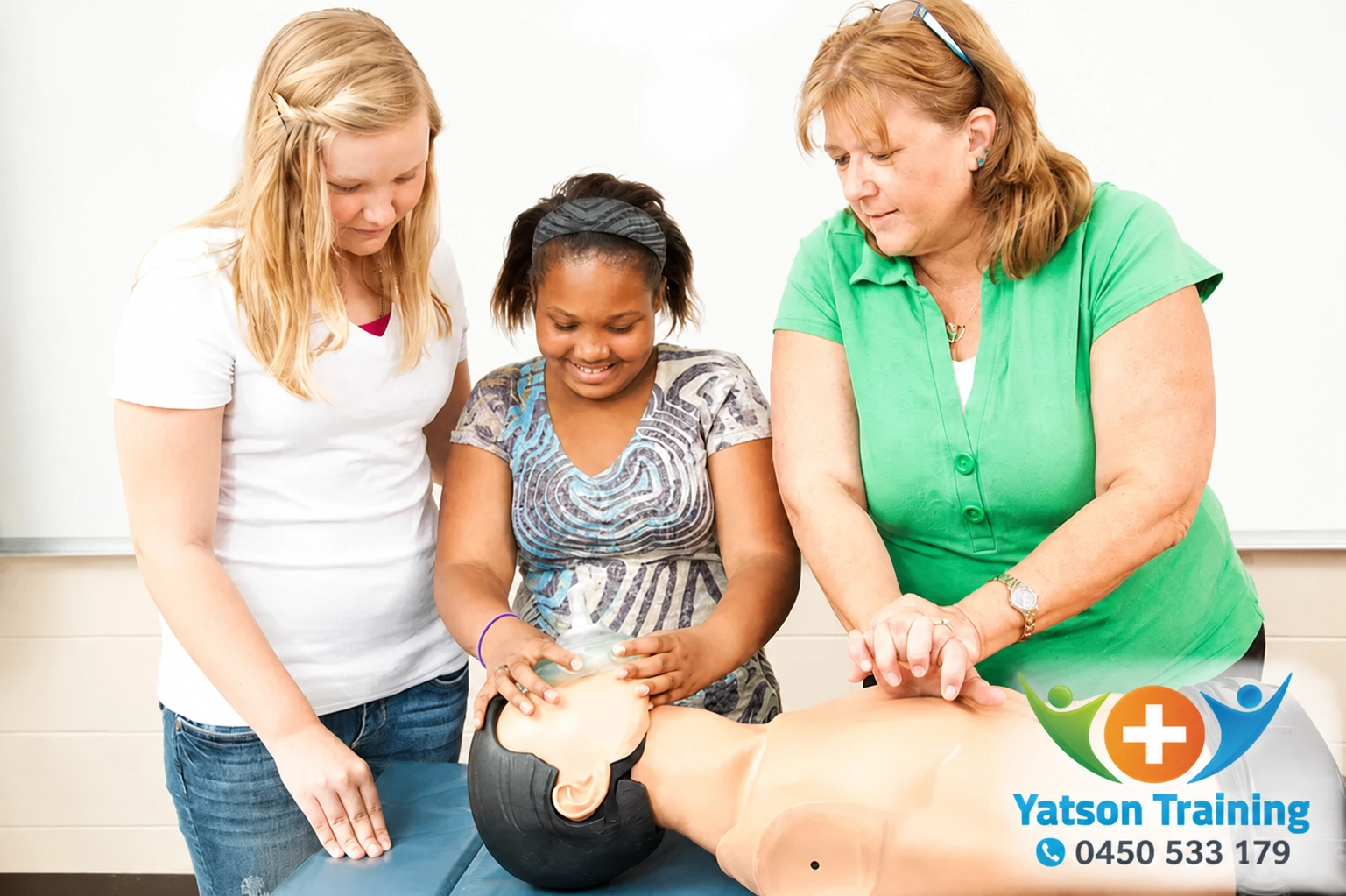
Maintaining a safe workplace is more than just following a set of rules. It is about being prepared for the unexpected. In 2026, the standard for safety in Australian businesses has reached a new level. Whether you work in a high-risk construction zone or a low-risk office environment, having the right skills can save a life. Yatson Training is here to ensure your team is equipped with the latest knowledge through our professional Corporate First Aid training.
What is Workplace First Aid all about?
Workplace First Aid is the immediate care provided to an injured or ill person before professional medical help arrives. It serves as the first line of defence in an emergency (such as a cardiac arrest or a severe allergic reaction). Its primary function is to preserve life, prevent the condition from worsening, and promote recovery.
In Australia, the HLTAID011 Provide First Aid unit is the industry standard for workplace certification. This course covers everything from minor cuts to life-threatening emergencies. For businesses in the Albury / Wodonga region, staying compliant with these standards is a legal requirement. It also builds a culture of care where every employee feels safe.
The Foundation of Life-Saving: DRSABCD
Every emergency response begins with the DRSABCD action plan. This is a systematic approach to assessing a situation and providing care.
- D – Danger: Check for hazards to yourself, bystanders, and the casualty. (Always ensure the area is safe before you approach).
- R – Response: Talk to the person. Squeeze their shoulders. Use the "COWS" method (Can you hear me? Open your eyes. What is your name? Squeeze my hands).
- S – Send for help: Call 000 immediately. Ask a bystander to find an AED (Automated External Defibrillator).
- A – Airway: Open the mouth and check for obstructions. Use the head-tilt chin-lift technique (tilting the head back to open the throat).
- B – Breathing: Look, listen, and feel for normal breathing for 10 seconds.
- C – CPR: If they are not breathing normally, start CPR.
- D – Defibrillation: Attach an AED as soon as it arrives and follow the voice prompts.

Learn CPR in Albury / Wodonga: The 2026 Standards
Cardiopulmonary Resuscitation (CPR) is a critical skill that requires regular practice. Current Australian Resuscitation Council (ARC) guidelines for 2026 emphasise high-quality, uninterrupted compressions. If you need to Learn CPR in Albury / Wodonga, you must understand these core steps:
- Rate: Perform compressions at a rate of 100–120 per minute. (Think of the beat of "Stayin' Alive").
- Depth: Compress the chest to about one-third of its depth. For adults, this is roughly 5–6 cm.
- Ratio: Use a ratio of 30 compressions followed by 2 rescue breaths.
- Recoil: Allow the chest to fully recoil (return to its normal position) after each push.
- Continuity: Do not stop compressions unless the person wakes up or the AED tells you to pause.
If you are uncomfortable giving rescue breaths, "Hands-Only" CPR is still highly effective. The most important thing is to keep the blood flowing to the brain. For comprehensive training on these techniques, call Yatson Training on 0450 533 179.
Essential Skills for HLTAID011 Provide First Aid
Beyond CPR, a Workplace First Aid certification involves managing various medical conditions. Here are the essential skills every employee needs:
1. Managing Severe Bleeding
Use the "Apply, Pressure, Bandage" method. Apply firm, direct pressure to the wound using a clean cloth or sterile dressing. If the bleeding does not stop, apply a second dressing over the first. Do not remove the original dressing as this may disturb any clots that have formed.
2. Treating Burns
Run cool running water over the burn for at least 20 minutes. (Do not use ice, butter, or ointments). Remove any jewellery or clothing near the burn unless it is stuck to the skin. Cover the area loosely with plastic wrap to keep it clean.
3. Anaphylaxis Response
Recognise the signs of a severe allergic reaction (such as swelling of the tongue or difficulty breathing). Use an adrenaline auto-injector (like an EpiPen) immediately if available. Call 000 and keep the person sitting or lying flat.

Workplace Safety: Hazard Identification and Prevention
A safe workplace starts with prevention. Being proactive can stop an accident before it happens.
- Conduct regular audits: Walk through your workplace to identify trip hazards, faulty wiring, or blocked exits.
- Maintain First Aid Kits: Ensure your kits are stocked and within their expiry dates. You can find a guide on staying compliant here.
- Signage: Ensure your First Aid Training – Albury / Wodonga posters and AED locations are clearly marked.
- Employee Awareness: Encourage staff to report "near misses." This data helps prevent future injuries.
Keep in Mind: Our Recommendations
First Aid is a "perishable" skill. If you do not use it, you may forget the details. We recommend the following:
- Annual CPR Refreshers: While a full First Aid certificate lasts three years, the CPR component should be refreshed every 12 months.
- Hands-On Learning: Online-only courses cannot replicate the feel of a real manikin. Always choose interactive, hands-on training for better retention.
- Site-Specific Training: Ensure your training covers the specific risks of your industry (e.g., construction vs. retail).
Our lead trainer, Jackie Hislop, is a Registered Nurse (RN) with years of clinical experience. She brings real-world scenarios into the classroom, making the Emergency First Aid certification process engaging rather than just a mandatory box to tick.

Frequently Asked Questions
Why is HLTAID011 Provide First Aid necessary for my job?
Most Australian workplaces are legally required to have a specific number of trained first aiders on-site. This qualification ensures you can handle common injuries and medical emergencies until professional help arrives, reducing workplace liability and improving safety.
How often should my staff update their First Aid skills?
To remain compliant, employees should renew their Workplace First Aid certification every three years. However, the Australian Resuscitation Council recommends a CPR refresher every year.
Can Yatson Training come to our office?
Yes. We specialise in Corporate First Aid training. We bring all the equipment to your location, making it easy and convenient for your team to learn together.
Is the training hard to pass?
No. Our goal is to make the training interactive and enjoyable. We focus on practical skills and clear communication, ensuring everyone feels confident by the end of the day.
Secure Your Workplace Safety Today
Don't wait for an emergency to happen. Equip your team with Life-saving skills training that makes a difference. Whether you are a small business owner or a corporate manager, Yatson Training offers flexible, professional courses tailored to your needs.
For all your First Aid training needs in the Albury / Wodonga area, click here to call us on 0450 533 179. We provide full support from your initial inquiry to final certification.
Contact Details:
- Phone: 0450 533 179
- Website: yatsontraining.com.au
- Follow us for more tips: Facebook | Instagram
#FirstAidTraining #AlburyWodonga #WorkplaceSafety #CPR #HLTAID011 #CorporateSafety #JackieHislopRN #YatsonTraining
{“@type”:”BlogPosting”,”image”:”https://cdn.marblism.com/p3FBBjX4d3G.webp”,”author”:{“name”:”Yatson Training”,”@type”:”Organization”},”faqPage”:{“@type”:”FAQPage”,”mainEntity”:[{“name”:”Why is HLTAID011 Provide First Aid necessary for my job?”,”@type”:”Question”,”acceptedAnswer”:{“text”:”Most Australian workplaces are legally required to have a specific number of trained first aiders on-site. This qualification ensures you can handle common injuries and medical emergencies.”,”@type”:”Answer”}},{“name”:”How often should my staff update their First Aid skills?”,”@type”:”Question”,”acceptedAnswer”:{“text”:”Employees should renew their Workplace First Aid certification every three years. However, a CPR refresher is recommended every 12 months.”,”@type”:”Answer”}}]},”@context”:”https://schema.org”,”headline”:”Australian First Aid, CPR & Workplace Safety Tips: Essential Skills Every Employee Needs in 2026″,”publisher”:{“logo”:{“url”:”https://cdn.marblism.com/-8AyRUBMjeY.png”,”@type”:”ImageObject”},”name”:”Yatson Training”,”@type”:”Organization”},”articleBody”:”Maintaining a safe workplace is more than just following a set of rules. It is about being prepared for the unexpected… (the full text of the article continues here)”,”description”:”Learn essential First Aid, CPR, and workplace safety skills for 2026. Yatson Training provides professional HLTAID011 certification in Albury / Wodonga.”,”datePublished”:”2026-07-16″,”mainEntityOfPage”:{“@id”:”https://yatsontraining.com.au/insights”,”@type”:”WebPage”}}