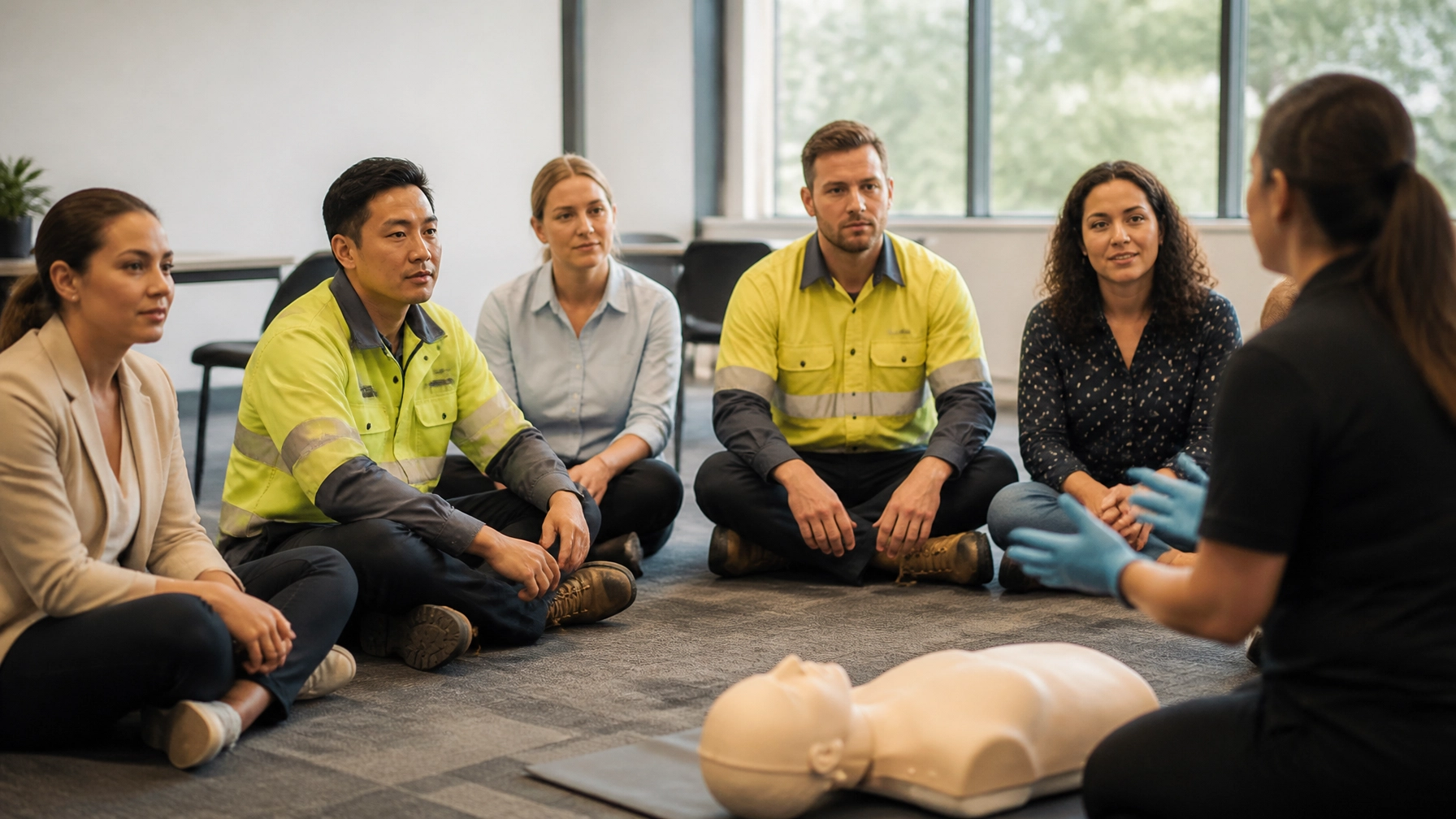

Maintaining a safe office environment involves more than just keeping cables off the floor and checking the fire extinguisher once a year. When a medical emergency happens in a corporate setting, whether it is a cardiac arrest, a severe allergic reaction, or a simple fall, the minutes before an ambulance arrives are the most critical.
As a Registered Nurse and lead trainer at Yatson Training, Jackie Hislop has seen firsthand how quickly a situation can escalate when staff are unprepared. Providing your team with life-saving skills is not just about ticking a compliance box; it is about creating a culture of care and readiness.
If you are looking to upgrade your team’s skills, you can book our professional Corporate First Aid training by calling 0450 533 179 today.
What is Office Safety First Aid all about?
Office Safety First Aid refers to the immediate assistance provided to any person suffering from a sudden illness or injury within a workplace environment. Its primary function is to preserve life, prevent the condition from worsening, and promote recovery until professional medical help arrives. In an office setting, this usually involves managing low-risk injuries like cuts or burns, but it also encompasses high-stakes responses like performing CPR or using an Automated External Defibrillator (AED).
In Australia, the Safe Work Australia Code of Practice mandates that every workplace must have accessible first aid equipment and enough trained personnel to assist in an emergency. For Albury / Wodonga businesses, staying compliant means ensuring your staff hold a current Workplace First Aid certification, such as the HLTAID011 Provide First Aid qualification.

1. Master the DRSABCD Action Plan
The cornerstone of all Australian first aid training is the DRSABCD protocol. This is the systematic approach every nurse and first aider uses to assess and manage an emergency. Memorising this flow ensures you do not skip vital steps when adrenaline is high.
- D – Danger: Check the area for risks to yourself, the casualty, and others.
- R – Response: Check for a response by talking to the person and gently squeezing their shoulders (the "COWS" method: Can you hear me? Open your eyes. What's your name? Squeeze my hands).
- S – Send for help: Call Triple Zero (000) immediately.
- A – Airway: Ensure the airway is clear. If there is a blockage, roll them onto their side and clear it.
- B – Breathing: Check for normal breathing (look, listen, and feel).
- C – CPR: If they are not breathing, start chest compressions and rescue breaths.
- D – Defibrillation: Apply an AED as soon as one is available.
For hands-on practice with these steps, you can Learn CPR in Albury / Wodonga with our expert team at Yatson Training. Call 0450 533 179 to arrange a session.
2. Conduct a "Kit Audit" Every Quarter
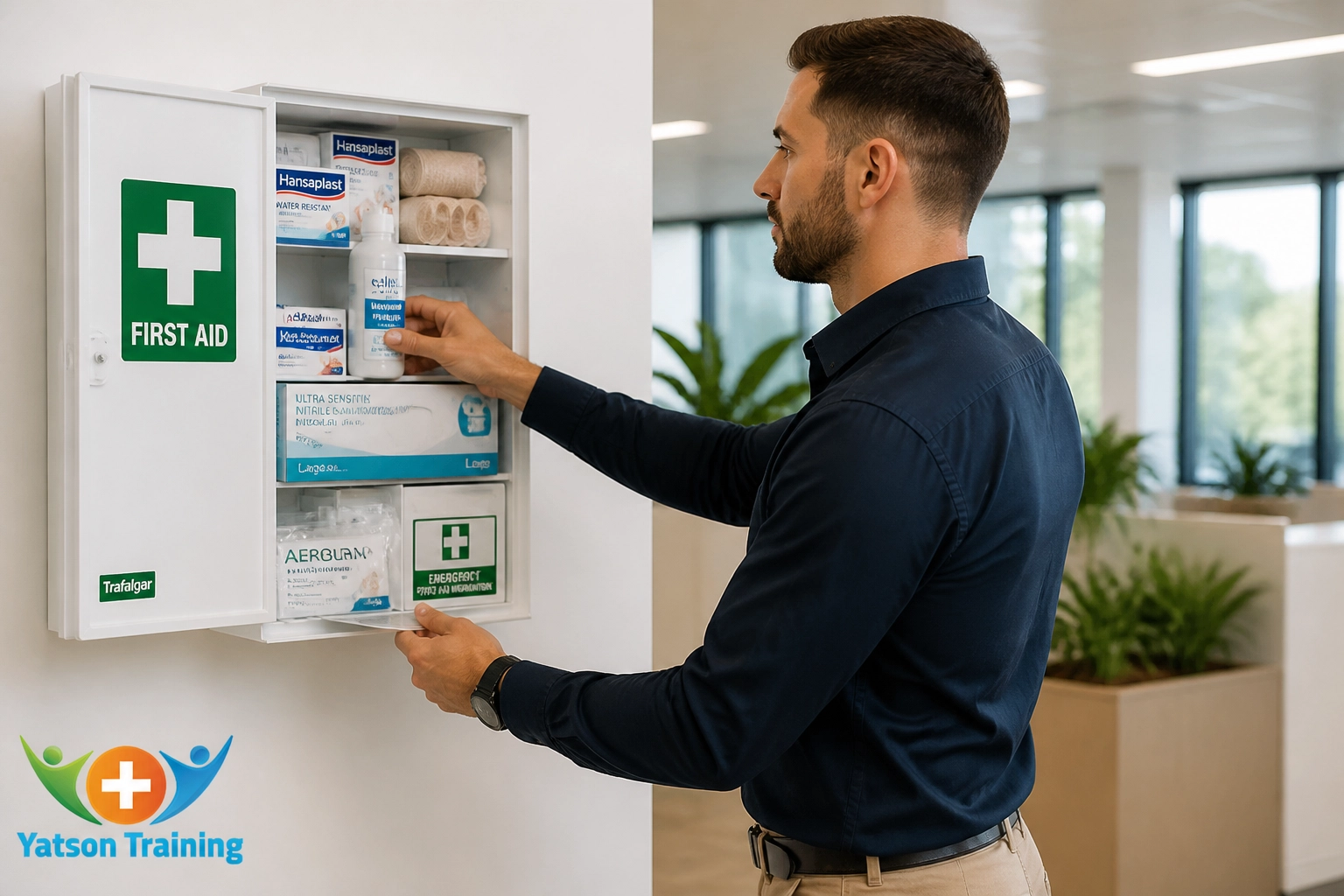
A first aid kit is useless if the bandages are out of date or the antiseptic wipes have dried up. In a busy office, items are often used and not replaced. As a nurse, my recommendation is to treat your kit like a piece of medical machinery, it needs regular maintenance.
- Check expiration dates on all sterile items.
- Ensure the kit is easily accessible and not locked behind a cupboard.
- Verify that you have enough supplies for the number of employees in your office. (See our guide on how to calculate first aid ratios).
- Include a list of trained first aiders on the front of the kit.
Avoid the 5 common mistakes in your workplace first aid kit by having Yatson Training perform a professional assessment of your safety needs.

3. Handle Fainting with "Gravity Therapy"
Fainting (syncope) is a common occurrence in offices, often caused by heat, stress, or standing for too long. While it is usually temporary, the risk of injury from falling is high.
- Catch the person: If you see someone swaying, help them to the floor gently.
- Lay them flat: Position the casualty on their back on the floor.
- Elevate the legs: Raise their legs above the level of their heart (this helps blood flow back to the brain).
- Ensure fresh air: Ask bystanders to move back and open a window if possible.
- Do not use smelling salts: These are outdated and can cause a reflex withdrawal that injures the neck.
4. Recognise the Silent Signs of a Heart Attack
Not every heart attack looks like the dramatic "chest clutching" seen in movies. Many people, particularly women and those with diabetes, experience subtle symptoms. Recognising these early can save a colleague's life.
- Identify the symptoms: Look for discomfort in the chest, neck, jaw, or arms; shortness of breath; nausea; or a "cold sweat."
- Take action: Stop all activity and have the person sit or lie down.
- Call 000: Even if they insist they are "fine," call for help. It is better to have a false alarm than a tragedy.
- Stay with them: Monitor their consciousness and be ready to start CPR if they stop breathing.
Our HLTAID011 Provide First Aid course covers heart attack management in detail, ensuring your staff feel confident to act. To book your staff in, click here to call us.

5. Invest in an AED for Your Office
If someone suffers a sudden cardiac arrest, their chances of survival decrease by about 10% for every minute that passes without defibrillation. Having an Automated External Defibrillator (AED) in the office is the single most effective way to boost safety instantly.
- Placement: Mount the AED in a central, visible location (like near the kitchen or reception).
- Ease of use: Modern AEDs provide voice prompts that tell you exactly what to do.
- No risk: You cannot accidentally shock someone who doesn't need it; the machine analyses the heart rhythm automatically.
Keep in Mind
Our recommendation is that providing a safe workplace is a continuous process, not a one-off event. Even the best equipment is ineffective if your staff don't know how to use it. While online videos are helpful, they cannot replace the tactile experience of performing compressions on a manikin or applying a real bandage under the guidance of a Registered Nurse.
Avoid these 7 mistakes you're making with workplace first aid compliance by scheduling regular training. At Yatson Training, we specialise in making these sessions interactive and enjoyable.

Frequently Asked Questions
How often should our office staff refresh their first aid training?
The Australian Resuscitation Council (ARC) recommends that CPR skills (HLTAID009) be refreshed every 12 months, while the full HLTAID011 Provide First Aid certification should be renewed every three years.
Does our office need a specific course for childcare or schools?
Yes. If you work in an education or childcare setting, you should undertake the Childcare First Aid course HLTAID012, which includes specific modules on asthma and anaphylaxis management for children.
Is it expensive to train a whole office?
Yatson Training provides cost-effective Corporate First Aid training packages tailored to your group size. Compared to the legal and emotional costs of a workplace accident, professional training is a vital and affordable investment.
Can we do the training at our office?
Absolutely. We offer flexible, hands-on training for corporate clients and small groups at your location in Albury / Wodonga or at our training facilities.
Ready to Secure Your Workplace?
Don't wait for an emergency to find out if your team is ready. Boost your office safety instantly by booking a professional training session with Jackie Hislop and the Yatson Training team. Whether you need a standard Workplace First Aid certification or a specialised Childcare First Aid course HLTAID012, we have you covered.
Contact Yatson Training today:
- Phone: 0450 533 179
- Website: yatsontraining.com.au
- Follow us on Social Media: Facebook | Instagram
Call us now on 0450 533 179 to discuss your training needs and ensure your office is a safe place for everyone.
#FirstAidTraining #AlburyWodonga #WorkplaceSafety #HLTAID011 #CorporateTraining #NurseLedTraining #CPRSavesLives #OfficeSafety
{“@type”:”BlogPosting”,”image”:”https://cdn.marblism.com/qfZqx3nTtXZ.webp”,”author”:{“name”:”Jackie Hislop”,”@type”:”Person”,”jobTitle”:”Registered Nurse & Lead Trainer”},”@context”:”https://schema.org”,”headline”:”Boost Your Office Safety Instantly with These 5 Life-Saving Tips from a Registered Nurse”,”publisher”:{“logo”:{“url”:”https://cdn.marblism.com/-8AyRUBMjeY.png”,”@type”:”ImageObject”},”name”:”Yatson Training”,”@type”:”Organization”},”articleBody”:”Maintaining a safe office environment involves more than just keeping cables off the floor… [full content continues]”,”description”:”Expert office safety and first aid tips from a Registered Nurse. Learn about DRSABCD, CPR, and workplace compliance in Albury / Wodonga.”,”datePublished”:”2026-06-18″,”mainEntityOfPage”:{“@id”:”https://yatsontraining.com.au/boost-your-office-safety-instantly”,”@type”:”WebPage”}}