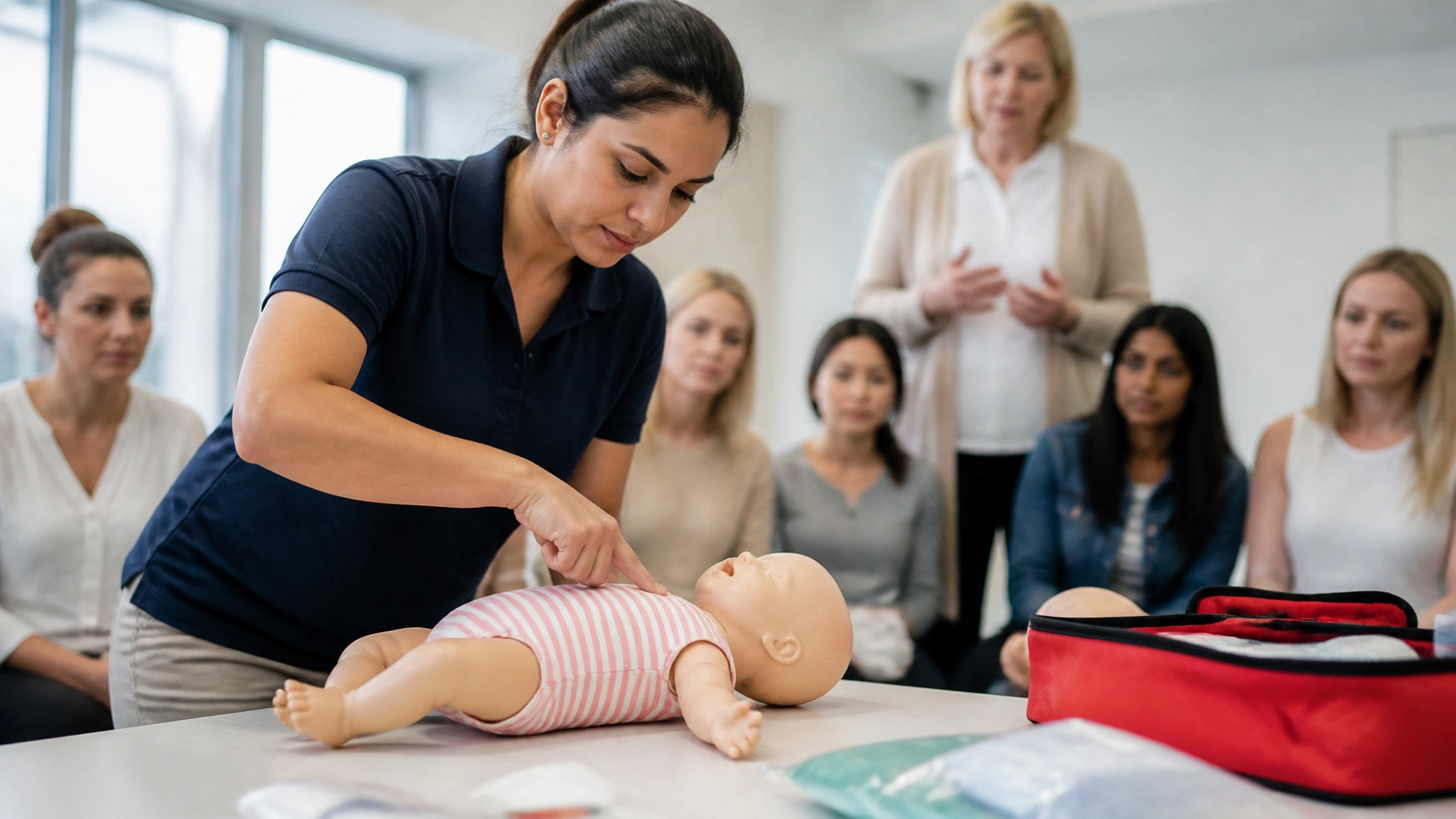

Ensuring a safe working environment is not just a legal requirement for businesses in Albury / Wodonga; it is a fundamental responsibility to your staff. While many offices view safety compliance as a box-ticking exercise, having a team equipped with real life-saving skills can be the difference between a minor incident and a workplace tragedy.
At Yatson Training, we believe that Corporate First Aid training should be more than just sitting in a room watching slides. It should be interactive, hands-on, and directly applicable to your specific office environment. Whether you are managing a small boutique agency or a large corporate headquarters, these five practical tips based on the HLTAID011 Provide First Aid unit will help you boost your office safety instantly.
What is HLTAID011 Provide First Aid all about?
HLTAID011 Provide First Aid (the current nationally recognised standard for workplace first aid) is the core qualification required for designated first aiders in most Australian workplaces. It provides the skills and knowledge necessary to provide a first aid response to a casualty in various situations.
This course covers everything from basic life support to managing specific injuries and illnesses. It is designed to give you the confidence to act quickly in an emergency. In a typical office, this might mean dealing with anything from a severe allergic reaction at lunch to a sudden cardiac arrest at a desk. Understanding the principles of HLTAID011 ensures that your team is prepared for the "what ifs" of the modern workplace.
Tip 1: Implement the DRSABCD Action Plan
The cornerstone of all Australian first aid training is the DRSABCD action plan. This is a systematic approach to assessing and managing an emergency. Every member of your staff, not just the designated first aiders, should be familiar with these steps.
- D – Danger: Check for hazards to yourself, bystanders, and the casualty (e.g., electrical cords, spilled liquids, or aggressive individuals).
- R – Response: Check for a response by talking to the casualty and squeezing their shoulders.
- S – Send for help: Call Triple Zero (000) immediately. If you are in a large office, designate a specific person to wait at the front entrance to guide the paramedics.
- A – Airway: Check that the casualty's airway is clear. (If they are unresponsive and breathing normally, place them on their side).
- B – Breathing: Check for normal breathing (look, listen, and feel).
- C – CPR: If they are not breathing normally, start CPR.
- D – Defibrillation: Apply an Automated External Defibrillator (AED) as soon as it is available.
By making this plan a part of your regular safety inductions, you create a culture of readiness.

Tip 2: Learn CPR in Albury / Wodonga for Cardiac Emergencies
Sudden cardiac arrest can happen to anyone, regardless of age or fitness level. In an office setting, stress and sedentary habits can increase risk factors. The most critical intervention for cardiac arrest is high-quality Cardiopulmonary Resuscitation (CPR).
When you Learn CPR in Albury / Wodonga with Yatson Training, we focus on the physical realities of the task. CPR is physically demanding. You need to push hard and fast in the centre of the chest to maintain blood flow to the brain.
Key CPR requirements for adults:
- Ratio: 30 chest compressions to 2 rescue breaths.
- Depth: One-third of the chest depth (about 5cm).
- Rate: 100 to 120 compressions per minute (the beat of "Stayin' Alive").
- Minimise interruptions: Keep compressions going until help arrives or an AED is ready.
Don't wait for a crisis to find out if your staff knows how to perform CPR. Regular practice ensures the technique is second nature.
Tip 3: Manage Common Office Injuries with a Compliant Kit
Office injuries aren't always life-threatening, but they require proper management to prevent complications. Common issues include deep cuts from paper guillotines, burns in the staff kitchenette, or trips and falls in the stairwell.
A compliant first aid kit is your first line of defence. However, having a kit is only half the battle; you must ensure it is stocked and accessible.
Our recommendations for office kit maintenance:
- Check quarterly: Ensure items like antiseptic wipes and bandages haven't expired.
- Location matters: Place kits in visible areas (near the kitchen or main exit). Never lock first aid kits.
- Accessibility: Ensure the kit is not blocked by boxes or furniture.
- Include an AED: We strongly recommend every office has an AED. They are designed to be used by anyone, with voice prompts that guide you through the process.
For more information on keeping your kits up to standard, read our guide on 5 common mistakes in your workplace first aid kit.

Tip 4: Prepare for Sudden Illness (Asthma and Anaphylaxis)
Modern offices are shared spaces where employees spend many hours. This increases the likelihood of a medical emergency related to pre-existing conditions like asthma or severe allergies (anaphylaxis).
While HLTAID011 covers these briefly, many workplaces, especially those with staff who have known allergies or offices that double as childcare or education spaces, should consider the Childcare First Aid course HLTAID012. This course provides more in-depth training on managing these specific life-threatening conditions.
How to handle an Anaphylactic reaction:
- Identify: Look for swelling of the tongue, difficulty breathing, or a persistent cough.
- Act: Lay the person flat. Do not let them stand or walk.
- Administer: Help them use their adrenaline autoinjector (EpiPen or Anapen) if they have one.
- Call: Telephone 000 immediately, even if the person seems to improve.
Being prepared for these specific illnesses is a vital part of a comprehensive safety strategy.
Tip 5: Maintain Compliance and Ratios
To stay compliant with Safe Work Australia guidelines, you must have an adequate number of trained first aiders. The standard recommendation is one first aider for every 50 workers in a low-risk environment (like an office).
However, you should also consider:
- Multiple floors: You need a first aider accessible on every level.
- Leave and travel: What happens when your only first aider is on annual leave or out at a client meeting?
- Workplace First Aid certification: Ensure your team's certifications are current. CPR must be refreshed every 12 months, and the full HLTAID011 certificate every three years.
Calculating your ratios correctly is essential for legal compliance and, more importantly, worker safety. You can find out more about calculating your first aid ratios here.

Keep in Mind
First aid training is not a "one and done" event. Skills degrade over time, and guidelines from the Australian Resuscitation Council (ARC) are updated periodically. We recommend conducting a quick "safety huddle" once a month to locate the first aid kit, check the AED battery, and remind everyone who the designated first aiders are.
Our recommendation
For Albury / Wodonga businesses, we recommend booking a dedicated Corporate First Aid training session. Bringing the training to your office allows our lead trainer, Jackie Hislop (a Registered Nurse), to tailor the scenarios to your actual workspace. This makes the training more relevant and far more engaging for your team.
Professional training ensures your staff aren't just compliant on paper, they are capable in person.
Ready to secure your workplace?
Don't wait for an accident to happen. Boost your office safety by booking your next training session with Yatson Training today. We offer flexible, hands-on training for corporate clients and small groups across the region.
Contact Yatson Training:
- Telephone: 0450 533 179
- Website: yatsontraining.com.au
- Book Now: To secure your dates, please click here to call us.
Frequently Asked Questions
Why do I need HLTAID011 instead of just a CPR course?
While CPR (HLTAID009) is a vital skill, HLTAID011 Provide First Aid covers a much broader range of emergencies, including bleeding, fractures, burns, poisoning, and medical conditions like strokes or seizures. It is the minimum requirement for most workplace first aiders.
How often does my office need to refresh first aid training?
According to industry standards and the ARC, CPR skills should be refreshed every 12 months. The full Workplace First Aid certification (HLTAID011) should be renewed every three years to remain compliant with safety regulations.
Can Yatson Training come to our office in Wodonga?
Yes! We specialise in on-site Corporate First Aid training. We bring all the necessary equipment, including manikins and AED trainers, to your location. This saves your staff travel time and allows us to discuss safety specific to your building. Call us on 0450 533 179 to discuss your needs.
Follow us for more safety tips:
#FirstAidTraining #AlburyWodonga #WorkplaceSafety #HLTAID011 #CorporateTraining #CPR #OfficeSafety #SafeWorkAustralia #YatsonTraining
{“@type”:”BlogPosting”,”image”:”https://cdn.marblism.com/niruKhCGBti.webp”,”author”:{“name”:”Yatson Training”,”@type”:”Organization”},”hasPart”:[{“name”:”Why do I need HLTAID011 instead of just a CPR course?”,”@type”:”Question”,”acceptedAnswer”:{“text”:”HLTAID011 Provide First Aid covers a broader range of emergencies including bleeding, fractures, and medical conditions, whereas CPR only covers resuscitation.”,”@type”:”Answer”}},{“name”:”How often does my office need to refresh first aid training?”,”@type”:”Question”,”acceptedAnswer”:{“text”:”CPR should be refreshed every 12 months, and the full HLTAID011 certification should be renewed every 3 years.”,”@type”:”Answer”}}],”@context”:”https://schema.org”,”headline”:”Boost Your Office Safety Instantly with These 5 Practical HLTAID011 First Aid Tips”,”publisher”:{“logo”:{“url”:”https://cdn.marblism.com/-8AyRUBMjeY.png”,”@type”:”ImageObject”},”name”:”Yatson Training”,”@type”:”Organization”},”description”:”Improve your workplace safety with 5 practical HLTAID011 first aid tips. Learn about DRSABCD, CPR in Albury / Wodonga, and maintaining first aid compliance for your office.”,”datePublished”:”2026-05-25″,”articleSection”:”Workplace Safety”,”mainEntityOfPage”:{“@id”:”https://yatsontraining.com.au/boost-your-office-safety-instantly-with-these-5-practical-hltaid011-first-aid-tips”,”@type”:”WebPage”}}