When an emergency happens, every second counts. Whether you are at your office in Albury or relaxing at home in Wodonga, knowing how to perform Cardiopulmonary Resuscitation (CPR) can be the difference between a tragic outcome and a life saved. Cardiopulmonary Resuscitation (CPR) is an emergency procedure that combines chest compressions often with artificial ventilation (rescue breaths) in an effort to manually preserve intact brain function until further measures are taken to restore spontaneous blood circulation and breathing in a person who is in cardiac arrest.
At Yatson Training, we believe that life-saving skills should be accessible, interactive, and easy to remember. This guide provides a foundational overview of CPR techniques taught in our HLTAID011 Provide First Aid courses.
What is CPR all about?
CPR is a technique used to keep blood flowing to the brain and heart when the heart has stopped beating. Think of yourself as a manual pump. By pressing down on the chest, you are physically squeezing the heart to push blood through the body. This provides oxygen to the brain, which is vital to prevent permanent damage while waiting for professional medical help to arrive.
The DRSABCD Action Plan
Before you start any physical first aid, you must follow the DRSABCD action plan. This is the standard Australian protocol for managing an unconscious casualty.
- D – Danger: Check the area for any hazards to yourself, bystanders, or the casualty. (Always ensure your own safety first).
- R – Response: Check if the person is conscious. Squeeze their shoulders and shout their name.
- S – Send for help: If there is no response, call 000 immediately. If you are alone, put your phone on speaker.
- A – Airway: Open the mouth and check for obstructions (like food or vomit). If blocked, roll them onto their side to clear it.
- B – Breathing: Look, listen, and feel for normal breathing for no more than 10 seconds.
- C – CPR: If they are not breathing or breathing abnormally, start CPR.
- D – Defibrillation: Attach an Automated External Defibrillator (AED) as soon as it is available and follow the voice prompts.

Performing CPR: Step-by-Step
If you determine that CPR is necessary, follow these procedural steps to maintain blood flow to the vital organs.
- Position the casualty: Place them on their back on a firm, flat surface (the floor is best).
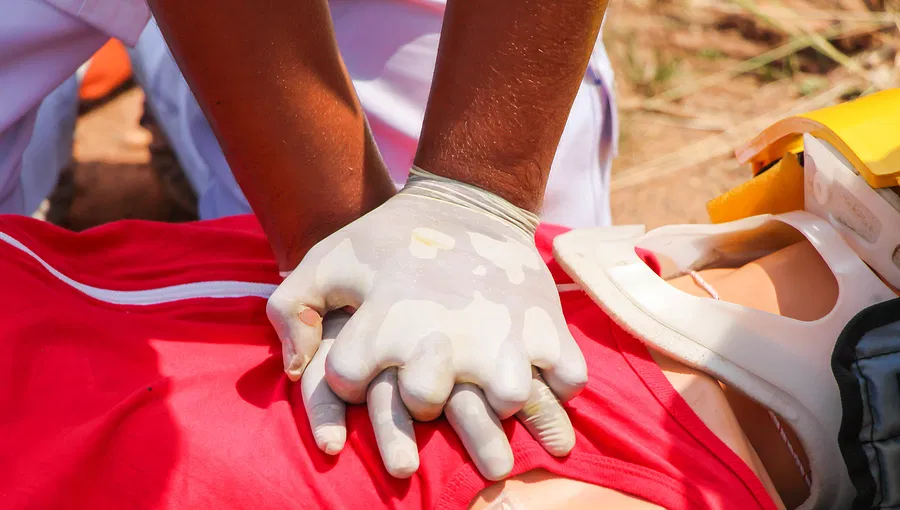
- Locate the compression point: Place the heel of one hand in the centre of the person's chest (the lower half of the sternum).
- Set your stance: Place your other hand on top and interlock your fingers. Keep your arms straight and your shoulders directly over your hands.
- Compress the chest: Push down hard and fast. Aim for a depth of about one-third of the chest (approximately 5cm for adults).
- Release the pressure: Allow the chest to recoil completely between compressions, but do not lift your hands off the chest.
- Maintain the rhythm: Aim for a rate of 100 to 120 compressions per minute. (Think of the beat to "Stayin' Alive").
- Give rescue breaths: If you are trained and willing, provide 2 breaths for every 30 compressions. If you are not comfortable, perform "compression-only" CPR.
- Continue without stopping: Do not stop unless the casualty starts moving, emergency services arrive, or you are physically unable to continue.
Why Professional Training Matters
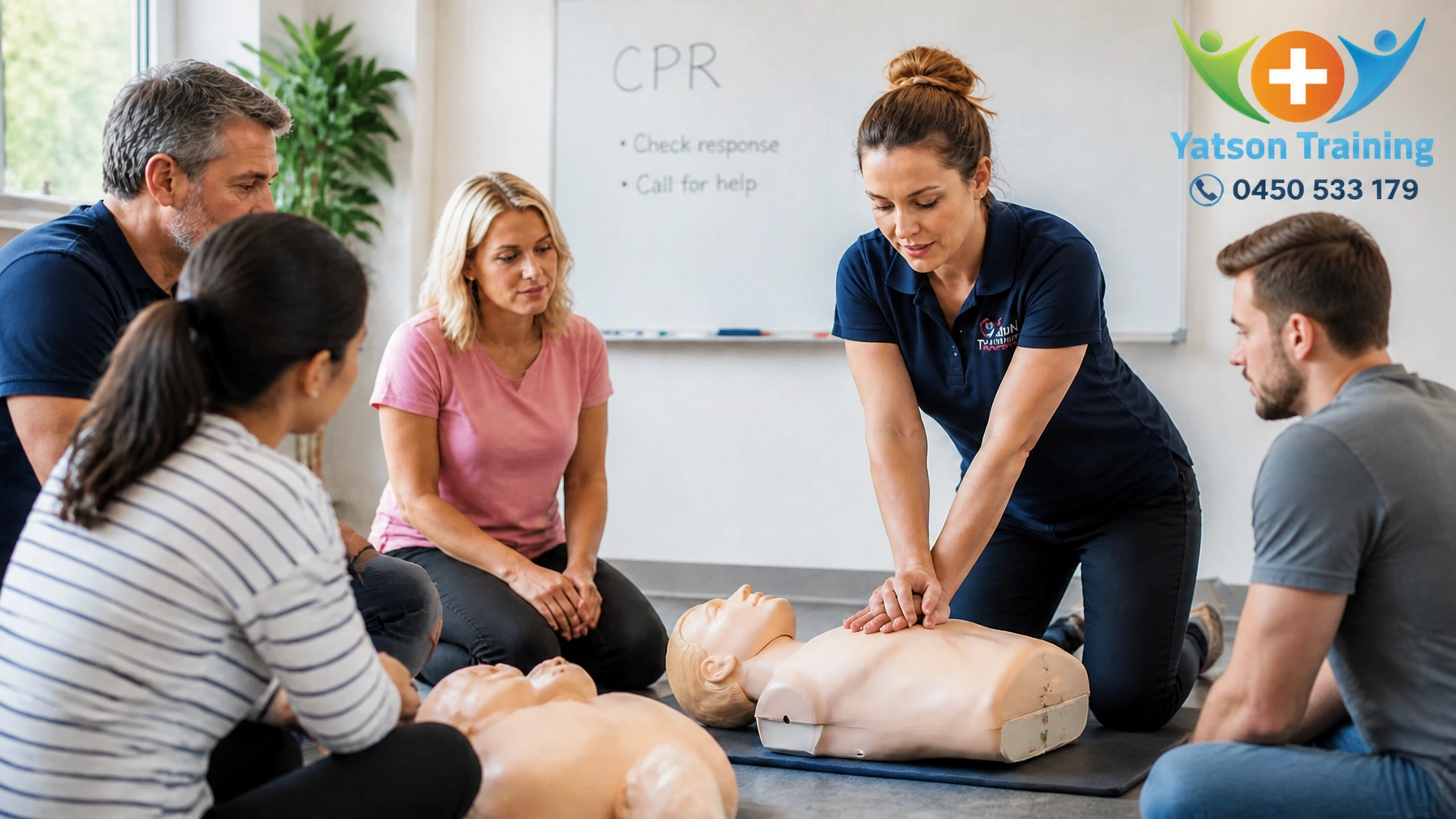
Reading a guide is a great start, but hands-on practice is irreplaceable. Our Corporate First Aid training and public courses in Albury / Wodonga allow you to practice on high-tech manikins under the guidance of experts like Jackie Hislop, a Registered Nurse with years of clinical experience.
Learning the difference between adult CPR and the techniques required for infants (which you will learn in our Childcare First Aid course HLTAID012) is critical for parents, teachers, and childcare workers.

Our recommendation
We recommend that everyone refreshes their CPR skills every 12 months. Guidelines and techniques can change, and physical memory fades over time. A HLTAID009 Provide CPR certificate is the standard requirement for most Workplace First Aid certification programs in Australia.
Keep in mind: You cannot hurt a person who is in cardiac arrest by performing CPR. They are already clinically dead; your intervention is their only chance. Don't be afraid to push hard.
Why Choose Yatson Training?
- Local Experts: We live and work in the Albury / Wodonga region.
- Compliance Focused: Our courses meet all national standards and exceed basic requirements.
- Flexible Delivery: We offer small group public sessions and on-site Corporate First Aid training for businesses.
- Engaging Atmosphere: We don't do "death by PowerPoint." Expect interactive, hands-on learning.

Frequently Asked Questions
Do I need a qualification to perform CPR in an emergency?
No. In an emergency, any CPR is better than no CPR. However, having a current Workplace First Aid certification ensures you have the confidence and technique to be effective.
How often should I update my CPR skills?
The Australian Resuscitation Council (ARC) recommends updating your CPR skills (HLTAID009) every 12 months and your full First Aid (HLTAID011) every 3 years.
Can I do the training at my workplace?
Yes. Yatson Training specialises in on-site Corporate First Aid training. We bring all the equipment to you, making it easy to ensure your whole team is compliant.
Is CPR different for babies?
Yes. Infant CPR involves using only two fingers for compressions and a much gentler approach. You can learn these specific skills in our Childcare First Aid course HLTAID012.
Get Certified Today
Don't wait for an emergency to realise you aren't prepared. Whether you need a full HLTAID011 Provide First Aid certificate or a quick CPR refresher, we are here to help.
To book your next course or to discuss a private group session for your business, telephone Yatson Training on 0450 533 179 or visit our website at yatsontraining.com.au.
Contact us:
Phone: 0450 533 179
Website: yatsontraining.com.au
Connect with us on Facebook and Instagram.
#FirstAidTraining #AlburyWodonga #LearnCPR #WorkplaceSafety #HLTAID011 #HLTAID012 #LifeSavingSkills #CorporateTraining #FirstAidCourse #EmergencyPreparedness
{“name”:”How to Perform CPR (Cardiopulmonary Resuscitation)”,”step”:[{“name”:”Danger”,”text”:”Check the area for any hazards to yourself, bystanders, or the casualty.”,”@type”:”HowToStep”},{“name”:”Response”,”text”:”Check for a response by squeezing the casualty’s shoulders and shouting.”,”@type”:”HowToStep”},{“name”:”Send for Help”,”text”:”Call 000 immediately or ask someone else to call.”,”@type”:”HowToStep”},{“name”:”Airway”,”text”:”Check the mouth for obstructions and clear them if necessary.”,”@type”:”HowToStep”},{“name”:”Breathing”,”text”:”Look, listen, and feel for normal breathing for 10 seconds.”,”@type”:”HowToStep”},{“name”:”CPR”,”text”:”Perform 30 chest compressions followed by 2 rescue breaths at a rate of 100-120 compressions per minute.”,”@type”:”HowToStep”},{“name”:”Defibrillation”,”text”:”Attach an AED as soon as available and follow the prompts.”,”@type”:”HowToStep”}],”tool”:[{“name”:”AED (Automated External Defibrillator)”,”@type”:”HowToTool”}],”@type”:”HowTo”,”image”:”https://cdn.marblism.com/LZ9J68Tvq8U.webp”,”supply”:[{“name”:”Gloves”,”@type”:”HowToSupply”}],”@context”:”https://schema.org”,”totalTime”:”PT10M”,”description”:”A beginner’s guide to the DRSABCD action plan and the steps for performing CPR in an emergency.”,”estimatedCost”:{“@type”:”MonetaryAmount”,”value”:”0″,”currency”:”AUD”}}