Maintaining a safe environment in an Albury or Wodonga workplace involves more than just hanging a green box on the wall. Many businesses fall into common traps that render their first aid response ineffective when a real emergency occurs. Understanding these pitfalls is the first step toward ensuring your team has the life-saving skills required to handle a crisis.
What is a first aid pitfall all about?
A first aid pitfall is a common mistake or oversight in the planning, equipment, or training of workplace medical response. These pitfalls often stem from a "set and forget" mentality where compliance is prioritised over actual readiness. In a workplace setting, a pitfall might look like an expired bottle of saline (sterile salt water used for eye irrigation) or a staff member who holds a certificate but lacks the confidence to perform Learn CPR in Albury / Wodonga techniques.
Avoiding these traps requires a proactive approach. You must treat first aid as a dynamic part of your workplace safety culture rather than a static requirement.
Pitfall 1: Treating Training as a "Tick-Box" Exercise
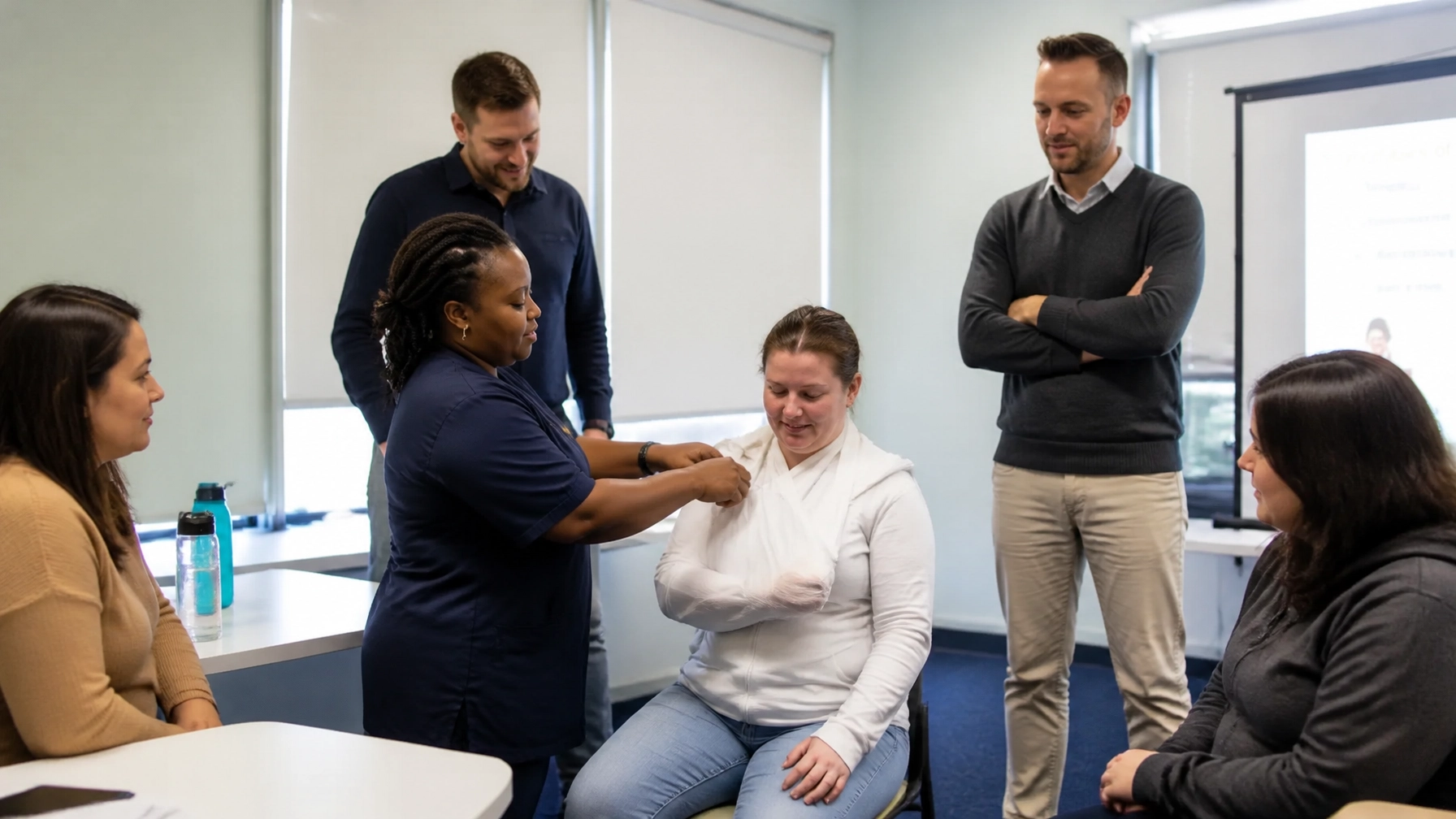
The biggest mistake many Albury businesses make is viewing Workplace First Aid certification as a mere administrative hurdle. When training is treated as a chore, staff rarely retain the information.
- The Reality: If your team only attends training because they "have to," they may not react correctly under pressure.
- The Consequence: During a cardiac arrest or severe allergic reaction, seconds matter. Confusion leads to delays.
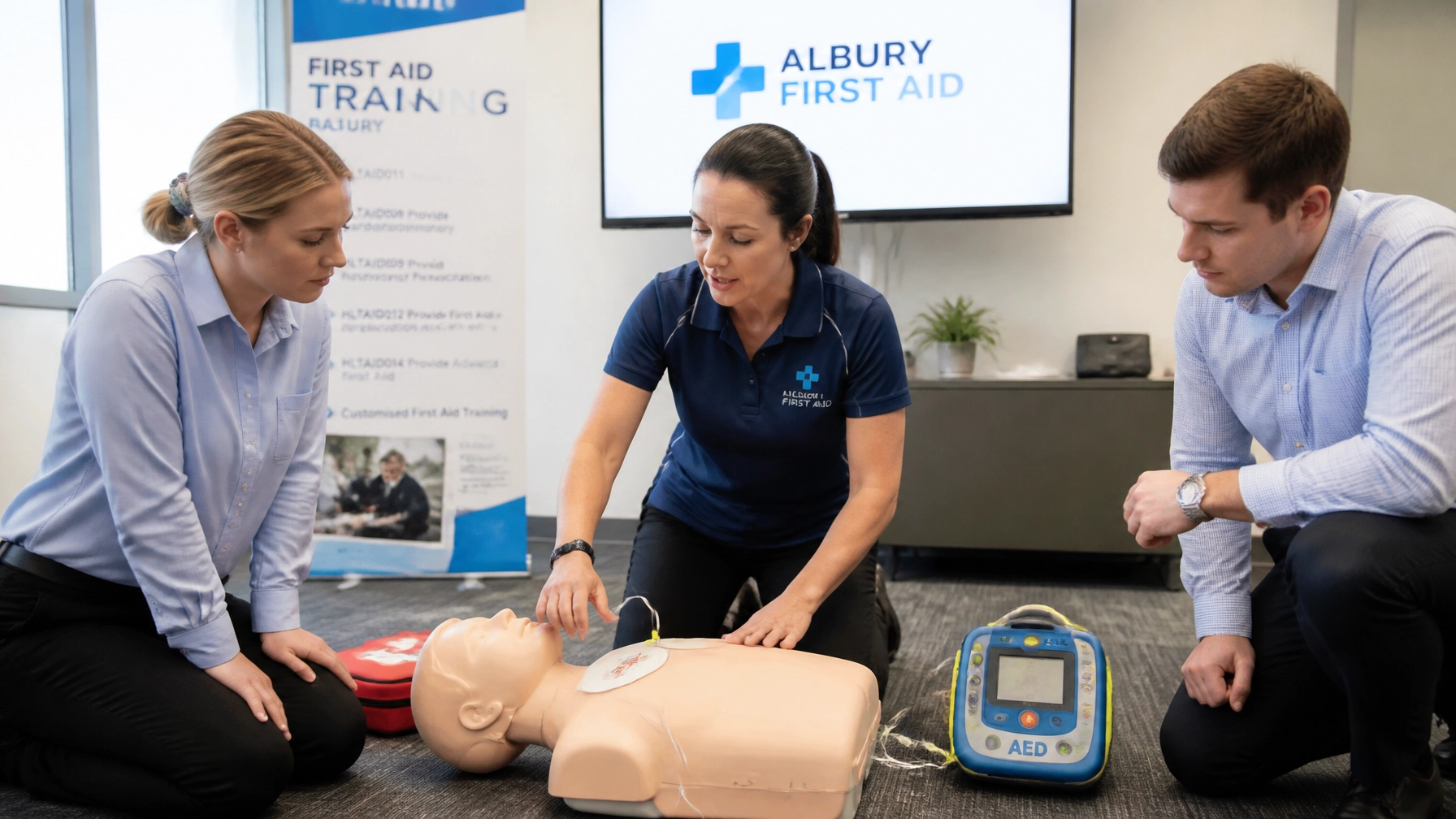
- The Solution: Choose interactive, hands-on training. At Yatson Training, led by Registered Nurse Jackie Hislop, we focus on making Corporate First Aid training engaging and memorable. We move beyond the slides to ensure your staff actually feel competent.

Pitfall 2: Relying on a Generic First Aid Kit
Many managers buy a standard kit from a hardware store and assume they are covered. However, a kit designed for an office is useless in a high-risk environment like a construction site or a manufacturing plant.
- Identify the Hazards: Does your workplace involve chemicals (potential for burns)? Heavy machinery (risk of major haemorrhage)? Outdoor work (snake bites or heat exhaustion)?
- Customise Your Equipment: Ensure your kits have modules specific to your industry.
- Check Accessibility: A kit locked in a manager’s office is not accessible. Place kits in high-traffic areas where they can be reached within one minute.
Pitfall 3: Letting Certifications Expire
It is easy to lose track of when your staff last completed their HLTAID011 Provide First Aid course. Under the Safe Work Australia Code of Practice, it is recommended that first aid qualifications are refreshed every three years, with CPR components refreshed every 12 months.
If you work in education or care, you must ensure your team is up to date with the Childcare First Aid course HLTAID012. This specifically covers asthma and anaphylaxis management, which are critical in those environments.

Pitfall 4: Failing to Follow a Process (DRSABCD)
In a high-stress situation, the human brain often defaults to panic. The most common operational failure is skipping the primary assessment.
How to follow the DRSABCD process:
- Danger: Check the area. Ensure it is safe for you, the casualty, and others. (Do not become a second casualty).
- Response: Look for a response. Talk to them. Squeeze their shoulders.
- Send for help: Call 000 immediately. Do not wait to see if they "wake up."
- Airway: Open the mouth. Check for obstructions.
- Breathing: Look, listen, and feel for normal breathing.
- CPR: If they are not breathing normally, start chest compressions and rescue breaths.
- Defibrillation: Attach an Automated External Defibrillator (AED) as soon as possible and follow the prompts.
Pitfall 5: Poor Kit Maintenance
A kit is only as good as its last inspection. We often see kits that are half-empty because someone used a bandage six months ago and never replaced it.
Step-by-step kit maintenance:
- Appoint a coordinator: Assign one person to be responsible for the kits.
- Conduct monthly checks: Look for expired items and broken seals.
- Restock immediately: If an item is used, replace it the same day.
- Keep a log: Document your checks to maintain compliance records.

Our recommendation for Albury workplaces
We recommend performing a "First Aid Audit" once every six months. Do not wait for an accident to happen to find out your AED battery is dead or your First Aid Officer has left the company.
If you are unsure if your workplace meets current standards, the best course of action is to book a professional assessment. Yatson Training offers flexible, hands-on training for corporate clients and small groups across the Albury / Wodonga region. We ensure your team doesn't just "pass" a test, but gains the confidence to save a life.
For all your First Aid Training needs, call Yatson Training on 0450 533 179 or visit yatsontraining.com.au.
Keep in Mind
- Legality: Providing adequate first aid is a legal requirement under OHS and WHS laws in both Victoria and NSW.
- Mental Health: Consider including Mental Health First Aid in your training roster to support staff wellbeing.
- Location: If your business is mobile or remote, every vehicle must have its own dedicated kit.
Frequently Asked Questions
How often should my staff do First Aid training?
The general HLTAID011 Provide First Aid certificate is valid for three years. However, the CPR component (which is part of the course) should be refreshed every 12 months to maintain peak proficiency.
Does Yatson Training come to our office?
Yes. We specialise in Corporate First Aid training. We bring all the necessary equipment, including manikins and AED trainers, to your location in Albury, Wodonga, or surrounding areas.
Is the HLTAID012 course different from the standard one?
Yes. The Childcare First Aid course HLTAID012 is specifically designed for educators and support staff in schools and childcare centres. It includes additional units on managing asthma and anaphylaxis in children.
Why choose a Registered Nurse for training?
Having a Registered Nurse like Jackie Hislop lead your training means you get real-world clinical insights. You aren't just reading from a book; you are learning from someone who has handled medical emergencies in a professional capacity.
Ready to upskill your team?
Don't let your workplace fall into these common traps. Ensure your staff have the life-saving skills they need.
Contact Yatson Training today:
Telephone: 0450 533 179
Website: yatsontraining.com.au
Follow us for more tips:
Facebook | Instagram | LinkedIn
#FirstAidTraining #AlburyWodonga #WorkplaceSafety #HLTAID011 #LearnCPR #JackieHislop #CorporateTraining #SafetyFirst
{“@type”:”BlogPosting”,”image”:”https://cdn.marblism.com/NXQM55gIqty.webp”,”author”:{“name”:”Yatson Training”,”@type”:”Organization”},”@context”:”https://schema.org”,”headline”:”How to Avoid the Biggest First Aid Pitfalls in Your Albury Workplace”,”publisher”:{“logo”:{“url”:”https://cdn.marblism.com/-8AyRUBMjeY.png”,”@type”:”ImageObject”},”name”:”Yatson Training”,”@type”:”Organization”},”articleBody”:”Maintaining a safe environment in an Albury or Wodonga workplace involves more than just hanging a green box on the wall. Many businesses fall into common traps that render their first aid response ineffective when a real emergency occurs…”,”description”:”Learn how to avoid common workplace first aid mistakes in Albury and Wodonga. From expired kits to training gaps in HLTAID011 and HLTAID012.”,”datePublished”:”2026-07-03″,”mainEntityOfPage”:{“@id”:”https://yatsontraining.com.au/insights”,”@type”:”WebPage”}}