What is Winter Workplace Safety all about?
Winter workplace safety is the process of identifying and controlling hazards that become more likely during colder, wetter and darker conditions. These hazards can affect offices, retail businesses, warehouses, construction sites, childcare services and outdoor work teams across Albury and Wodonga.
The main winter risks include:
- Slips, trips and falls caused by rain, frost, ice and wet flooring.
- Cold stress, frostbite and hypothermia.
- Reduced visibility during early starts and late finishes.
- Seasonal influenza and other respiratory illnesses.
- Delays in accessing first aid or emergency services during severe weather.
A practical winter safety plan combines prevention, suitable equipment, clear procedures and current Workplace First Aid certification. It also ensures your team knows how to respond while waiting for professional medical assistance.
For guidance on managing cold environments, review the SafeWork NSW cold environments information and the SafeWork Australia information on working in cold conditions.
1. Control winter slips, trips and falls
Wet entrances and outdoor paths are common sources of workplace injuries during winter. Frost may also remain on shaded paths and car parks after sunny areas have dried.
Take these steps:
- Inspect entrances, stairs, car parks and walkways before staff arrive.
- Place absorbent, non-slip mats at external doors.
- Mop spills promptly and dry the area thoroughly.
- Display wet-floor signage while cleaning or repairing leaks.
- Use grit or other suitable traction material on icy outdoor paths.
- Improve lighting around entrances, loading areas and car parks.
- Keep walkways clear of boxes, cords and equipment.
- Check that handrails and stair treads are secure.
- Encourage workers to slow down and use designated paths.
- Provide slip-resistant footwear where the work environment requires it.
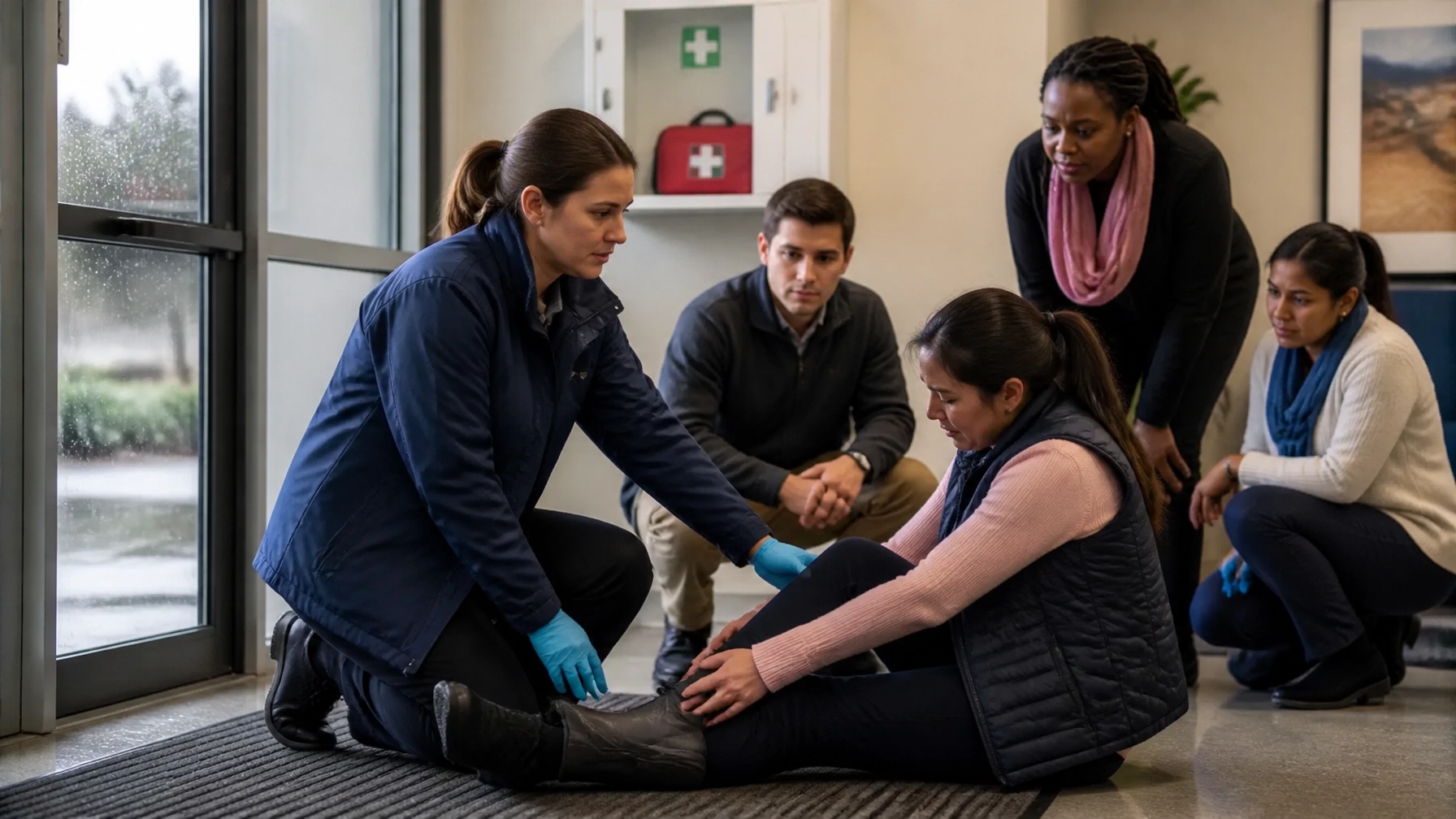
Do not assume a minor fall is harmless. A slip can result in fractures, head injuries, spinal injuries or soft-tissue damage. Your first aiders should know how to protect the injured person, identify serious symptoms and contact emergency services when necessary.
Read more about workplace first aid compliance and first aid ratios.
2. Prevent cold stress and hypothermia
Workers can experience cold stress indoors or outdoors. The risk increases when conditions are wet, windy or prolonged. It also increases when workers become sweaty and their clothing remains damp.
Reduce the risk by:
- Scheduling outdoor or physically demanding tasks for the warmer part of the day where possible.
- Providing heated break areas, vehicle cabins or sheltered warm-up spaces.
- Allowing regular warm breaks.
- Using a buddy system for outdoor, remote or isolated workers.
- Providing warm, waterproof and wind-resistant clothing.
- Encouraging workers to wear several adjustable layers.
- Supplying suitable gloves, head coverings and insulated, slip-resistant boots.
- Providing spare clothing for workers who become wet.
- Encouraging regular food and fluid intake.
- Checking weather forecasts and changing work plans when conditions deteriorate.
SafeWork NSW identifies shivering, numbness, slurred speech, confusion and irrational behaviour as possible signs of hypothermia. More serious symptoms can include difficulty standing, slow breathing, loss of consciousness and cardiac arrest.
Respond to suspected hypothermia
Act promptly:
- Call Triple Zero (000) if the person has significant symptoms, confusion, drowsiness, reduced responsiveness or difficulty breathing.
- Move the person to a warm, dry location if it is safe to do so.
- Remove wet clothing and replace it with dry layers or blankets.
- Keep the person still and minimise unnecessary movement.
- Warm the head, neck and torso with blankets or suitable wrapped warm packs.
- Offer a warm, non-alcoholic drink only if the person is conscious and able to swallow.
- Monitor breathing and responsiveness until help arrives.
- Begin CPR if the person is unresponsive and not breathing normally, following your training and the instructions of the emergency call-taker.
Do not use direct high heat, place the person in a hot bath or rub their skin vigorously. For further medical information, refer to Healthdirect’s hypothermia guidance.

3. Manage flu season and respiratory illness
Winter often means more time indoors, closer contact between workers and increased transmission of influenza and other respiratory illnesses. Infection control is part of practical Workplace Safety.
Your workplace should:
- Encourage workers to stay home when they are unwell.
- Provide handwashing facilities and alcohol-based hand sanitiser.
- Clean frequently touched surfaces such as door handles, phones, keyboards and shared equipment.
- Improve ventilation where possible.
- Avoid overcrowding in small lunchrooms and meeting spaces.
- Communicate your illness and return-to-work procedures clearly.
- Keep first aid areas clean and well ventilated.
- Support workers to seek appropriate medical advice when symptoms are severe or worsening.
First aiders should also use suitable personal protective equipment when assisting with bodily fluids, vomiting, bleeding or respiratory symptoms. Include gloves, resuscitation masks and hand hygiene supplies in your first aid preparation.
4. Complete your 2026 first aid compliance checklist
Use this checklist before winter conditions become more difficult.
HLTAID011 Provide First Aid
Confirm that:
- Your workplace has enough trained first aiders for its size, hazards, shifts and layout.
- Certificates are current and easy to verify.
- First aiders are available during leave, breaks, remote work and after-hours operations.
- Workers know who the first aiders are and how to contact them.
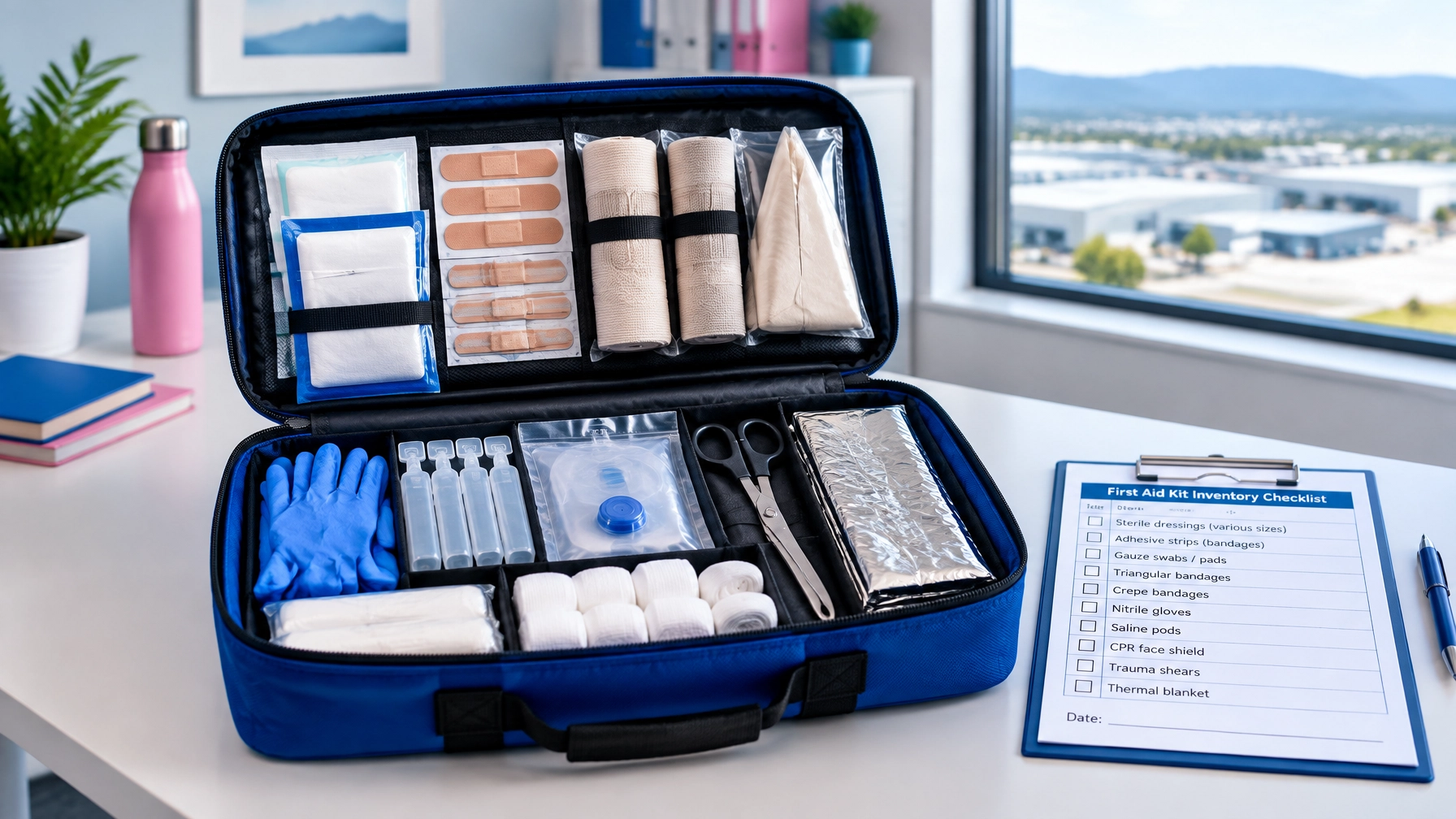
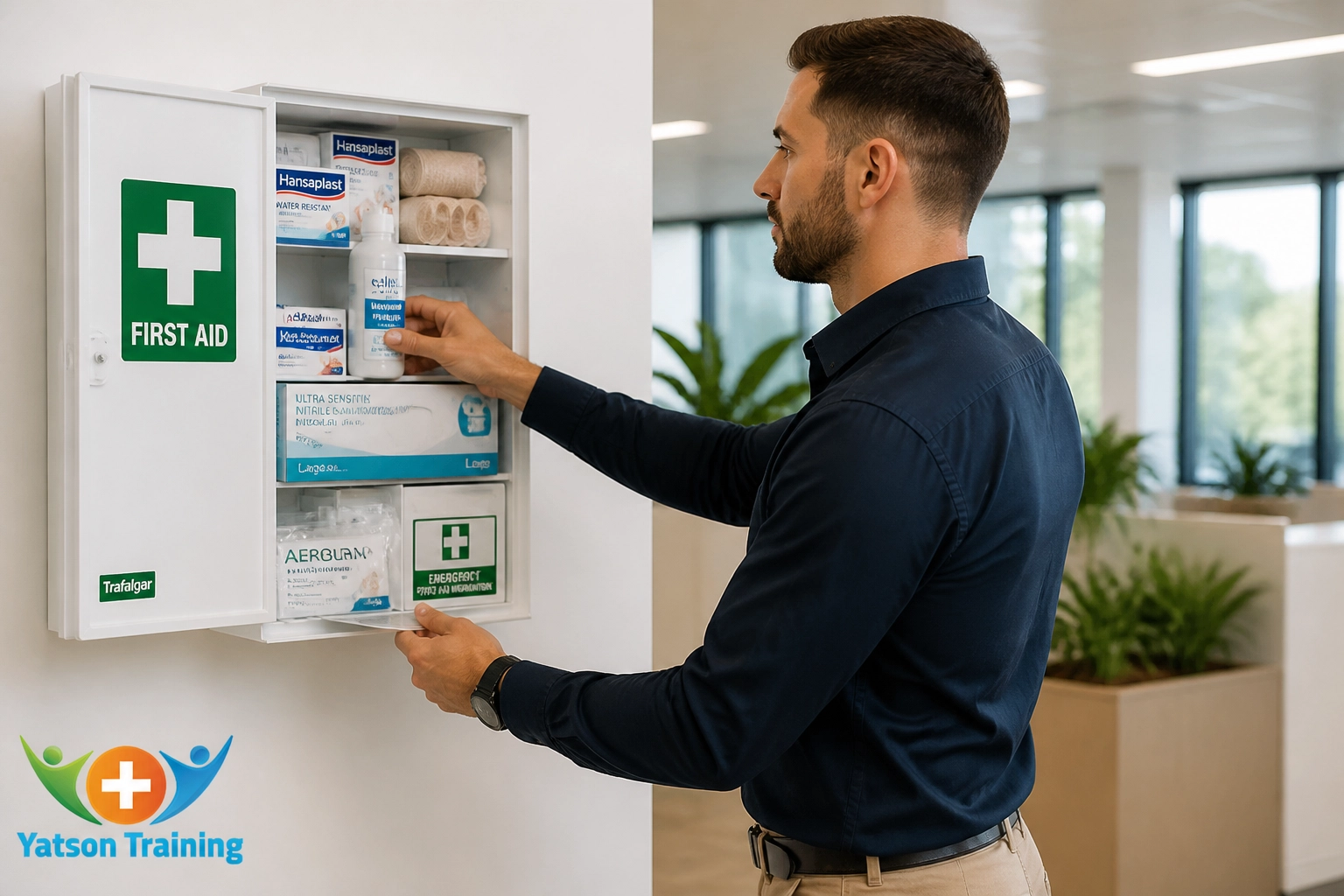
- First aid kits are accessible, clearly marked and fully stocked.
- Kits include thermal blankets, disposable gloves, resuscitation barriers and suitable wound-care supplies.
- Emergency contact details and site access instructions are current.
- Your emergency plan includes slips, cold exposure, serious illness and evacuation.
- First aiders have practised CPR, AED use and incident reporting.
HLTAID009 Provide CPR
Check that:
- The CPR component has been refreshed within the required annual timeframe.
- Staff know how to recognise an unresponsive person who is not breathing normally.
- Workers know how to call Triple Zero (000), send someone for an AED and begin CPR.
- Your AED is accessible, maintained and checked according to the manufacturer’s instructions.
- Staff know the location of the AED and first aid kit.
- CPR procedures are included in inductions and regular safety briefings.
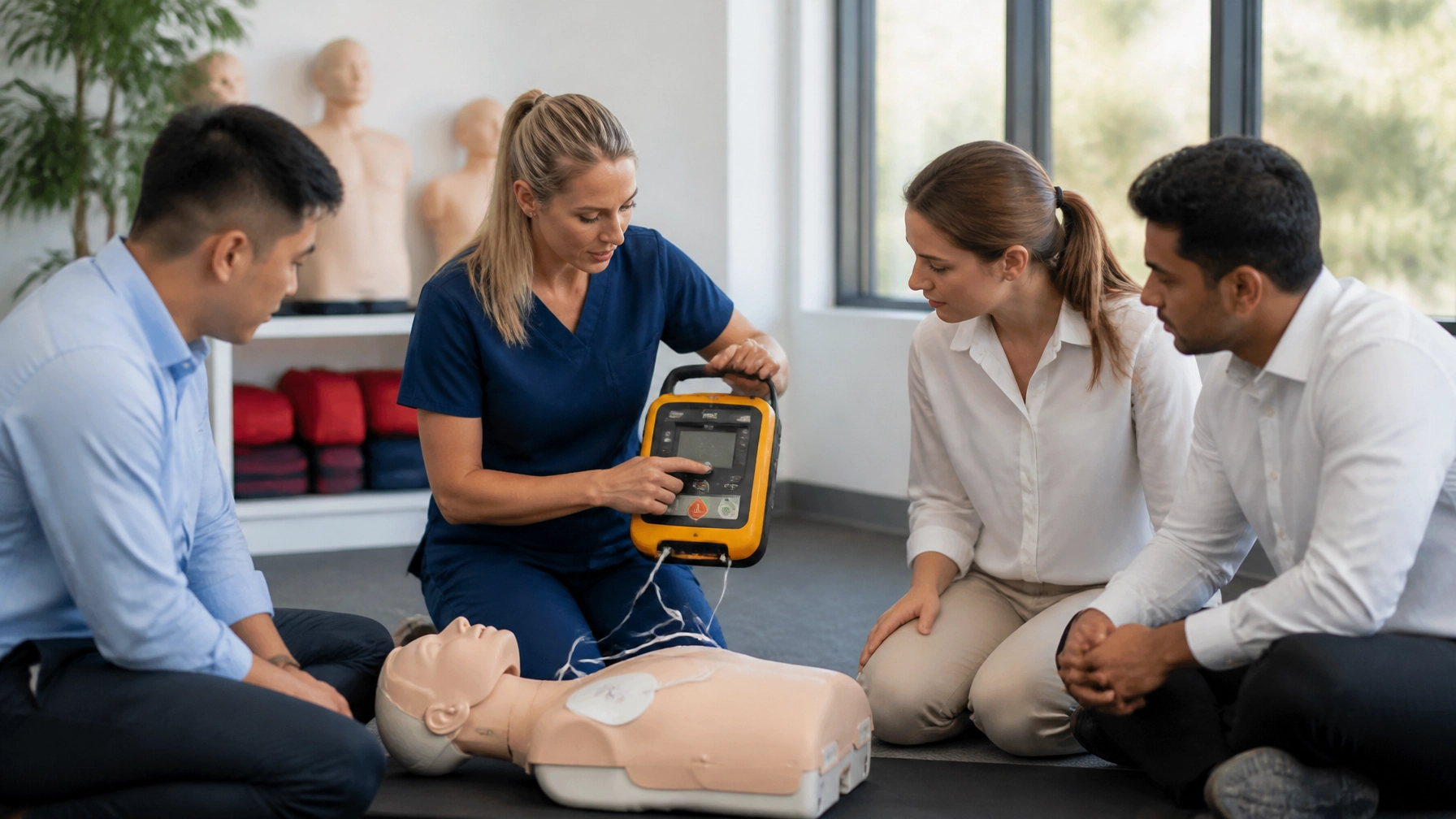
If your team needs to Learn CPR in Albury Wodonga, Yatson Training provides practical training using manikins and trainer AEDs. Participants practise the physical skills rather than relying only on theory.
HLTAID012 Childcare First Aid
Childcare services should confirm that:
- Educators hold the qualification required for their role and service.
- CPR skills are refreshed as required.
- Staff practise infant and child CPR.
- Staff understand choking response for babies and children.
- First aid kits are suitable for the age groups in care.
- Medication, allergy and anaphylaxis procedures are current.
- Outdoor areas, sleep spaces and excursion arrangements are included in risk assessments.
- Adequate first aid coverage is available whenever children are present.
The HLTAID012 Childcare First Aid course is designed for people working in education and care settings. Yatson Training offers tailored training for childcare teams, small groups and individuals.
5. Choose practical professional training
A certificate is important, but confidence comes from repeated practice and clear instruction. Yatson Training delivers flexible, hands-on Corporate First Aid training for businesses across the Albury Wodonga region.
Our training can support:
- HLTAID011 Provide First Aid for workplace first aiders.
- HLTAID009 Provide CPR for annual CPR updates.
- HLTAID012 Childcare First Aid for educators and childcare teams.
- Workplace toolbox talks and winter safety preparation.
- Small group and individual first aid training.
- Training delivered at your workplace where suitable.
Lead trainer Jackie Hislop is a Registered Nurse. Our experienced trainers focus on realistic scenarios, clear explanations and active participation. Yatson Training supports you from your first enquiry through to final certification.
Explore the Yatson Training courses or learn more about Corporate First Aid training in the Albury Wodonga area.
Keep in Mind: Our recommendation
Do not wait for an incident or certificate expiry date to review your arrangements.
Complete a pre-winter workplace inspection. Confirm first aid coverage across every shift. Refresh CPR skills annually. Include cold exposure and slips in your toolbox talks. Check that your first aid kits, AED and emergency contact procedures are ready for use.
Most importantly, make sure workers know what to do before an emergency occurs. Prompt first aid can reduce harm, support recovery and improve the outcome while paramedics are on their way.

Frequently asked questions
Why does winter require a separate workplace safety review?
Winter changes the workplace environment. Rain, frost, reduced daylight, cold temperatures and seasonal illness can introduce hazards that are not present, or are less likely, during warmer months.
How often should CPR training be refreshed?
CPR training should be refreshed every 12 months to help maintain practical skills. Check your training records and current regulatory or industry requirements.
Is HLTAID011 Provide First Aid suitable for most workplaces?
HLTAID011 Provide First Aid is a common workplace first aid qualification. However, your business should assess its hazards, location, staffing arrangements and industry requirements before selecting training.
Can Yatson Training train our whole team at work?
Yes. Yatson Training offers flexible, hands-on training for corporate clients, small groups and individuals across Albury, Wodonga and surrounding areas.
Prepare your team before winter hazards become incidents
Professional training is a cost-effective part of workplace risk management. It helps your staff respond to injuries, illness and cardiac emergencies with a clear process.
For First Aid Training Albury Wodonga, Workplace First Aid certification, Corporate First Aid training or CPR updates, telephone Yatson Training today on 0450 533 179. Visit yatsontraining.com.au to enquire about your course and training options.
Follow Yatson Training for further safety information:
#FirstAidTraining #AlburyWodonga #WorkplaceSafety #WinterSafety #HLTAID011 #HLTAID009 #HLTAID012 #CorporateFirstAidTraining #WorkplaceFirstAidCertification #LearnCPR #FirstAidTrainingAlburyWodonga #ChildcareFirstAid