Performing Cardiopulmonary Resuscitation (CPR) is a high-pressure situation. Even if you have completed a Workplace First Aid certification in the past, technique can fade over time. Subtle errors in your form can significantly reduce the effectiveness of life-saving efforts.
At Yatson Training, we specialise in hands-on First Aid training in Albury / Wodonga, ensuring you don't just "pass" a course, but walk away with the confidence to save a life. Led by Registered Nurse Jackie Hislop, our HLTAID011 Provide First Aid courses focus on correcting these common mistakes before they become habits.
What is CPR Technique all about?
CPR technique is the specific physical process of manually pumping blood through the body and delivering oxygen to the lungs when a person’s heart has stopped (cardiac arrest). It acts as a mechanical bridge, keeping vital organs, especially the brain, alive until professional medical help or a defibrillator (AED) arrives. Proper technique relies on precise depth, rate, and rhythm to mimic the heart's natural function.
1. Not Pushing Deep Enough
One of the most frequent mistakes made during Corporate First Aid training is being too gentle. Many rescuers fear they will cause injury, such as breaking a rib. While a fracture is possible, it is a secondary concern compared to the reality of a non-functioning heart.
- The Mistake: Compressing only 1 or 2 centimetres. This does not create enough pressure to squeeze the heart against the spine and move blood to the brain.
- The Symptoms: No visible "bounce" in the chest; the rescuer is barely moving their shoulders.
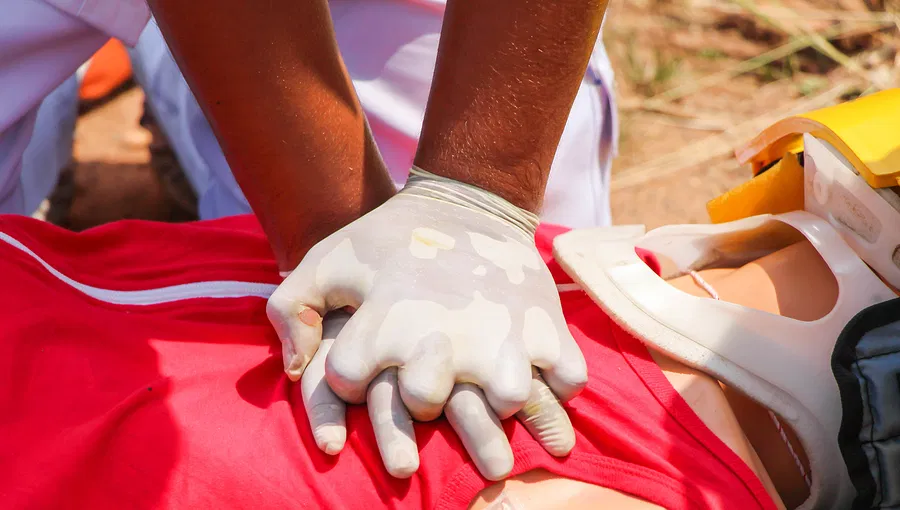
- The Fix: Compress the chest by at least one-third of the chest depth. For an adult, this is roughly 5cm.
- Apply: Use the heel of your hand on the centre of the chest and push hard.

2. Leaning on the Chest (No Recoil)
Efficiency in CPR isn't just about the "push", it is also about the "release." Many people stay leaned over the patient, keeping constant pressure on the sternum.
- The Mistake: Failing to let the chest come all the way back up between compressions.
- The Symptoms: The chest remains partially depressed during the "up" phase.
- The Fix: Allow full chest recoil. This means your hands should stay in contact with the chest, but you must remove all your weight so the chest returns to its normal position.
- The Reason: Full recoil allows the heart to refill with blood (venous return). If the heart doesn't refill, your next compression has nothing to pump.
3. Getting the Tempo Wrong
Timing is everything. People often either panic and push too fast (preventing the heart from filling) or push too slow (failing to maintain blood pressure).
- The Mistake: Pushing at a frantic pace or a sluggish rhythm.
- The Fix: Aim for 100 to 120 compressions per minute.
- Recommendation: Think of the beat of the song "Stayin' Alive" by the Bee Gees. It is the perfect tempo for HLTAID011 Provide First Aid standards.
- Check: Use a timer or a metronome app during your practice sessions to internalise this speed.
4. Bending Your Elbows
Using only your arm muscles is a recipe for exhaustion. In a real emergency, you may need to perform CPR for several minutes before an ambulance arrives.
- The Mistake: Pushing with the strength of your triceps and biceps by bending your arms.
- The Symptoms: Rapid fatigue; shallowing compressions after only 60 seconds.
- The Fix: Lock your elbows straight. Position your shoulders directly over your hands.
- Apply: Use your upper body weight to drive the compression. This is more sustainable and ensures consistent depth.

5. Incorrect Airway Management
If you choose to provide rescue breaths, they are useless if the airway is blocked by the tongue or soft tissue.
- The Mistake: Giving breaths with the patient’s head flat on the ground.
- The Symptoms: Air entering the stomach (causing bloating) rather than the lungs; the chest failing to rise.
- The Fix: Perform a head-tilt and chin-lift.
- Process: Place one hand on the forehead and the fingertips of the other hand under the chin. Tilt the head back firmly to open the airway path.
- Note: If the chest does not rise, re-tilt the head and try again.

6. Using the Wrong Ratio
Australian Resuscitation Council (ANZCOR) guidelines are specific. Mixing up the numbers can lead to confusion and ineffective oxygenation.
- The Mistake: Doing 15 compressions, or 50, or simply forgetting to stop for breaths.
- The Fix: Maintain a strict ratio of 30 compressions to 2 breaths.
- Recommendation: Count out loud. "1, 2, 3… 28, 29, 30." This helps you stay on track and informs any helpers nearby where you are in the cycle.
- Keep in Mind: If you are unwilling or unable to give breaths (e.g., no mask available), perform "Hands-Only CPR" (continuous compressions) rather than stopping entirely.
7. Too Many Interruptions
Every time you stop compressions to check for a pulse or talk to a bystander, the blood pressure you have built up drops to zero instantly.
- The Mistake: Pausing for more than 10 seconds.
- The Fix: Minimise interruptions. If you are switching rescuers, do it quickly (in under 5 seconds).
- Keep in Mind: Do not stop CPR to check for "signs of life" unless the person starts moving or breathing normally on their own.
Pediatric Considerations: The Small-Scale Fix
Technique changes when the patient is a child or infant. This is a core component of our Childcare First Aid course HLTAID012.
- For Infants (under 1 year): Use two fingers in the centre of the chest. Still aim for one-third depth.
- For Children: You may use one hand or two, depending on the child's size, to achieve the required depth.

Keep in Mind: Our Recommendations
To ensure you are truly ready for an emergency, Yatson Training recommends the following:
- Practice on a firm surface: Never perform CPR on a bed or sofa. The mattress absorbs the force, making your compressions useless. Move the person to the floor.
- Don't wait for a "clear" pulse: If they are unconscious and not breathing normally, start CPR immediately.
- Call 000 early: As per the DRSABCD protocol, sending for help is your first priority after checking for danger and response.
- Regular Refreshers: Skills degrade. The Australian Resuscitation Council recommends a CPR refresher every 12 months.
Frequently Asked Questions
Does CPR actually work?
Yes. While it is rarely as dramatic as seen on TV, effective CPR combined with early defibrillation can double or triple the chances of survival after cardiac arrest.
What if I break a rib?
If you are performing CPR correctly, you might feel or hear a "pop." This is often the cartilage or ribs. Continue compressions. A broken rib can be fixed; a dead brain cannot.
Can I get in legal trouble for doing CPR incorrectly?
In Australia, "Good Samaritan" laws generally protect individuals who provide assistance in an emergency in good faith, provided they act within their level of training.
Is it hard to learn?
The physical movements are simple, but getting the technique right requires hands-on practice. Our First Aid Training sessions are designed to be interactive and supportive, making the learning process enjoyable.
Take Action Today
Don't wait for an emergency to realise your technique is rusty. Whether you need a Workplace First Aid certification or a Childcare First Aid course HLTAID012, we are here to help.
Yatson Training offers flexible, hands-on training for corporate clients, small groups, and individuals across Albury and Wodonga.
Ready to book?
Telephone Yatson Training on 0450 533 179 for all your First Aid training needs. If you have questions about our upcoming schedule or on-site corporate bookings, click here to speak with our team.
Connect with us:
- Website: yatsontraining.com.au
- Phone: 0450 533 179
- Follow us for tips: Facebook | Instagram
#FirstAidTraining #AlburyWodonga #LearnCPR #HLTAID011 #WorkplaceSafety #LifeSavingSkills #CorporateFirstAid #YatsonTraining
{“@type”:”BlogPosting”,”image”:”https://cdn.marblism.com/H_AdrxqbjFh.webp”,”author”:{“name”:”Yatson Training”,”@type”:”Organization”},”@context”:”https://schema.org”,”headline”:”7 Mistakes You’re Making with CPR Technique (and How to Fix Them Instantly)”,”publisher”:{“logo”:{“url”:”https://cdn.marblism.com/-8AyRUBMjeY.png”,”@type”:”ImageObject”},”name”:”Yatson Training”,”@type”:”Organization”},”articleBody”:”Performing Cardiopulmonary Resuscitation (CPR) is a high-pressure situation. Even if you have completed a Workplace First Aid certification in the past, technique can fade over time… [Mistakes: Shallow Compressions, No Recoil, Wrong Tempo, Bending Elbows, Airway Management, Wrong Ratio, Interruptions]”,”description”:”Learn the 7 most common mistakes made during CPR and how to fix them using Australian Resuscitation Council guidelines. Essential for workplace safety and first aid certification in Albury / Wodonga.”,”datePublished”:”2026-05-27″}