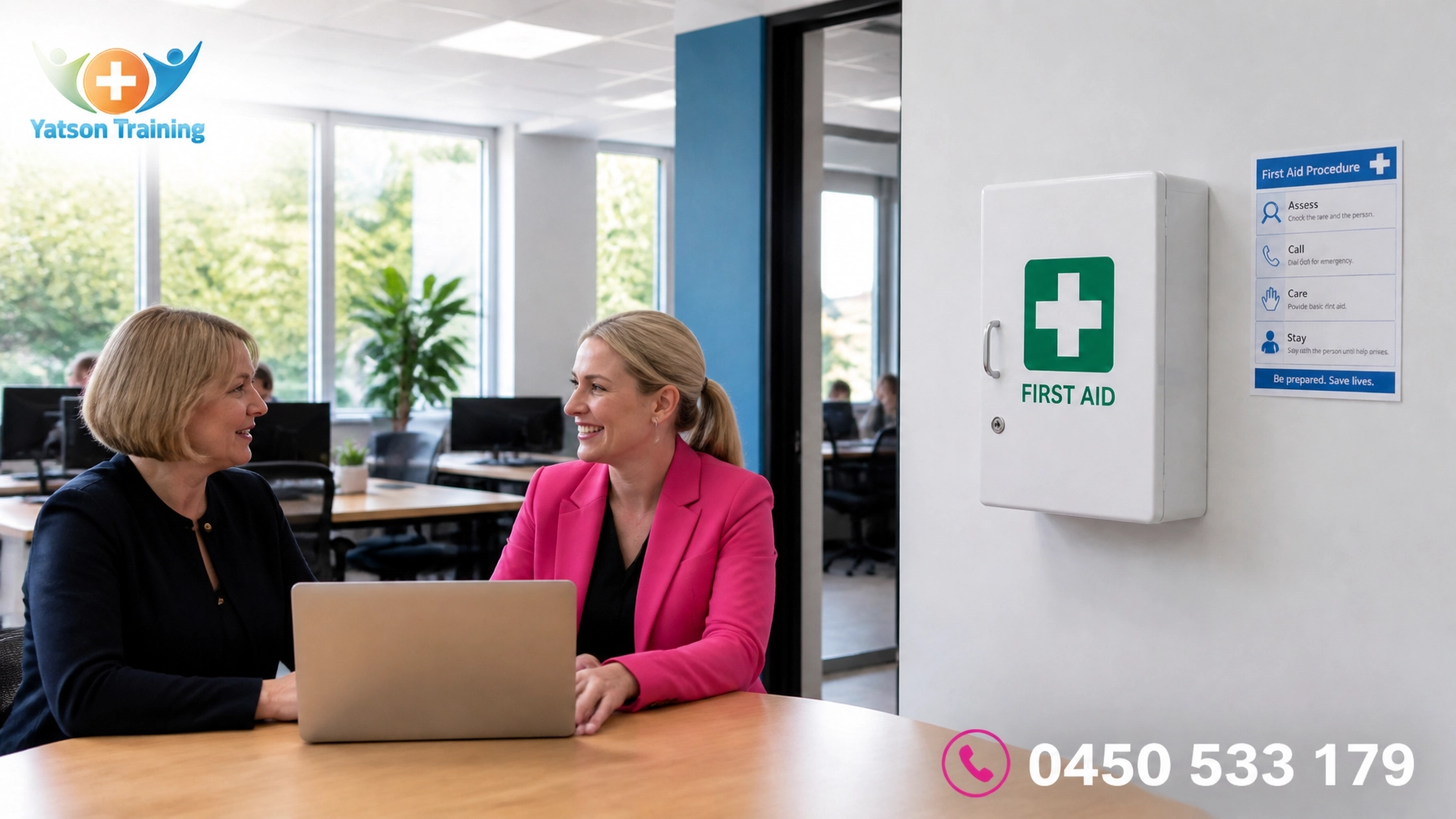
Staying current with first aid protocols is a legal and moral obligation for businesses in the Albury/Wodonga region. While the core principles of resuscitation remain consistent, the Australian Resuscitation Council (ARC) frequently refines techniques to improve survival rates. If your staff last completed their HLTAID011 Provide First Aid course more than 12 months ago, their CPR skills may not align with the latest evidence-based practices.
At Yatson Training, we specialise in Corporate First Aid training that brings these updates directly to your workplace. We ensure your team is not just compliant, but genuinely capable of performing life-saving skills under pressure.
What is CPR all about?
Cardiopulmonary Resuscitation (CPR) is an emergency procedure used to maintain blood flow and oxygenation to the brain and vital organs when a person’s heart has stopped beating (cardiac arrest). It acts as a manual pump. By compressing the chest, you physically squeeze the heart, forcing blood to circulate. By providing rescue breaths, you add oxygen to that blood.
In a workplace setting, CPR is the critical bridge between the moment a colleague collapses and the arrival of professional emergency services. Without immediate intervention, brain damage begins in as little as four minutes.
The DRSABCD Process
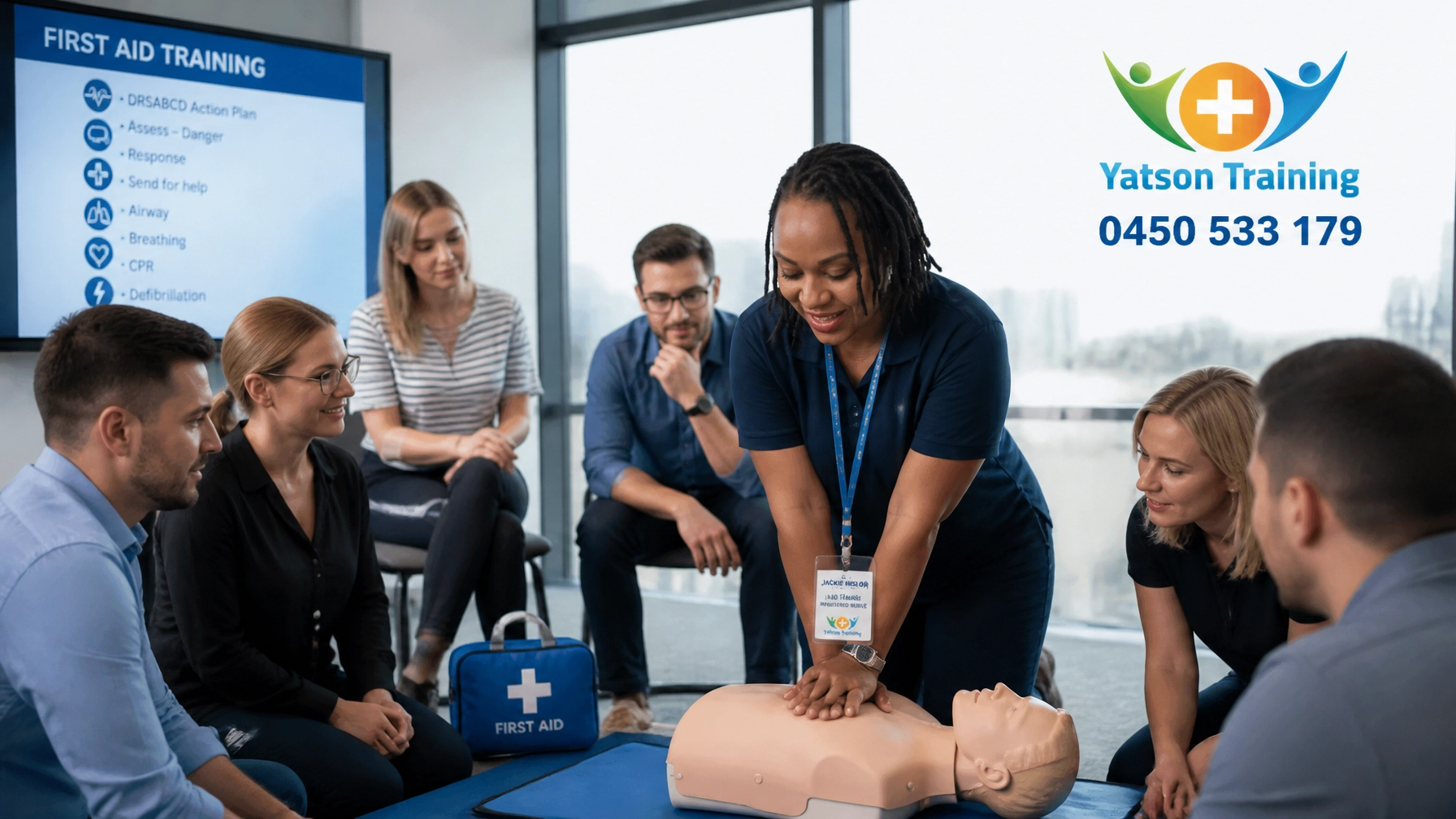
To perform CPR correctly in accordance with current ARC guidelines, you must follow the DRSABCD action plan. This acronym ensures you do not skip vital safety or diagnostic steps.
- D – Danger: Check the site for hazards to yourself, bystanders, and the casualty. (Ensure there are no live wires or moving traffic).
- R – Response: Check for a response by talking to the person and gently squeezing their shoulders. (Use the "COWS" method: Can you hear me? Open your eyes. What's your name? Squeeze my hands).
- S – Send for help: Call Triple Zero (000) immediately. Ask a bystander to find an Automated External Defibrillator (AED).
- A – Airway: Open the mouth and check for obstructions. If the airway is blocked, roll the person onto their side and clear it. (Use a head-tilt and chin-lift for adults to open the passage).
- B – Breathing: Check for normal breathing by looking, listening, and feeling for no more than 10 seconds. (Ignore "gasping" sounds, as these are not normal breathing).
- C – CPR: Start 30 chest compressions followed by 2 rescue breaths.
- D – Defibrillation: Attach an AED as soon as it arrives and follow the voice prompts.

The Current CPR Guidelines Breakdown
The ARC and ANZCOR (Australian and New Zealand Committee on Resuscitation) provide the official standards for First Aid Training. Here is the breakdown of the current technical requirements for adult CPR:
Compression Rate
You must maintain a rate of 100 to 120 compressions per minute. This speed is roughly the beat of the song "Stayin' Alive" or "Another One Bites the Dust." Pushing too slowly fails to build enough pressure; pushing too fast does not allow the heart to refill with blood between compressions.
Compression Depth
For an adult, you must compress the chest to at least 5cm (or about one-third of the chest depth). You must allow for full chest recoil after each push. If you do not push deep enough, the blood will not reach the brain.
The 30:2 Ratio
The standard ratio for all ages remains 30 compressions followed by 2 rescue breaths. If you are unwilling or unable to provide breaths (due to lack of a mask or physical barriers), the guidelines state that compression-only CPR is significantly better than doing nothing at all.
Minimise Interruptions
The latest focus in Workplace First Aid certification is the "compression fraction." This means you should spend as much time as possible actually compressing the chest. Do not stop to check for a pulse or "see if they are okay" unless they show clear signs of life, such as coughing or moving.
AED: The Modern Life-Saver
An Automated External Defibrillator (AED) is the only way to "restart" a heart in a shockable rhythm. Modern units are designed for use by anyone, even those without formal training. However, practicing with an AED trainer during your Corporate First Aid training reduces the "panic factor" in a real emergency.
- Locate the device: Know exactly where the AED is in your Albury/Wodonga office.
- Turn it on: The device will speak to you and give step-by-step instructions.
- Apply pads: Place pads on the bare chest as shown in the diagrams on the pads.
- Stay clear: Ensure no one is touching the casualty when the AED analyses the heart rhythm or delivers a shock.

Symptoms of Cardiac Arrest
Recognising cardiac arrest quickly is the first step in the chain of survival. Look for these signs:
- Sudden Collapse: The person falls to the ground without warning.
- Unresponsiveness: They do not wake up or react when you shout or touch them.
- Abnormal Breathing: They are not breathing at all, or they are making infrequent, quiet, or gasping sounds (agonal gasps).
- No Pulse: (Note: Guideline 8 advises bystanders not to waste time checking for a pulse; rely on responsiveness and breathing).
Our Recommendation: Keep in Mind
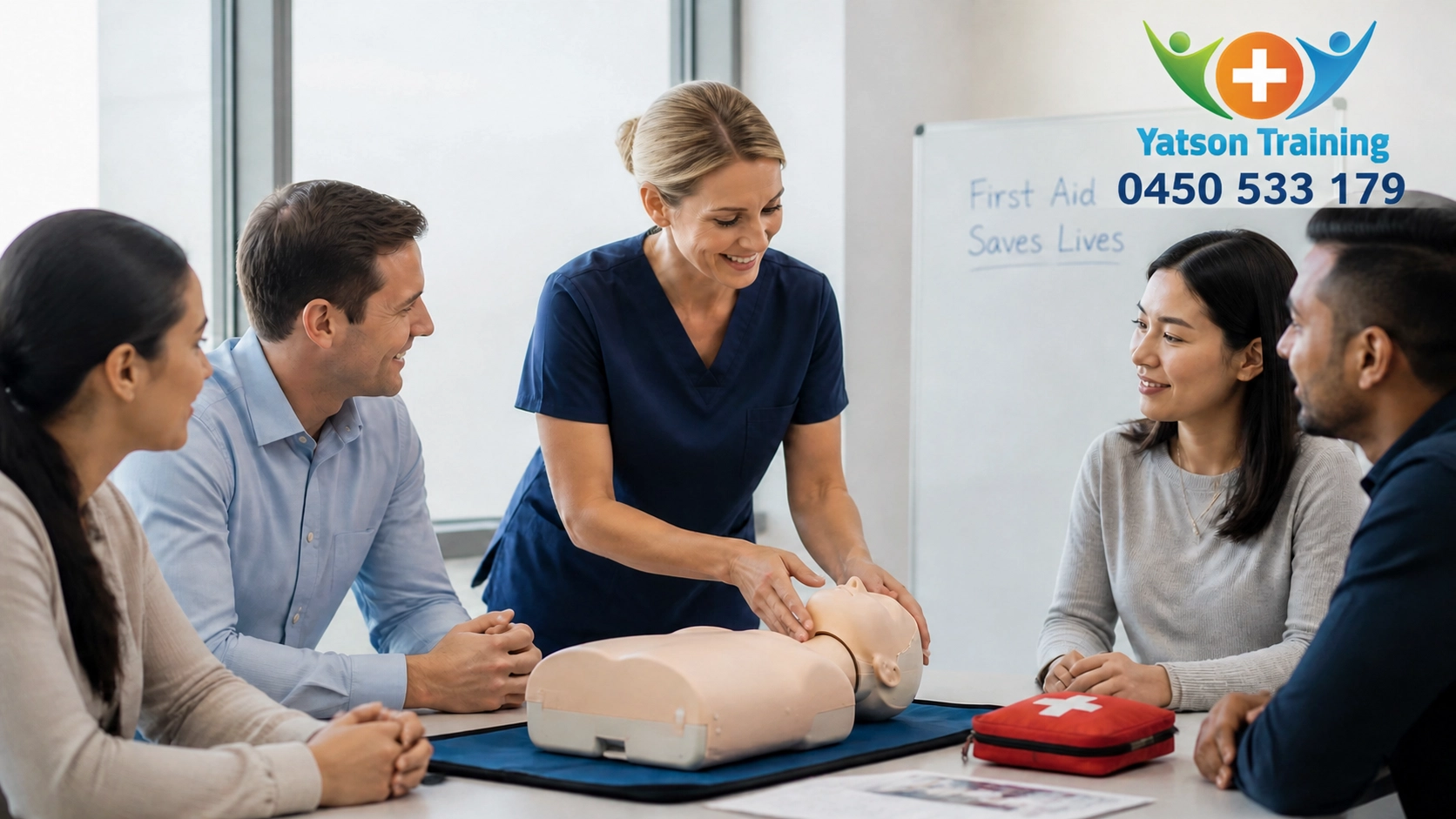
Practice makes permanent. Reading about CPR is not the same as the physical experience of compressing a manikin. We recommend that Albury/Wodonga businesses schedule a refresher every 12 months, even though the full certificate lasts three years.
Invest in Quality Equipment. Ensure your workplace AED has functional batteries and pads that have not expired. Check your first aid kits monthly. You can learn more about maintaining compliance in our guide on calculating first aid ratios.
Don't Fear the Guidelines. Many people fear doing CPR incorrectly. Remember: the person is clinically dead if they are not breathing and have no heartbeat. You cannot make the situation worse, but you can certainly make it better. For more common errors, read our post on 7 CPR mistakes and how to fix them.
Childcare Specifics (HLTAID012)
If you work in an early childhood setting in Wodonga, the guidelines for infants (under 1 year) differ slightly.
- Depth: Compress the chest by 4cm.
- Technique: Use two fingers for infants rather than the heel of the hand.
- Head Tilt: Do not use a head tilt for infants; keep the head in a neutral position to avoid blocking their soft airways.
Our Childcare First Aid course HLTAID012 covers these nuances in detail.

FAQ: CPR and Training
How often should I update my CPR certification?
The Australian Resuscitation Council recommends updating your CPR skills (HLTAID011) every 12 months to ensure your life-saving skills remain sharp and aligned with the latest ARC updates.
Is hands-only CPR effective?
Yes. While 30:2 is the gold standard, continuous chest compressions are highly effective in the first few minutes of a cardiac arrest by keeping oxygenated blood moving to the brain.
Can I get in trouble for performing CPR?
In Australia, "Good Samaritan" laws generally protect individuals who provide emergency assistance in good faith, provided they act within their level of training and are not under the influence of drugs or alcohol.
Does Yatson Training come to our office?
Yes. We provide flexible, hands-on Corporate First Aid training across the Albury/Wodonga region. We bring all the equipment, including manikins and AED trainers, to your site.
Ready to Secure Your Workplace Safety?
Don't wait for an emergency to find out if your team's skills are out of date. Ensure your Albury/Wodonga business is fully compliant and your staff are confident in their ability to save a life.
For professional, engaging, and hands-on First Aid Training, telephone Yatson Training today on 0450 533 179.
Contact Yatson Training:
- Phone: 0450 533 179
- Website: yatsontraining.com.au
- Follow us on Facebook: Yatson Training Facebook
- Connect on LinkedIn: Yatson Training LinkedIn
External Resources:
- Australian Resuscitation Council (ARC) Guidelines
- ANZCOR Guideline 8 – Cardiopulmonary Resuscitation
#FirstAidTraining #AlburyWodonga #WorkplaceSafety #CPRSavesLives #HLTAID011 #CorporateTraining #HealthAndSafety #WodongaBusiness
{“@type”:”BlogPosting”,”about”:[{“name”:”HLTAID011 Provide First Aid”,”@type”:”Course”,”description”:”Comprehensive first aid training including CPR.”},{“name”:”HLTAID012 Provide First Aid in an Education and Care Setting”,”@type”:”Course”,”description”:”Specialised childcare first aid course.”}],”image”:”https://cdn.marblism.com/wlqKXjj9qiJ.webp”,”author”:{“name”:”Yatson Training”,”@type”:”Organization”},”hasPart”:[{“name”:”How often should I update my CPR certification?”,”@type”:”Question”,”acceptedAnswer”:{“text”:”The Australian Resuscitation Council recommends updating your CPR skills (HLTAID011) every 12 months to ensure your life-saving skills remain sharp.”,”@type”:”Answer”}},{“name”:”What is the correct CPR compression rate?”,”@type”:”Question”,”acceptedAnswer”:{“text”:”The current guideline is a rate of 100 to 120 compressions per minute for adults, children, and infants.”,”@type”:”Answer”}}],”@context”:”https://schema.org”,”headline”:”The New CPR Guidelines Explained in Under 3 Minutes for Albury/Wodonga Businesses”,”publisher”:{“logo”:{“url”:”https://cdn.marblism.com/-8AyRUBMjeY.png”,”@type”:”ImageObject”},”name”:”Yatson Training”,”@type”:”Organization”},”areaServed”:”Albury Wodonga”,”description”:”Learn the latest ARC CPR guidelines for 2024-2026. Essential information for Albury/Wodonga businesses on rate, depth, and the DRSABCD process for HLTAID011.”,”datePublished”:”2026-05-29″,”mainEntityOfPage”:{“@id”:”https://yatsontraining.com.au/the-new-cpr-guidelines-explained”,”@type”:”WebPage”}}