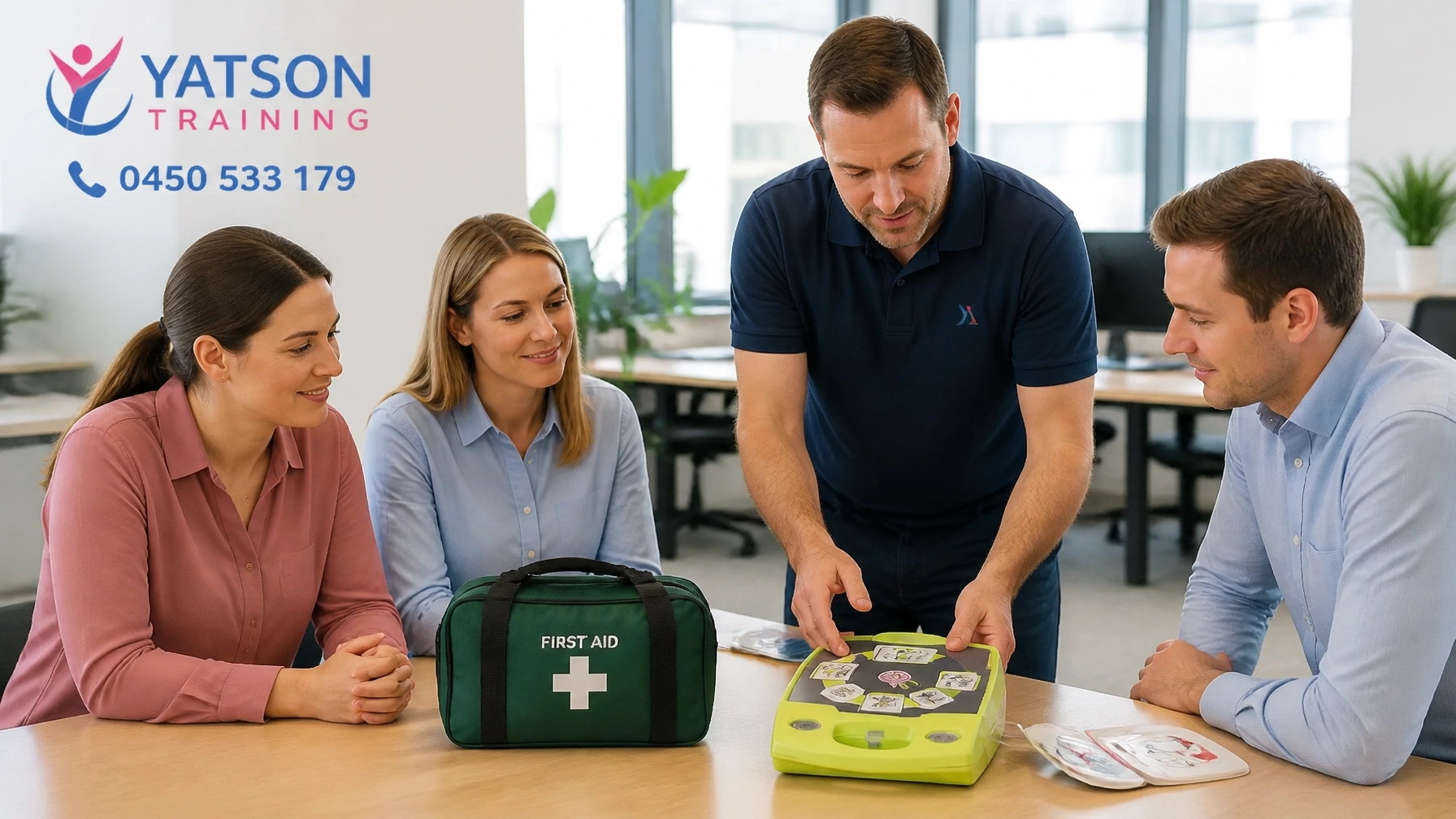

What is Workplace First Aid all about?
Workplace first aid is the immediate care provided to an ill or injured person until professional medical help (such as paramedics or a doctor) arrives. It is a critical component of your health and safety system. Its primary functions are to preserve life, prevent the condition from worsening, and promote recovery. In a busy environment, whether that is a corporate office in Albury / Wodonga or a high-risk construction site, having the right equipment and life-saving skills can be the difference between a minor incident and a workplace tragedy.
Maintaining a safe workplace is not just about having a box on the wall. It requires a systematic approach to risk assessment, equipment maintenance, and hands-on First Aid training.
1. The "Set and Forget" Kit
Many businesses purchase a first aid kit and never open it until an emergency occurs. This is a significant mistake. Items inside a kit have expiry dates (the date after which the product may no longer be sterile or effective).
The Fix:
- Assign a dedicated "First Aid Officer" to check the kit monthly.
- Replace used items immediately after an incident.
- Check expiry dates on saline, bandages, and antiseptic wipes.
- Ensure the kit is "readily accessible" (unlocked and easy to reach).
2. The Ratio Trap: Not Enough First Aiders
Relying on one or two staff members to handle all emergencies is risky. If your only first aider is on annual leave, working a different shift, or is the person who actually gets injured, your workplace is vulnerable. Safe Work Australia guidelines recommend specific ratios of first aiders to workers depending on the risk level of your industry.
The Fix:
- Conduct a risk assessment to determine how many trained staff you need.
- Schedule Corporate First Aid training for multiple team members to ensure coverage during lunch breaks and holidays.
- Ensure staff are trained in HLTAID011 Provide First Aid, which is the standard for most Australian workplaces.

3. Relying on Old Wives’ Tales
Medical guidelines change as research evolves. Using outdated methods, like putting butter on a burn or leaning your head back during a nosebleed, can actually cause more harm. For example, leaning back during a nosebleed can cause blood to flow down the throat (aspiration), potentially blocking the airway or causing vomiting.
The Fix:
- Follow the current Australian Resuscitation Council (ARC) guidelines.
- Treat burns by running cool water over the area for at least 20 minutes.
- Treat nosebleeds by leaning forward and pinching the soft part of the nose.
- Book a refresher course with Yatson Training to stay updated on modern techniques.
4. Moving a Casualty Without a Plan
A common instinct is to move an injured person to a "more comfortable" spot. However, if the person has a suspected spinal or head injury (common in falls), moving them can cause permanent paralysis or further trauma.
The Fix:
- Follow the DRSABCD (Danger, Response, Send for help, Airway, Breathing, CPR, Defibrillation) protocol.
- Do not move the casualty unless there is an immediate danger to their life (such as fire or live electricity).
- Reassure the person and keep them still until professional help arrives.

5. Training Expiry Blind Spots
A Workplace First Aid certification is not a "once-and-done" event. Skills like CPR (cardiopulmonary resuscitation) are perishable; if you don't practice them, you forget them. Most Australian safety standards require a full first aid certificate to be renewed every three years, while the CPR component should be refreshed annually.
The Fix:
- Keep a training register that tracks expiry dates for all staff.
- Set a calendar reminder three months before a certificate expires.
- Book your team into a Learn CPR in Albury / Wodonga session to maintain high competency levels.
6. Forgetting Personal Protection (PPE)
In the heat of an emergency, it is easy to forget your own safety. However, coming into contact with a casualty's blood or bodily fluids puts you at risk of infections (blood-borne pathogens). A first aider who becomes a second casualty cannot help anyone.
The Fix:
- Always wear disposable gloves (nitrile or vinyl) before touching a casualty.
- Use a resuscitation mask or face shield if you need to perform rescue breaths.
- Wash your hands thoroughly with soap and water after providing any care.

7. Hesitating to Call 000
Some workers hesitate to call emergency services because they don't want to "cause a scene" or are unsure if the situation is serious enough. Delaying the call for a heart attack or stroke can lead to irreversible damage.
The Fix:
- If you are unsure, call Triple Zero (000). The operators are trained to help you assess the situation.
- Delegate the call: Point to a specific person and say, "You, call 000 now and tell them we have an unconscious person."
- Ensure your workplace has clear signage with the address and nearest cross-street to assist the operator.

Our Recommendation
At Yatson Training, we recommend moving beyond a simple compliance mindset. Don't just tick a box; build a culture of safety. We suggest conducting an annual "First Aid Audit" where you check your kits, review your staff training levels, and run a mock emergency drill. This ensures that when a real crisis hits, your team acts with confidence and precision.
If you are a childcare provider, ensure your staff have completed the specific Childcare First Aid course HLTAID012 to meet the unique needs of infants and children.
Frequently Asked Questions
How often do we need to refresh our training?
Standard industry practice in Australia is to refresh your full First Aid certificate (HLTAID011) every three years and your CPR (HLTAID009) every 12 months.
Is it expensive to train my whole team?
No. Yatson Training offers competitive rates for Corporate First Aid training. Investing in training is far more cost-effective than the potential legal and insurance costs associated with a workplace injury that was poorly managed.
Can you come to our office in Albury?
Yes. We provide flexible, hands-on training at your location or ours, making it easy to fit into your busy schedule.
Ready to secure your workplace?
Don't wait for an accident to happen. Ensure your team has the life-saving skills they need today. For professional, engaging, and compliant First Aid Training in Albury / Wodonga, contact Yatson Training.
Telephone us now on 0450 533 179 or visit our website at yatsontraining.com.au to book your next course.
Connect with us:
#FirstAidTraining #AlburyWodonga #WorkplaceSafety #HLTAID011 #CorporateTraining #LifeSavingSkills #SafetyFirst #YatsonTraining
{“@type”:”BlogPosting”,”image”:”https://cdn.marblism.com/8erFR_B9KtU.webp”,”author”:{“name”:”Yatson Training”,”@type”:”Organization”},”faqPage”:{“@type”:”FAQPage”,”@context”:”https://schema.org”,”mainEntity”:[{“name”:”How often do we need to refresh our training?”,”@type”:”Question”,”acceptedAnswer”:{“text”:”Standard industry practice in Australia is to refresh your full First Aid certificate (HLTAID011) every three years and your CPR (HLTAID009) every 12 months.”,”@type”:”Answer”}},{“name”:”Is it expensive to train my whole team?”,”@type”:”Question”,”acceptedAnswer”:{“text”:”No. Yatson Training offers competitive rates for Corporate First Aid training. Investing in training is far more cost-effective than potential legal costs.”,”@type”:”Answer”}}]},”@context”:”https://schema.org”,”headline”:”7 Mistakes You’re Making with Workplace First Aid (and How to Fix Them)”,”publisher”:{“logo”:{“url”:”https://cdn.marblism.com/-8AyRUBMjeY.png”,”@type”:”ImageObject”},”name”:”Yatson Training”,”@type”:”Organization”},”description”:”Learn the most common workplace first aid mistakes and how to stay compliant with Australian safety standards. Expert tips for Albury / Wodonga businesses.”,”datePublished”:”2026-06-09″,”mainEntityOfPage”:{“@id”:”https://yatsontraining.com.au/7-mistakes-youre-making-with-workplace-first-aid”,”@type”:”WebPage”}}