What is a Workplace First Aid Audit all about?
A workplace first aid audit is a systematic review of your business’s emergency preparedness. It evaluates whether your site has the correct equipment, signage, and, most importantly, trained personnel to handle a medical crisis. In Albury and Wodonga, businesses must adhere to strict safety standards set by Safe Work Australia and relevant state regulators (SafeWork NSW or WorkSafe Victoria).
The goal of the audit is to ensure that if someone stops breathing, suffers a severe allergic reaction, or is injured on the job, your team can intervene effectively until paramedics arrive. Mastering these 15 life-saving skills ensures your staff are not just "compliant" on paper, but capable in reality.
1. Master the DRSABCD Action Plan
The DRSABCD (Danger, Response, Send for help, Airway, Breathing, CPR, Defibrillation) action plan is the foundation of all first aid. It provides a clear, step-by-step checklist to follow when you encounter a casualty.
- Check for Danger: Ensure the area is safe for you, the casualty, and bystanders.
- Check for Response: Talk to the casualty and squeeze their shoulders.
- Send for Help: Call Triple Zero (000) immediately.
2. Perform High-Quality CPR (Adults)
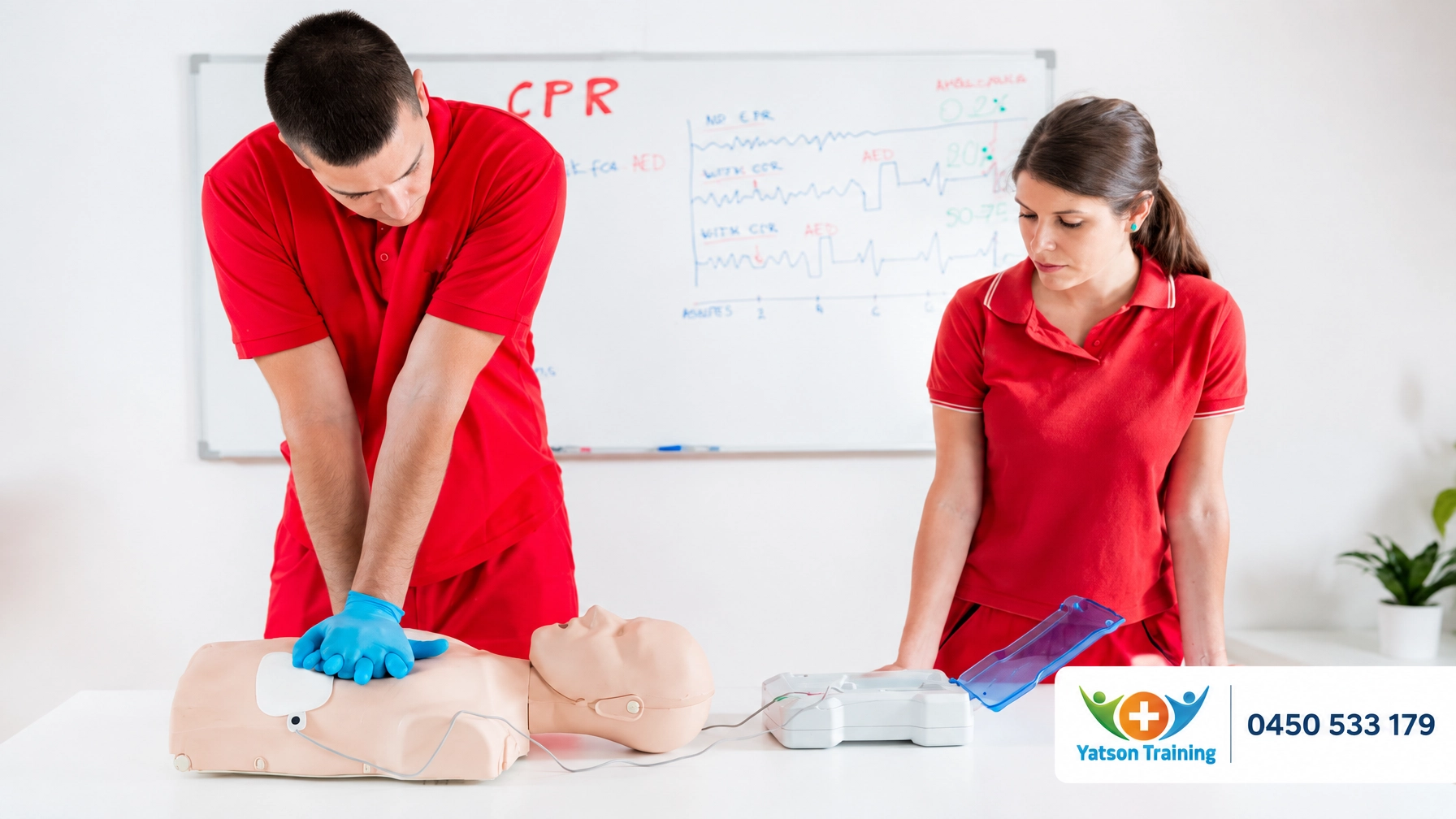
Cardiopulmonary Resuscitation (CPR) is a critical component of the HLTAID011 Provide First Aid course. It involves manually pumping the heart to keep blood flowing to the brain.
- Position: Place the heel of one hand in the centre of the chest and the other hand on top.
- Compress: Push down one-third of the chest depth (about 5cm).
- Rate: Maintain a steady rhythm of 100–120 compressions per minute.
- Breathe: Provide 2 rescue breaths for every 30 compressions.

3. Operate an Automated External Defibrillator (AED)
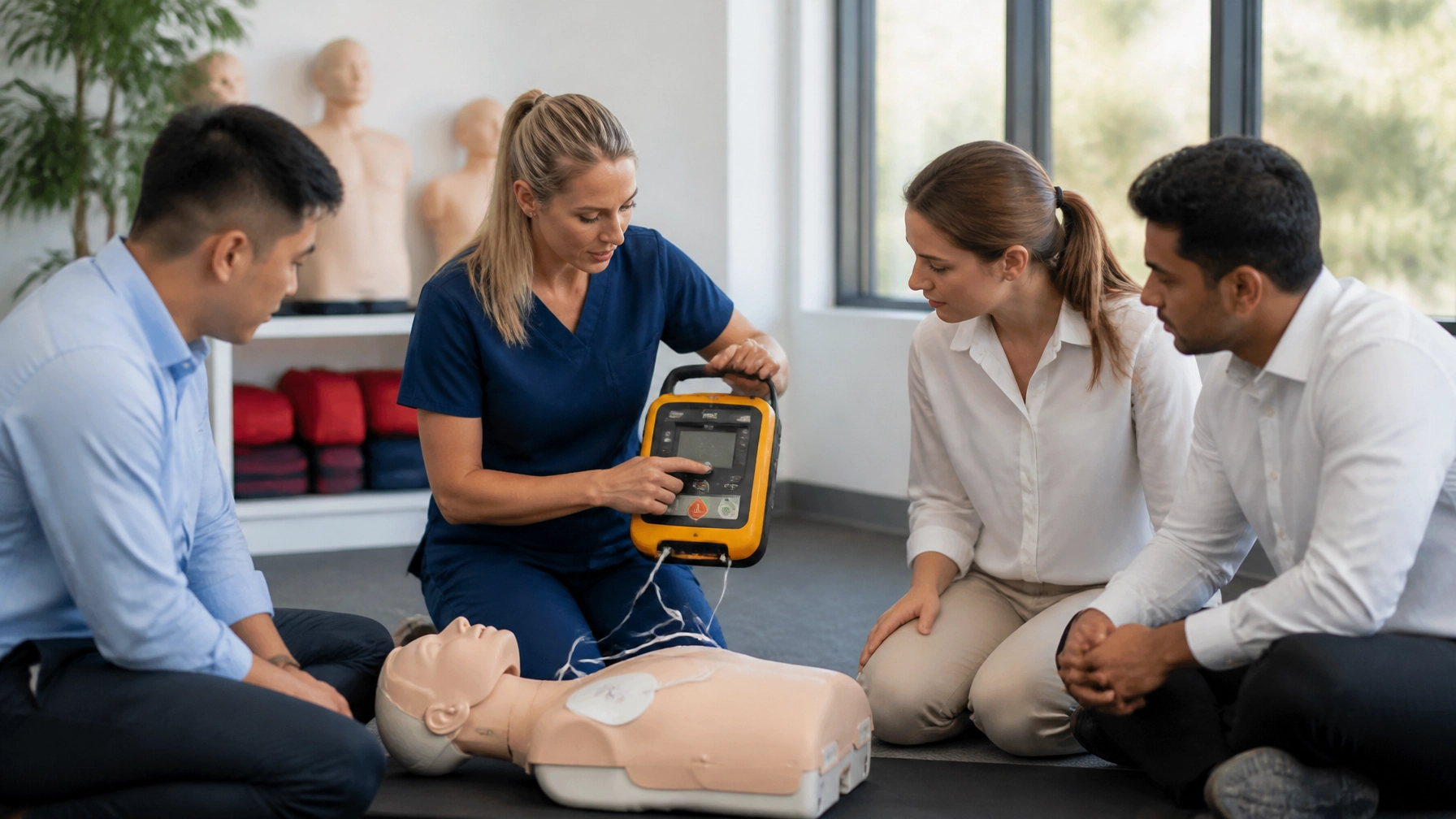
An AED is a portable device that can restart a heart. During an audit, inspectors often check if staff know where the AED is and how to use it. Many small businesses and sporting groups in Albury-Wodonga are now installing these life-saving tools.
- Turn it on: Follow the voice prompts immediately.
- Attach pads: Place pads on the casualty’s bare chest as shown on the diagrams.
- Clear the area: Do not touch the casualty while the machine analyses or delivers a shock.
4. Manage Infant and Child Emergencies
If your workplace involves children, such as a school or daycare, your staff must hold a Childcare First Aid course HLTAID012.
- Adapt CPR: Use two fingers for infant compressions rather than full hands.
- Check Airway: Be extremely gentle when checking the airway of a small child (the head-tilt/chin-lift is less pronounced).
5. Control Severe Bleeding
Uncontrolled bleeding can lead to shock and death in minutes. Mastery of pressure techniques is vital for industrial or construction sites.
- Apply Pressure: Use a clean pad or clothing and press firmly on the wound.
- Elevate: Keep the injured limb above the level of the heart if possible.
- Bandage: Secure the pad with a firm bandage, but do not cut off circulation.
6. Administer an Adrenaline Auto-Injector (Epipen)
Anaphylaxis is a life-threatening allergic reaction. You must act fast if a colleague or customer is struggling to breathe.
- Identify: Look for swelling of the tongue, throat tightness, or a persistent cough.
- Administer: Press the auto-injector firmly into the outer mid-thigh.
- Hold: Keep it in place for the required seconds (usually 3 or 10 depending on the device).
7. Provide Asthma First Aid
Asthma attacks are common in the Albury-Wodonga region, especially during hay fever season.
- Sit Upright: Help the person sit up and stay calm.
- 4x4x4 Rule: Give 4 separate puffs of a blue/grey reliever. Take 4 breaths after each puff. Wait 4 minutes. If no improvement, repeat.
8. Recognise Stroke Symptoms (F.A.S.T.)
Every second counts when someone is having a stroke. Use the F.A.S.T. acronym to assess the situation.
- Face: Check if their face has dropped on one side.
- Arms: Can they lift both arms?
- Speech: Is their speech slurred or garbled?
- Time: Call 000 immediately if any symptoms are present.
9. Manage Fractures and Dislocations
Workplace falls can lead to broken bones. Proper immobilisation prevents further internal damage.
- Support: Use a sling or padding to keep the limb still.
- Check Circulation: Ensure bandages are not so tight that fingers or toes turn blue.

10. Respond to Snake and Spider Bites
In regional Australia, knowing how to handle envenomation is a mandatory skill.
- Stay Still: Keep the casualty calm and completely still.
- Pressure Immobilisation: Apply a broad pressure bandage over the bite site and then the entire limb.
- Do Not Wash: Never wash the bite site, as venom on the skin helps hospital staff identify the snake.
11. Manage Burns and Scalds
Whether it's a chemical burn in a lab or a steam scald in a kitchen, immediate cooling is the priority.
- Cool: Run cool (not cold) tap water over the burn for at least 20 minutes.
- Remove: Gently take off jewellery or clothing unless it is stuck to the burn.
- Cover: Use a loose, non-stick dressing or clean plastic wrap.
12. Treat Heat-Related Illnesses
Albury-Wodonga summers can be brutal. Heat exhaustion and heatstroke are serious risks for outdoor workers.
- Cool Down: Move the person to a shaded area.
- Hydrate: Give small sips of water if they are conscious.
- Apply Ice: If they have heatstroke (unconscious/confused), apply ice packs to the armpits and groin.
13. Handle Seizures and Fits
Watching someone have a seizure can be distressing, but your calm response is essential.
- Protect: Clear away hard or sharp objects.
- Time it: Note how long the seizure lasts.
- Recovery Position: Once the jerking stops, roll them onto their side (recovery position) to keep the airway clear.
14. Use First Aid Equipment Correctly
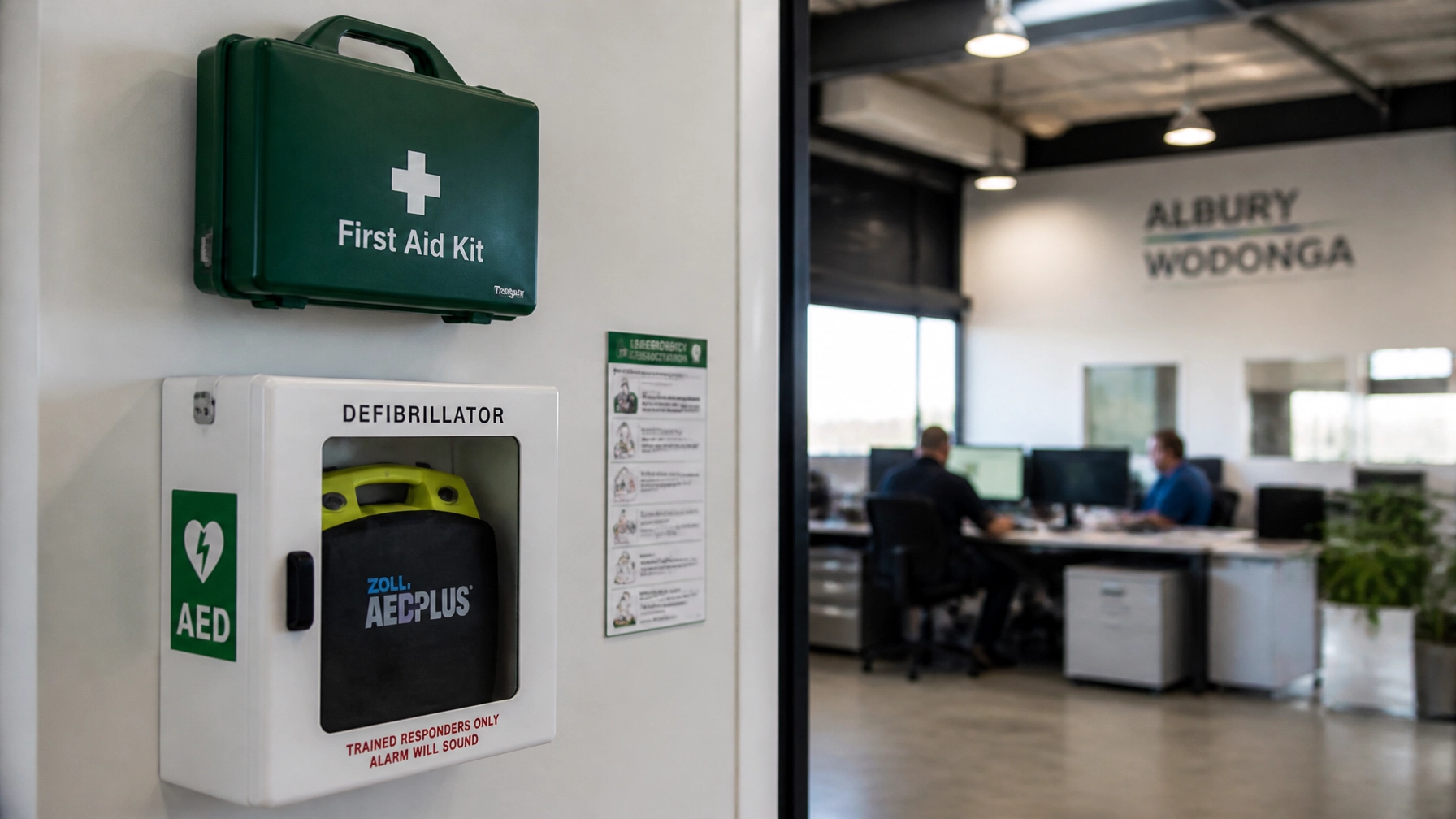
An audit will often ask staff to locate and demonstrate the use of items within the first aid kit.
- Check Expiry: Regularly inspect your kits for expired saline or bandages.
- Replenish: Ensure that if an item is used, it is replaced immediately.
- Know your Kit: Familiarise yourself with the common mistakes in workplace first aid kits.
15. Complete Accurate Incident Documentation
First aid doesn’t end when the ambulance arrives. You must document the event for legal and compliance reasons.
- Record: Note the time, symptoms, and treatment provided.
- Confidentiality: Store these records securely as per privacy laws.
- Review: Use the incident to calculate your first aid ratios and improve future safety.

Our Recommendation: Practice Makes Permanent
Reading a list of skills is a great start, but it is not a substitute for hands-on experience. We recommend that all Albury-Wodonga businesses conduct regular "first aid drills." Much like a fire drill, these practice runs help staff build muscle memory. When a real emergency happens, you won't have time to Google the instructions.
Yatson Training offers flexible, hands-on training for corporate clients and small groups. We focus on real-world scenarios to ensure your team is truly ready. Don't wait for a workplace audit to find out your staff are unprepared.
Workplace First Aid FAQ
How often do my staff need to refresh their First Aid training?
According to the Australian Resuscitation Council (ARC), CPR (HLTAID009) should be refreshed every 12 months, while the full First Aid certificate (HLTAID011) should be renewed every 3 years.
Is one first aider enough for my warehouse?
This depends on your risk level and the number of employees. Low-risk workplaces usually need one first aider for every 50 people, while high-risk sites require one for every 25. Check our guide on workplace first aid compliance for more details.
Can we do the training at our own office in Wodonga?
Yes! Yatson Training provides on-site corporate training. We come to you, making it easy to get your whole team certified without the travel time.
Book Your Training Today
Ensure your business passes its next audit with flying colours. For professional, engaging, and compliant First Aid Training in the Albury-Wodonga area, contact Yatson Training.
Call Jackie and the team on 0450 533 179 or visit yatsontraining.com.au to book your session.
Stay updated with safety tips on our social media:
#FirstAidTraining #AlburyWodonga #WorkplaceSafety #HLTAID011 #LearnCPR #WorkplaceAudit #CorporateTraining #SafetyFirst
{“@type”:”BlogPosting”,”image”:”https://cdn.marblism.com/x-vsM7t5Ibc.webp”,”author”:{“name”:”Yatson Training”,”@type”:”Organization”},”@context”:”https://schema.org”,”headline”:”15 Life-Saving Skills to Master Before Your Next Albury-Wodonga Workplace Audit”,”publisher”:{“logo”:{“url”:”https://cdn.marblism.com/-8AyRUBMjeY.png”,”@type”:”ImageObject”},”name”:”Yatson Training”,”@type”:”Organization”},”articleBody”:”A workplace first aid audit is a systematic review of your business’s emergency preparedness… [15 Skills: DRSABCD, CPR, AED, Infant First Aid, Bleeding, Anaphylaxis, Asthma, Stroke, Fractures, Snake Bites, Burns, Heat Illness, Seizures, Equipment Use, Documentation] …Contact Yatson Training on 0450 533 179.”,”description”:”Master 15 essential life-saving skills for your workplace. Ensure your Albury-Wodonga business is compliant with HLTAID011 and ready for any emergency audit.”,”datePublished”:”2026-06-15″}