
When you are running a local business in Albury or managing a weekend footy team in Wodonga, your to-do list is already a mile long. You are focused on rosters, customer service, and keeping the lights on. It is easy to look at an Automated External Defibrillator (AED) and think, "That’s a big investment for something we might never use."
But as a Registered Nurse with years of experience in emergency care, I have seen the "truth" of what happens when a cardiac arrest strikes and there is no AED nearby. The reality is often heartbreaking, but it is also entirely preventable.
What is an AED all about?
An AED (Automated External Defibrillator) is a portable electronic device that automatically diagnoses life-threatening cardiac arrhythmias, specifically ventricular fibrillation (VF) and pulseless ventricular tachycardia, and is able to treat them through defibrillation.
In simpler terms, it is a smart box that can restart a heart that has stopped beating effectively. It works by sending an electric shock to the heart to restore its natural rhythm. The most important thing to understand is that modern AEDs are designed for everyone to use. You do not need to be a doctor or a nurse to operate one. The machine talks to you, giving you step-by-step instructions (voice prompts) and it will only deliver a shock if the person’s heart actually needs it. You cannot accidentally shock someone who doesn't need it.
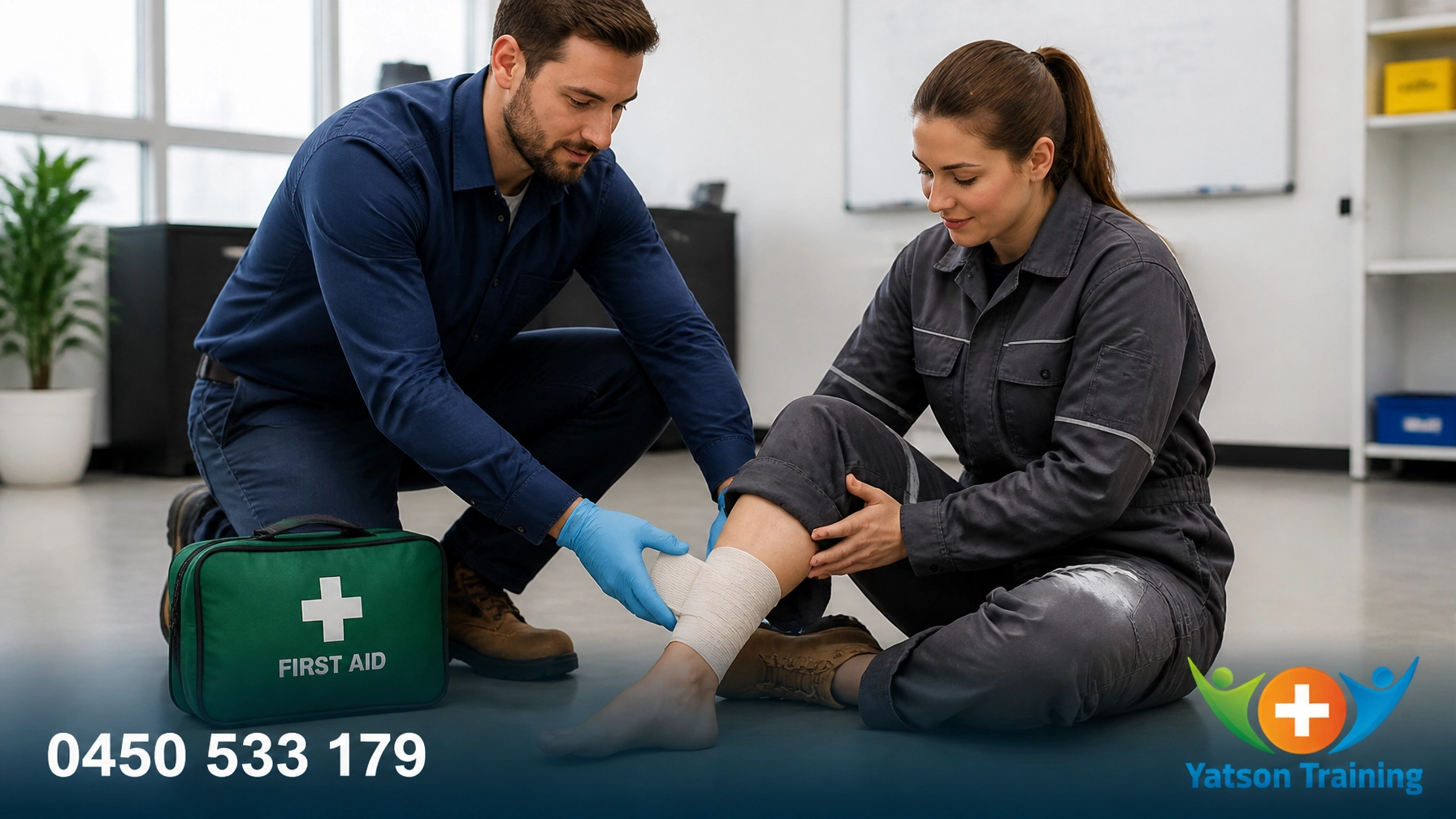
At Yatson Training, we integrate AED practice into every HLTAID011 Provide First Aid course we run because this tool is the single most effective way to save a life during a cardiac emergency.
The Stark Reality: Statistics in Australia
The numbers around Sudden Cardiac Arrest (SCA) in Australia are confronting. Every year, over 20,000 Australians experience a cardiac arrest outside of a hospital. That is roughly 20 times the annual national road toll.
Without immediate intervention, the survival rate is less than 10%. However, when high-quality CPR is combined with the use of an AED within the first few minutes, survival rates can soar to over 65%.
Every minute that passes without defibrillation reduces the chance of survival by approximately 7% to 10%. By the time an ambulance arrives, even in a well-serviced area like Albury / Wodonga, it might already be too late. This is why having an AED on-site for your First Aid for small groups is not just a "nice to have"; it is a critical safety asset.

Why Sporting Groups are High-Risk Zones
You might think that because your athletes are young and fit, they are safe. Unfortunately, the data tells a different story. First Aid Training for Sporting Groups is essential because athletes are actually three times more likely to experience a sudden cardiac arrest than non-athletes.
Around 90% of cardiac arrests in young athletes occur during or immediately after intense exercise. Whether it is a local soccer match, a netball tournament, or a gym session, the physical strain on the heart can trigger an underlying condition that no one knew existed.
Many sporting clubs in regional Victoria and NSW have benefited from government grants to install AEDs, but the hardware is only half the battle. Your coaches, trainers, and parents need to Learn CPR in Albury / Wodonga and know exactly where that AED is kept and how to use it under pressure.
Small Businesses: Duty of Care and Compliance
For small business owners, the question often comes down to: "Am I legally required to have one?"
While Australian law doesn't currently mandate an AED in every single small shop, the Work Health and Safety (WHS) Act requires you to provide "adequate first aid equipment" and manage risks "so far as is reasonably practicable." If your business has an older workforce, high-risk physical tasks, or is located some distance from a hospital, a risk assessment would likely suggest an AED is necessary.
Beyond the legalities, there is the human element. Your staff and your customers are like family. Providing a safe environment includes being prepared for the worst-case scenario. Investing in Workplace First Aid certification for your team ensures that if a customer or colleague collapses, your staff won't stand by helplessly, they will take action.

How the AED Works (Simple Steps)
When you attend our Corporate First Aid training, we take the mystery out of the machine. Here is the basic process:
- Check the Scene: Ensure it is safe for you to help.
- Check Responsiveness: If the person is unconscious and not breathing normally, call 000 immediately.
- Start CPR: Begin chest compressions (pushing hard and fast in the centre of the chest).
- Turn on the AED: Open the lid or press the power button.
- Attach the Pads: Follow the pictures on the pads to place them on the person's bare chest. (You may need to dry the chest or remove clothing).
- Let the AED Analyse: Stop CPR when the machine tells you to. Do not touch the person while it is analysing the heart rhythm.
- Deliver the Shock (If prompted): If the AED says "Shock Advised," ensure no one is touching the person and press the shock button.
- Resume CPR: The machine will tell you when to start compressions again. Continue until the person recovers or paramedics take over.
Our Recommendation: The Jackie Hislop Perspective
As a Registered Nurse and the lead trainer at Yatson Training, my recommendation is simple: Don't wait for a tragedy to happen before you act.
An AED is the only thing that can stop the chaotic electrical activity in a failing heart and allow it to reset. CPR keeps oxygen moving to the brain, which is vital, but the AED is the "cure."
If you are a small business or a sporting club, I suggest you:
- Conduct a Risk Assessment: Look at your location and who is using your facility.
- Invest in a Quality Unit: Choose an AED that is easy to maintain and has long-lasting pads and batteries.
- Make it Visible: Don't hide your AED in a locked cupboard. It should be in a central, well-signposted location.
- Train Your People: Equipment is useless if no one is confident enough to touch it. Book a session with us to get your team certified in HLTAID011 Provide First Aid.

Keep in Mind: Maintenance and Training
An AED is not a "set and forget" device. You must ensure it is ready to work when you need it.
- Check the Indicator Light: Most AEDs have a small green light or a tick that shows they have passed their self-test. Check this weekly.
- Monitor Expiry Dates: Pad electrodes (the sticky pads) and batteries have expiry dates. Mark these on your calendar and replace them before they expire.
- Review Your Training: Skills fade over time. We recommend a full First Aid refresher every three years and a CPR-only refresher (HLTAID009) every year to keep your confidence high.
- Register Your Device: In many parts of Australia, you can register your AED with the local ambulance service. This helps 000 dispatchers direct people to your device in an emergency.
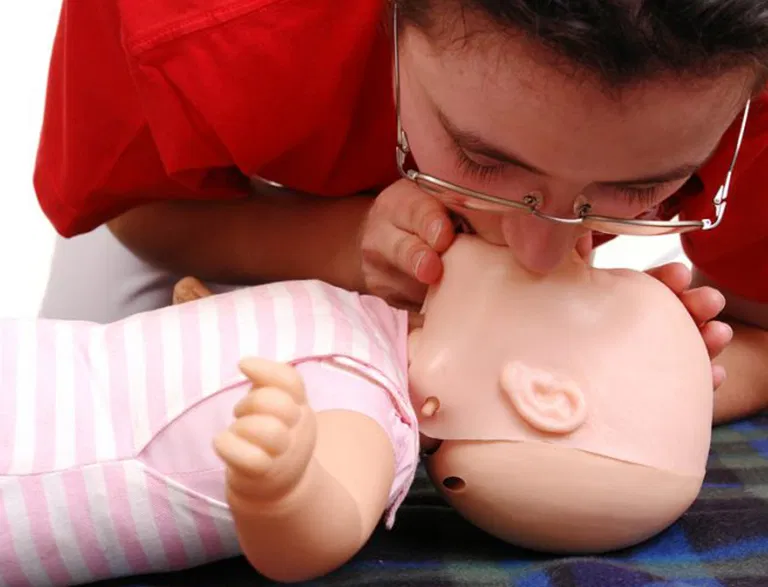
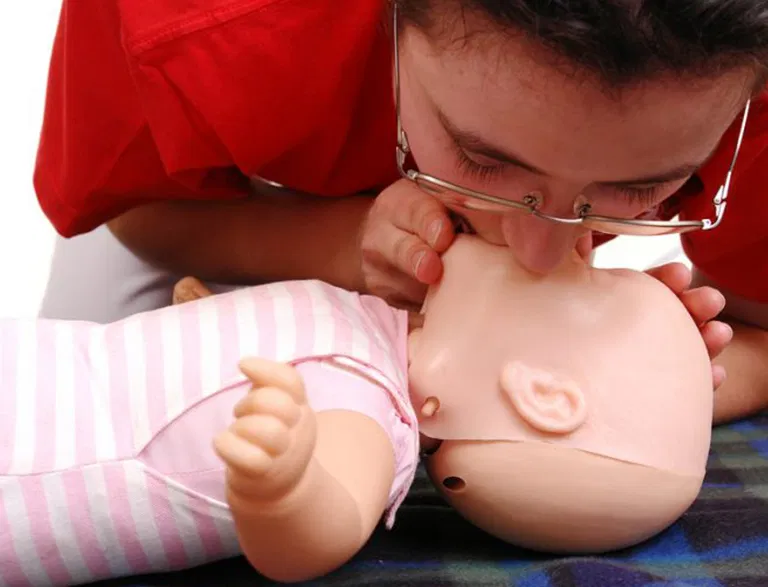
If you are also working in the childcare sector, remember that our Childcare First Aid course HLTAID012 specifically covers how to use an AED on infants and children, which requires different pad placement or special paediatric settings.
Frequently Asked Questions (FAQs)
Can I get in trouble if I use an AED and the person doesn't survive?
No. In Australia, "Good Samaritan" laws protect you. As long as you are acting in good faith to help someone in an emergency, you are generally protected from civil liability.
Are AEDs expensive to maintain?
Not particularly. After the initial purchase, you only need to replace the pads and batteries every few years (usually 2–5 years depending on the model). It is a very cost-effective way to protect lives.
Do I need a medical degree to use one?
Absolutely not. The machine is designed to be used by a "layperson" (someone without medical training). It will literally talk you through every single second of the process.
Can I accidentally shock someone who is just fainted?
No. The AED is incredibly smart. It will only deliver a shock if it detects a specific lethal heart rhythm. If the person has just fainted or has a healthy heart rhythm, the machine will not shock them.
Protect Your Team with Professional Training
At Yatson Training, we don't just teach you how to pass a test; we give you the confidence to save a life. Our training is hands-on, interactive, and led by experienced professionals who have been on the front lines of healthcare.
Whether you need Corporate First Aid training for your office or a custom session for your local sports club, we provide flexible, high-quality certification that exceeds compliance requirements.
Ready to ensure your workplace or club is truly prepared? Call us today to discuss your training needs or to book a course.
Contact Yatson Training:
- Telephone: 0450 533 179
- Website: yatsontraining.com.au
- About Us: Meet Jackie and the team
Follow us for more safety tips and updates:
#FirstAidTraining #AlburyWodonga #WorkplaceSafety #AED #SaveALife #HLTAID011 #CorporateTraining #SportsSafety #LearnCPR #CommunitySafety