
What is Workplace First Aid Compliance all about?
Workplace first aid compliance is the process of meeting legal requirements set by Work Health and Safety (WHS) regulators to ensure every person in your business has access to immediate medical assistance if they are injured or become ill. It involves more than just buying a box of bandages. Compliance is a living system that includes risk assessments, appropriate equipment, trained staff, and clear procedures. In Australia, the Safe Work Australia Code of Practice provides the framework for what you must do to keep your team safe. Neglecting these standards can lead to heavy fines, legal liability, and, most importantly, preventable tragedies.
1. Conducting a "One-Size-Fits-All" Risk Assessment
Many businesses assume that because they have an office, their risks are low and a standard kit is enough. This is a critical error. A proper risk assessment must account for your specific hazards, the size of your workforce, and your physical location.
- Identify specific hazards (like chemicals, machinery, or extreme heat).
- Evaluate the distance to the nearest hospital.
- Determine if your staff work in shifts or in isolation.
If you haven't reviewed your risk assessment in the last 12 months, you are likely out of compliance. Check your risk register today.
2. Counting Expired Certificates as "Trained Staff"
Your compliance rests on the shoulders of your designated first aiders. A common mistake is failing to track when their HLTAID011 Provide First Aid or CPR certificates expire. An expired certificate means that person no longer counts toward your legal ratio requirements.

- Create a spreadsheet of all trained staff.
- Set calendar reminders three months before a certificate expires.
- Book a refresher course immediately to avoid gaps in coverage.
For reliable Workplace First Aid certification, click here to book a group session in the Albury / Wodonga area.
3. The "Set and Forget" Mentality with First Aid Kits
A first aid kit is not a permanent fixture; it is a consumable resource. We often see kits that are missing essential items because someone used a bandage and didn't report it. Furthermore, items like saline and antiseptic creams have expiry dates (they lose their sterile properties or chemical stability over time).
- Inspect every kit at least once a month.
- Replace any opened or expired items immediately.
- Seal kits with a breakable tag to easily identify if they have been opened.

4. Ignoring Your Remote and Mobile Workers
If your staff work in vans, at client sites, or in remote areas of the Albury / Wodonga region, your office first aid kit does not cover them. Employers are responsible for providing first aid access to workers wherever they are performing their duties.
- Equip every company vehicle with a dedicated vehicle first aid kit.
- Provide communication devices (satellite phones or two-way radios) for areas with poor mobile reception.
- Ensure mobile workers know the location of the nearest medical facility for each job site.
5. Neglecting Contractors and Visitors
Under Australian WHS law, "workers" include contractors, subcontractors, and labour-hire staff. If a visitor trips in your foyer, you are responsible for their immediate first aid. Failing to factor these people into your first aid plan is a major compliance gap.
- Include visitor numbers in your peak occupancy calculations.
- Brief long-term contractors on where your first aid room and kits are located.
- Document every incident involving a non-employee in your first aid log.
6. Failing to Run Practical First Aid Drills
You might have the best equipment and a trained team, but if no one knows how to react during a high-stress emergency (the "freeze" response), your compliance system has failed. Safe Work Australia recommends regular testing of your emergency procedures.

- Schedule a mock emergency once every six months.
- Test how long it takes for a first aider to reach a specific location.
- Evaluate the performance of the first aider and the clarity of the communication.
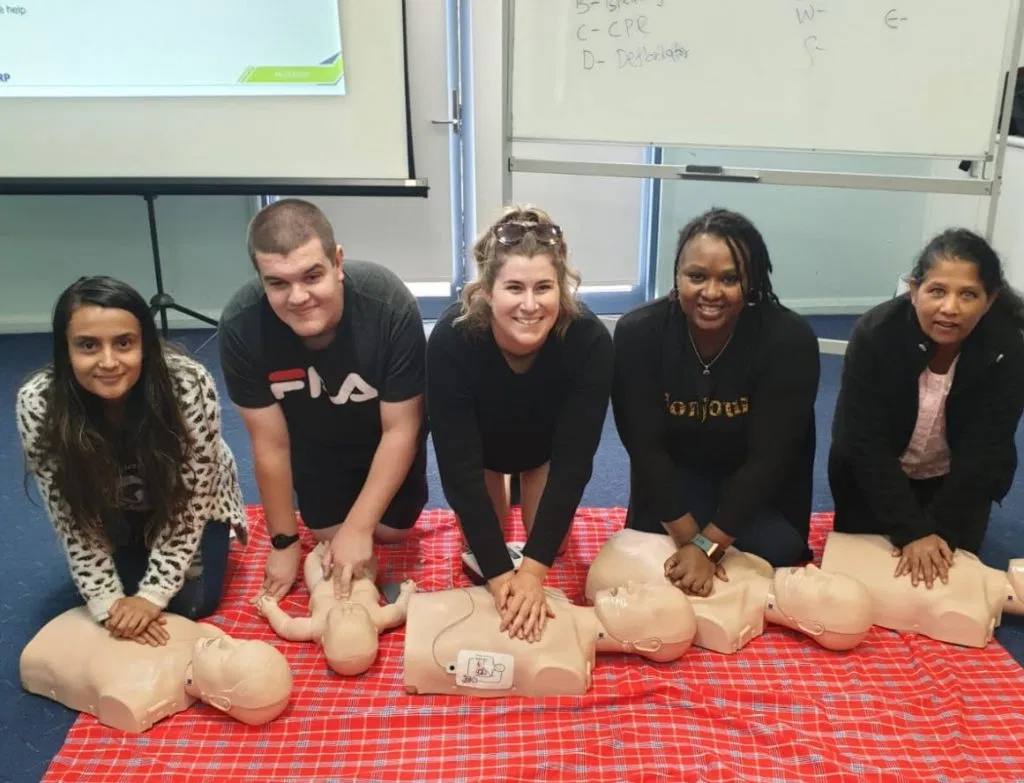
Interactive and engaging Corporate First Aid training is the best way to ensure your team actually knows what to do when the pressure is on.
7. Missing Compliant Signage and Accessibility
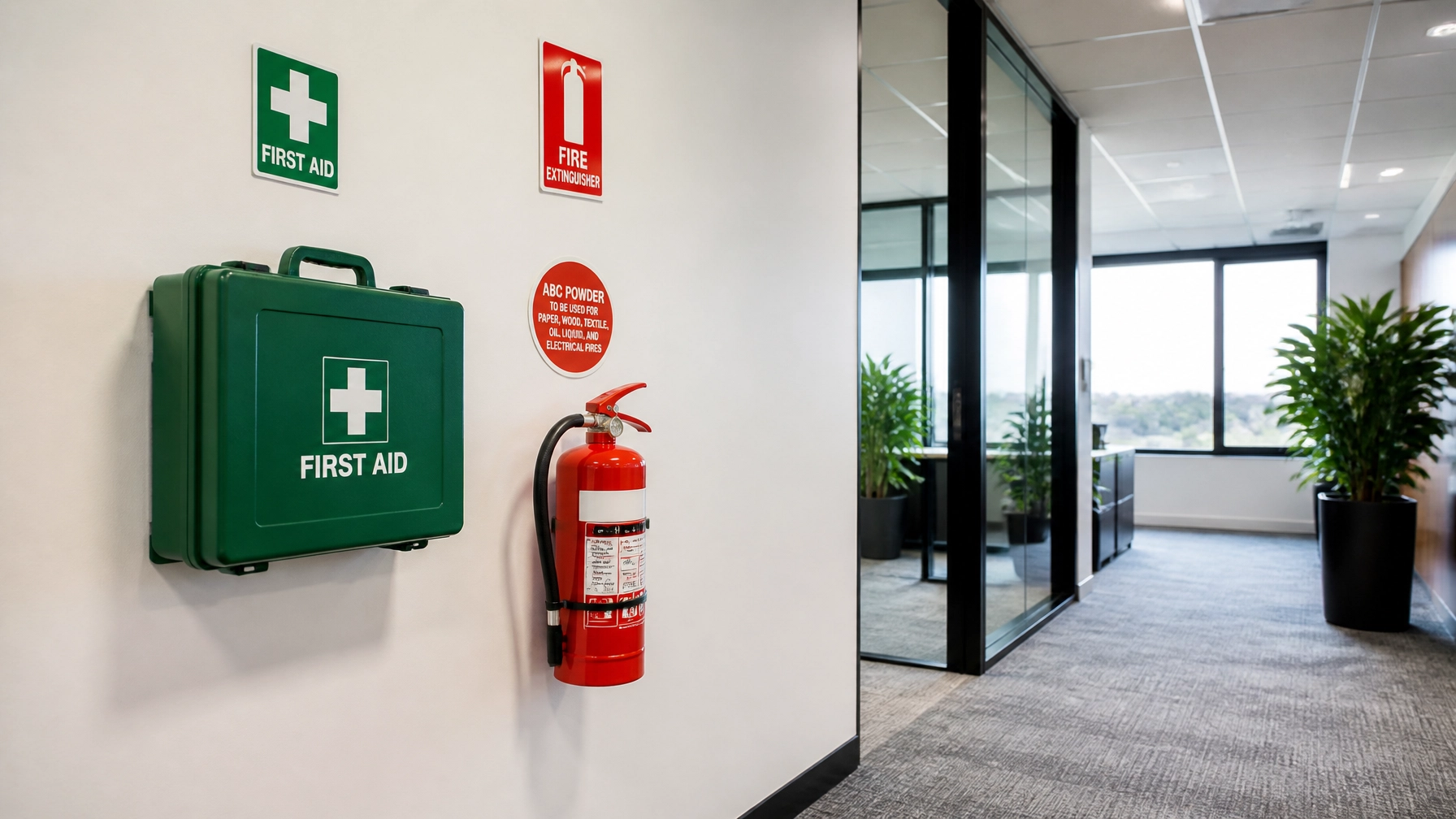
A first aid kit is useless if it is locked in a manager's office or hidden behind a stack of boxes in the warehouse. Compliance requires that kits be "readily accessible" and "prominently signed."
- Use the standard white cross on a green background for all signs.
- Ensure signs are visible from a distance and not obstructed by equipment.
- Mount kits at a height where they can be easily reached by everyone.
Our Recommendation
At Yatson Training, we recommend appointing a "First Aid Champion" in your workplace. This person shouldn't just be a first aider; they should be responsible for the administrative side of compliance. They will check the kits, track the expiry dates of the HLTAID011 Provide First Aid certificates, and ensure new staff are briefed on first aid locations. This proactive approach prevents the "compliance drift" that leads to fines and unsafe environments.

Keep in Mind
If your business involves children, such as a childcare centre or school, your requirements are different. You must ensure your staff complete a Childcare First Aid course HLTAID012, which includes specific modules for asthma and anaphylaxis management.
Workplace First Aid FAQ
How many first aiders do I need?
As a general rule for low-risk workplaces (like offices), you need 1 first aider for every 50 workers. For high-risk workplaces (like construction or manufacturing), you need 1 for every 25 workers.
How often does First Aid training need to be renewed?
The full HLTAID011 Provide First Aid certificate should be renewed every three years. However, the CPR component (HLTAID009) must be refreshed every 12 months to remain compliant.
Can I just buy a kit from the supermarket?
While better than nothing, supermarket kits often lack the specific items required for workplace hazards. A compliant kit should be based on your risk assessment and meet the Safe Work Australia standards.
Is an AED (Defibrillator) mandatory?
While not strictly mandatory for all small businesses, they are highly recommended. Having an AED on-site significantly increases the survival rate for cardiac arrest.

Ready to get your workplace compliant?
Don't wait for an accident to find out your compliance is lacking. Yatson Training provides professional, hands-on First Aid training for corporate clients and small groups across the Albury / Wodonga region. Our lead trainer, Jackie Hislop, is a Registered Nurse who ensures your team gains real-world life-saving skills in an interactive and enjoyable environment.
We provide full support from your initial inquiry through to final certification. Whether you need a Childcare First Aid course HLTAID012 or a full Corporate First Aid training package, we can help.
Contact us today to book your session:
Telephone: 0450 533 179
Website: yatsontraining.com.au
Follow us for more safety tips:
Facebook | Instagram
#FirstAidTraining #AlburyWodonga #WorkplaceSafety #HLTAID011 #CorporateTraining #SafeWorkAustralia #CPR #LifeSavingSkills
{“@type”:”BlogPosting”,”image”:”https://cdn.marblism.com/d412QoLgDIw.webp”,”author”:{“name”:”Yatson Training”,”@type”:”Organization”},”@context”:”https://schema.org”,”headline”:”7 Mistakes You’re Making with Your Workplace First Aid Compliance (and How to Fix Them)”,”keywords”:”HLTAID011 Provide First Aid, Learn CPR in Albury / Wodonga, Corporate First Aid training, Workplace First Aid certification, Childcare First Aid course HLTAID012″,”publisher”:{“logo”:{“url”:”https://cdn.marblism.com/-8AyRUBMjeY.png”,”@type”:”ImageObject”},”name”:”Yatson Training”,”@type”:”Organization”},”description”:”Discover common workplace first aid compliance mistakes and learn how to fix them to ensure WHS standards and employee safety in Australia.”,”datePublished”:”2026-06-28″,”articleSection”:”Workplace Safety”}