What is Australian first aid, CPR, and workplace safety all about?
Australian first aid is the immediate care provided to a person who is injured or becomes unwell before professional medical help arrives. It includes assessing danger, contacting emergency services, providing CPR when required, controlling bleeding, and supporting a casualty until further care is available.
CPR (cardiopulmonary resuscitation) is used when a person is unconscious and not breathing normally. Workplace safety is the broader system of identifying hazards, reducing risks, maintaining emergency equipment, and ensuring workers have suitable training.
Your workplace needs more than a first aid kit in a cupboard. You need trained people, clear procedures, accessible equipment, and regular reviews. Professional First Aid training helps your team respond safely and consistently when an incident occurs.
1. Understand HLTAID011 Provide First Aid
HLTAID011 Provide First Aid is a nationally recognised unit commonly used for workplace first aiders across Australia. It applies to people who may need to provide first aid in community or workplace settings.
The unit covers how to:
- Recognise and assess an emergency.
- Protect yourself, bystanders, and the casualty.
- Contact emergency services.
- Provide CPR in line with Australian Resuscitation Council guidelines.
- Use an automated external defibrillator (AED).
- Manage common injuries and medical conditions.
- Communicate incident details.
- Complete workplace reporting.
- Review the incident and identify any support required.
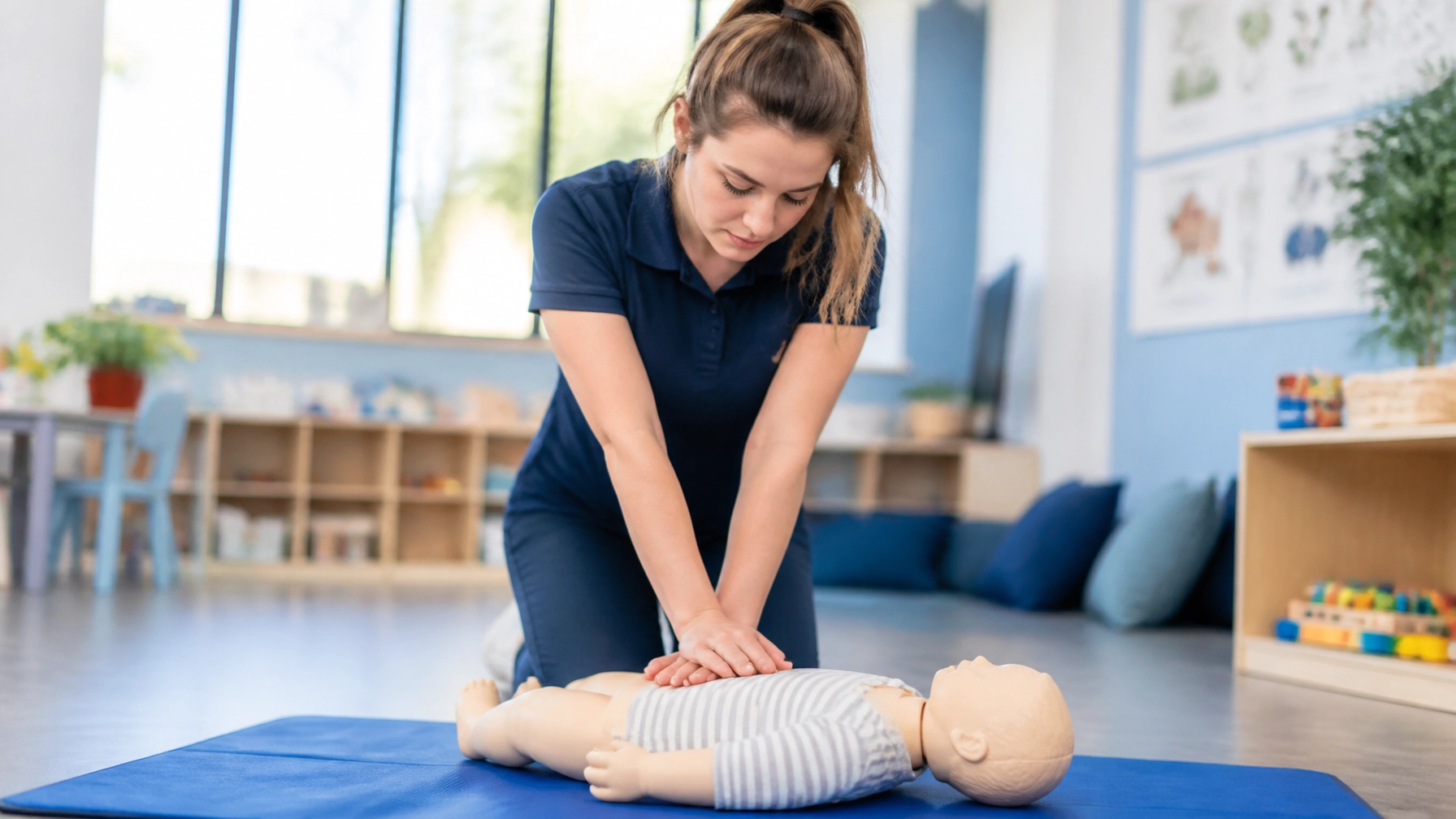
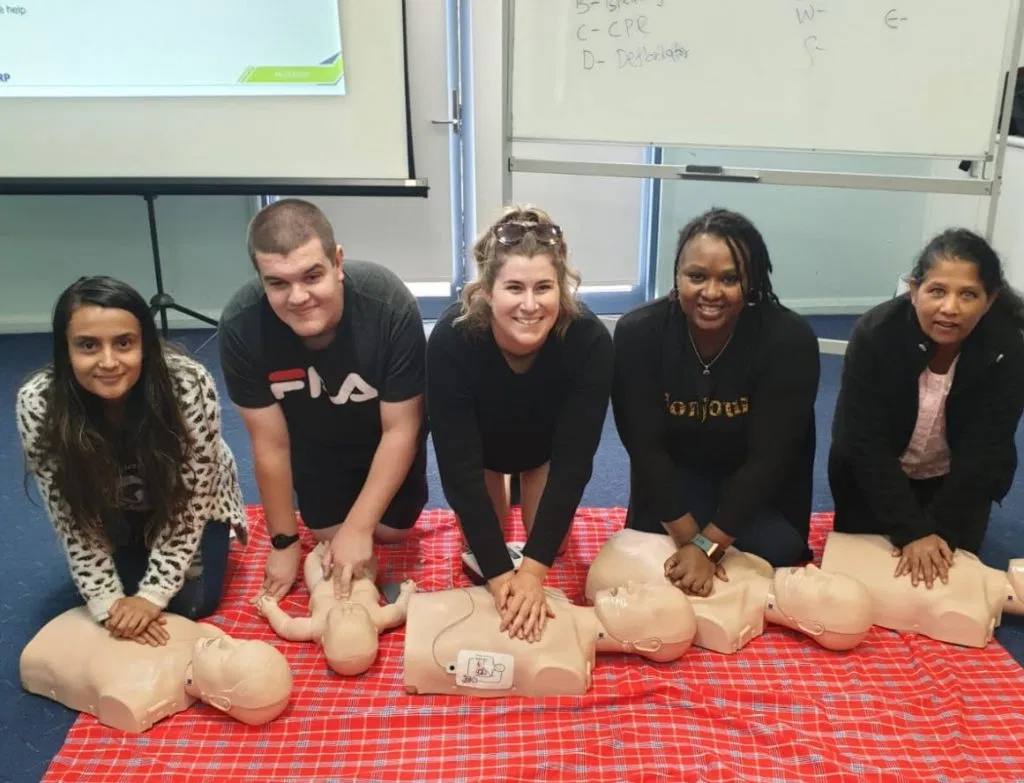
HLTAID011 includes practical assessment. You must demonstrate skills in realistic scenarios using adult and infant manikins, an AED training device, first aid equipment, and other resources.
The broader qualification is generally refreshed every three years. CPR skills are commonly refreshed every 12 months. Check your industry requirements, workplace procedures, and relevant state or territory guidance before scheduling training.
2. Use DRSABCD during an emergency
DRSABCD provides a structured approach to an emergency. Use it to reduce delays and help you focus on the correct sequence.
- Danger: Check that the area is safe for you, the casualty, and bystanders.
- Response: Check whether the person responds to your voice or gentle touch.
- Send for help: Call 000 or direct another person to call.
- Airway: Open the airway and check for obstruction.
- Breathing: Check for normal breathing. Do not mistake occasional gasping for normal breathing.
- CPR: Start CPR if the person is unresponsive and not breathing normally.
- Defibrillation: Use an AED as soon as it becomes available. Follow its voice and visual prompts.
Do not place yourself in danger to help someone else. Use gloves or other personal protective equipment where available. Ask for consent when the person is conscious. Maintain privacy and communicate clearly with emergency services.
This information is general guidance only. Complete practical First Aid training so you can perform these actions under supervision and assessment.
3. Know the basics of CPR and AED use
When an adult is unconscious and not breathing normally, begin CPR and use an AED as soon as possible.
During training, you will practise:
- Positioning the casualty on a firm surface.
- Placing your hands on the lower half of the sternum (the breastbone).
- Giving compressions at the recommended rate.
- Providing rescue breaths when trained and able to do so.
- Minimising interruptions.
- Rotating rescuers during prolonged CPR.
- Responding to regurgitation or vomiting.
- Following AED prompts and maintaining safety while a shock is delivered.
CPR is physically demanding. You must practise correct positioning, compression technique, and safe movement. Practical training also helps you understand the differences between adult, child, and infant CPR.
If you are searching for Learn CPR in Albury / Wodonga, Yatson Training provides hands-on sessions using realistic equipment and scenarios. View the HLTAID009 Provide CPR course or contact Yatson Training to discuss group options.

4. Build a practical workplace first aid plan
A workplace first aid plan should reflect your actual environment. Do not rely on a generic checklist.
Start by reviewing:
- The hazards associated with your work.
- The size and layout of your workplace.
- The number of workers, visitors, contractors, and customers.
- Operating hours and shift arrangements.
- Remote or isolated work.
- Travel between sites.
- Previous incidents and near misses.
- The distance from medical services.
- Any workers or clients with known medical needs.
Safe Work Australia guidance provides general benchmarks for first aider numbers. These include approximately one first aider per 50 workers in low-risk workplaces, one per 25 workers in high-risk workplaces, and one per 10 workers in remote high-risk workplaces. Your risk assessment may require more.
Ensure a trained first aider is available during operating hours and on each shift. Display the names or roles of first aiders where workers can find them quickly.
Your procedures should explain:
- How to call 000.
- Where first aid kits are located.
- Where the AED is located, if one is available.
- How to contact first aiders.
- How to manage visitors and contractors.
- How to record and report incidents.
- How to review the response afterwards.
Read the Safe Work Australia Code of Practice: First aid in the workplace and confirm local requirements with your state or territory regulator.
5. Maintain first aid kits and emergency equipment
A first aid kit is only useful when it is accessible, clearly identified, and properly stocked.
Check your workplace equipment regularly. Assign responsibility to a specific person or role. Record each inspection and replace used, damaged, or expired items.
Your workplace may need:
- Basic first aid kits.
- Additional kits for separate floors or work areas.
- Burns treatment supplies.
- Eye-wash facilities.
- Personal protective equipment.
- Resuscitation barrier devices.
- An AED.
- Additional supplies for remote or high-risk work.
Place clear signs near kits, first aid rooms, and AEDs. Do not store equipment behind locked doors unless authorised people can access it immediately.
Match your supplies to your hazards. A construction site, childcare setting, office, warehouse, and healthcare environment will not have identical first aid needs.

6. Train for common workplace injuries and illnesses
Your first aiders should know how to respond to more than CPR. HLTAID011 training addresses a range of situations, including:
- Severe and non-life-threatening bleeding.
- Burns.
- Choking.
- Asthma.
- Anaphylaxis.
- Fractures, dislocations, sprains, and strains.
- Shock.
- Seizures.
- Stroke.
- Chest pain.
- Poisoning.
- Bites and stings.
- Head, neck, and spinal injuries.
- Minor wounds and nosebleeds.
- Heat-related illness and hypothermia.
Use practical scenarios that reflect your workplace. For example, a warehouse may practise crush injuries and falls. An office may focus on cardiac emergencies, choking, and slips. A childcare service needs age-appropriate responses for infants and children.
For education and care environments, consider a Childcare First Aid course HLTAID012. Yatson Training lists HLTAID012 Provide First Aid in an Education and Care Setting among its nationally recognised courses.
7. Choose interactive, professional training
Online information cannot replace supervised practical training. You need to practise CPR, AED use, bandaging, casualty assessment, and emergency communication.
Yatson Training provides flexible, hands-on First Aid training for corporate clients, small groups, and individuals. The training is designed to be interactive and engaging rather than a dry compliance exercise.
Lead trainer Jackie Hislop is a Registered Nurse with experience in medical care and training. Yatson Training supports you from the initial enquiry through to final certification.
Explore the Yatson Training courses, learn more about the training team, or review Corporate First Aid training in the Albury-Wodonga area.
Keep in Mind
Do not wait for an incident before checking your workplace readiness.
- Review first aid procedures at least annually and after any significant change.
- Track first aid and CPR currency dates.
- Schedule annual CPR refreshers where required.
- Restock kits after every use.
- Test emergency communication procedures.
- Include new workers in safety inductions.
- Run realistic drills.
- Debrief after incidents.
- Support workers who may experience stress after providing first aid.
Good preparation reduces confusion. It also helps your business meet workplace safety responsibilities and respond more effectively when professional emergency services are on the way.
Our recommendation
Book professional First Aid training before your current certificates expire. Arrange enough trained people to cover every shift and location. Select training that reflects your workplace hazards.
For a quote or to discuss Corporate First Aid training, telephone Yatson Training on 0450 533 179. Yatson Training can assist businesses, small groups, and individuals across the Albury-Wodonga region and surrounding areas.
Visit yatsontraining.com.au or use the contact page to send an enquiry.
Frequently Asked Questions
How often should workplace CPR training be refreshed?
CPR skills are commonly refreshed every 12 months. Check your workplace policy, industry requirements, and applicable regulator guidance.
Is HLTAID011 required for every worker?
No. The required number of trained first aiders depends on your workplace risk assessment, workforce size, work arrangements, and operating conditions. Every worker should still know how to raise the alarm and access emergency assistance.
Is professional training worth the cost?
Yes. Practical training costs less than unmanaged risk, extended disruption, or avoidable delays during an emergency. It also supports workplace compliance and gives your team a clear response process.
Where can I book First Aid training in Albury-Wodonga?
Contact Yatson Training on 0450 533 179 for flexible training options. Yatson Training offers workplace, small-group, and individual First Aid courses.
Follow Yatson Training on Facebook, Twitter, LinkedIn, and YouTube.
#FirstAidTraining #CPRTraining #HLTAID011 #HLTAID009 #AlburyWodonga #LearnCPR #WorkplaceSafety #CorporateFirstAidTraining #WorkplaceFirstAidCertification #ChildcareFirstAid #HLTAID012