
Businesses in Albury and Wodonga need practical systems for responding to workplace injuries and medical emergencies. A first aid kit alone is not enough. Your workers also need suitable training, clear procedures and reliable access to help.
This guide explains how to improve workplace first aid, CPR readiness and general Workplace Safety across offices, retail stores, warehouses, construction sites, hospitality venues and community workplaces.
What is First Aid, CPR and Workplace Safety all about?
First aid is the immediate care given to a person who is injured or becomes unwell. It is provided until advanced medical assistance arrives or the person recovers.
CPR (cardiopulmonary resuscitation) is an emergency procedure used when a person is unresponsive and not breathing normally. It helps maintain circulation until professional medical assistance becomes available.
Workplace safety includes the systems you use to prevent harm and respond effectively when incidents occur. This includes:
- Identifying workplace hazards.
- Providing suitable first aid equipment.
- Training an adequate number of first aiders.
- Maintaining emergency procedures.
- Reviewing incidents and near misses.
- Keeping staff training current.
For Australian businesses, first aid arrangements should be based on the type of work, workplace hazards, workforce numbers, location and operating hours. Read the SafeWork Australia first aid guidance and the SafeWork NSW workplace first aid information for further guidance.
Understand the main first aid training units
HLTAID011 Provide First Aid
HLTAID011 Provide First Aid is the current nationally recognised unit for providing a first aid response in community and workplace settings.
The unit covers the skills and knowledge needed to:
- Assess an emergency situation.
- Protect yourself, bystanders and the casualty.
- Contact emergency services.
- Perform CPR in line with Australian Resuscitation Council guidelines.
- Use an automated external defibrillator (AED).
- Manage bleeding, burns, choking, fractures, asthma, anaphylaxis, seizures and shock.
- Communicate information to emergency services.
- Complete workplace incident documentation.
- Review the response and identify any support required.
Check the current unit details on training.gov.au before enrolling.
HLTAID009 Provide CPR
HLTAID009 Provide CPR is a CPR-focused unit. It includes CPR for adults, children and infants, AED use and emergency communication.
CPR skills should be refreshed every 12 months. First aid qualifications are commonly renewed every three years, although your workplace, industry or regulator may have additional requirements.
If your staff need to Learn CPR in Albury Wodonga, Yatson Training can help you organise a practical refresher or a complete CPR course. You can review the HLTAID009 course details or explore the full range of Yatson Training courses.
Other industry-specific training
Some workplaces require additional training. For example, educators may need the Childcare First Aid course HLTAID012 Provide First Aid in an Education and Care Setting. Always confirm the course requirements for your industry and role before booking.

Five practical Workplace Safety tips for Albury Wodonga businesses
1. Complete a workplace-specific risk assessment
Do not choose your first aid arrangements by relying on a generic checklist. Consider the actual conditions at your workplace.
Review:
- The tasks workers perform.
- Machinery, vehicles, chemicals and electrical equipment.
- Manual handling and work at heights.
- Heat, cold and outdoor conditions.
- The number of workers, visitors and contractors.
- Multiple work areas or separate buildings.
- Lone workers and mobile staff.
- Night shifts, weekends and holiday periods.
- Previous injuries and near misses.
An office may need different equipment and first aider coverage from a fabrication workshop or construction site. A business operating on both sides of the border should also make sure its emergency plans identify whether the incident is in Albury, NSW, or Wodonga, Victoria.
2. Provide enough trained first aiders
Your business must have an adequate number of trained first aiders, or workers must have access to other suitably trained people.
As a general NSW guide, indicative ratios include:
- Low-risk workplaces: approximately one first aider per 50 workers.
- High-risk workplaces: approximately one first aider per 25 workers.
- Remote high-risk workplaces: approximately one first aider per 10 workers.
These figures are starting points, not a replacement for a risk assessment. Review coverage across every shift, floor, site and work area. Arrange backup first aiders for leave and staff turnover.
Display a current list of first aiders where workers can easily find it. Include their names, work locations and the expiry dates of their relevant training.
3. Check first aid kits and emergency equipment
Place kits where workers can access them quickly. Make sure they are clearly identified and close to areas where injuries are more likely to occur.
Nominate a responsible person to check each kit regularly. Check that:
- Sterile items remain sealed.
- Products are within their expiry dates.
- Used supplies have been replaced.
- Dressings and bandages suit the workplace risks.
- Personal protective equipment is available.
- Instructions are easy to locate.
- Mobile workers have suitable portable kits.
You may also need eyewash facilities, emergency showers, an AED or other equipment. Base these decisions on your risk assessment and the manufacturer’s instructions.
For more information, read Yatson Training’s guide to common mistakes in workplace first aid kits.
4. Make your emergency response procedure simple
Workers should know what to do before an emergency occurs. Keep procedures short and easy to follow.
Teach workers to:
- Check for danger before approaching.
- Assess the person and identify immediate life threats.
- Send someone to call Triple Zero (000).
- Provide first aid within their level of training.
- Follow the instructions of emergency services.
- Record the incident according to workplace procedures.
When calling 000, provide the exact street address, site access details, number of casualties and the nature of the emergency. Tell the operator whether the location is in Albury or Wodonga.
If a person is unresponsive and not breathing normally, commence CPR as trained. Use an AED as soon as it is available. Follow its voice prompts and do not delay the call for emergency services.
For serious bleeding, apply firm direct pressure with a suitable dressing. For burns, use cool running water and seek medical help when required. For suspected stroke, heart attack, anaphylaxis or severe breathing difficulty, call 000 immediately and follow your workplace procedures.
Do not provide treatment beyond your training. Protect yourself from blood and body substances and use personal protective equipment where available.
5. Review incidents and refresh skills
First aid arrangements should be reviewed after an incident, near miss, workplace change or staffing change.
Ask:
- Was the first aid kit accessible?
- Did workers know who to contact?
- Was the emergency address clear?
- Did the first aider have current training?
- Was the AED accessible, if one was available?
- Were incident reports completed?
- Does the procedure need to change?
Include first aid in staff induction. Run short emergency drills so workers know where kits, AEDs and emergency exits are located.

Why choose professional First Aid Training Albury Wodonga?
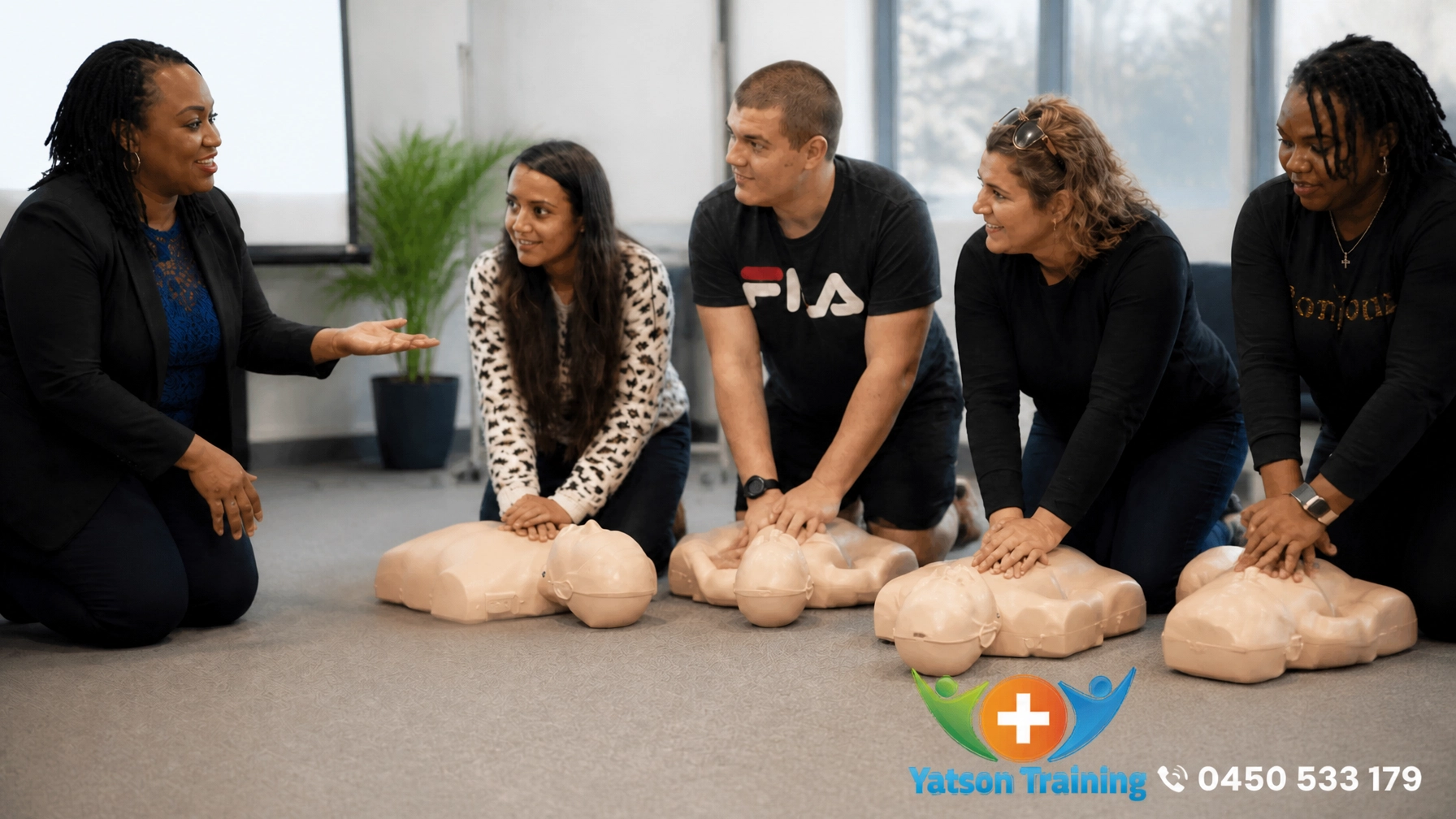
Online information can explain first aid principles, but it cannot replace supervised practice. Workers need to physically practise CPR, AED use, bandaging, slings and emergency communication.
Yatson Training provides flexible, hands-on Corporate First Aid training for businesses, small groups and individuals. Sessions are interactive and designed to keep participants involved rather than simply listening to a presentation.
Lead trainer Jackie Hislop is a Registered Nurse. Her clinical background supports clear explanations of why first aid procedures matter and how they apply in practical situations.
Yatson Training can support your business from the first enquiry through to final certification. Training may be arranged for a corporate team, a small group or an individual who needs reliable Workplace First Aid certification.
Learn more about Corporate First Aid training in the Albury Wodonga area.

Our recommendation: build a complete first aid system
Do not wait until an incident exposes gaps in your workplace arrangements.
Use this simple review process:
- Confirm which staff hold current HLTAID011 training.
- Schedule annual HLTAID009 CPR refreshers.
- Check first aider coverage for every shift and location.
- Inspect first aid kits and replace expired supplies.
- Confirm your AED location and access arrangements.
- Update emergency procedures with the exact site address.
- Include contractors, visitors and mobile workers in your planning.
- Record and review incidents and near misses.
- Consult workers about workplace hazards and first aid needs.
Training is a practical investment. It can reduce confusion, improve response times and help your business meet its workplace safety responsibilities.
Frequently asked questions
Is workplace first aid training necessary for a small business?
Yes. Workplace first aid needs depend on risk, not just business size. Even a small business should provide suitable equipment, procedures and access to trained assistance.
Is HLTAID009 enough for a designated workplace first aider?
HLTAID009 focuses on CPR. Many designated workplace first aiders also require HLTAID011 Provide First Aid. Check your risk assessment, industry requirements and regulator guidance.
How often should CPR be refreshed?
CPR should generally be refreshed every 12 months. Regular practice helps workers maintain the physical skills needed to respond effectively.
Can Yatson Training train our whole team?
Yes. Yatson Training offers flexible, hands-on training for corporate clients, small groups and individuals across Albury Wodonga and surrounding areas.
Book First Aid training for your Albury Wodonga business
Improve your workplace readiness with professional, practical training from Yatson Training. Telephone 0450 533 179 for all your First Aid training needs, including HLTAID011 Provide First Aid, HLTAID009 Provide CPR and tailored Corporate First Aid training.
Visit yatsontraining.com.au to explore available courses and enquire about training for your workplace.
Follow Yatson Training for further training updates:
#FirstAidTraining #AlburyWodonga #FirstAidTrainingAlburyWodonga #CorporateFirstAidTraining #WorkplaceSafety #WorkplaceFirstAidCertification #HLTAID011 #HLTAID009 #LearnCPRAlburyWodonga #CPRTraining #AustralianFirstAid #YatsonTraining