Performing Cardiopulmonary Resuscitation (CPR) is a high-pressure task. Even for those who have completed a Workplace First Aid certification, the stress of a real emergency can lead to technical errors. However, the quality of your compressions and breaths directly impacts the person’s chance of survival. In Albury / Wodonga, businesses and individuals rely on Yatson Training to ensure their life-saving skills are sharp and compliant with the latest Australian standards.
What is CPR all about?
CPR is a life-saving procedure (a combination of chest compressions and rescue breaths) used when a person's heart stops beating or they stop breathing normally. Its primary function is to maintain a flow of oxygenated blood to the brain and vital organs until professional medical help arrives or an Automated External Defibrillator (AED) can be used. Think of it as manually "parking" the heart's job to keep the system running. Without it, permanent brain damage can occur within minutes.
1. Not Pushing Deep Enough
One of the most frequent errors observed during First Aid Training is shallow compressions. If you do not compress the chest deep enough, you are not effectively squeezing the heart to pump blood.
How to fix it:
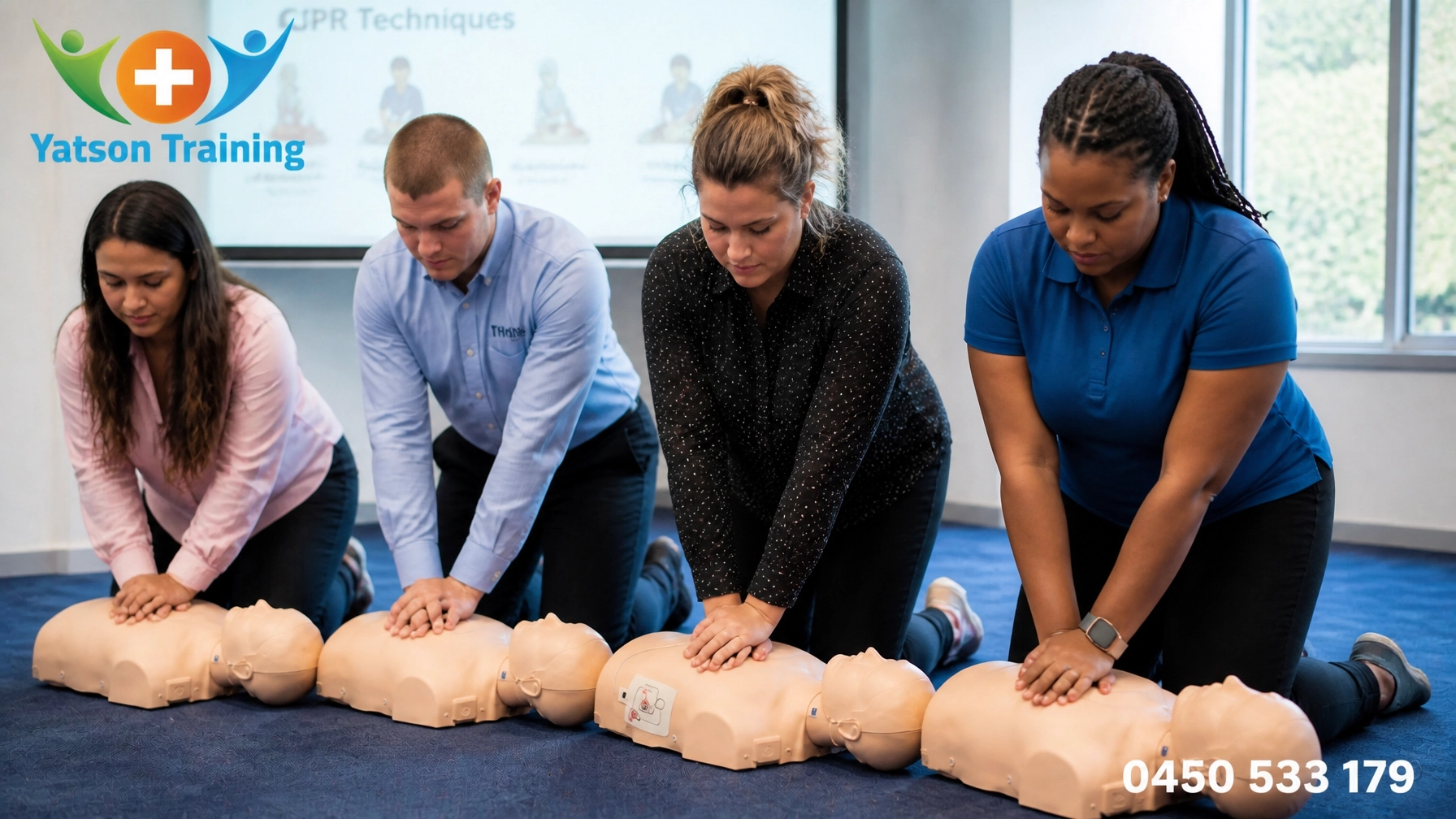
- Check the depth. For an adult, you must compress the chest by at least five centimetres (or about one-third of the chest depth).
- Use your body weight. Position your shoulders directly over your hands.
- Keep arms straight. Do not use just your arm muscles; lock your elbows and use your upper body weight to push down.
- Place the person on a firm surface. If they are on a bed or couch, move them to the floor if possible. Soft surfaces absorb your force, making compressions ineffective.

2. Getting the Speed Wrong
The rate of compressions is critical. Pushing too slowly fails to build up the necessary pressure to move blood to the brain. Pushing too quickly (over 120 beats per minute) doesn’t give the heart enough time to refill between each squeeze.
How to fix it:
- Aim for 100 to 120 compressions per minute. This is roughly two compressions every second.
- Find a rhythm. Many people use the beat of the song "Stayin' Alive" to maintain the correct pace.
- Avoid fatigue. If you have another person available, swap every two minutes. Fatigue causes your rate to drop without you even realising it.
3. Leaning on the Chest (Lack of Recoil)
When you are tired, it is natural to "lean" on the person’s chest. This is a major mistake because it prevents full chest recoil. If the chest doesn't return to its normal position, the heart cannot refill with blood, making the next compression useless.
How to fix it:
- Release completely. After every downward push, lift your weight off your hands so the chest rises fully.
- Maintain contact. Keep the heel of your hand on the chest so you don't lose your position, but ensure no pressure is being applied during the "up" phase.
- Think: "Hard and fast down, all the way up."
4. Improper Airway Positioning for Breaths
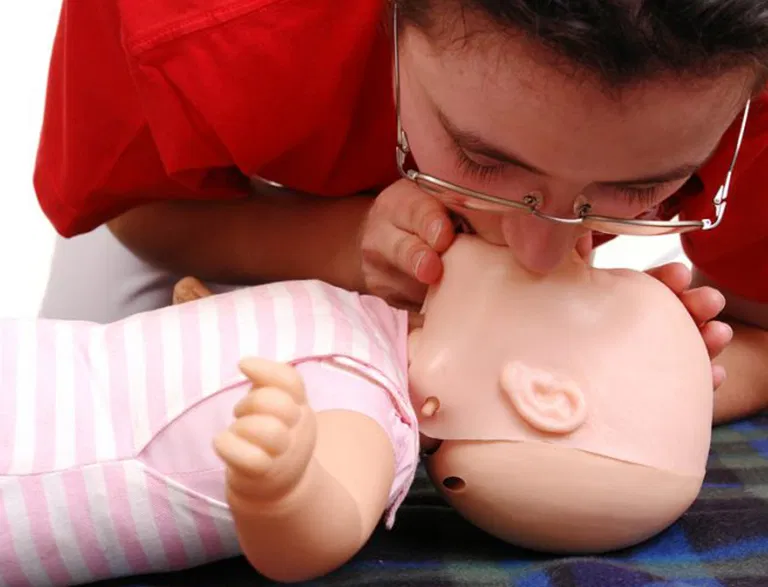
If you are trained and willing to provide rescue breaths (as taught in our HLTAID011 Provide First Aid course), the position of the head is vital. If the head is not tilted back correctly, the tongue can block the airway, and your breaths will go into the stomach instead of the lungs.
How to fix it:
- Use the head-tilt, chin-lift technique. Place one hand on the forehead and two fingers under the point of the chin.
- Tilt the head back firmly. This opens the airway (the "pipe" to the lungs).
- Pinch the nose. Ensure a complete seal over the mouth so air doesn't escape.
- Watch for the rise. Give a breath for about one second and look for the chest to physically rise. If it doesn't, reposition the head and try again.

5. Hesitating to Start
Many people hesitate to start CPR because they are afraid of "doing it wrong" or breaking the patient's ribs. In reality, the biggest mistake is doing nothing. According to ANZCOR Guidelines, you should start CPR if the person is unresponsive and not breathing normally.
How to fix it:
- Check for normal breathing. Gasping or snoring sounds are not normal breathing.
- Start immediately. Every minute without CPR reduces the chance of survival by 10%.
- Don't worry about ribs. It is common for ribs to crack during effective CPR. A broken rib can heal; a brain without oxygen cannot.
- Call 000 straight away. Put your phone on speaker so the dispatcher can guide you while you work.
Keep in Mind
CPR is a physical skill that requires practice to maintain. While reading about it helps, nothing replaces the hands-on experience of a professional First Aid training session. Techniques change, and your muscle memory fades over time.
Our recommendation:
Schedule a refresher course at least once every 12 months for CPR and every 3 years for your full First Aid certification. This ensures you are up to date with the latest Australian Resuscitation Council (ARC) standards and feel confident to act in a crisis. Whether you need a Childcare First Aid course HLTAID012 for your staff or general Corporate First Aid training, staying prepared is your best defence against workplace tragedies.

FAQ: Common CPR Questions
Do I have to give mouth-to-mouth?
If you are untrained or unwilling, "hands-only" CPR (compressions only) is still highly effective and much better than doing nothing. However, for drowning victims or children, rescue breaths are strongly encouraged.
What if I have an AED?
If an AED is available, turn it on immediately and follow the voice prompts. It will tell you exactly when to stop and start CPR. You can read more about why your business needs an AED here.
Is CPR different for babies?
Yes. For infants (under 1 year), you use two fingers for compressions and avoid tilting the head back too far. We cover these specifics in our specialised first aid courses.
Can I get in legal trouble for performing CPR?
In Australia, "Good Samaritan" laws generally protect individuals who provide assistance in an emergency, provided they act in good faith and within their level of training.
Ready to Learn CPR in Albury / Wodonga?
Don't wait for an emergency to find out if your technique is correct. Yatson Training provides flexible, hands-on training for corporate clients, small groups, and individuals. Ensure your team is compliant and capable of saving a life.
Contact us today to book your course:
- Telephone: 0450 533 179
- Website: yatsontraining.com.au
Stay connected with us for more safety tips:
#FirstAidTraining #AlburyWodonga #CPR #WorkplaceSafety #HLTAID011 #LifeSavingSkills #CorporateTraining #YatsonTraining
{“@type”:”BlogPosting”,”image”:[“https://cdn.marblism.com/PNtGNU2twcB.webp”,”https://cdn.marblism.com/W4ZlSN6Pakm.webp”,”https://cdn.marblism.com/3xLmRR3fhYh.webp”,”https://cdn.marblism.com/fBLxdK-FGBq.webp”],”author”:{“name”:”Penny”,”@type”:”Person”},”faqPage”:{“@type”:”FAQPage”,”mainEntity”:[{“name”:”Do I have to give mouth-to-mouth?”,”@type”:”Question”,”acceptedAnswer”:{“text”:”If you are untrained or unwilling, hands-only CPR is still effective. However, for drowning or children, breaths are encouraged.”,”@type”:”Answer”}},{“name”:”Is CPR different for babies?”,”@type”:”Question”,”acceptedAnswer”:{“text”:”Yes, for infants under 1 year, use two fingers for compressions and avoid over-tilting the head.”,”@type”:”Answer”}}]},”@context”:”https://schema.org”,”headline”:”Are You Making These Common CPR Mistakes? 5 Tips to Improve Your Technique Today”,”keywords”:”HLTAID011, CPR, Albury Wodonga, First Aid Training, Workplace Safety”,”publisher”:{“logo”:{“url”:”https://cdn.marblism.com/-8AyRUBMjeY.png”,”@type”:”ImageObject”},”name”:”Yatson Training”,”@type”:”Organization”},”description”:”Learn the 5 most common CPR mistakes and how to improve your life-saving technique today. Professional advice for Albury / Wodonga residents and businesses.”,”datePublished”:”2026-05-23″,”articleSection”:”First Aid Tips”,”mainEntityOfPage”:{“@id”:”https://yatsontraining.com.au/7-mistakes-youre-making-with-cpr-technique-and-how-to-fix-them”,”@type”:”WebPage”}}