What are slips, trips and falls all about?
Slips, trips and falls occur when a person loses traction, catches a foot on an obstruction or loses balance. They can happen in offices, warehouses, retail stores, construction sites, healthcare facilities, childcare services and outdoor work areas.
A slip may result from water, oil, dust or another substance on the floor. A trip may be caused by a trailing cable, uneven surface, open drawer or poorly stored equipment. A fall may occur on the same level or from stairs, platforms or another height.
The consequences range from minor bruising to sprains, fractures, head injuries and spinal injuries. A fall may also trigger a serious medical emergency.
Effective Workplace Safety requires two connected approaches:
- Prevent hazards before someone is injured.
- Prepare trained workers to provide immediate assistance when an incident occurs.
For businesses operating across Albury and Wodonga, this means considering both sides of the state border. Albury workplaces operate under the NSW framework, while Wodonga workplaces operate under Victorian requirements. Use the national guidance from Safe Work Australia, then check the specific requirements for your workplace.
Why slips, trips and falls happen in Albury–Wodonga workplaces
Local businesses face a range of practical conditions that can increase the risk of falls. These may include wet weather at entrances, dirt and gravel tracked into buildings, loading dock activity, warehouse traffic, temporary cables and uneven outdoor surfaces.
Risk may also increase when workers are:
- Carrying loads that obstruct their view.
- Working in poor lighting.
- Rushing to meet deadlines.
- Working extended shifts or experiencing fatigue.
- Using unsuitable footwear.
- Working around vehicles, machinery or stored materials.
- Cleaning floors without isolating the area.
- Using stairs while carrying unstable or heavy items.
Review these risks during workplace inspections. Ask workers where near misses occur and map recurring problem areas. A near miss is an early warning that a control may not be working.
Practical ways to prevent slips, trips and falls
Use the risk management process recommended by safety regulators. Identify the hazard, assess the risk, apply controls and review whether those controls remain effective.
Keep walkways clear
Inspect aisles, corridors, stairs, doorways and emergency exits. Remove rubbish, packaging, tools and stored goods. Keep access routes clear at all times.
Do not leave stock, cleaning equipment or personal belongings in walkways. Store materials in designated areas.
Control spills quickly
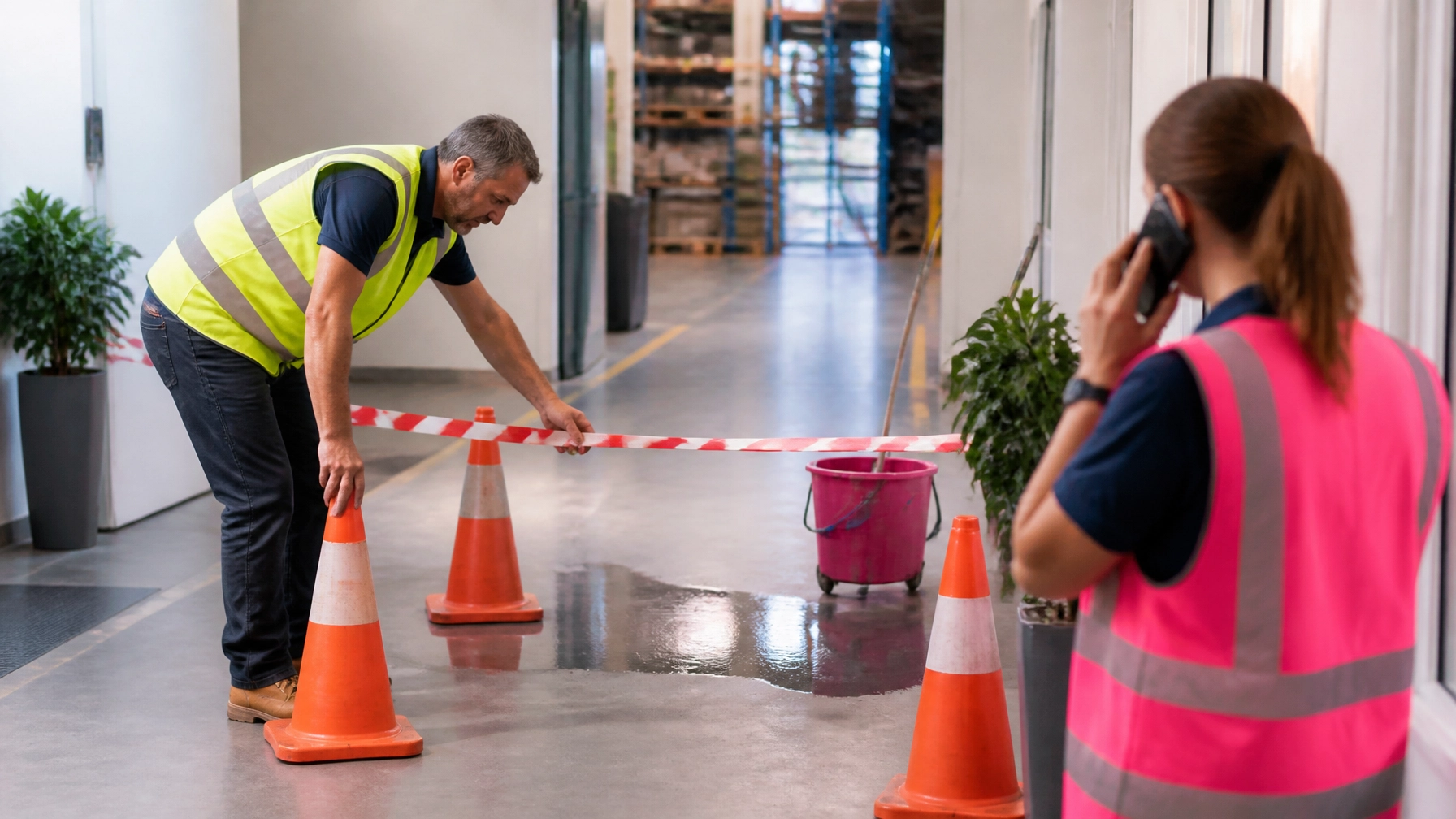
Respond immediately when you find water, oil, chemicals or other substances on a walking surface.
- Isolate the area with suitable signs or barriers.
- Notify the responsible person.
- Clean the spill using the correct procedure.
- Dry the surface thoroughly.
- Remove the warning signs only when the area is safe.
- Report recurring leaks or drainage problems.
Do not assume a small spill is harmless. A person may not see it, particularly in a busy entrance or poorly lit corridor.
Manage cables and temporary equipment
Avoid running power leads across walkways. Use fixed power points where practical. If a cable must cross a work area, secure it using a suitable cable cover or other approved control.
Check portable equipment, mats and floor coverings. Repair or replace items that curl, move or create an uneven surface.
Improve lighting and visibility
Provide adequate lighting in:
- Stairwells.
- Entrances and exits.
- Car parks.
- Loading areas.
- Storage rooms.
- Outdoor paths.
- Changes in floor level.
Mark steps and changes in level clearly. Keep signage visible and replace damaged signs.
Select suitable footwear
Use footwear appropriate to the task and environment. Slip-resistant footwear may be required in kitchens, healthcare settings, warehouses, workshops and outdoor work areas.
Check that footwear is correctly fitted and in good condition. Remember that personal protective equipment is generally the last line of defence. Remove or reduce the hazard wherever possible.
Maintain stairs and floor surfaces
Inspect stairs, handrails, ramps, grates and floor coverings. Repair damaged surfaces promptly. Keep handrails secure and make sure workers can maintain three points of contact when using ladders.
For more detailed guidance, read the WorkSafe Victoria information on slips, trips and falls and the SafeWork NSW guide to preventing slips, trips and falls.

What should you do when someone falls at work?
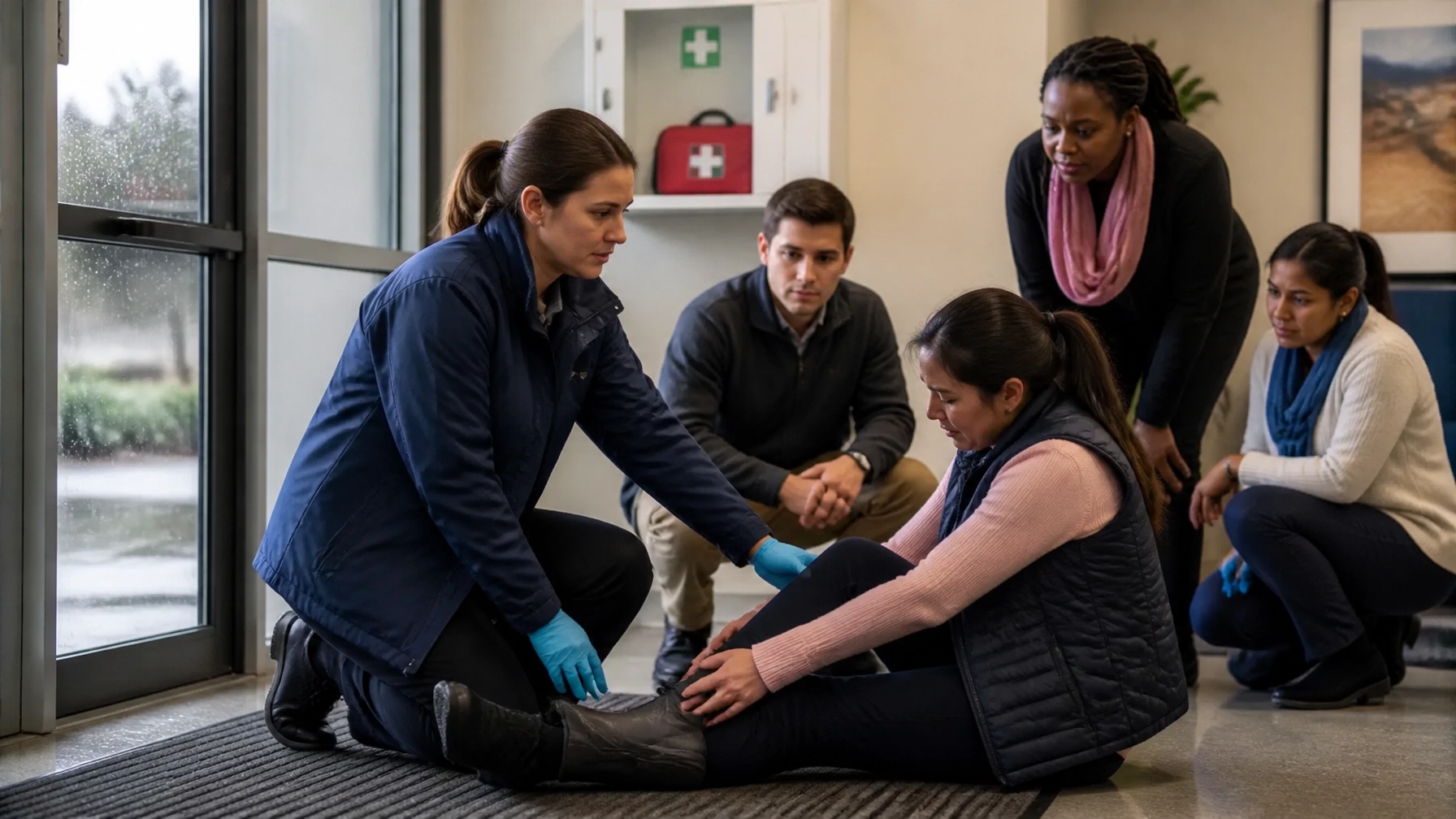
Respond calmly and follow your workplace emergency procedure. Do not put yourself at risk or enter an unsafe area.
Step 1: Check for danger
Look for moving vehicles, exposed electricity, unstable structures, chemicals, broken glass or other hazards. Control the danger if you can do so safely.
Step 2: Check the person
Assess responsiveness and breathing. Ask what happened, if the person can answer. Look for visible bleeding, deformity, pain, confusion or difficulty moving.
Step 3: Call for help
Direct someone to call Triple Zero (000) if the injury appears serious, the person is unconscious, breathing abnormally or has severe bleeding. Send another person to collect the first aid kit and AED, if available.
Step 4: Avoid unnecessary movement
Do not move the person if you suspect a spinal injury, serious fracture or significant head injury, unless there is immediate danger.
Encourage the person to remain still. Support the head and neck without forcing them into a different position. Do not give food or drink.
Step 5: Provide appropriate first aid
Apply firm direct pressure to severe bleeding using gloves and a dressing, where possible. Do not push directly on an obvious fracture or embedded object.
If the person is unresponsive and not breathing normally:
- Call Triple Zero (000).
- Begin CPR.
- Ask someone to bring the AED.
- Follow the AED prompts.
- Continue until the person shows signs of life or emergency services take over.
These skills should be practised during professional training. The nationally recognised HLTAID009 Provide CPR course covers CPR and AED use. The broader HLTAID011 Provide First Aid course covers CPR as well as common workplace injuries and medical emergencies.

Warning signs after a workplace fall
Seek urgent medical assistance when a person has:
- Loss of consciousness, even briefly.
- Confusion, unusual drowsiness or difficulty speaking.
- Repeated vomiting.
- A worsening headache.
- Seizures.
- Neck or back pain.
- Numbness, weakness or loss of movement.
- An obvious deformity.
- Severe pain or inability to bear weight.
- Heavy bleeding that does not stop with direct pressure.
- Breathing difficulties.
- Pale, clammy skin or signs of shock.
Do not allow a worker to return to normal duties simply because the injury initially appears minor. Follow your incident reporting and medical assessment procedures.
Build first aid into your fall prevention plan
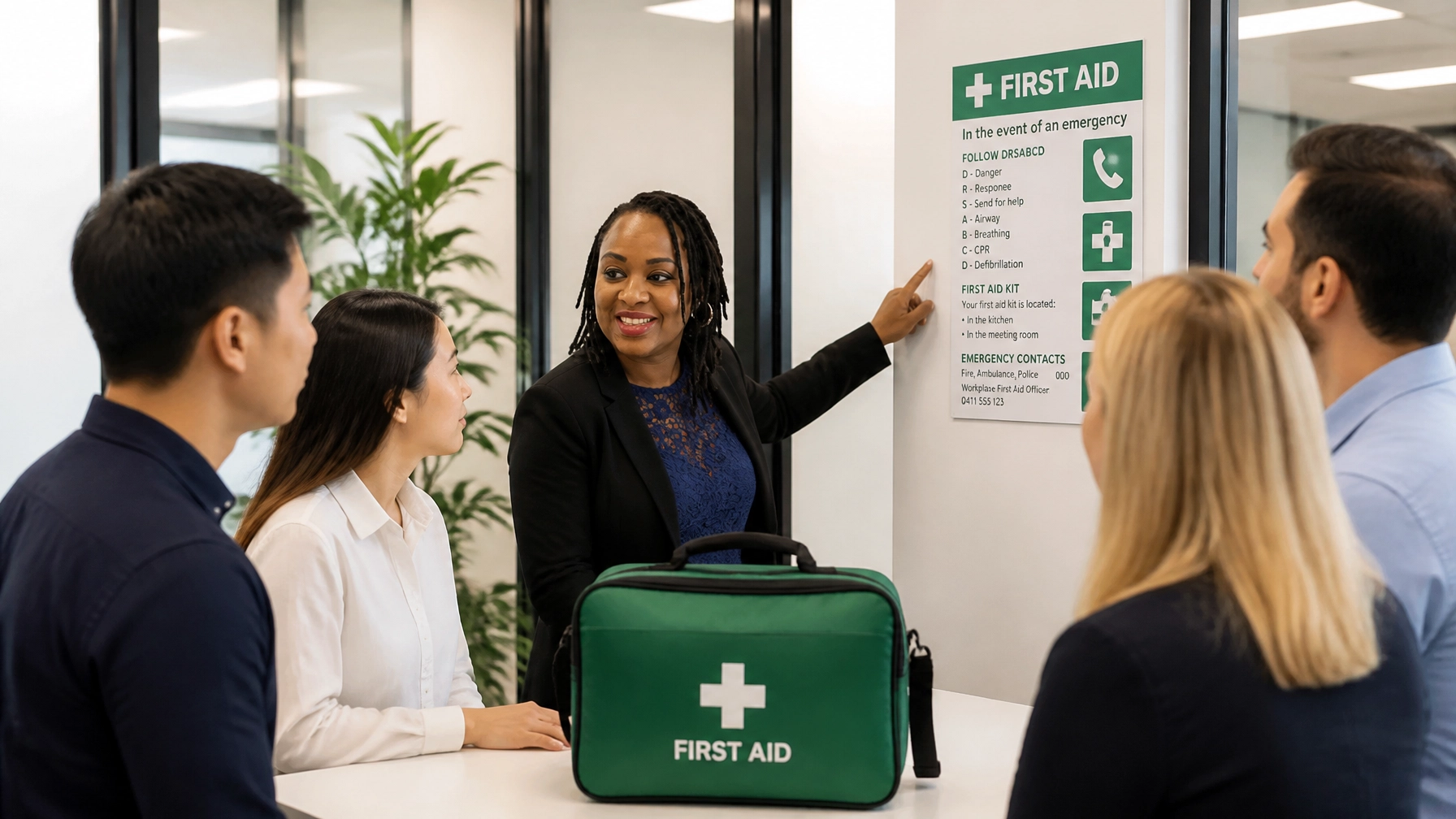
First aid arrangements should reflect the risks, size, layout and operating hours of your workplace. Review the location of first aid kits, trained personnel and emergency communication equipment.
Check that:
- First aid kits are accessible and stocked.
- Workers know how to contact a trained first aider.
- Trained staff are available across shifts and during leave periods.
- Emergency exits and access routes are clear.
- The AED location is known to staff, where one is provided.
- Incident and near-miss reports are reviewed.
- New workers receive relevant induction information.
- CPR refresher dates are recorded.
The Safe Work Australia first aid guidance provides a useful national reference. Also follow the Australian Resuscitation Council guidelines when developing CPR procedures.
Our recommendation: train for the workplace you actually have
Do not rely on a generic procedure that staff have never practised. Walk through likely scenarios in your actual workplace.
Ask your team:
- Who calls 000?
- Who collects the first aid kit?
- Who brings the AED?
- Who meets emergency services at the entrance?
- Who controls traffic and bystanders?
- Who reports the hazard?
- Who records the incident?
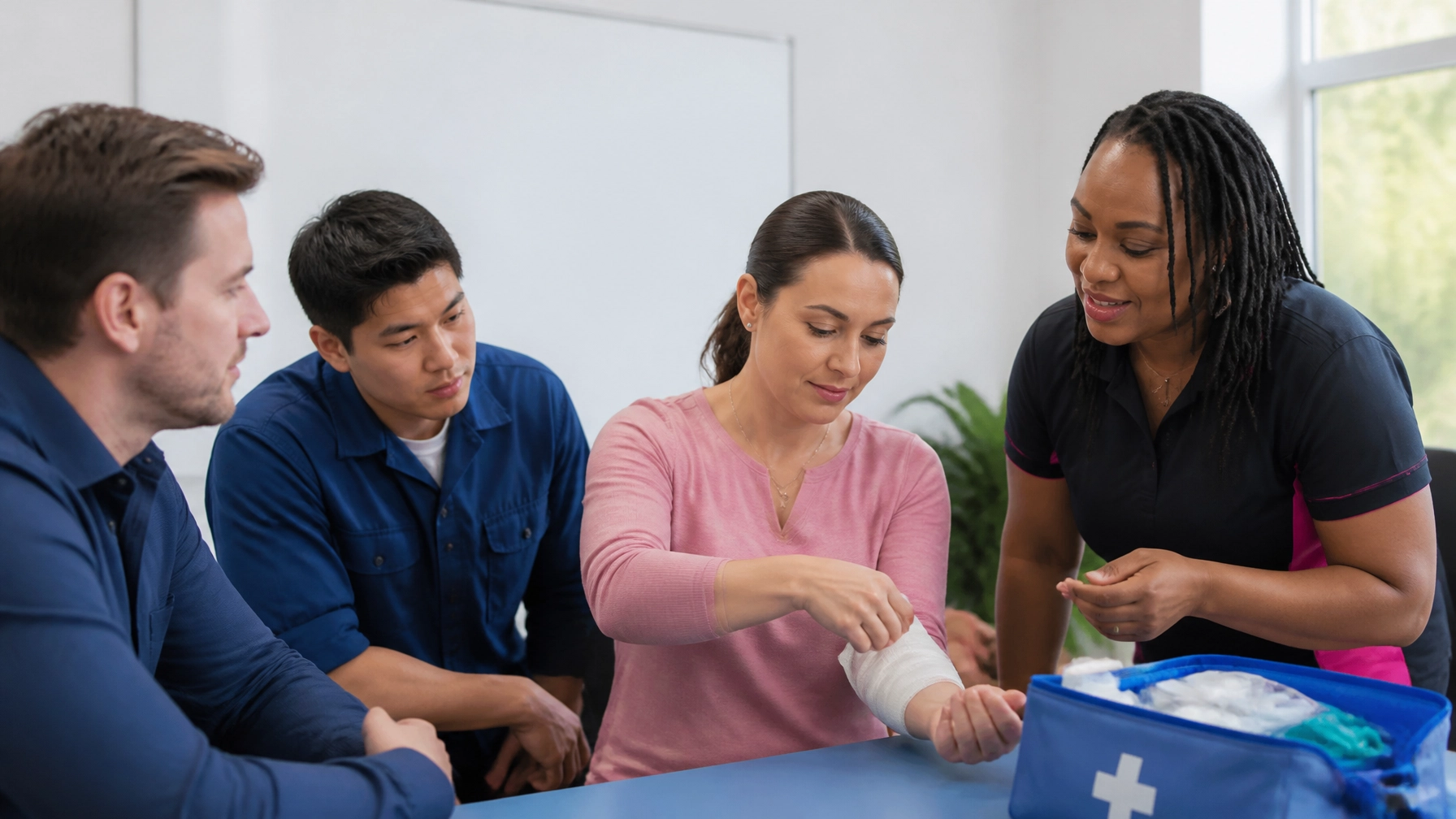
Practical training helps workers understand what to do under pressure. It also supports stronger Workplace First Aid certification arrangements.
Yatson Training provides flexible, hands-on training for corporate clients, small groups and individuals across Albury, Wodonga and surrounding areas. Lead trainer Jackie Hislop is a Registered Nurse, and training is designed to be interactive, clear and relevant rather than a dry compliance exercise.
You can review the available Yatson Training courses, learn more about Corporate First Aid training in Albury Wodonga, or contact the team through the Yatson Training contact page.
For childcare and education services, ask about the Childcare First Aid course HLTAID012. For workplace first aiders, HLTAID011 Provide First Aid is often the more comprehensive option. Your course selection should match your risk assessment and industry requirements.

Frequently asked questions
Are slips, trips and falls a serious workplace risk?
Yes. They can cause fractures, head injuries, spinal injuries and extended time away from work. They may also indicate broader problems with housekeeping, maintenance, lighting or supervision.
Does first aid training prevent falls?
Training does not remove physical hazards. It helps workers identify risks, follow emergency procedures and respond appropriately after an incident. Combine training with inspections, maintenance and effective controls.
Should our business choose HLTAID009 or HLTAID011?
Choose HLTAID009 Provide CPR when you need CPR-specific training or a refresher. Choose HLTAID011 Provide First Aid when designated first aiders need broader skills for workplace injuries and illnesses.
Is Corporate First Aid training cost-effective?
Yes. A planned training programme helps you maintain current skills, reduce confusion during emergencies and identify gaps before an incident occurs. It is more practical than waiting for an injury to expose weaknesses in your emergency response.
Where can we find First Aid Training Albury Wodonga?
Yatson Training offers flexible sessions for workplaces, small groups and individuals across the region. Discuss your staff numbers, workplace risks and certification requirements with the team.
Book professional First Aid training in Albury Wodonga
Review your fall hazards. Check your first aid arrangements. Train your team before an emergency occurs.
For all your professional First Aid training needs, telephone Yatson Training on 0450 533 179. Visit yatsontraining.com.au to learn more about workplace courses, CPR training and certification options.
Follow Yatson Training on Facebook and Instagram for training updates.
Ready to improve Workplace Safety? Telephone Yatson Training on 0450 533 179 to arrange flexible, hands-on Corporate First Aid training in Albury Wodonga.
#FirstAidTraining #AlburyWodonga #WorkplaceSafety #CorporateFirstAid #WorkplaceFirstAid #HLTAID011 #HLTAID009 #CPRTraining #FirstAidTrainingAlburyWodonga #SlipTripFallPrevention #WorkplaceFirstAidCertification #YatsonTraining