
A workplace first aid kit is a practical part of your emergency plan. It gives your team immediate access to basic supplies while a trained first aider assesses the situation and emergency services are contacted.
For workplaces in Albury and Wodonga, spring is a useful time to review your kit. Warmer weather can increase outdoor work, manual handling, sports activities, bites and stings, heat exposure, and allergy-related incidents.
A well-stocked kit does not replace professional training. It supports it. Your staff must know where the kit is, what it contains, and how to use the equipment safely.
What is a workplace first aid kit all about?
A workplace first aid kit is a collection of supplies used to provide immediate care for an injury or illness. It functions as an early response resource before medical assistance arrives.
Use your kit to:
- Control bleeding.
- Cover and protect wounds.
- Irrigate eyes or minor wounds.
- Reduce infection risks.
- Support an injured limb.
- Protect the first aider from contact with blood or body fluids.
- Record incident details for handover and workplace reporting.
The correct contents depend on your workplace risk assessment. Consider your industry, hazards, workforce size, work location, distance from medical services, and the type of injuries that could occur.
The Safe Work Australia first aid guidance and the Model Code of Practice: First aid in the workplace provide a useful national framework. Victorian and New South Wales workplaces should also check the requirements that apply to their specific location.
Essential workplace first aid kit contents
For many low- to medium-risk workplaces, include the following supplies. Adjust quantities and add specialised equipment after completing your risk assessment.
Barrier and infection control items
Include:
- Disposable nitrile gloves (latex-free).
- CPR face shields or resuscitation masks.
- Disposable hand towels.
- Alcohol or antiseptic swabs.
- Waste bags for contaminated materials.
Choose sealed, single-use items where possible. Check packaging for damage before use.
Dressings and bleeding control
Stock:
- Adhesive dressing strips in assorted sizes.
- Sterile gauze swabs.
- Non-stick wound dressings.
- Combine dressings for larger wounds.
- Eye pads.
- Conforming or crepe bandages.
- At least one larger pressure bandage.
- Triangular bandages.
Apply firm, direct pressure to serious bleeding and call emergency services. Do not delay urgent care while searching through the kit.
Cleaning and irrigation supplies
Keep:
- Sterile saline ampoules.
- Wound cleaning wipes.
- Antiseptic solution or spray.
- Access to clean running water for eye irrigation.
For a chemical splash to the eye, begin flushing immediately. Follow your workplace chemical safety procedure and seek urgent medical advice.
Tools and support items
Add:
- Blunt-ended scissors or shears.
- Tweezers or forceps.
- Disposable splinter probes.
- Safety pins.
- An emergency thermal blanket.
- A notepad and pen.
- A CPR flow chart or first aid instruction guide.
- A cold pack, if appropriate for your workplace risks.
Your workplace may need extra supplies for burns, chemicals, remote work, construction, laboratories, kitchens, farms, or outdoor environments.

Spring first aid kit checks for Albury Wodonga workplaces
Spring conditions can change the risks around your workplace. Review your emergency arrangements before outdoor tasks and seasonal activities increase.
Allergies, asthma and anaphylaxis
Spring pollen can worsen asthma and allergy symptoms. Make sure workers with known conditions have their personal action plans and prescribed medication available according to your workplace policy.
Train your first aiders to recognise:
- Difficulty breathing.
- Wheezing or persistent coughing.
- Swelling of the lips, tongue or throat.
- Widespread hives or skin changes.
- Dizziness, collapse or confusion.
The standard workplace kit should not be treated as a general medicine cabinet. Do not add pain-relief tablets or other medication without a clear organisational policy and appropriate clinical guidance.
Bites, stings and outdoor hazards
Warmer conditions can increase exposure to bees, wasps, ants, spiders and snakes. Outdoor, rural, landscaping and maintenance teams should review their procedures.
Check that you have:
- Suitable compression bandages.
- Reliable communication equipment.
- Clear site location information.
- An emergency access plan.
- Trained staff who understand the correct response to suspected envenomation.
Do not wash, cut or suck a snake or spider bite. Keep the person still, apply a pressure bandage and call emergency services. Include local outdoor scenarios in your training.
Heat, sun and physical activity
Spring can bring increased outdoor work, gardening, grounds maintenance, sporting activities and manual handling.
Review access to:
- Drinking water.
- Shade or a cool recovery area.
- Sun protection.
- Burn dressings or hydrogel products where relevant.
- Crepe bandages and cold packs for soft-tissue injuries.
These controls are not all kit items. They are part of your wider Workplace Safety plan.
How to maintain your workplace first aid kit
A neglected kit can create delays during an emergency. Assign responsibility to a trained staff member and make inspections part of your regular safety schedule.
Follow these steps:
- Locate every first aid kit, eyewash station and emergency device.
- Check that each kit is clearly signed and easy to access.
- Inspect seals, packaging and item condition.
- Remove expired, damaged, opened or contaminated supplies.
- Restock items after every use.
- Record the inspection date and the name of the person completing it.
- Review stock levels after incidents and near misses.
- Tell new workers where the kit is located during induction.
- Check that first aiders know the emergency contact process.
- Schedule a full risk review when your workforce, equipment, premises or work activities change.
Store the kit in a clean, dry location. Do not place it behind locked doors, in a high cupboard or in an area blocked by stock and furniture.
The St John Ambulance Australia first aid kit guide also recommends regular checks for cleaning, sealed packets, expiry dates, replacement items and staff awareness.
How training supports your first aid kit
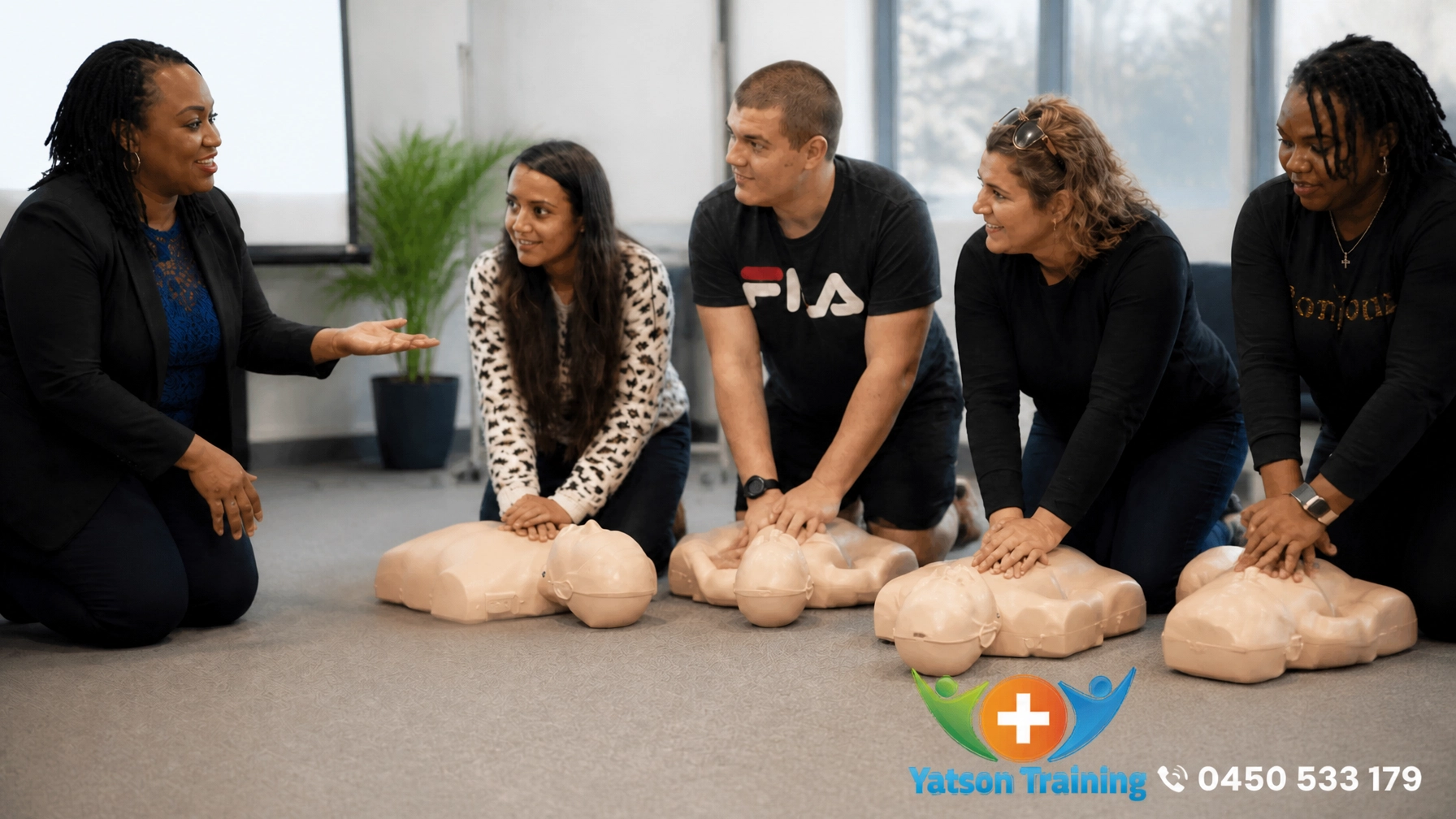
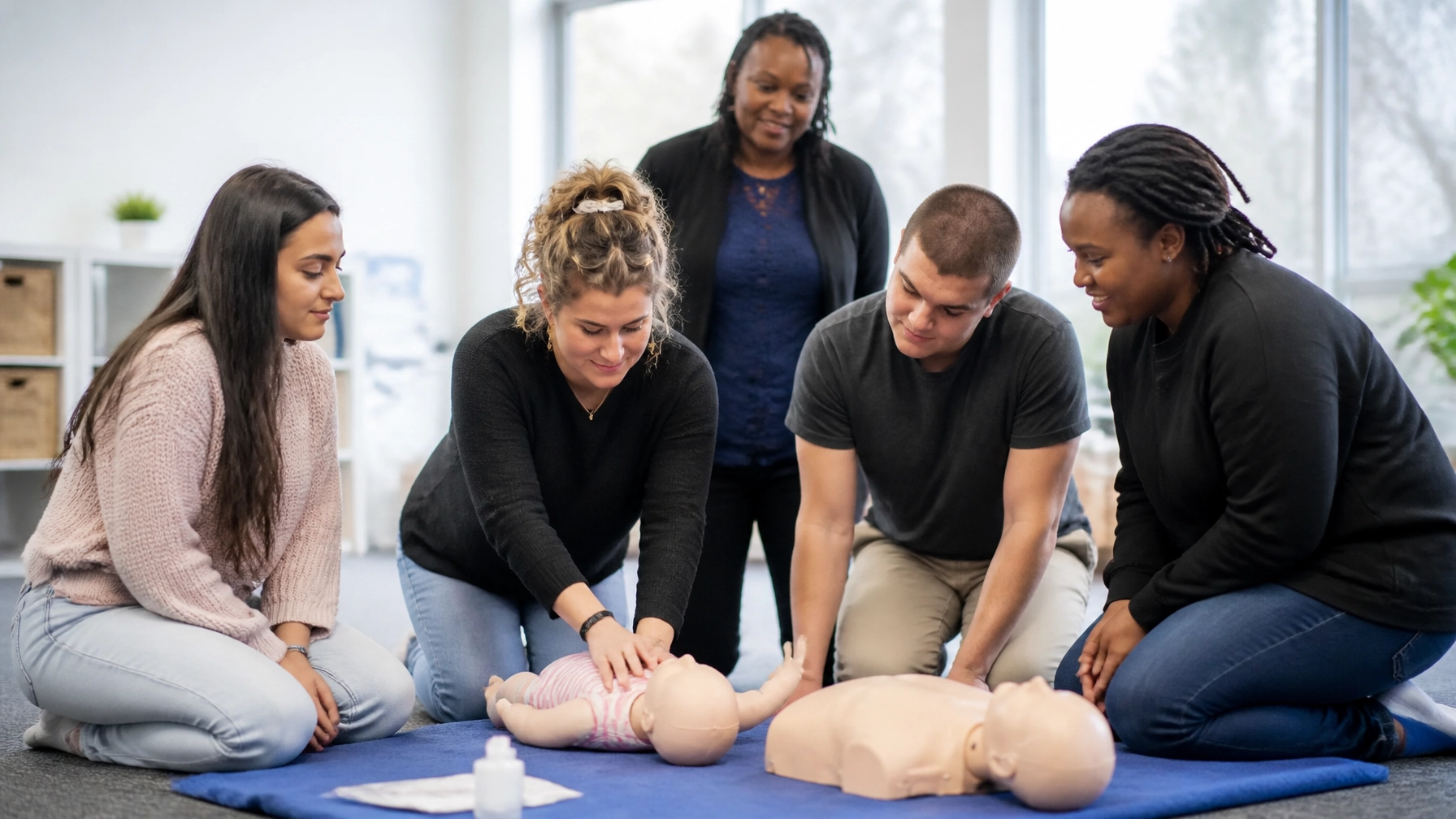
Equipment is only effective when people know how to use it. HLTAID011 Provide First Aid helps participants respond to a range of workplace emergencies, use appropriate resources and communicate information to emergency services.
Your training should help staff practise:
- Assessing hazards before approaching.
- Following the DRSABCD action plan.
- Calling Triple Zero (000).
- Performing CPR.
- Using an AED.
- Managing bleeding, burns and soft-tissue injuries.
- Supporting asthma and anaphylaxis responses.
- Applying bandages and slings.
- Recording and handing over incident information.
Yatson Training provides practical HLTAID011 Provide First Aid training in the Albury Wodonga area. We also offer HLTAID009 Provide CPR for people who need to Learn CPR in Albury Wodonga or refresh their CPR skills.
Our lead trainer, Jackie Hislop, is a Registered Nurse. Jackie and the Yatson team focus on realistic, hands-on learning rather than a dry compliance exercise.
We provide flexible Corporate First Aid training for workplaces, along with sessions for small groups and individuals. Training can be arranged around your operational needs and linked to the hazards your staff actually face.

Our recommendation
Complete a first aid kit audit at the beginning of spring and repeat your checks at least monthly.
Then compare your kit with your current training records. A workplace may have adequate supplies but no staff member with current Workplace First Aid certification. In other cases, staff may be trained but unable to find the kit quickly.
Use this simple review:
- Confirm your nominated first aiders and backup first aiders.
- Check HLTAID011 currency.
- Schedule CPR refreshers every 12 months.
- Confirm each kit is suitable for the workplace risk level.
- Practise an emergency call and site access procedure.
- Review outdoor and seasonal hazards.
- Record actions and assign completion dates.
If your workplace operates in education or care, ask about the HLTAID012 Provide First Aid in an Education and Care Setting course.
Frequently asked questions
Is a first aid kit enough for workplace compliance?
No. Your workplace needs suitable equipment, accessible first aid arrangements, trained first aiders and procedures based on your risks. A kit is one part of the overall system.
How often should a workplace first aid kit be checked?
Check it monthly and after every use. Increase the frequency if your workplace has higher risks, frequent incidents or several work locations.
Should we keep medications in the kit?
Do not use a standard workplace first aid kit as a general medicine supply. Manage personal prescribed medication according to your workplace policy and relevant medical advice.
Does HLTAID011 include CPR?
HLTAID011 training commonly includes CPR competency through the HLTAID009 Provide CPR unit. Confirm the exact course structure and assessment requirements when booking.
What is the most cost-effective way to improve workplace safety?
Combine a risk-based kit audit with current, hands-on training. This helps your team identify hazards, respond sooner and use available equipment correctly.
Book First Aid training in Albury Wodonga
Do not wait until an incident exposes gaps in your emergency plan. Yatson Training offers professional, flexible and hands-on training for corporate clients, small groups and individuals.
Telephone Yatson Training today on 0450 533 179 for all your First Aid training needs. Visit yatsontraining.com.au to review available courses and training options.
Connect with Yatson Training:
#FirstAidTraining #AlburyWodonga #FirstAidTrainingAlburyWodonga #WorkplaceSafety #CorporateFirstAidTraining #WorkplaceFirstAidCertification #HLTAID011 #HLTAID009 #LearnCPR #CPRTraining #AustralianFirstAid #YatsonTraining