What are workplace first aid kits all about?
A workplace first aid kit contains the basic supplies needed to provide immediate care after an injury or sudden illness.
Use it to control bleeding, cover wounds, support sprains, manage minor burns, flush eyes and protect an injured person while further medical assistance is arranged.
A first aid kit is only one part of your workplace safety system. You also need:
- Accessible first aid equipment.
- Suitable first aid facilities.
- Trained first aiders.
- Clear emergency procedures.
- Regular kit inspections and replenishment.
- Appropriate First Aid training for the risks in your workplace.
Australian workplace first aid requirements are based on the hazards, workforce, location and operating arrangements of your business. There is no single kit that suits every workplace.
What Australian workplace first aid requirements apply?
Under work health and safety duties, a person conducting a business or undertaking (PCBU) must provide adequate first aid equipment, facilities and trained first aiders for workers.
The SafeWork NSW first aid guidance states that every workplace must provide first aid equipment and ensure workers can access it.
Your business should:
- Provide at least one suitable first aid kit.
- Place kits where workers can access them quickly.
- Consider additional kits for large, multi-level or spread-out workplaces.
- Provide portable kits for mobile workers and work vehicles.
- Nominate a person to maintain each kit.
- Train an adequate number of workers in first aid.
- Explain first aid arrangements to all workers.
- Keep emergency contact and incident reporting procedures current.
Safe Work Australia provides the national first aid guidance and model code information. If your business operates across Albury and Wodonga, check which state regulator applies to each worksite. NSW businesses should also review the NSW Work Health and Safety Regulation.
How many first aid kits does your business need?
Start with a workplace risk assessment. Consider the work being performed, the number of workers, the layout of the site and the time it may take for emergency services to arrive.
As a practical guide, provide additional kits when your workplace includes:
- Separate office, warehouse, workshop or production areas.
- Multiple floors or buildings.
- Outdoor work zones.
- Remote or isolated work areas.
- Multiple shifts or overtime.
- Mobile workers or company vehicles.
- Higher-risk machinery, chemicals, heat or electrical hazards.
- Large numbers of customers, visitors, children or members of the public.
Keep kits visible and clearly identified. Do not hide them in a locked office or behind stock. Workers should know where the nearest kit is located before an incident occurs.
SafeWork NSW provides general guidance of one trained first aider for every 50 workers in low-risk workplaces, one for every 25 workers in high-risk workplaces and one for every 10 workers in remote high-risk workplaces. Use these figures as a starting point, then adjust them for your actual risks and work arrangements.

What should every workplace first aid kit include?
Your kit should contain enough suitable supplies to respond to the injuries identified in your risk assessment.
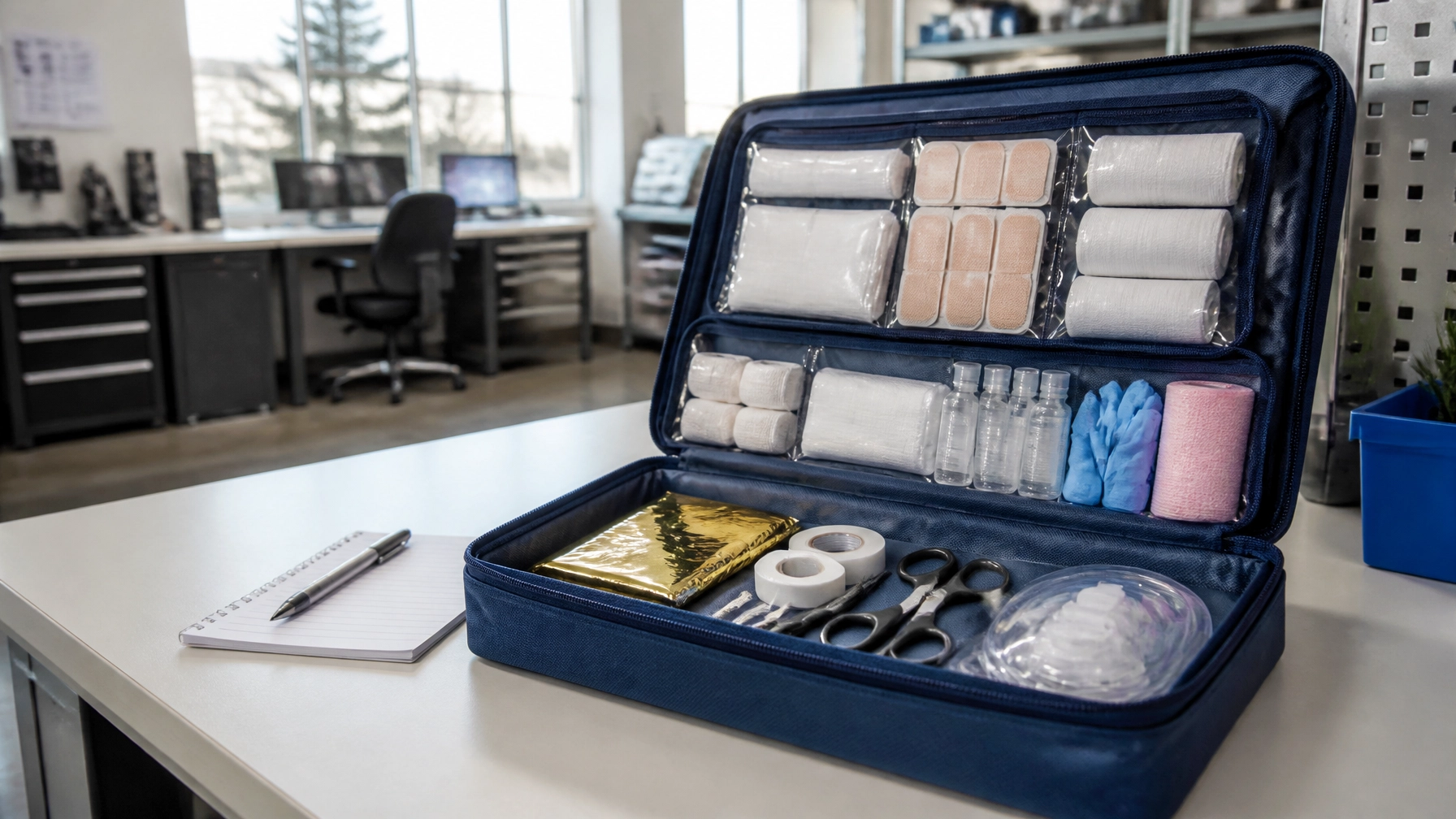
A standard workplace kit should generally include:
Dressings and bandages
- Adhesive dressings in assorted sizes.
- Sterile wound dressings.
- Non-stick dressings for wounds and minor burns.
- Large combined dressings for heavy bleeding.
- Crepe bandages for sprains and strains.
- Triangular bandages for slings and immobilisation.
- Hypoallergenic adhesive tape.
- Safety pins or suitable fasteners.
Cleaning and protection supplies
- Sterile saline ampoules or bottles.
- Sterile wipes for cleaning around minor wounds.
- Disposable non-latex gloves in suitable sizes.
- CPR face shields or resuscitation masks.
- Disposable bags for contaminated waste.
- Hand sanitiser where appropriate.
Tools and emergency items
- Blunt-ended scissors.
- Tweezers for splinters and small foreign objects.
- Instant cold packs.
- A thermal or emergency blanket.
- First aid instruction material.
- CPR instructions.
- A notepad and pen for recording incident details.
Your supplies must be sealed, clean and fit for use. Do not rely on damaged packaging, expired sterile products or items contaminated by dust and moisture.
What extra supplies might your workplace need?
Add equipment based on the hazards you have identified. Do not add medicines or specialised equipment without suitable procedures and training.
Consider the following additions:
- Burns supplies: Add burn dressings and suitable burn treatment products in commercial kitchens, workshops, welding areas and workplaces with hot surfaces.
- Eye protection: Provide additional saline, sterile eye pads or an eyewash station where workers face dust, chemicals, splashes or flying particles.
- Bleeding control: Add larger trauma dressings where machinery, sharp tools or construction activities create a risk of serious bleeding.
- Cold packs: Keep additional cold packs in physically demanding, outdoor or sporting work environments.
- AED: Consider an automated external defibrillator where there is a risk of cardiac arrest, electrocution, delayed ambulance access or a large number of people onsite.
- Mobile kits: Secure kits in work vehicles so they do not become projectiles in a collision.
An eyewash station or emergency shower may be necessary for some chemical or laboratory environments. Include these controls in your risk assessment and emergency plan.
Do not use the kit as a substitute for eliminating or controlling hazards. Prevention remains the first priority.

Where should you store your workplace first aid kit?
Store each kit in an accessible, dry and clearly marked location.
Follow these steps:
- Identify high-risk areas. Place kits near workshops, kitchens, loading docks, machinery and outdoor work areas.
- Check travel distance. Make sure workers can reach a kit quickly without crossing avoidable hazards.
- Use clear signage. Mark the location with recognised first aid signage.
- Keep the kit accessible. Do not place it behind locked doors or blocked storage.
- Protect the contents. Keep kits away from heat, direct sunlight, dust and moisture.
- Tell workers where it is. Include the location in inductions and workplace safety briefings.
- Secure vehicle kits. Prevent portable kits from moving during transport.
If you operate a large business, map your first aid equipment and first aiders. Include arrangements for workers who work alone, start early, finish late or move between sites.
How often should you check a first aid kit?
Nominate a responsible person for each kit. Set a regular inspection schedule. Monthly checks are a practical minimum for many workplaces, but high-risk or high-use environments may require more frequent inspections.
During each check:
- Compare the contents with the kit inventory.
- Replace used items immediately.
- Check sterile products remain sealed.
- Check expiry dates.
- Remove damaged or contaminated items.
- Confirm gloves and CPR barriers are available.
- Check scissors, tweezers and other tools remain usable.
- Confirm instructions are legible.
- Record the inspection and replenishment.
Review your kit after every incident. The type and quantity of supplies used may show that your workplace needs additional equipment, a different kit location or further training.
Why training matters as much as the kit
A well-stocked kit cannot make decisions for you. Your workers need the knowledge and confidence to recognise an emergency, protect themselves, call for help and provide appropriate first aid.
Yatson Training provides practical, professional training for businesses, small groups and individuals across the Albury Wodonga area.
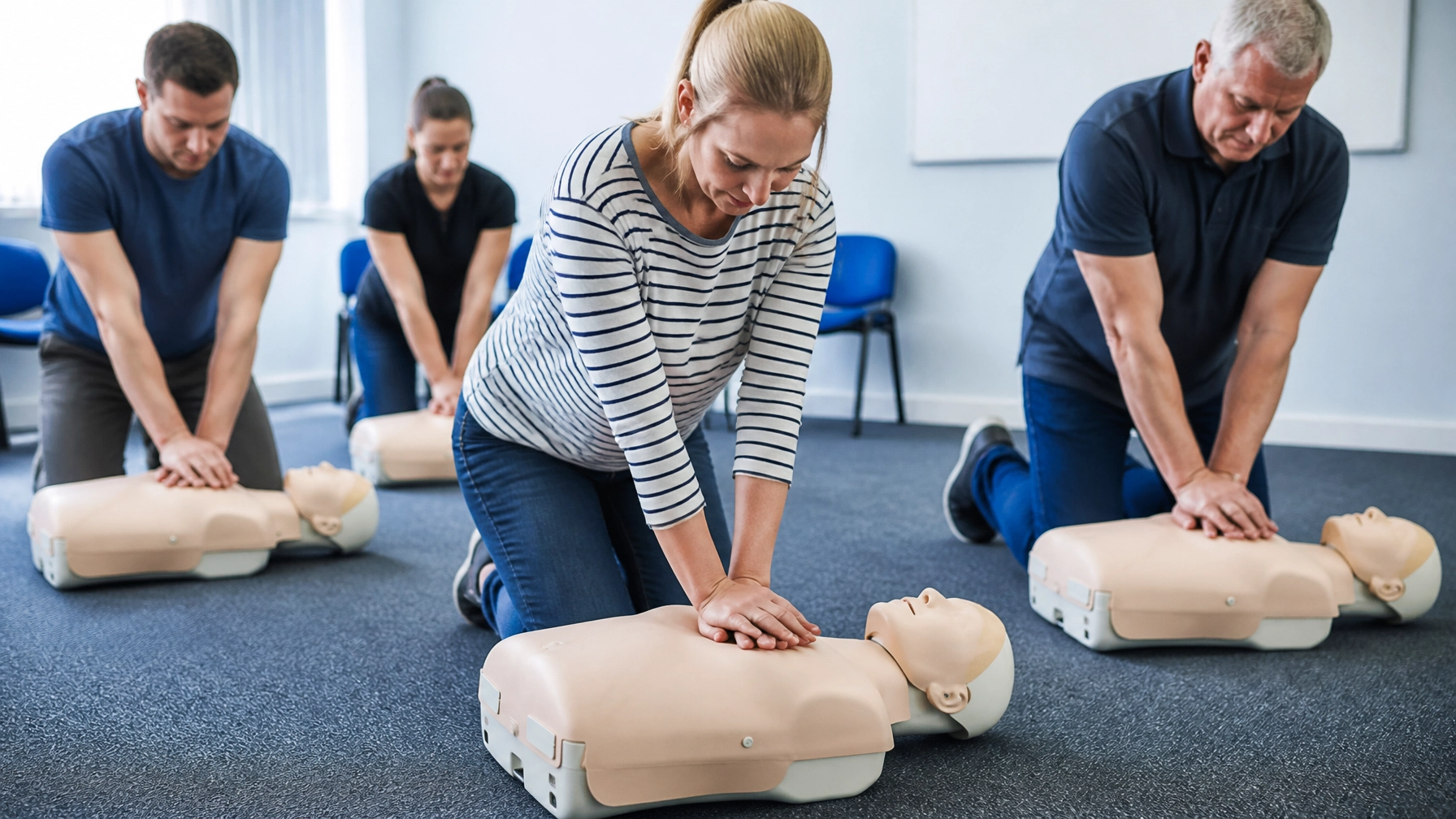
The HLTAID011 Provide First Aid course covers essential workplace and community first aid skills. It includes practical activities such as CPR, wound management, bandaging, recovery position and response to common medical emergencies.
You can also learn CPR in Albury Wodonga through HLTAID009 Provide CPR. CPR training should be refreshed annually, while first aid qualifications generally require renewal every three years.
For childcare and education environments, Yatson Training also provides the Childcare First Aid course HLTAID012.

Keep in mind: build a complete first aid system
Do not treat a first aid kit as a compliance box to tick.
Our recommendation is to complete this review:
- Inspect every kit.
- Compare contents with your workplace hazards.
- Add site-specific supplies.
- Confirm kits are easy to find.
- Check mobile workers have access to kits.
- Review your trained first aider numbers.
- Confirm CPR refreshers are current.
- Update your emergency contacts.
- Include first aid arrangements in worker inductions.
- Record inspections and incidents.
- Review the system after changes to your workplace.
Yatson Training can help you strengthen the training component of your Workplace Safety system. Our experienced team, including lead trainer Jackie Hislop, a Registered Nurse, delivers engaging and hands-on sessions rather than a purely theory-based exercise.
Explore Corporate First Aid training in Albury Wodonga, or contact Yatson Training to discuss a suitable session for your workplace.
Frequently asked questions
Is one first aid kit enough for a small business?
It may be enough for a small, low-risk workplace if every worker can access it quickly. Assess your layout, work activities, shifts and hazards before deciding.
Are workplace first aid kits legally required in Australia?
Businesses must provide adequate first aid equipment and access to first aid arrangements. The number and contents depend on the workplace risk assessment and applicable state or territory requirements.
Does a first aid kit make a business compliant?
No. You also need suitable first aiders, procedures, communication systems, maintenance arrangements and worker instruction.
How often should employees complete CPR training?
CPR training should generally be refreshed every year. First aid qualifications should be renewed according to the unit requirements and your workplace risk assessment.
Is professional First Aid training cost-effective?
Yes. Practical training helps workers respond earlier and more effectively while emergency assistance is arranged. It also supports safer procedures and reduces the risk of preventable delays.
Arrange professional First Aid training in Albury Wodonga
Do not wait until an incident exposes gaps in your kit or training.
Yatson Training offers flexible Corporate First Aid training, Workplace First Aid certification, HLTAID011 Provide First Aid, CPR training and courses for small groups and individuals.
For all your First Aid training needs, telephone Yatson Training on 0450 533 179. Visit yatsontraining.com.au to learn more.
Follow Yatson Training on Facebook, Instagram, LinkedIn and YouTube.
#FirstAidTraining #AlburyWodonga #WorkplaceSafety #CorporateFirstAidTraining #WorkplaceFirstAid #HLTAID011 #LearnCPR #FirstAidTrainingAlburyWodonga #AustralianWorkplaceSafety #CPRTraining #SmallBusinessSafety #ChildcareFirstAid