A workplace first aid kit is only useful when it is properly stocked, accessible and supported by trained people. A sealed box in a storeroom will not provide an effective response if workers cannot find it or do not know how to use its contents.
For businesses across Albury and Wodonga, your first aid arrangements should reflect your workplace risks, workforce size, location and distance from medical services. Winter conditions, outdoor work, vehicle movements, machinery, chemicals and rural travel may all influence your requirements.
This guide explains how to build, maintain and use an effective workplace first aid kit. It also explains why professional training, including HLTAID011 Provide First Aid, HLTAID009 Provide CPR and Workplace First Aid certification, is essential.
What is building an effective first aid kit all about?
Building an effective first aid kit means selecting, organising and maintaining supplies that help manage common workplace injuries until further medical assistance is available.
The kit is part of a wider workplace safety system. It does not replace:
- A documented risk assessment.
- Trained workplace first aiders.
- Clear emergency procedures.
- Accessible emergency communication.
- Appropriate personal protective equipment.
- Regular CPR and first aid refresher training.
Use the Safe Work Australia first aid guidance as a starting point. The recommended contents are examples, not a substitute for assessing your own workplace.
What should your workplace first aid kit contain?
For many low-risk workplaces, the kit should include supplies for bleeding, minor wounds, burns, sprains, eye injuries and infection control.
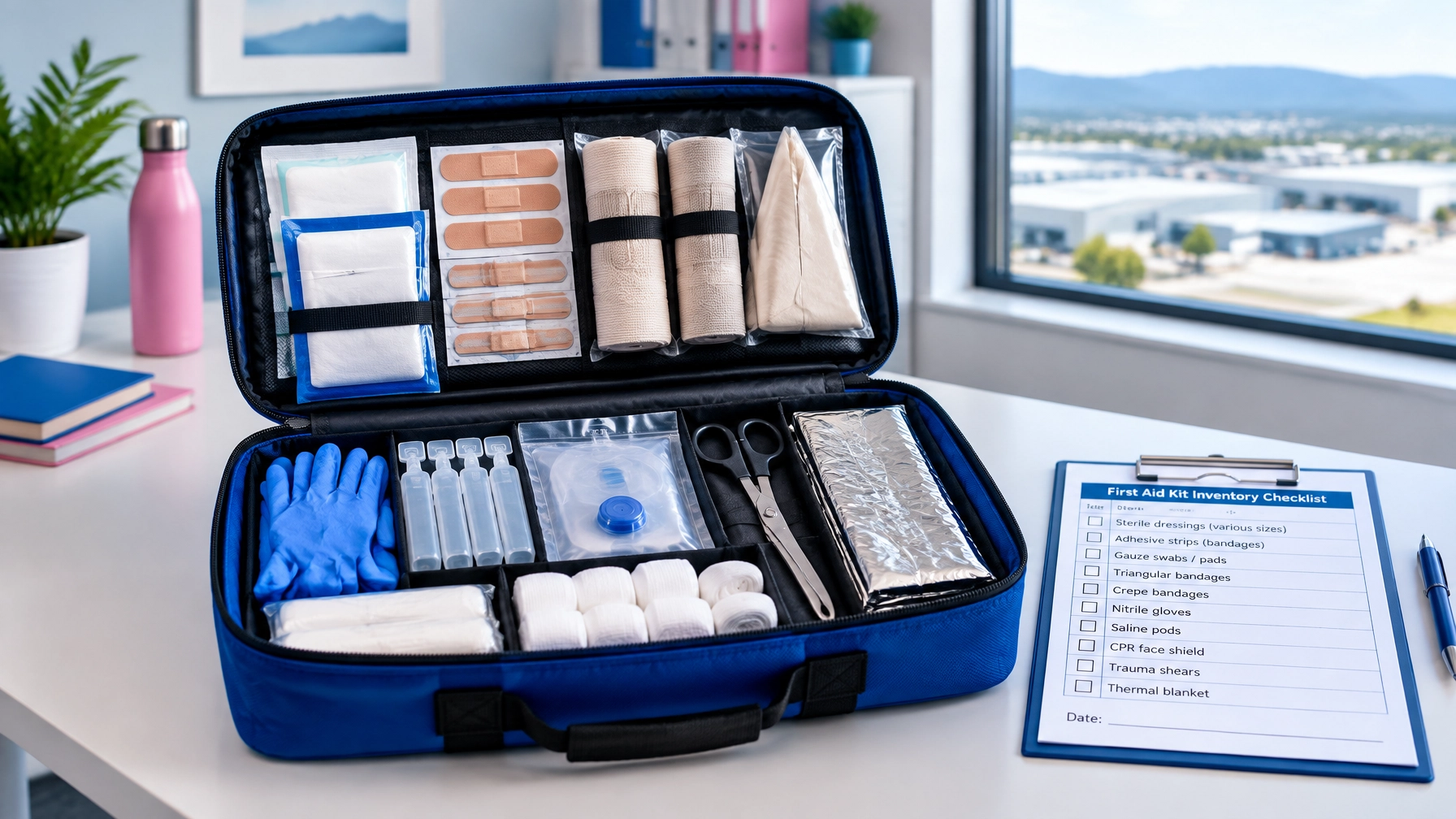
Check that your kit contains:
- Assorted adhesive dressing strips for minor cuts and grazes.
- Sterile gauze swabs and wound dressings.
- Non-adherent dressings for larger wounds.
- Combine or compression dressings for significant bleeding.
- Crepe or conforming bandages in several widths.
- Triangular bandages for slings and immobilisation.
- Hypoallergenic adhesive tape.
- Disposable nitrile gloves.
- CPR face shield or resuscitation mask.
- Saline ampoules for eye and wound irrigation.
- Antiseptic wipes or an appropriate antiseptic solution.
- Eye pads.
- Trauma scissors.
- Tweezers or forceps.
- Safety pins.
- Disposable waste bags.
- A first aid booklet.
- A CPR and first aid instruction chart.
- A notebook and pen for recording incidents.
- An emergency thermal blanket.
Do not assume that a small retail kit will meet your workplace needs. A warehouse, childcare service, construction site, commercial kitchen and office may all require different supplies.
The Safe Work Australia Model Code of Practice: First aid in the workplace provides further guidance.

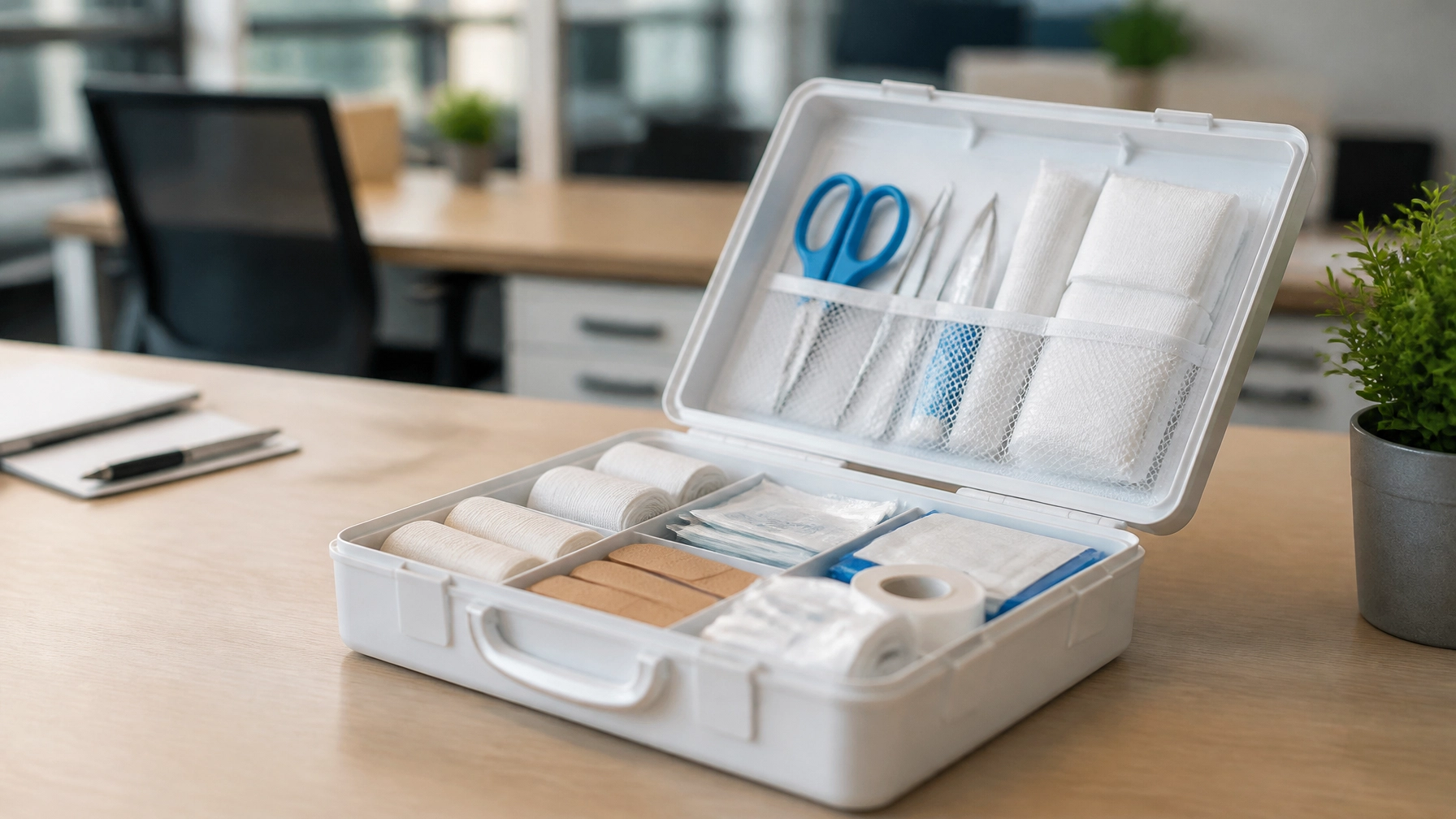
Practical training helps workers understand how to use first aid equipment under pressure.
Match the kit to your workplace risks
Complete a workplace risk assessment before deciding what to add. Consider:
- The type of work performed.
- The number of workers and visitors.
- The size and layout of the site.
- The number of work areas or buildings.
- The distance to medical assistance.
- Remote, outdoor or mobile work.
- Existing injuries and health risks.
- Machinery, tools and vehicles.
- Chemicals, fuels and hot surfaces.
- Risks affecting children or vulnerable people.
- Seasonal hazards, including winter conditions.
For outdoor and rural work around Albury Wodonga, consider adding:
- Heavy-duty crepe bandages suitable for pressure immobilisation.
- An additional thermal blanket.
- A torch for low-light incidents.
- A whistle for remote locations.
- Larger quantities of wound dressings and gloves.
- Burn-specific supplies where hot equipment or chemicals are used.
- Additional saline for eye irrigation.
Do not add items simply because they appear in a commercial kit. Make sure workers understand their purpose and limitations.
Winter safety for Albury Wodonga workplaces
Cold mornings, wet surfaces, frost and reduced visibility can increase workplace risks during winter. A first aid kit forms only one part of your winter safety controls.
Prevent incidents by asking workers to:
- Check paths, ramps and entry points for frost, water and slippery surfaces.
- Wear footwear with suitable grip.
- Improve lighting around entrances, car parks and outdoor work areas.
- Keep walkways clear of hoses, cords and stored equipment.
- Wear warm, weather-appropriate clothing for outdoor tasks.
- Take regular breaks in a warm, dry area.
- Report signs of cold stress, numbness, confusion or unusual fatigue.
- Carry suitable communication equipment when working remotely.
- Keep vehicles stocked with appropriate emergency supplies.
Use the thermal blanket for warmth and protection while arranging medical assistance. Do not rely on a first aid kit to manage serious cold exposure. Move the person to a safe, sheltered area and call 000 when the situation is urgent.
Keep your first aid kit accessible and organised
A kit cannot help if people cannot find it quickly. Store it in a central, clearly marked location. Larger workplaces may need multiple kits.
Take these steps:
- Display clear first aid signage.
- Keep the kit unlocked and accessible.
- Tell every worker where it is during induction.
- Place additional kits near high-risk or remote work areas.
- Keep the kit away from excessive heat, moisture and contamination.
- Organise supplies into labelled compartments.
- Keep instructions visible and easy to read.
- Record the date of every inspection.
- Restock items immediately after use.
Do not store the kit behind furniture, inside a locked office or in a location known only to one manager.

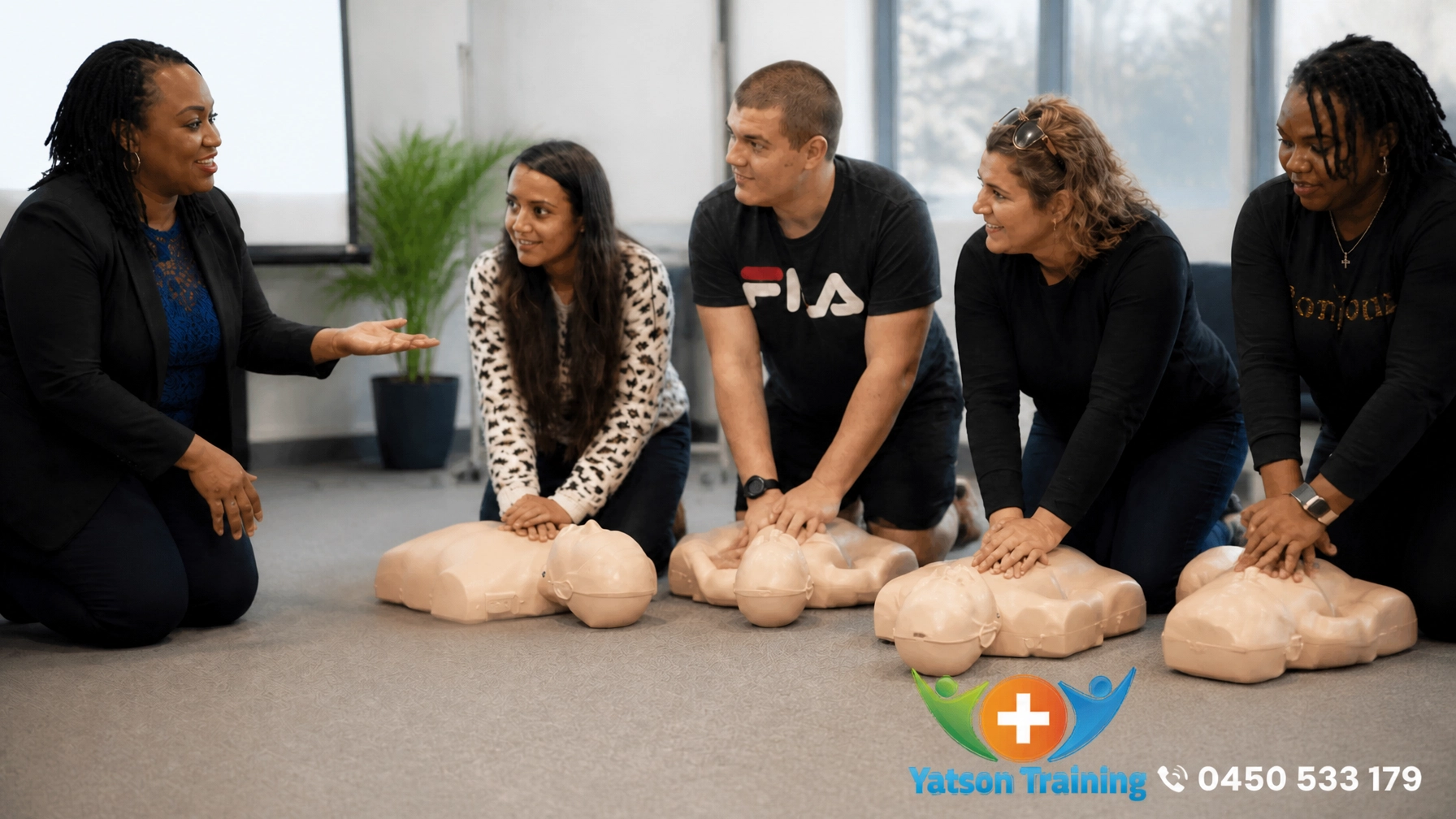
CPR training gives your team the opportunity to practise correct positioning, compressions and emergency response.
Inspect and restock the kit regularly
Assign responsibility for kit maintenance. A nominated first aid officer, supervisor or workplace safety representative should inspect the kit at least monthly and after every incident.
During each inspection:
- Check expiry dates on sterile products and saline.
- Replace opened, damaged or contaminated items.
- Confirm that gloves are intact and available in suitable sizes.
- Check that the CPR face shield is sealed and ready to use.
- Replace missing dressings, bandages and tape.
- Confirm that scissors and tweezers are clean and functional.
- Remove unidentified or unlabelled items.
- Check the thermal blanket for damage.
- Update the inventory checklist.
- Record the inspection and any corrective action.
Workplace first aid kits should generally not contain medications. Medication creates additional risks relating to allergies, dosage, interactions and authorisation. Follow the guidance in the Safe Work Australia code and seek professional advice if your workplace has specific clinical requirements.
Training is as important as the kit
A well-stocked kit does not replace practical knowledge. Your team needs to recognise an emergency, call for help, provide immediate care and use equipment safely.
Yatson Training provides professional First Aid Training Albury Wodonga businesses can use to build practical workplace capability. Training options include:
- HLTAID011 Provide First Aid.
- HLTAID009 Provide CPR.
- Corporate First Aid training.
- HLTAID012 Childcare First Aid.
Yatson Training delivers flexible, hands-on training for corporate clients, small groups and individuals. Lead trainer Jackie Hislop is a Registered Nurse, and sessions are designed to be interactive, practical and relevant to your workplace.
Annual CPR refreshers are recommended to help keep skills current. First aid qualifications and workplace requirements should also be reviewed before certificates expire.

Hands-on practice helps participants apply first aid procedures with greater confidence.
Our recommendation
Complete a full first aid kit audit each quarter, with shorter monthly checks between audits.
During the quarterly audit, remove the contents and:
- Compare every item with your workplace inventory.
- Check expiry dates and packaging.
- Clean the inside of the kit.
- Replace used or damaged items.
- Review whether the kit still reflects current workplace risks.
- Confirm that trained first aiders are available across all shifts.
- Check that first aid signage and emergency contacts are visible.
- Update your workplace emergency procedure if conditions have changed.
Use the audit to identify training gaps. If workers are unsure how to use the kit, book professional training rather than relying on written instructions alone.
Frequently asked questions
Is a first aid kit legally required in an Australian workplace?
Workplaces must provide suitable first aid equipment, facilities and trained personnel based on their circumstances and risks. The exact arrangements depend on the workplace, workforce and environment. Use the Safe Work Australia guidance and applicable Victorian requirements when reviewing your arrangements.
How often should a workplace first aid kit be checked?
Inspect it monthly and after every use. Complete a more detailed audit at least quarterly or whenever your workplace risks change.
Can one small kit cover an entire business?
Not always. Large sites, multi-level premises, warehouses and workplaces with outdoor areas may require several kits. Place them where workers can access them quickly.
What is the difference between HLTAID009 and HLTAID011?
HLTAID009 Provide CPR focuses on CPR and resuscitation procedures. HLTAID011 Provide First Aid covers a broader range of first aid conditions and emergencies, including CPR.
Where can I Learn CPR in Albury Wodonga?
Yatson Training offers practical CPR training for businesses, small groups and individuals across the local area. Visit the CPR training page or telephone 0450 533 179.
Book professional First Aid training in Albury Wodonga
Do not wait until an incident exposes gaps in your kit or your team’s skills. Yatson Training can help you review your training needs and arrange flexible, hands-on instruction for your business or group.
Telephone Yatson Training on 0450 533 179 for all your First Aid training needs.
Visit yatsontraining.com.au to learn more about Workplace First Aid certification, Corporate First Aid training, HLTAID011 Provide First Aid, HLTAID009 Provide CPR and HLTAID012 Childcare First Aid.
Follow Yatson Training for safety updates:
#FirstAidTraining #FirstAidTrainingAlburyWodonga #AlburyWodonga #WorkplaceSafety #WinterSafety #CorporateFirstAidTraining #WorkplaceFirstAidCertification #HLTAID011 #HLTAID009 #LearnCPR #ChildcareFirstAid #YatsonTraining