What is Australian First Aid, CPR and Workplace Safety all about?
Australian First Aid, CPR and Workplace Safety are the practical systems your team uses to prevent incidents, respond to injuries and protect people until professional medical help arrives.
First aid is the immediate care provided after an injury or illness. CPR (cardiopulmonary resuscitation) supports a person who is unresponsive and not breathing normally. Workplace safety includes the procedures, equipment, training and culture that reduce risks before an emergency occurs.
For businesses in Albury and Wodonga, safety should be more than a policy document. Your team should know what to do, who should take charge and where to find first aid equipment.
Use this everyday checklist to strengthen your workplace response.
1. Check the scene before helping
Start with Danger. Do not rush into an unsafe area.
Check for:
- Moving vehicles, machinery or equipment.
- Electricity, fire, smoke or gas.
- Chemicals, spills or broken glass.
- Unstable structures or falling objects.
- Traffic, poor lighting or slippery surfaces.
- Aggressive behaviour or other hazards.
Protect yourself, the casualty and nearby workers. Use gloves from the first aid kit where available. Ask someone to control the hazard or isolate equipment if this can be done safely.
If the scene cannot be made safe, move away and call 000. Tell the emergency operator what happened, where you are and what hazards remain.
2. Use DRSABCD for serious emergencies
DRSABCD is the standard Australian emergency response sequence. Practise it regularly so your team can follow the steps under pressure.
- Danger: Check for hazards.
- Response: Speak to the person and gently squeeze their shoulders.
- Send for help: Call 000. Send someone for the first aid kit and AED (automated external defibrillator).
- Airway: Open the mouth and check for visible obstruction.
- Breathing: Look, listen and feel for normal breathing for no more than 10 seconds.
- CPR: Begin CPR if the person is unresponsive and not breathing normally.
- Defibrillation: Attach an AED as soon as it arrives and follow its prompts.
Place one person in charge. Give clear instructions, such as “Call 000”, “Bring the AED” and “Meet the ambulance at the front entrance”.
Read the Australian Resuscitation Council guidelines and ensure your workplace procedures reflect current advice.

3. Perform effective CPR compressions
If a person is unresponsive and not breathing normally, start CPR immediately. Do not delay while searching for a pulse.
For an adult:
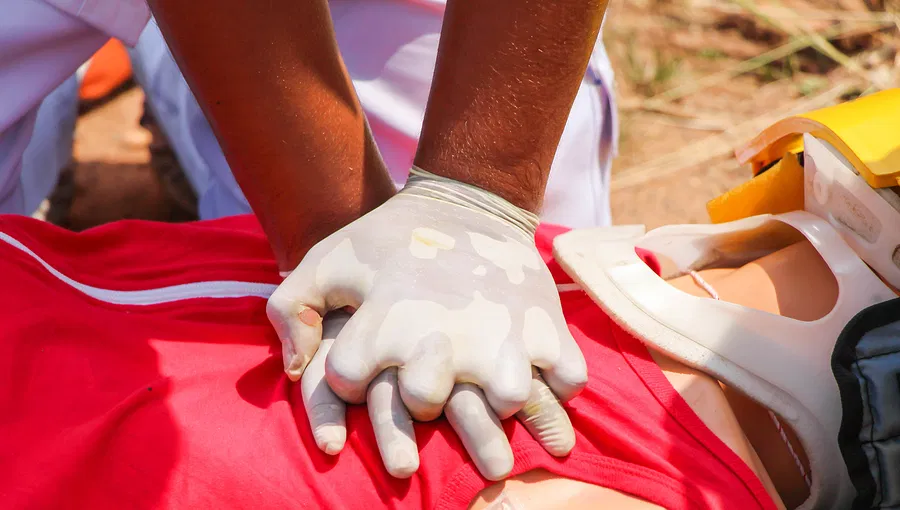
- Place the heel of one hand in the centre of the chest.
- Place your other hand on top.
- Keep your arms straight and position your shoulders above your hands.
- Compress at a rate of 100 to 120 compressions per minute.
- Compress to approximately one-third of the chest depth, or about 5–6 centimetres in an adult.
- Allow the chest to recoil fully after each compression.
- Give 30 compressions followed by two rescue breaths if you are trained and willing.
- Continue until the person shows signs of life, another trained rescuer takes over, emergency services arrive or you are physically unable to continue.
If you are not trained or do not wish to give rescue breaths, provide continuous chest compressions. Follow instructions from the Triple Zero operator.
Change rescuers about every two minutes where possible. This helps maintain compression quality and reduces fatigue.
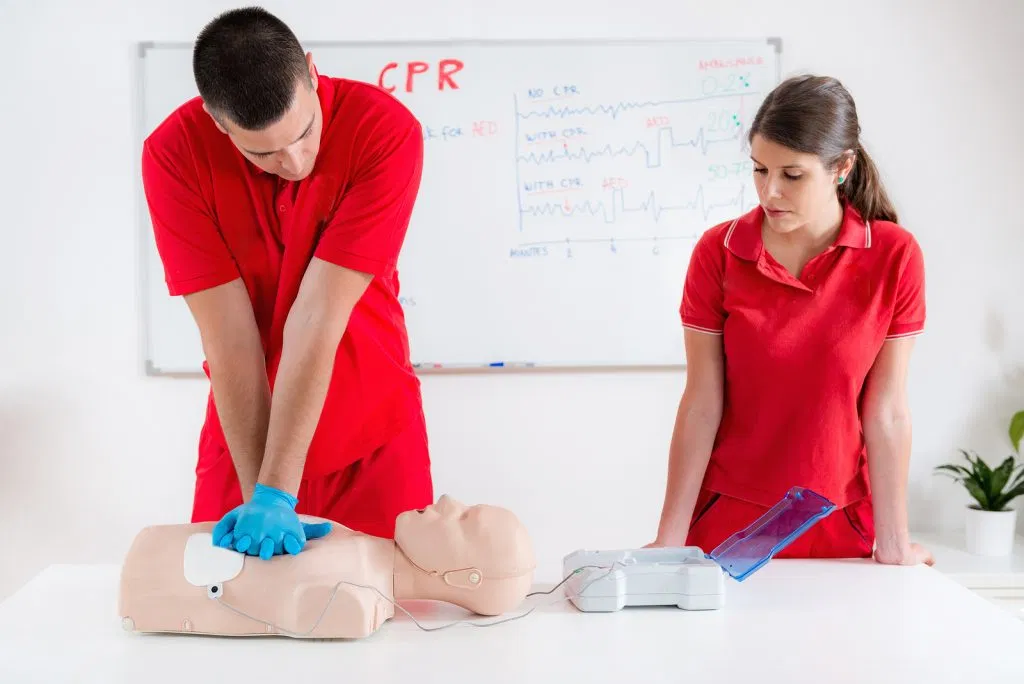
Yatson Training’s HLTAID009 Provide CPR course provides practical experience with adult, child and infant manikins. It is also a useful option if your team needs to Learn CPR in Albury Wodonga.
4. Use the AED as soon as possible
An AED analyses the heart rhythm and may deliver a shock when required. You do not need to diagnose the rhythm yourself.
When the AED arrives:
- Turn it on immediately.
- Follow the voice and visual instructions.
- Expose the person’s chest.
- Dry excessive moisture from the chest.
- Apply the pads as shown on the diagrams.
- Ensure nobody touches the person during analysis or shock delivery.
- Resume CPR immediately when instructed.
Keep your AED visible, accessible and clearly signposted. Check its battery, pads and service status as part of your regular workplace inspection.
Include AED practice in your professional First Aid training. Familiarity reduces hesitation during a cardiac emergency.
5. Respond to common workplace injuries
Cuts and severe bleeding
For a minor cut:
- Wash your hands and put on gloves.
- Rinse the wound with clean running water.
- Remove visible dirt if it can be done safely.
- Cover the wound with a sterile dressing.
For severe bleeding:
- Apply firm, direct pressure with a clean dressing.
- Do not repeatedly lift the dressing to inspect the wound.
- Add another dressing if blood soaks through.
- Call 000 for heavy, uncontrolled or spurting bleeding.
- Keep the casualty still and monitor their breathing.
Do not remove an embedded object. Apply pressure around it and wait for medical assistance.
Burns
For a thermal burn:
- Remove the person from the source of heat.
- Cool the burn under cool running water for 20 minutes where possible.
- Remove jewellery or restrictive items before swelling develops, unless stuck to the skin.
- Cover the area with a sterile, non-stick dressing.
- Do not apply ice, butter, creams or greasy substances.
- Do not break blisters or remove clothing stuck to the burn.
Call 000 for extensive, deep or electrical burns, or burns involving the face, airway, hands or genitals. Chemical burns require urgent medical advice and careful decontamination.
Sprains and strains
For a suspected sprain or strain:
- Stop the activity.
- Rest the injured area.
- Apply a cold pack wrapped in a cloth to reduce pain and swelling.
- Use gentle compression if appropriate.
- Elevate the limb where practical.
- Seek medical assessment for severe pain, deformity, numbness or inability to bear weight.
Do not force a joint back into position. Treat a suspected fracture as a serious injury and keep the area still.
6. Review winter-to-spring hazards
As winter conditions change in the Albury Wodonga area, review your risk controls rather than assuming hazards have disappeared.
Winter Safety
Check:
- Wet entryways, muddy paths and slippery floors.
- Frost or poor visibility around outdoor areas.
- Portable heaters, damaged leads and overloaded power points.
- Poor lighting during early starts and late finishes.
- Cold exposure for workers outdoors or in unheated areas.
Keep walkways clear. Dry tracked-in water quickly. Keep combustible items away from heaters. Provide warm, dry areas and suitable protective clothing for outdoor tasks.
Spring hazards
Spring can introduce different risks, including:
- Wet surfaces after storms.
- Increased outdoor work.
- Insects and allergic reactions.
- Poorly maintained paths, gardens or equipment.
- Heat exposure as temperatures rise.
- Manual handling during workplace clean-ups or maintenance.
Update your first aid kit and emergency contacts when work locations, staffing or tasks change.
7. Build a workplace first aid culture
A workplace first aid culture develops through regular action. Do not rely only on an annual course or a first aid poster.
Use this practical checklist:
- Complete a first aid risk assessment.
- Identify trained first aiders on every shift.
- Display first aider names and contact methods.
- Signpost first aid kits, AEDs and emergency exits.
- Inspect and restock kits regularly.
- Include DRSABCD in staff inductions.
- Run short emergency response discussions.
- Practise how to direct emergency services to your site.
- Record incidents and review what could be improved.
- Encourage workers to report hazards and near misses.
- Schedule CPR refreshers every 12 months.
- Keep Workplace First Aid certification current.
Safe Work Australia provides guidance through its First aid in the workplace resources. Check your state or territory requirements and complete a workplace-specific risk assessment.

Our recommendation: train for the workplace you actually have
Choose training that reflects your real environment. An office, warehouse, construction site, childcare service and community organisation will not have identical risks.
Yatson Training provides flexible, hands-on training for corporate clients, small groups and individuals. The training is practical, interactive and designed to help participants apply skills rather than simply complete a mandatory exercise.
Lead trainer Jackie Hislop is a Registered Nurse, and the experienced Yatson Training team supports you from your first enquiry through to training and certification.
Relevant options include:
- HLTAID011 Provide First Aid for general workplace and home emergencies.
- HLTAID009 Provide CPR for annual CPR renewal and practical resuscitation skills.
- Childcare First Aid course HLTAID012 for education and care settings.
- Corporate First Aid training in Albury Wodonga for team-based workplace delivery.

Keep in mind
First aid training does not replace emergency medical care. Call 000 for life-threatening injuries, serious burns, uncontrolled bleeding, suspected spinal injury or cardiac arrest.
Training should be refreshed before skills become unfamiliar. Review your procedures after an incident, near miss or workplace change. Make sure every worker knows how to raise the alarm, access equipment and support the trained first aider.
FAQ: Is professional First Aid training necessary for my team?
Do all workplaces need trained first aiders?
Workplaces need suitable first aid arrangements based on their hazards, workforce and location. A risk assessment helps determine the number of first aiders, equipment and facilities required.
How often should CPR training be renewed?
CPR competency should generally be refreshed every 12 months. Check your course requirements and workplace policies.
Is HLTAID011 suitable for most businesses?
HLTAID011 Provide First Aid is designed for a broad range of workplace and community situations. Your business may need additional training for higher-risk work or specialised settings.
Can Yatson Training work with small teams?
Yes. Yatson Training provides flexible sessions for corporate teams, small groups and individuals across the Albury Wodonga area.
How do I book training?
Telephone Yatson Training on 0450 533 179 for all your First Aid training needs. Visit yatsontraining.com.au to review courses and enquire about a suitable session.
Ready to strengthen your team’s Workplace Safety? Telephone Yatson Training on 0450 533 179 to arrange professional, hands-on First Aid training.
Follow Yatson Training through the social links listed on the Yatson Training website: Facebook, LinkedIn and YouTube.
#FirstAidTraining #CPRTraining #HLTAID011 #HLTAID009 #HLTAID012 #LearnCPRAlburyWodonga #AlburyWodonga #CorporateFirstAidTraining #WorkplaceFirstAidCertification #WorkplaceSafety #WinterSafety #AustralianFirstAid #AEDTraining #SmallGroupTraining